策展 to earn 叙事兴起,盘点四个变现“品味”的创新项目

深潮Pubblicato 2025-10-13Pubblicato ultima volta 2025-10-14

从社交信号到新经济的探索。

作者:michaellwy

编译:深潮TechFlow

第 1 部分,我们探讨了 Curator Capital Markets(策展资本市场)作为应对由人工智能驱动的媒体环境的理论基础。这一观点仍处于早期阶段,但相关实验已经开始涌现。我们可以将这些早期实验归为三大类,每一类都代表一种不同形式的“高成本信号”:

  • 资源分配市场:通过引入稀缺性来赋予内容背书行为价值。

  • 预测市场:直接将预测能力货币化。

  • 身份层:将数字化判断与高风险声誉绑定。

下面我们来看看一些正在实践这一理念的项目。

1.Tweem(@tweemdotlol

我们都见过那些热门推文下面的评论:“10个点赞时就投资。”这本质上是一种通过早期支持来获取社交资本的尝试。
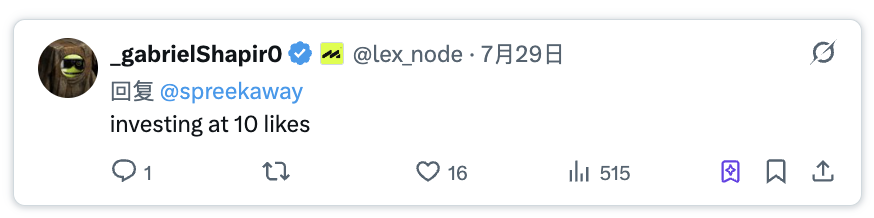
原推文链接:点击此处

Tweem将这种潜在的、非正式的行为转化为一个可玩且具有竞争性的游戏。其机制非常简单,具体操作如下:用户可以通过标记 @tweemdotlol 并设置推文未来表现的具体目标(例如)来押注推文是否会成为爆款:

  • 增幅(如浏览量增长10倍,点赞增长5倍)

  • 特定指标(如1000个点赞)

如果推文达到预测的指标,用户将在 Tweem 平台上赚取积分。
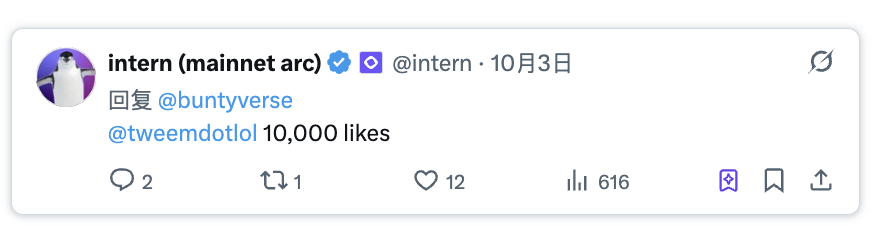
原推文链接:点击此处

其核心价值主张在于,每次正确预测都会添加到用户永久且公开的记录中。这份可验证的记录能够帮助用户建立对好内容和前瞻性的鉴赏力的声誉。通过“搜索”推文,你实际上是在构建一份公开的记录,反映你消费信息的质量和内容类型。
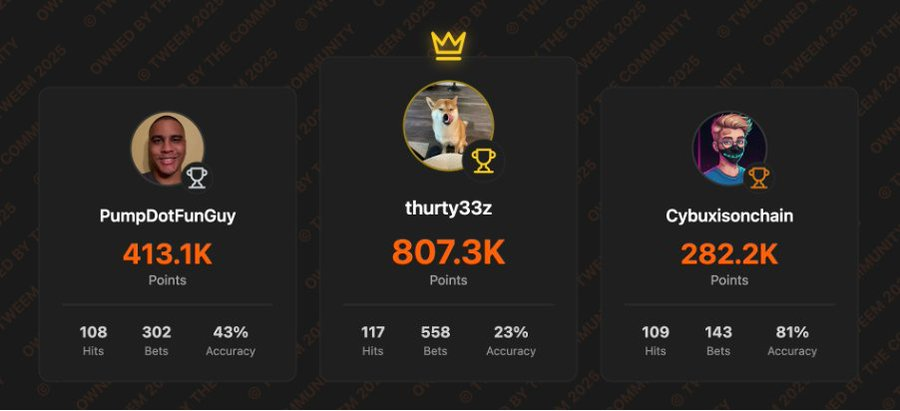
此外,Tweem还提供一个名为“Cult”(团队)的功能,允许用户与其他内容猎手组队寻找优质内容。团队成员可以平均分配积分。这可能形成某种“内容公会”,专注于策划特定主题的专业内容。例如,可以有专注于最佳Meme、最佳宏观分析或最佳预测市场洞察的团队“Cult”。

2.Bangit(@bangitdotxyz

Bangit 是一个基于 X/Twitter 的策展游戏和经济层,其目标是取代 Twitter 原生的点赞和转发系统,构建一个更复杂的市场,用于奖励准确识别“爆款内容”的用户。

其核心理念是“免费游玩,点赞即赚”(Free to Play, Upvote to Earn)

其机制围绕一种稀缺且可再生的资源——“能量”(Power)。每个用户每天都会补充一定的“最大能量”(Max Power),而不是像传统的点赞那样拥有无限次数。

用户可以通过消耗一定比例的能量(1%-10%)来点赞或反对推文。这一设计将点赞行为从一个零成本、随意的点击转变为一种需要慎重分配个人有限资源的行为。
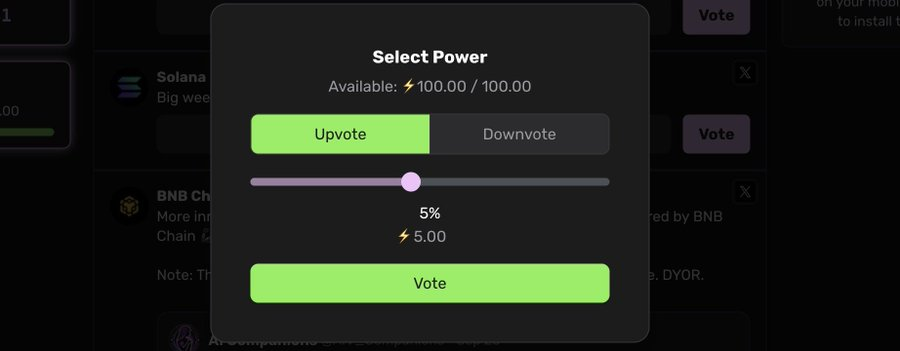
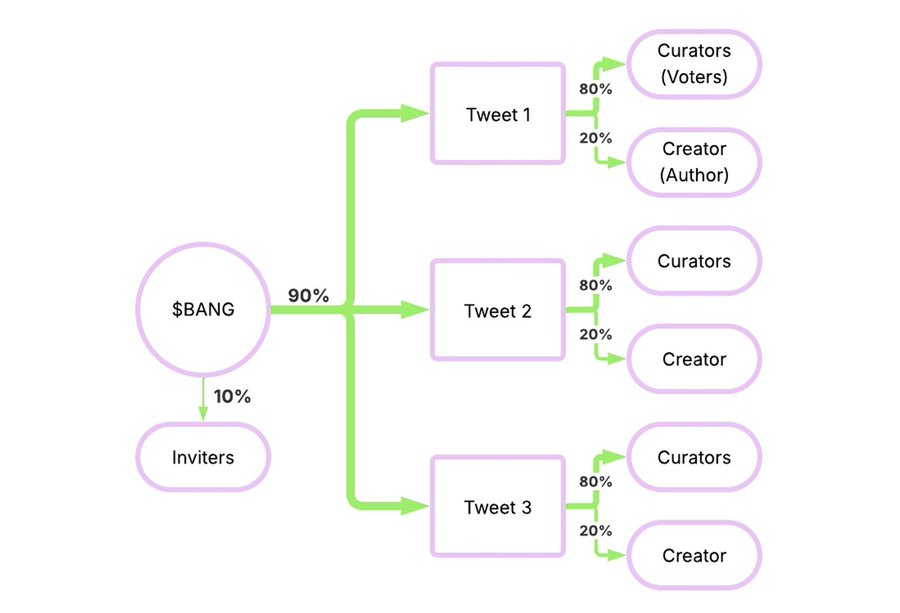
该系统旨在通过飞轮效应奖励技术娴熟的策展者。那些能够持续点赞成功推文的用户(综合考虑点赞的早期程度、使用的能量量级以及整体影响力)可以赚取 $BANG 代币。

这些代币可以用于质押,从而增加用户的“最大能量”,提升未来的奖励潜力。这种循环机制使得拥有“品味证明”(Proof of Taste)的用户能够扩大其影响力和收益能力。

奖励分配方面,大部分(80%)归于成功识别内容的策展者,而一小部分(20%)则归于原创内容创作者,从而明确地资本化了发现的价值。
3.Vimix(@vimixdotfun

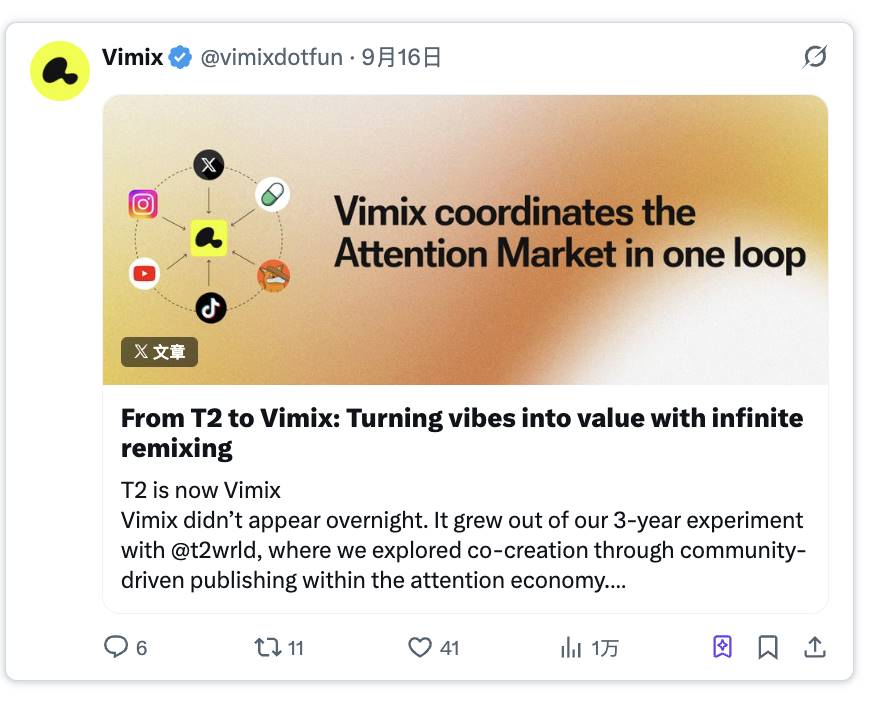
Vimix 是一个希望成为“注意力市场协调层”的协议,其核心理念是为一种特定的、高价值的策展工作——内容二次创作(remixing)构建市场。

Vimix 认识到“文化本质上就是一种二次创作”,而最有力的传播形式来自于社区将核心理念进行衍生创作,如剪辑、表情包、用户生成内容(UGC),通过新的渠道传播。

Vimix 所重视的“高成本信号”是这种二次创作过程中的创意和智力劳动。成本直接体现在

  • 理解内容并以新的、引人注目的方式重新构思所需的时间和技能。

  • 判断哪些瞬间最具共鸣,并如何以最大化影响力的方式呈现。

通过 Vimix,创作者可以建立一个内容社区,设置一小部分奖励池,让二次创作者和策展者传播作品。更多信息可以通过相关项目资料了解。
原推文链接:点击此处

4.Twocents (@twocentinc)

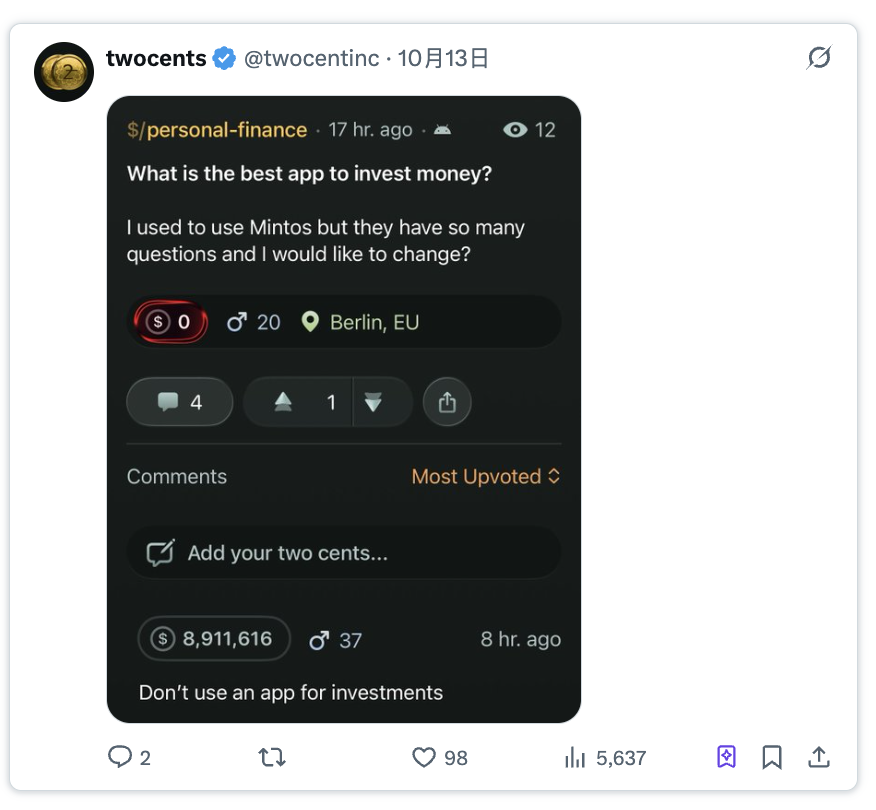
Twocents 是一个社交网络,其用户身份基于经过验证的净资产。虽然它本身不是一个策展市场,但它对解决当前社交媒体中零成本、(大多)匿名身份问题提供了有趣的思路。
原推文链接:点击此处

该平台通过 Plaid 连接到用户的金融账户,将其资本作为用户名的一部分。这创造了一种伪匿名环境,每个帖子和评论都以用户的财富为背景。

平台并未专注于单一话题,用户可以讨论从投资到约会的各种内容,但始终以其经过验证的财务状况为背景。

例如,一个拥有已验证净资产为 2600 万美元的账户所表达的观点,是一种无法伪造的信号,具有其他账户无法复制的分量。这在身份层面上强制实施了“风险共担”(skin in the game)。一个经过验证的、拥有资本的账户的背书因此成为一种更值得信赖的高保真信号,可以更可靠地被其他市场参与者使用。

总结

目前这些项目看起来更像是一些奇特的互联网游戏,而非新经济的基础,但这正是此类创新的起点。

我认为,这些项目的具体特性可能并不重要,重要的是它们共同试图解决的问题:构建一个能够为人类的“选择行为”定价的市场,而不仅仅是为创作行为进行定价的市场。

Letture associate

South Korea’s KB Financial Completes Stablecoin Pilot As Lawmakers Press For Regulatory Framework

South Korea's KB Financial Group has completed a Proof-of-Concept (PoC) for a won-denominated stablecoin in partnership with several companies. The pilot integrated the entire financial process—from stablecoin issuance to offline payments, merchant settlements, and international remittances—into a single blockchain-based workflow. A key test involved offline payments at a coffee shop via QR code without requiring a digital wallet. For international transfers, the model converted the won stablecoin to a dollar stablecoin, completing the process within three minutes and reducing fees by approximately 87% compared to traditional methods. KB aims to launch services once digital asset regulations are established. However, South Korea's Digital Asset Act, which would establish rules for such stablecoins, faces significant delays due to a disagreement between the Financial Services Commission (FSC) and the Bank of Korea (BOK). The central bank advocates for a consortium of banks to hold a majority stake in any issuer, while the FSC worries this could stifle innovation and tech firm participation. Lawmakers and experts have urged the National Assembly to prioritize the legislation, warning that South Korea is falling behind in the global digital asset market despite accounting for 10% of global transactions. Bank of Korea Deputy Governor Chang Cheong-soo acknowledged the potential of won-pegged stablecoins as a competitive future payment method.

bitcoinist47 min fa

South Korea’s KB Financial Completes Stablecoin Pilot As Lawmakers Press For Regulatory Framework

bitcoinist47 min fa

The Bond Market Deals a Blow to the AI Bull Market

The article "Bond Market Deals a Blow to the AI Bull Market" discusses how a recent global bond sell-off is threatening to end the AI-driven stock market rally that had been ongoing for about a month and a half. A sharp sell-off in global equity markets began last Friday, with significant declines in indices like South Korea's KOSPI and Japan's Nikkei 225. The primary suspect, according to Morgan Stanley, is the bond market. Key long-term bond yields, such as the U.S. 30-year Treasury and Japan's 10-year government bond, have surged to multi-decade highs. This breach of critical yield levels (like 5% for the 30-year U.S. Treasury) is seen as a dangerous signal that historically precedes risk asset corrections. The root cause is identified as resurgent inflation, fueled by rising oil prices due to renewed Middle East geopolitical tensions, specifically the breakdown of U.S.-Iran talks and the blockade of the Strait of Hormuz. This has led markets to drastically revise expectations for U.S. Federal Reserve policy, now pricing in a significant chance of future rate hikes instead of cuts. Higher bond yields negatively impact stocks, especially high-growth tech/AI stocks, through two main channels: 1. **Valuation Pressure:** Higher yields increase the discount rate used to value future earnings, making the present value of distant AI-related cash flows less attractive. 2. **Relative Attraction:** Safer government bonds offering ~5% yields reduce the appeal of riskier equity investments in emerging markets and tech sectors. Despite the pressure from bonds, the AI bull market has fundamental support from strong sector earnings (e.g., semiconductor companies). The current situation is described as a "tug-of-war" between bond market turbulence and AI prosperity. However, warnings exist that AI stock valuations have become excessive. For investors, the advice is to increase portfolio flexibility. Suggestions include focusing on specific AI supply chain segments (domestic computing, semiconductors, equipment) and being prepared for continued volatility. The article concludes by noting the market is at a precarious point, caught between geopolitical uncertainty and the AI revolution, requiring careful navigation.

marsbit53 min fa

The Bond Market Deals a Blow to the AI Bull Market

marsbit53 min fa

Trading

Spot
Futures
活动图片