Чего ждать от биткоина после обвала на выходных

cryptonews.ruPubblicato 2025-05-12Pubblicato ultima volta 2025-10-13

Обвал крипторынка на фоне объявления нового витка войны тарифов Трампа заставил участников криптосообщества переосмыслить возможности развития событий

Свое видение происходящего представил популярный аналитик Doctor Profit. Он считает, что благодаря обвалу рынок «оздоровился» и теперь может готовиться к возобновлению буллрана. Вот какие аргументы приводит Doctor Profit и что, по его мнению, станет отменой позитивного сценария.

Как купить биткоин с карты: инструкция

После рекордного обвала на крипторынке наступил момент передышки. Аналитик Doctor Profit считает, что этот кризис стал необходимой «чисткой»: рынок избавился от избыточного оптимизма и теперь готов к новому этапу.

Последний обвал стал самым масштабным в истории криптовалют. Почти все трейдеры, которые открывали сделки на рост с использованием заемных средств, потерпели убытки. Особенно сильно пострадали альткоины — цены на многие из них рухнули почти до нуля.

По словам Doctor Profit, с августа крупные участники рынка, маркетмейкеры, активно продавали биткоин и альткоины, открывая короткие позиции, пока розничные инвесторы продолжали выкупать каждое снижение. Так, по его мнению, выглядела фаза распределения: крупные игроки постепенно выходят из активов, а неопытные участники рынка, наоборот, входят, надеясь на новый рост. Результатом стала волна ликвидаций — принудительного закрытия сделок из-за нехватки залога. По сути, рынок очистился от избыточных ставок на рост.

По мнению аналитика, сейчас есть два варианта развития событий:

  1. Завершение бычьего цикла — крупные игроки зафиксировали прибыль и начали снижать активность, что приведет к длительному спаду.
  2. Перезапуск роста — обвал стал финальной стадией очищения перед новым этапом накопления активов. Теперь цены постепенно начнут восстанавливаться.

Doctor Profit склоняется ко второму варианту: рынок сбросил избыточный риск, и теперь у крупных инвесторов появилась возможность снова покупать активы. Чтобы снизить риски, аналитик использует комбинированную стратегию: часть прибыли он держит в фиате, часть вложил в криптовалюту на низких уровнях, а короткие позиции оставил как страховку на случай нового падения. Такая модель, по его словам, позволяет зарабатывать и при росте, и при снижении рынка.
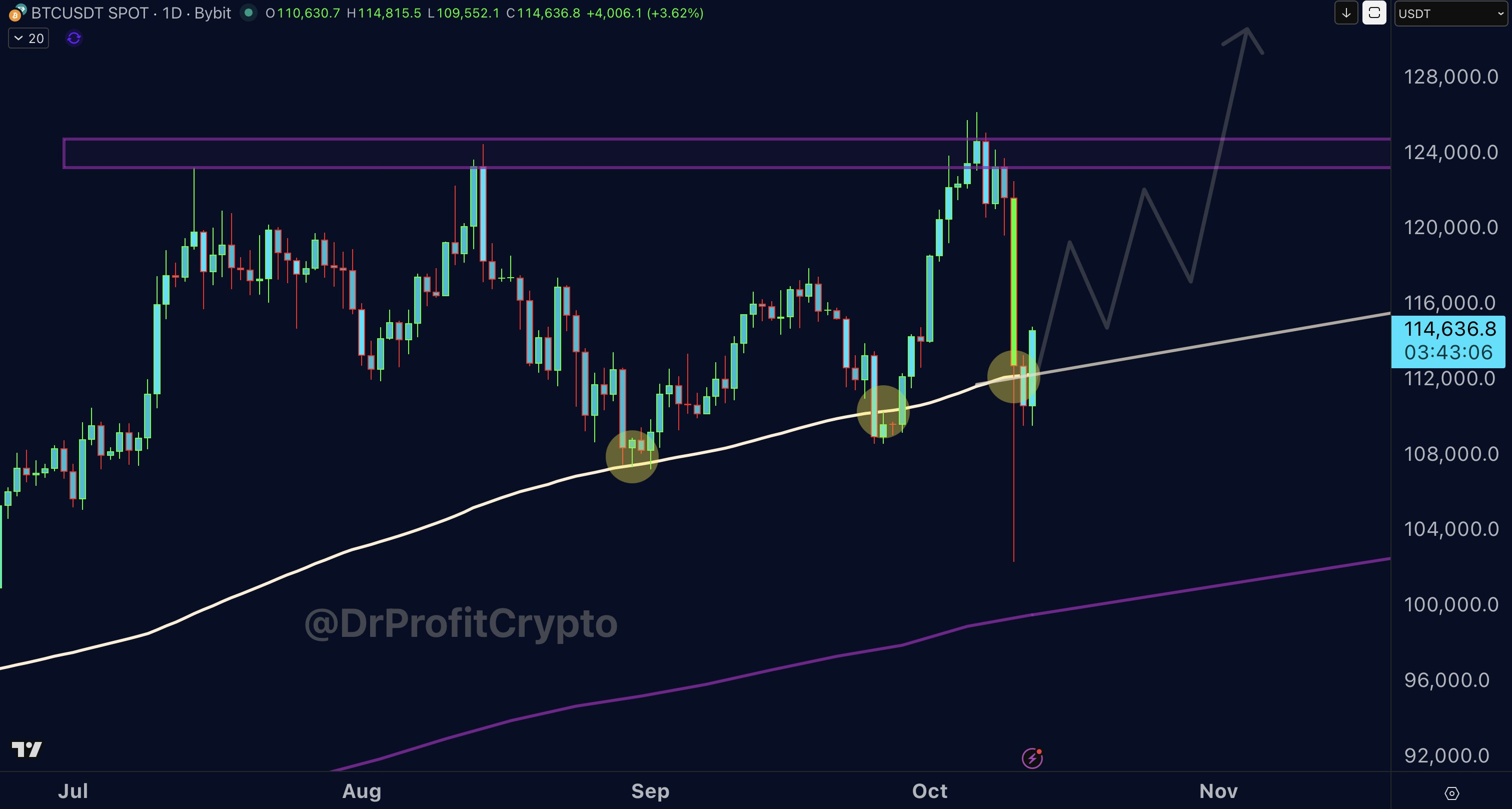
прогноз биткоина
Предполагаемая траектория движения BTC из анализа Doctor Profit

Аналитик сообщил, что открыл долгосрочные позиции по ряду монет: SUI — $0,90, XRP — $1,60, ONDO — $0,40, ETH — $3 200, HYPE — $20. Половину прибыли от коротких позиций по биткоину он направил на покупку BTC по цене $105–110 тысяч, а вторую половину оставил в хеджирующих позициях, чтобы при любом исходе сохранить баланс между риском и прибылью.

Ближайшие дни, по его словам, станут решающими для понимания направления рынка. Основные факторы, на которые стоит обратить внимание:

  • открытие американских бирж NYSE и Nasdaq — оно покажет настроение инвесторов после обвала;
  • День Колумба в США — банки и госучреждения не работают, поэтому при падении фондовых индексов часть сделок может не успеть закрыться вовремя, что повышает волатильность;
  • курс японской иены — ее резкие движения часто сигнализируют о смене глобального настроя к рисковым активам;
  • состояние фондового рынка — если инвесторы начнут массово выходить из акций, это может вызвать дополнительное давление на криптовалюты.

Параллельно на рынок влияют и глобальные экономические факторы. Китай запретил закупки видеокарт NVIDIA, которые использовались в сфере искусственного интеллекта. Страна приносила около 40% выручки компании, поэтому запрет может ударить по технологическому сектору и вызвать падение акций. Американские компании, в свою очередь, ускоряют разработку собственных чипов, чтобы сократить зависимость от NVIDIA. Снижение интереса к технологическим акциям обычно приводит к падению спроса на другие рискованные активы, включая криптовалюты.

По мнению Doctor Profit, рынок уже прошел стадию паники, которую многие ждали в случае падения биткоина к $90 тысячам. Эффект «очищения» был достигнут раньше, поэтому силы покупателей и продавцов сейчас сбалансированы.

Аналитик предполагает, что в ближайшие месяцы биткоин может обновить исторический максимум и подняться до $130 тысяч, если удержится ключевой уровень поддержки на $105-110 тыс. Потеря этого уровня станет сигналом отмены бычьего сценария.

Периоды массовых распродаж, по наблюдениям Doctor Profit, часто становятся лучшими моментами для покупок. После капитуляции трейдеров и ухода спекулянтов рынок стал здоровее: инвесторы получили возможность войти в позиции по более выгодным ценам. Аналитик резюмирует: экстремальные настроения позади, рынок очистился, и теперь важно наблюдать за динамикой цены, чтобы вовремя определить начало нового цикла.

Letture associate

Playnance’s $GCOIN Lists on KoinBX Amid Rapid Growth in India

Playnance's native token, $GCOIN, has been listed on the cryptocurrency exchange KoinBX as of June 18. This move aims to enhance accessibility for its rapidly growing community, particularly in India, where the blockchain-powered Web3 iGaming ecosystem has gained significant traction. Over 130 partners in Playnance's "Be the Boss" program have built communities engaging thousands of active players in the region. The "Be the Boss" model allows participants to create and manage their own gaming communities, earning rewards tied to community activity. CEO Pini Peter noted India's high engagement, with community leaders successfully building player networks. One partner, Dr. Nicolas, reported earning over $57,000 through the program in recent months, highlighting both the financial rewards and the opportunity to grow an engaged community. $GCOIN serves as the ecosystem's core utility token, incentivizing participation and aligning the interests of players and community leaders ("Bosses"). The listing on KoinBX is part of Playnance's strategy to expand globally, increasing the token's utility and accessibility by combining community ownership, gamified engagement, and blockchain-based incentives. Founded in 2020, Playnance is a Web3 iGaming infrastructure company focused on creating live, non-custodial, on-chain products to onboard mainstream users. It currently processes approximately one million transactions daily, aiming to simplify the user experience while maintaining full on-chain transparency.

TheNewsCrypto25 min fa

Playnance’s $GCOIN Lists on KoinBX Amid Rapid Growth in India

TheNewsCrypto25 min fa

STRC Hits Historic Low, Saylor's Perpetual Motion Machine Grinds to a Halt

STRC, the perpetual preferred stock issued by MicroStrategy to fund its Bitcoin purchases, hit a historic low of $85.32, a 17% discount to its $100 par value. Designed as a "digital credit engine" to trade stably near par and enable continuous share issuance for buying Bitcoin, its plunge signals a breakdown in this model. Three key factors drove the decline: 1. Bitcoin's price fell over 50% from its peak, trading around $63,000 amid hawkish Fed signals. 2. MicroStrategy's cash reserves were depleted after a $1.5 billion convertible note repayment, slashing the dividend coverage for STRC's 11.5% yield to ~7 months. The company then sold 32 BTC to cover dividends—Michael Saylor's first Bitcoin sale since 2022—damaging the "never sell" narrative. 3. A competing Bitcoin-backed preferred stock, Strive's SATA, offers a higher yield (~13%) and daily dividends, drawing investors away from STRC. The drop triggers a negative cycle: STRC below par halts ATM share issuances, cutting off a key funding source for Bitcoin buys and potentially forcing more BTC sales for dividends, further eroding confidence. While Saylor argues the model is mathematically sound—needing only 2.3% annual Bitcoin growth to sustain itself—the market is testing the resilience of the leveraged Bitcoin treasury strategy in a bear market. The STRC price now reflects rising skepticism about this financial machinery's durability during downturns.

marsbit46 min fa

STRC Hits Historic Low, Saylor's Perpetual Motion Machine Grinds to a Halt

marsbit46 min fa

A Guide to Grayscale’s ‘Bottom Fishing’: Using Cash Flow to Assess Cryptocurrency Value

**Title:** Grayscale's Guide to Bottom-Fishing: Valuing Cryptoassets Using Cash Flows **Summary:** This report by Grayscale Research presents a fundamental valuation framework for cryptocurrency assets, moving beyond pure speculation to analyze those with underlying cash flows. It distinguishes between "commodity-like" assets (e.g., Bitcoin) and "cash-flow" assets, primarily within DeFi. Using the leading decentralized lending protocol Aave as a case study, the analysis applies traditional financial methodologies like Discounted Cash Flow (DCF) and Price-to-Earnings (P/E) multiples. Key findings indicate that AAVE tokens are currently undervalued. Despite recent challenges, the protocol's strong revenue growth, ~50% net profit margin, and diversified treasury support a fundamental valuation range of $80-$100 per token (compared to a ~$75 market price at the time of writing). In a base-case scenario driven by stablecoin adoption and regulatory clarity, the fair value could rise to around $175 within a year. The report emphasizes that protocol success does not automatically translate to token value. It critically examines the "value capture" mechanisms—such as buybacks, burns, and staking rewards—that channel protocol profits to token holders. Furthermore, it addresses the legal and governance complexities of Decentralized Autonomous Organizations (DAOs), noting their difference from traditional corporate equity but highlighting how robust, transparent governance can align protocol economics with holder interests. The conclusion is that the crypto market is maturing, with capital increasingly flowing towards projects with demonstrable fundamentals, real adoption, and disciplined capital allocation, creating opportunities for value-based investors.

marsbit1 h fa

A Guide to Grayscale’s ‘Bottom Fishing’: Using Cash Flow to Assess Cryptocurrency Value

marsbit1 h fa

After semiconductors lead the gains, are funds buying into AI orders or a macroeconomic rebound?

After US-Iran talks led to a temporary ceasefire and framework for reopening the strategic Strait of Hormuz, U.S. stocks rose on June 18, with the Nasdaq gaining 1.9%. The semiconductor and AI hardware sectors outperformed. This rally stemmed primarily from reduced geopolitical risk, which lowered oil prices and inflation expectations, easing discount rate pressure on high-valuation growth stocks like tech. The key question is not whether tech rebounded, but the nature of the rebound. The market appears to be selectively repricing AI infrastructure plays rather than broadly chasing AI narratives. Gains were concentrated in chips, optical interconnects, memory, and domestic manufacturing—segments tied to tangible data center build-outs and capital expenditure. Intel's ~10% surge, fueled by a Trump statement about potential Apple collaboration, exemplifies this mixed dynamic. It reflects policy catalysts and domestic manufacturing sentiment more than confirmed fundamentals. Meanwhile, strong earnings from companies like Astera Labs (revenue up 93% YoY) provided concrete evidence of AI-driven demand in hardware. In essence, the rally represents a risk-premium recalibration. Lower Middle East tensions opened a valuation repair window, and capital flowed first into AI infrastructure segments with visible near-term revenue streams. The sustainability of this move hinges on upcoming Q2 earnings, specifically continued strength in cloud provider capex, AI server orders, and hardware company guidance. Policy hopes alone are insufficient; the cycle needs validation from orders and financials.

marsbit2 h fa

After semiconductors lead the gains, are funds buying into AI orders or a macroeconomic rebound?

marsbit2 h fa

Trading

Spot
Futures
活动图片