Новый цикл биткоина изменил ключевые исторические закономерности крипторынка

cryptonews.ruPubblicato 2025-07-09Pubblicato ultima volta 2025-10-10

Текущий, четвертый цикл биткоина демонстрирует признаки фундаментального отличия от всех предыдущих. Если раньше каждый бычий рынок заканчивался падением на 80%–90%, то теперь данные указывают на иные механизмы поведения. По словам экспертов, основное отличие — отсутствие глубоких коррекций. С начала цикла снижение более чем на 25% фиксировалось лишь 4 раза, а большинство откатов укладывалось в диапазон 10%–20%. Такой уровень устойчивости ранее не наблюдался. Тогда колебания в 40%–50% считались нормой.

Волатильность биткоина (BTC) сейчас находится на минимальных уровнях за всю историю бычьих фаз. Исследователи заявили: это подтверждают сжатие полос Боллинджера и снижение стандартного отклонения ценовых движений. Стабилизация рынка связана с постепенным уменьшением спекулятивной активности и ростом институционального присутствия, особенно со стороны американских финансовых структур. В отличие от прошлых циклов, где поведение определяли розничные трейдеры, сегодня значительную часть рынка формируют крупные держатели и корпоративные фонды.

По мнению аналитиков, такое перераспределение капитала создает новую модель движения цены. Продажи со стороны старых крупных инвесторов эффективно поглощаются новыми участниками — институциональными фондами, казначействами и долгосрочными держателями с низкой склонностью к панике. В результате рынок демонстрирует меньше импульсивных движений, а коррекции становятся не такими разрушительными для общей структуры цикла.

Другая особенность текущего периода — баланс между краткосрочными и долгосрочными держателями. По данным аналитиков, сейчас наблюдается «фаза дистрибуции»: долгосрочные инвесторы постепенно фиксируют прибыль, в то время как краткосрочные покупатели выкупают ликвидность, формируя новую базу поддержки. Подобное распределение капитала часто предшествует консолидационным фазам перед очередным импульсом роста.

Такой сценарий отражает зрелость индустрии и снижение влияния спекулятивных факторов. Новые инвесторы заходят на рынок осознанно, ориентируясь на долгосрочные цели и макроэкономические тренды, такие как рост долга, инфляция и диверсификация резервов. Это делает цикл более устойчивым и менее зависимым от резких распродаж.


Letture associate

Bank of Russia: 12 Largest Banks to Connect Digital Ruble from September 1, 2026

The Central Bank of Russia (CBR) announced that all 12 of the country's systemically important banks will be ready to offer clients digital ruble accounts and transactions starting September 1, 2026. According to Alla Bakina, director of the CBR's national payment system department, these banks cover over 80% of the domestic payment market. The digital ruble is described as a new form of the existing currency, functioning as a cashless payment method but held directly in a user's wallet on the CBR platform. Nine other banks designated as significant payment market participants are also expected to provide access, with most aiming to complete integration by autumn 2026. Starting from the September launch date, major retail chains with annual revenue exceeding 120 million rubles will be required to accept digital ruble payments, though adoption for citizens remains voluntary. The rollout follows a delayed pilot phase, with mass implementation postponed from 2025. The CBR's model currently offers basic account functionality without interest accrual, unlike China's digital yuan, which began paying interest in early 2026. The announcement positions Russia among dozens of countries testing Central Bank Digital Currencies (CBDCs), though the digital ruble's potential role in cross-border settlements, particularly within BRICS, remains an open question for its future international relevance.

cryptonews.ru2 min fa

Bank of Russia: 12 Largest Banks to Connect Digital Ruble from September 1, 2026

cryptonews.ru2 min fa

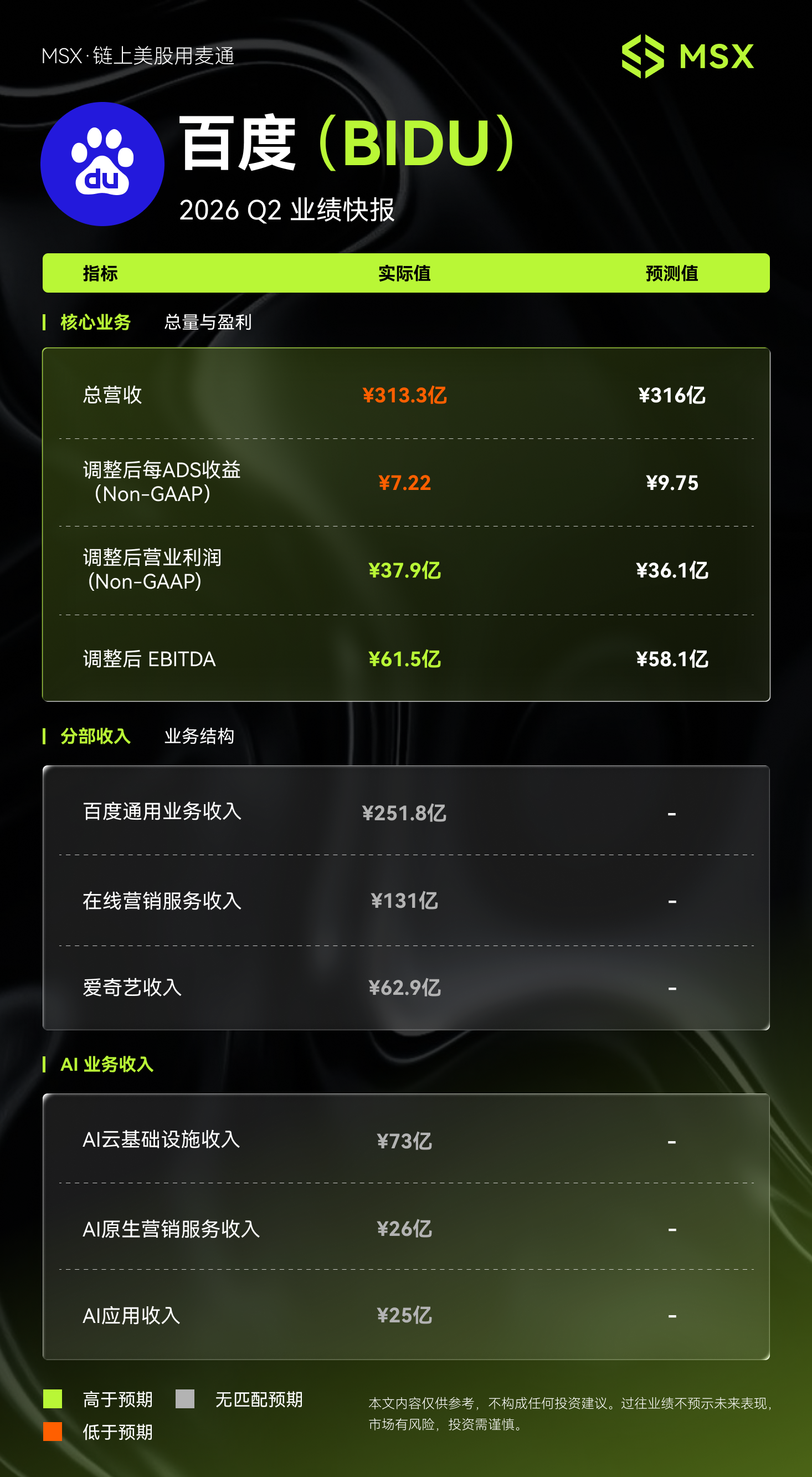
MSX US Stock Daily Observation: Baidu 2026 Q2 Earnings: AI Revenue Accounts for Half of Core Business for Two Consecutive Quarters, 283% GPU Cloud Growth Boosts Business Transformation

**MSX Daily US Stock Observation: Baidu 2026 Q2 Earnings Report** Baidu's Q2 2026 earnings present a clear picture of a company in transition. Total revenue declined slightly to RMB 313.25 billion, missing market expectations. This was driven by a continued double-digit contraction (-19%) in its core online marketing (advertising) business. The key highlight is the structural shift within the company's operations. AI-related revenue reached RMB 125 billion, accounting for approximately half of Baidu's core business income for the second consecutive quarter. Within AI, growth is heavily skewed towards infrastructure: AI cloud infrastructure revenue grew 50% year-over-year to RMB 73 billion, with GPU cloud revenue surging 283%. In contrast, AI application and AI-native marketing services revenue grew only 3% and remained flat, respectively, indicating slower commercialization on the application side. Profitability metrics were mixed. While adjusted operating profit and EBITDA exceeded expectations, demonstrating cost control, adjusted earnings per ADS of RMB 7.22 fell short by about 26%. This gap is largely attributed to depreciation and amortization costs linked to significant AI infrastructure investments, which continue to pressure bottom-line profit realization. The company holds a substantial cash position of RMB 2831 billion, providing runway for continued investment. The critical challenge ahead is translating the explosive growth in AI infrastructure (like GPU cloud) into stronger monetization from AI applications to bridge the gap between operational profit and per-share earnings.

Odaily星球日报7 min fa

MSX US Stock Daily Observation: Baidu 2026 Q2 Earnings: AI Revenue Accounts for Half of Core Business for Two Consecutive Quarters, 283% GPU Cloud Growth Boosts Business Transformation

Odaily星球日报7 min fa

Bitwise CIO: Three Major Cognitive Errors Common Among Crypto Investors Today

Bitwise CIO Matt Hougan highlights three key misconceptions he believes many crypto investors currently hold, presenting them as opportunities for those who see beyond them. First, investors significantly underestimate the total addressable market for crypto applications. While many view platforms like Uniswap only as tools for trading crypto assets (a ~$2 trillion market), their true potential lies in tokenizing and trading *all* asset classes—such as stocks and bonds—which represent markets hundreds of trillions of dollars in size. Second, there's a persistent overestimation of traditional financial institutions' ability to dominate crypto-native sectors. Examples like PayPal's stable币 (with ~1% market share vs. Tether/Circle's 88%) and Fidelity's custody business (trailing Coinbase) show that crypto-native firms often win due to faster iteration, focused expertise, and established user trust within the crypto ecosystem. Third, investors linearly extrapolate future on-chain transaction volumes from today's data, severely underestimating potential growth. The shift to 24/7 trading for tokenized assets could multiply trading hours by 5x. When combined with AI agents that may execute trades far more frequently than humans, transaction volumes could grow by 10x to 100x, massively boosting revenue for underlying blockchains and applications. Hougan concludes that the gap between the rapid pace of industry change and slower mainstream perception updates creates significant investment opportunities.

marsbit10 min fa

Bitwise CIO: Three Major Cognitive Errors Common Among Crypto Investors Today

marsbit10 min fa

Trading

Spot
活动图片