US Labor Union Urges Senate To Oppose Crypto Bill Over Pension, Workers’ Risks

bitcoinistPubblicato 2025-10-09Pubblicato ultima volta 2025-10-09

Introduzione

The largest US federation of trade unions has asked US Senators to reject the Senate’s version of the crypto market...

Trusted Editorial content, reviewed by leading industry experts and seasoned editors. Ad Disclosure

The largest US federation of trade unions has asked US Senators to reject the Senate’s version of the crypto market structure bill due to serious concerns and a lack of proper safeguards for workers.

Senate’s Crypto Bill Faces Backlash

On Tuesday, Jody Calemine, Director of Government Affairs at The American Federation of Labor and Congress of Industrial Organizations (AFL-CIO), sent a letter to the US Senate Banking Committee sharing multiple concerns about the highly anticipated Responsible Financial Innovation Act (RFIA).

Calemine affirmed that the bill “does not protect consumers, workers or the financial system,” arguing that RFIA’s treatment of crypto assets “poses risks to both retirement funds and to the overall financial stability of the U.S. economy.”

According to the letter, the current state of the legislation would enable the crypto industry to “operate in wider and deeper ways” without sufficient oversight or “meaningful safeguards,” which would potentially increase financial instability.

While currently most pensions do not carry crypto assets because of the risks associated with them, the bill provides the facade of regulation that may make cryptocurrency and associated assets more mainstream in portfolios. Passing this legislation will allow the proliferation of assets that investors will wrongly perceive as safe.

The AFL-CIO director warned that the proposed bill also increases systemic risks, as it would expose banks and put the Federal Deposit Insurance Corporation (FDIC)’s taxpayer-backed Deposit Insurance Fund at greater risk.

Additionally, the labor union considers that the legislation “codifies the tokenization of securities and assets such that private companies have a pathway to create a shadow public stock outside of SEC oversight.”

Labor Union, State Regulators Call For “Proper Safeguards”

The letter concluded that the Senate’s version of the crypto market structure bill “substantially weakens” both federal and state enforcement tools to regulate digital assets.

It’s worth noting that the Senate’s RFIA is expected to come before the Committee, led by Chairman Tim Scott, soon as the US Congress’s upper chamber races to advance the bill to a floor vote next month and potentially send it to the President’s desk before the end of the year.

The legislation has also received backlash from multiple state authorities, which have warned that it may “diminish their ability to pursue wrongdoers” and allow criminals to “wiggle out” of prosecution.

As reported by Bitcoinist, regulators from Alabama to Montana recently argued that the bill does not give state-level regulatory agencies implicit authority to supervise crypto companies, which could mean that these regulatory agencies may not be able to prosecute offenders for fraud.

State regulators have proposed changes to the market structure bill, like adding language that specifies businesses to register and respond to their inquiries, and rejecting the provisions that redefine the investment contract test.

Similarly, the AFL-CIO suggested that working people need policies that effectively regulate financial markets and ensure their hard-earned retirement benefits are not endangered.

Ultimately, Calemine asked the Senate Banking Committee members to oppose the bill, and “make sure that the financial system is stable instead of creating a casino for crypto billionaires to make more profits.”
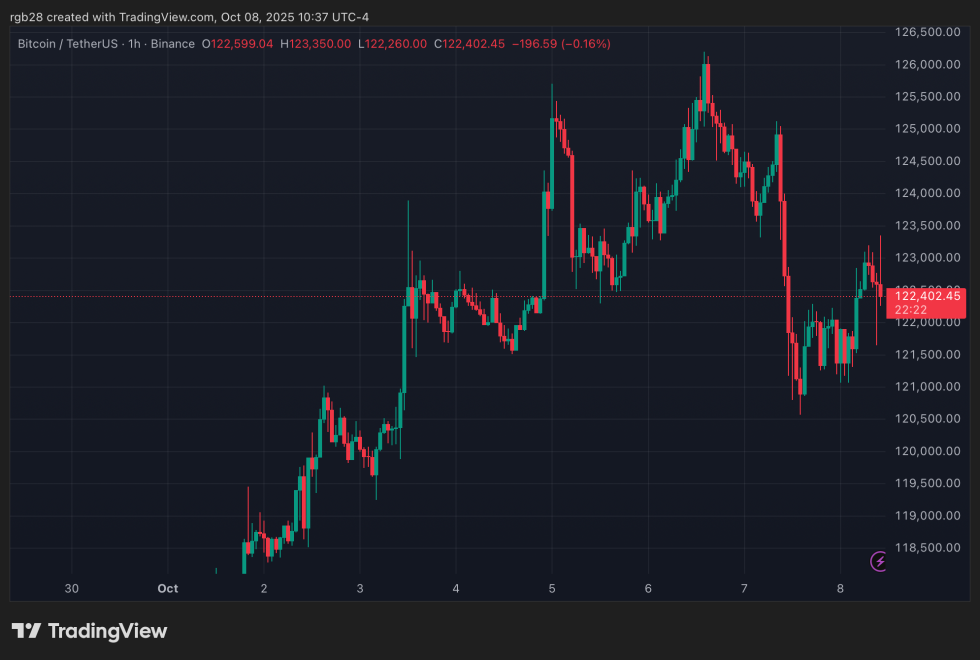
Crypto, btc, btcusdt

Bitcoin (BTC) trades at $112,402 in the one-week chart. Source: BTCUSDt on TradingView
Featured Image from Unsplash.com, Chart from TradingView.com
Editorial Process for bitcoinist is centered on delivering thoroughly researched, accurate, and unbiased content. We uphold strict sourcing standards, and each page undergoes diligent review by our team of top technology experts and seasoned editors. This process ensures the integrity, relevance, and value of our content for our readers.

Rubmar is a crypto enthusiast who likes learning and improving constantly. She enjoys reporting on the latest news and developments in the crypto industry. Rubmar also enjoys scrapbooking, crafting, simulation games, and watching football.

Letture associate

6 Questions to Understand the Business Trends of AI

The AI industry has entered its "summer" phase, according to a six-dimensional scoring framework assessing its development cycle. Each dimension—narrative vs. delivery, system connectivity, delivery capability, ROI rationalization, common industry trends, and capital environment—scores 1 point, totaling 6 points. This places the industry firmly in summer (5-7 points), characterized by a coexistence of grand promises and tangible deliverables, with increasing pressure to demonstrate value and profitability. Key signals mark this shift. ByteDance's Doubao launched paid subscriptions, while OpenAI introduced an advertising platform. These moves are driven by dual forces: immense cost pressures from scaling user bases and massive compute requirements, and the maturation of commercial opportunities. Major players like Anthropic report explosive growth, highlighting AI's transition into core productivity infrastructure. For businesses, the path forward involves three strategic steps. First, identify a small, high-impact use case to quickly demonstrate a closed-loop value proposition, such as automating customer service or content generation. Second, systematically replicate successful pilots across the organization by standardizing processes, building shared AI capabilities, and aligning talent, incentives, and leadership. Finally, move beyond simply adding AI to existing workflows and undertake systemic reconstruction—redesigning processes for parallel AI-human collaboration, implementing real-time dashboards, and establishing automated trigger chains. The era where storytelling alone secured funding is over. The focus has shifted to delivering measurable efficiency gains, cost savings, and new revenue streams, as evidenced by real-world implementations in companies like Semir, Anta, and Midea. Success now depends on starting with a focused proof point, scaling it organization-wide, and ultimately allowing AI to redefine operational paradigms.

marsbit6 h fa

6 Questions to Understand the Business Trends of AI

marsbit6 h fa

US Government Lifts Ban on Crypto Perpetual Contracts for the First Time: What Does It Mean for the Market?

The U.S. Commodity Futures Trading Commission (CFTC) has issued guidance permitting 24/7 trading and clearing for crypto asset derivatives, effectively opening the U.S. market to crypto perpetual contracts for the first time. This move ends the previous ban and allows American individuals and institutions to trade these instruments around the clock. Direct beneficiaries include Kalshi, which received approval to list a Bitcoin perpetual contract; Coinbase, now the first CFTC-regulated futures commission merchant for U.S. clients to access global crypto derivatives; and CME, which will transition its Bitcoin futures and options to 24/7 trading. The CFTC emphasized this is a specific allowance for crypto assets, noting that traditional commodities like agriculture may not be suitable for non-stop trading. It also requires platforms to undergo case-by-case reviews for compliance and risk management. Industry leaders like Michael Saylor and Brian Armstrong praised the decision for integrating Bitcoin into capital markets and granting U.S. users access to a major global market segment. However, consumer advocacy group Better Markets criticized the CFTC for allegedly neglecting investor protection and favoring the industry it regulates. Other platforms like Kraken have announced plans to launch regulated perpetual futures for the U.S. market. The policy shift is expected to redirect significant liquidity and institutional participation to the newly accessible U.S. crypto derivatives landscape.

Odaily星球日报17 h fa

US Government Lifts Ban on Crypto Perpetual Contracts for the First Time: What Does It Mean for the Market?

Odaily星球日报17 h fa

Trading

Spot
Futures
活动图片