做多 Pump,做空人性,在 8B 市值上为 Pump.fun 大儒辨经

深潮Pubblicato 2025-09-14Pubblicato ultima volta 2025-09-15

“我Pump maxi的根本原因是深谙人性的黑暗,和世界走向混沌的必然”。

作者:加密韋馱

7月顶着全网fud当Pump简中第一大儒,被骂俩月,被上千人屏蔽。

预售+27+45滚仓抄底,中间多单打损再上再打损再上,顶着大额亏损”现货不怕“,$Pump是我两年大仓位持仓经验最痛苦的币。如今终于处处“自有大儒辨经”“轻舟已过万重山”之类,“我早就曰过了”这种的逼话就不说了。

在我看来,巫师提出的Pump直播博弈问题、以及简中绝大多数关于Pump的模式、护城河的问题,本质上都是对Pump受众理解的问题。

TL;DR

- Pump最对的是他早于任何人理解了这一代年轻人是“PVP世代”;

- Pump是基于PVP世代价值观而导致的大众传媒,等同于Truth Social和Bluesky;

- 直播币的博弈与其他币没有不同,站在赛道和生态角度理解;

- Pump一定要做直播币的原因是必须从交易平台抢夺Taker流量;

- 我Pump maxi的根本原因是深谙人性的黑暗,和世界走向混沌的必然;

理解PVP世代

任何盘子,真正决定性的是受众。

Pump最大的护城河是他的受众,也就是在开源镰刀23我说的"PVP一代", 出生在05后的一代人。

为什么?

以往我们说的护城河: 流动性、技术、合规门槛等,谈论这些的前提是经济学上的“理性人”假设 —— 经济活动中的个体是自利的,能够理性地权衡利弊,以最小的成本追求自身经济利益的最大化,BTC挖矿博弈、DeFi、代币经济模型等,都是以此为前提。

当然实践中不可能人人都圣人。而理性的传承是制度性的,只要经济参与者中的话语权影响力的掌握者是“理性”的,那么这些模型就基本仍然成立。

问题就在这里: PVP世代是成长于社交媒体话语权下的第一代人。

这一代人的特征是:

- 幼年时代不像我们这一代,经历过温饱的挣扎,衣食无忧

- 社交媒体等“非理性放大器”对于他们的影响远大于理性教育

- 绝大多数国家的这一代,从未像他们的父辈一样体验过全局性的经济增长,反而是因为技术替代、产业转移,导致的就业机会锐减

这样的结果,是他们的认知方式就是“非理性的”,基于标签而非理性分析。

并且其中最聪明的人,从事零和行业的比例大大提高,包括金融、房产、娱乐等服务行业。这些行业的本质是从别人的口袋里掏钱出来装在自己口袋里,是分蛋糕而不是做蛋糕。

如果不信,你可以看看过去10年,中国最赚钱的企业是不是都在转金融,大量高学历人员都在做直播、当网红。美国的青年是不是大多数都左倾,考虑的不是右派那样”make america great again“的”做蛋糕,而是“social justice warrior”这种分蛋糕?

零和,在上一代人看来是割韭菜;而对这一世代,是新常态。因此用以往的普世道德、价值观逻辑去评判他们是毫无意义的。

他们对生存问题无感,对于成就的理解是“我有多少多少follower”“我怎么go viral”,而不是像父辈一样,怎样去建立一个"business"。甚至他们唾弃父辈的价值观。
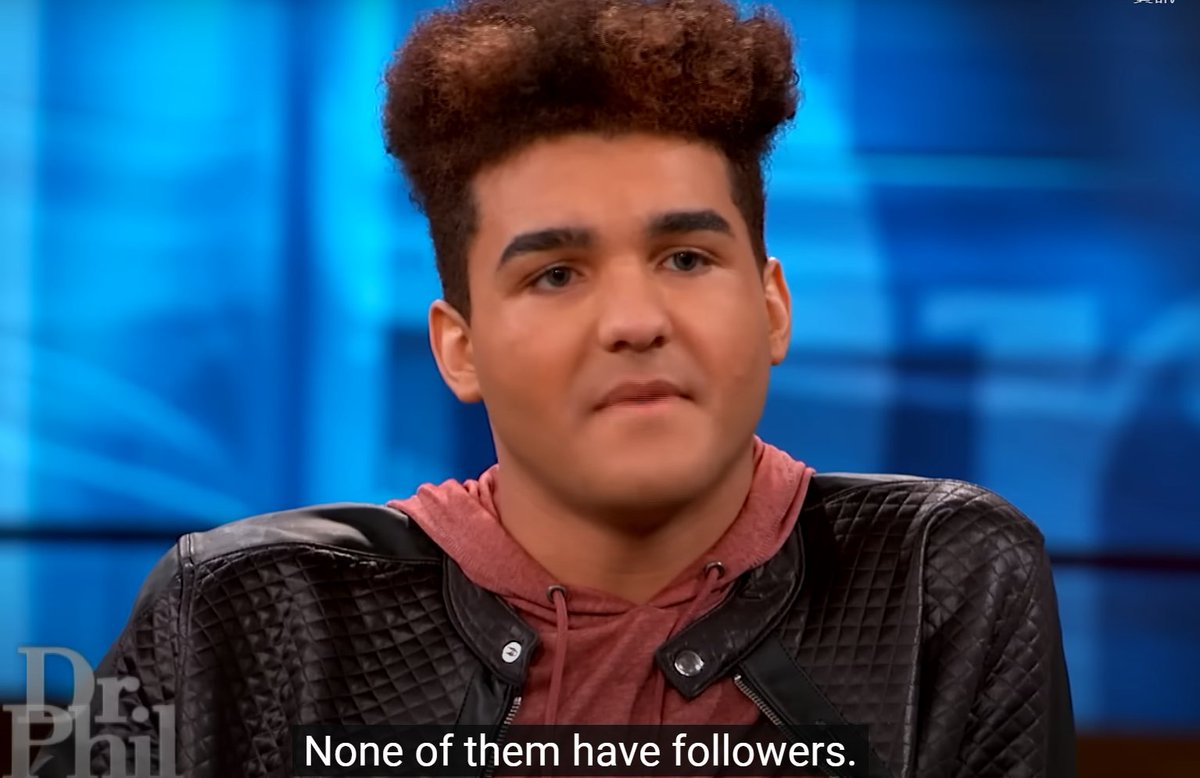
行为上,这一代人专业性差但行动力强,深知如何有目的性的“哗众取宠“,厌恶被评判哪怕是一丝一毫,且对于获取反馈的时间容忍度极低,无法忍受延迟满足。

Pump的核心护城河

Pump能成功主要是理解PVP世代的诉求:

- 没有道德评判

- 超及时反馈刺激

- 低门槛

其中后两样是通过产品特性解决的,按照很多人说法,“是没有护城河的”。

所以Pump牛逼的核心,在塑造了一种不拘泥传统道德评判的价值观,只要你赢了、拉到了注意力,你就是牛逼 Pump绝不会像别的项目一样假惺惺的跟你说"社区第一”、“长期价值”、“团队有格局”等等。

即使你像$Quant小孩哥或者说$HANDS没手哥那样rug了,官方和社区各个账号只会把你当成新meme剪进视频。整个Pump是没有维权这回事的。

还有各种新闻币、政治币(甚至是所谓“死人币”),在其他平台甚至Twitter本身可能都会被和谐,更不可能变现。但是在Pump Fun,都可以。
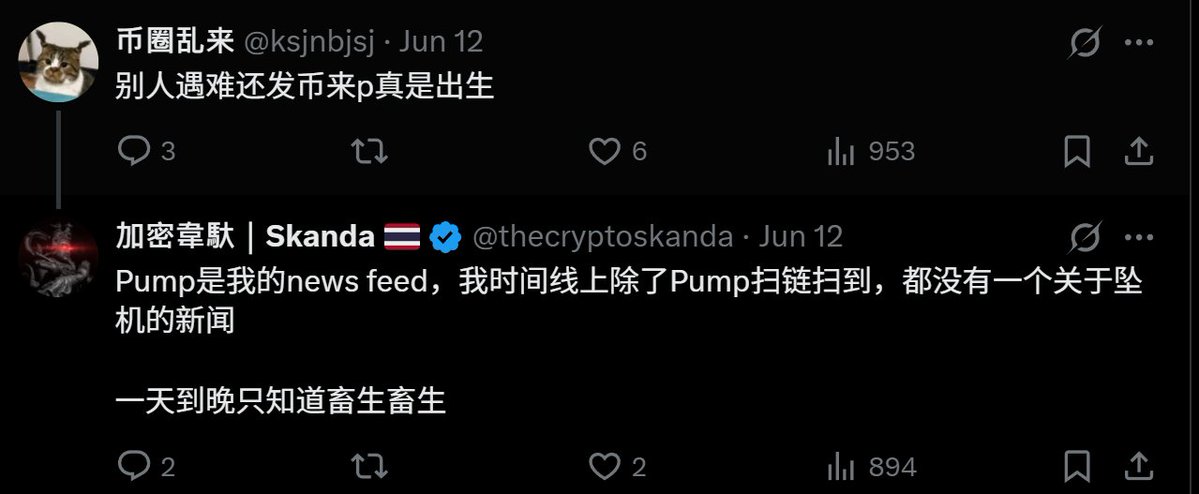
PVP世代的dev也好战壕也好,讨厌被抢跑被Rug,但是更讨厌被说教,被人说自己参与的东西“就是骗局,就是畜生,就是割韭菜”。对于PVP世代的incel们来说,战壕事战壕了,但是在价值观上被否定就是生理性厌恶。

不管你喜不喜欢,价值观是大众传媒的底座。

就好比右派老登厌恶在Jack Dorsey时代的Twitter被捂嘴,就有了Truth Social;左派老登厌恶马斯克之后的X是Farcist Rhetorics于是去了Bluesky。人因自己的价值观倾向选择属于自己的回音壁。PVP世代觉得你们妈了个逼的都是老登,于是选择了PumpFun。

你要问我为什么这么懂这个,可能是因为“出生理解出生”吧。

Pump直播币博弈

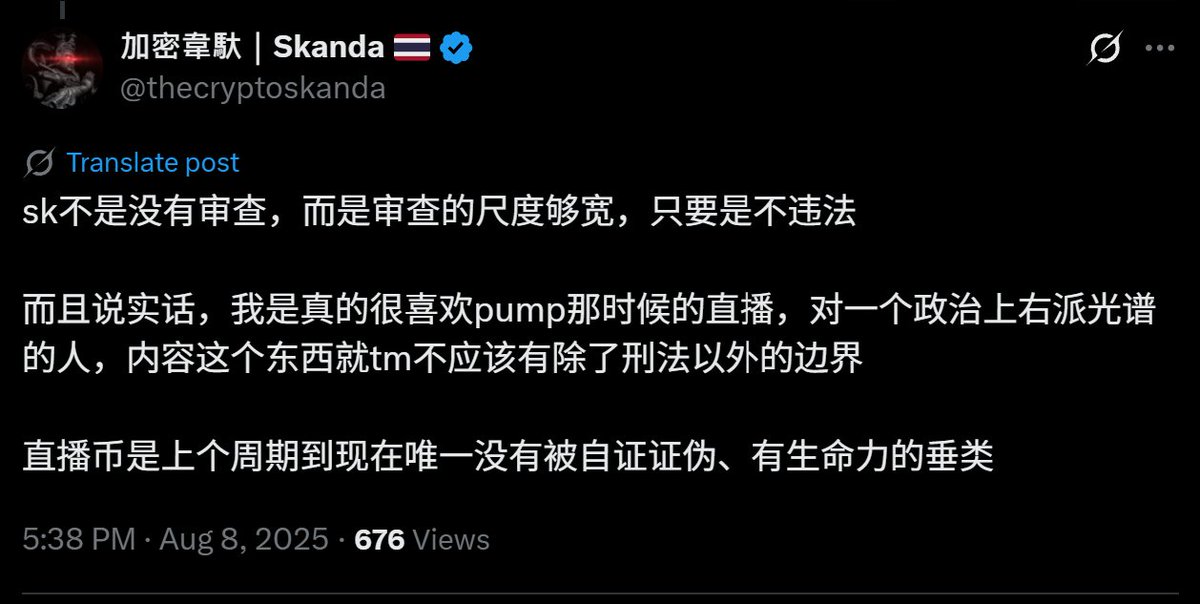
去年在跟友人聊天中,我明确看好直播币,也认为直播币是去年唯一没有证伪的赛道(Pump是因为整改而不是做不下去才中断直播)。这也成为了我当时就支持@Sidekick_Labs的主要原因。
当然巫师之前问的问题也很具有代表性: web2是打赏,所以主播的有动力一直播,才能赚钱。 web3是浇给,主播底部自己买好了,播差不多,砸盘,还继续播啥?为了拿交易手续费? 如果大量归零,博弈是不是又不断前置?市值越搞越低?

首先他说的博弈推演是对的,但这是站在具体一个币上的。如果是赛道,那就需要反着思考:如果不是直播,就不这样吗?

不管之前的AI还是Bonk的CTO、Solana推的ICM,甚至不限于链上发射、包括交易所VC币,从来都是的dev有不对成优势,可以直接砸盘走人。

能影响团队弃盘与否的只有前期成本和是否有现金流持续收入。当前期成本越高,且持续现金收入,项目方是不会弃盘的。 我7月9号转发PUMP ICO视频的时候就这么说Pump本身的,当时被人喷死,一堆人认为Alon是畜生所以Pump一定会rug。
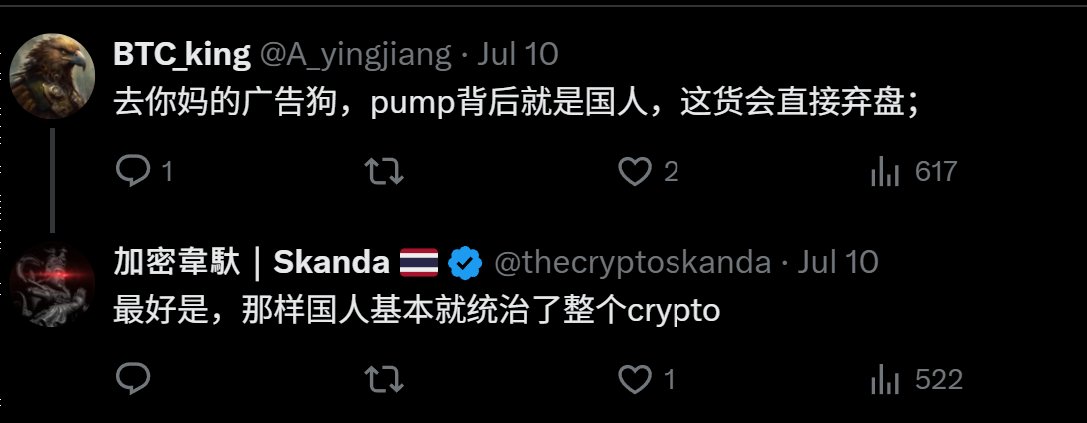
现在回头看,是不是这么回事?同理,主播rug一次基本就不可能再播第二次,一锤子买卖。如果他能像Bagwork一样一直在赚creator fee现金呢?他为什么一定要杀死一头现金奶牛呢?

第二,直播这个行业在web2是一个工业化体系,主播只是站台(对应memecoin的角度),真正的推动力是买量、背后找大哥、找浑水摸鱼资金洗流水的工会和军火商。主播到手并没多少钱。

直播币也是一样,币跑的好主要靠MM。主播大概率不会MM,那么就是Pump负责吸引wannabe们来,MM承担工会的职责。

这里有两个点:

- 赌场最赚钱的不是博彩本身,而是流水。比例约为1:9;

- ICM或者AI之类的应用币叙事,作为MM你需要控制一个团队;直播币,你只需要控制一个人。

为什么Pump一定要做直播币?

这是Pump最明智的决定。

整个Solana链上的流量命门,不在台子,而在于交易平台,在于Axiom。

Solana可以系统性抹黑Pump,鼓动VC资金支持Bonk或者其他台子,冲Useless,但是金流和注意力是两回事,用户交易不管bonk还是Pump的币,都是通过Axiom,不论你讲什么故事,都他妈是一个CA。

但是直播不一样,直播的内容直接传导到K线,看直播下单会比看Axiom K线有不对称的信息优势。而直播不是具体的叙事,它本身就是流量载体。下单量会真正意义的向Pump倾斜。

所以下一个阶段的关键数据,是看Pump前端的下单量是否能抢夺Axiom的市场份额,而不是看Pump跟其他台子的比值。

为什么我会那么早支持Pump
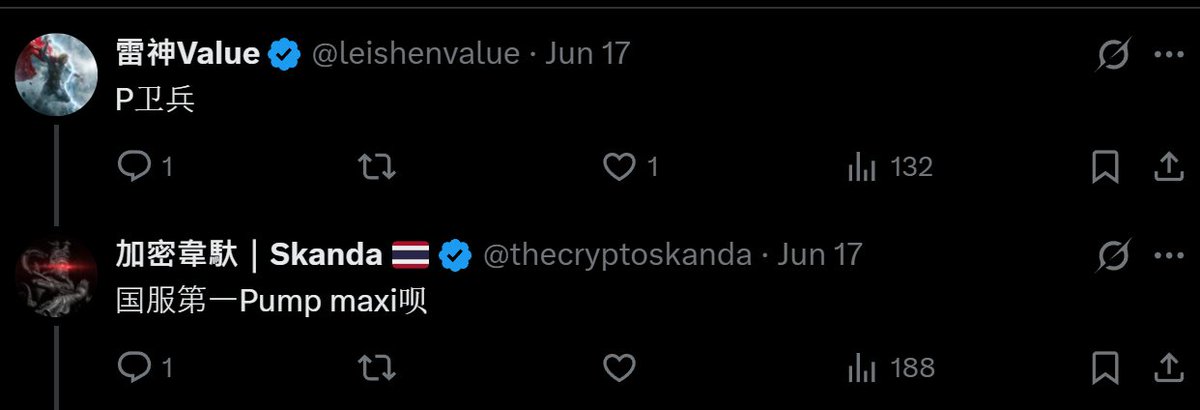
有不短的时间我几乎是简中唯一的Pump Maxi,非要说原因:

1. 我自己带过Dev团队;

2. 我自己做过launchpad但没成功,理解了为什么我还有其他launchpad在solana会失败,见识了Pump的牛逼;

3. 我很早认识Pump的早期投资人,收获了一手的insight,前排见识了Pump团队的工作方式和逻辑;

4. 我花了大量时间跟年轻人在一起;

5. 我做了10年盘子,也许我不精于二级,但我了解人性,更了解人性的黑暗,我对世界的底层理解是走向混沌,而混沌是阶梯;

6. 如我所说,Pump团队是鲨鱼,是在马桶上读拿破仑的征服者。

Letture associate

Leading Players in Large Models Drain the Primary Market

The AI industry is witnessing an unprecedented concentration of capital into a handful of leading players, signaling what insiders call the "eve of a final shakeout." A staggering funding surge exceeding $7 billion hit just three Chinese companies in May alone—Kimi, StepFun (接近完成融资), and DeepSeek—with the latter's valuation reaching $45-$50 billion. Globally, giants like OpenAI, Anthropic, and SpaceX (set to merge with xAI) are preparing for public listings, collectively eyeing valuations over $3 trillion. This capital is no longer fueling a broad "hundred-model war" but is being funneled to "refuel" the final few contenders, following a sector-wide attrition rate exceeding 90%. This frenzy is driven by a fundamental shift in industry logic. The focus has moved from比拼模型智商 (competing on model intelligence) to "token factory economics." The explosion of long-context AI agents has massively increased token consumption per task. With token supply constrained by bottlenecks in HBM memory and power infrastructure—key factors in production costs—dominance now hinges on owning and efficiently operating large-scale compute resources. Major tech firms are investing hundreds of billions annually in this AI "power grid." Consequently, competition pivots to three core areas: 1) **Monetization** as the "AGI premium" cools, forcing a shift from user growth to revenue; 2) **Cost efficiency**, where reducing inference costs becomes the ultimate KPI as model capabilities commoditize; and 3) **Strategic path divergence** between enterprise-focused AI (prioritizing integration and reliability) and consumer-facing applications (betting on scale and user engagement). The message is clear: the final capital injections are determining the endgame lineup. Success will depend not just on technical prowess, but on transforming technology into a sustainable, profitable business model with demonstrable return on massive compute investments.

marsbit7 min fa

Leading Players in Large Models Drain the Primary Market

marsbit7 min fa

AI Giants Queueing Up for IPOs: Is This the 'Last Dance' for the U.S. Stock Market?

A massive wave of IPOs from AI giants like OpenAI, Anthropic, and SpaceX is taking shape, potentially reshaping the U.S. stock market. OpenAI is reportedly preparing for a historic IPO, targeting a valuation over $1 trillion and raising roughly $60 billion, which would dwarf previous records. Anthropic is also advancing its own IPO plans, projecting significant revenue growth and achieving quarterly operating profit. However, their financial profiles starkly differ. While Anthropic is nearing profitability with a focus on enterprise clients, OpenAI continues to report substantial losses, with a negative operating margin and expectations for positive cash flow only by 2029-2030. Analysts warn these listings could trigger a major "passive fund reshuffle," forcing index funds to sell holdings in established tech giants to make room for the new entrants, potentially pressuring the broader market. Some observers view the IPO rush as a "risk transfer," allowing early private investors to cash out at peak valuations while passing future financial uncertainty to public market investors. The divergent paths of Anthropic's near-term profitability versus OpenAI's long-term, high-cost growth narrative present a critical choice for investors. The outcome of these IPOs is seen as a major swing factor for risk assets in 2026, testing whether this surge marks a new cycle or a potential peak.

marsbit15 min fa

AI Giants Queueing Up for IPOs: Is This the 'Last Dance' for the U.S. Stock Market?

marsbit15 min fa

The Richest Fed Chair in 112 Years Is Here: Kevin Warsh Is Rewriting the Rules

Kevin Warsh, with a personal fortune exceeding $130 million, became the 112nd and wealthiest Chair of the U.S. Federal Reserve on May 22nd. A former Wall Street investment banker and key figure during the 2008 financial crisis, Warsh lacks a traditional academic background for a central banker but brings deep market experience. He proposes an unconventional policy approach of simultaneously reducing the Fed's balance sheet ("quantitative tightening") while cutting interest rates, arguing that a smaller balance sheet would allow for more effective rate policy. His ascent marks a potential regime change at the Fed. Warsh aims to reform the institution's decision-making processes, tighten communication discipline among officials, and reduce reliance on forward guidance like the "dot plot." This shift responds to the Fed's current dilemma: fiscal policy is expanding the government's balance sheet through deficits, while monetary policy's ability to shrink its own $6.7 trillion balance sheet is severely constrained, creating pressure on long-term interest rates. Analysts expect Warsh's tenure to sustain high volatility in the U.S. Treasury market due to persistent supply pressures. Furthermore, his leadership coincides with a gradual, structural erosion of dollar dominance, evidenced by its declining share in global reserves and cracks in the petrodollar system, with increased use of alternatives like the Chinese yuan in oil trade. For investors, this environment underscores the importance of portfolio diversification, including assets like gold and Chinese sovereign bonds, amid a fluctuating dollar credit anchor.

链捕手29 min fa

The Richest Fed Chair in 112 Years Is Here: Kevin Warsh Is Rewriting the Rules

链捕手29 min fa

τ Scaling: Huawei's New Growth Engine Designed for the Post-Moore Era

**Tau Scaling: Huawei's New Growth Engine for the Post-Moore Era** For 60 years, progress in semiconductors was driven by Moore's Law – making transistors smaller, denser, and cheaper. This path has now stalled due to plummeting returns below 7nm, astronomical lithography costs, and rising per-transistor expenses. After six years and testing 381 production chips, Huawei’s semiconductor team proposes a fundamental shift: **stop competing on size, start competing on time**. This is the core of their "τ (Tau) Scaling" theory. It treats *time* as the key optimization metric, compressing characteristic delays (τ) across all levels – from transistor switching (picoseconds) to data center tasks (seconds), spanning 12 orders of magnitude. **What is τ Scaling?** It holistically minimizes delay/time constants (τ) across four layers: transistors (switching speed), circuits (signal delay), chips (compute/memory access), and systems (end-to-end communication). The goal is to align optimization from process and circuit design to architecture and systems using this unified metric. **Mobile Application: LogicFolding** Without advancing the process node, this technique vertically stacks chips using ultra-precision hybrid bonding, distributing critical paths across layers ("stacking floors"). Results include a 55% transistor density increase, 41% better energy efficiency, over 40% higher SRAM frequency, and a roadmap targeting 4GHz by 2029. **AI Data Center Application: Full-Link Latency Compression** With 80% of AI cluster energy and 70% cost spent on data movement, the focus is slashing communication time. Key innovations include: 1. **Unified Bus:** Cuts multi-layer protocols, reducing remote access latency from microseconds to ~100 nanoseconds – 500x faster. 2. **Hi-ONE Optical Interconnect:** Replaces copper with fiber, enabling 8Tb/s per module and scaling distances from 1m to 100m for 10,000-chip clusters. 3. **3D Folding:** Solves the "interface bottleneck" of 2.5D packaging by vertically integrating memory, power, and optical I/O alongside compute, predicting over 100x integration density gain by 2035. **Re-fusion of Logic and Memory** The AI era, where data movement is more critical than computation, demands tight 3D integration of logic and memory, shifting industry influence towards memory and advanced packaging. **Remaining Challenges** include adapting EDA tools for 3D design, optimizing wafer-to-wafer process variation and vertical interconnect losses, and establishing new energy efficiency and benchmarking standards. **Conclusion:** The era of scaling physical dimensions is over. The era of scaling time has begun. By leveraging 3D stacking, system architecture, and interconnect optimization—rather than solely chasing advanced lithography—performance and efficiency can continue to advance. This is poised to be the semiconductor industry's core roadmap for the next decade.

marsbit1 h fa

τ Scaling: Huawei's New Growth Engine Designed for the Post-Moore Era

marsbit1 h fa

NodeStrategy: The First Ordinals DAT Project, Bringing the Strategy Treasury Narrative to NFTs

**Summary: The Fundamental Flaws of NodeStrategy, the 'First Ordinals DAT'** NodeStrategy presents itself as the first Ordinals Digital Asset Treasury (DAT) on Bitcoin. Its model mirrors MicroStrategy's treasury narrative but for NFTs, specifically targeting the NodeMonkes collection (not officially affiliated). The project's core mechanism is a four-step flywheel: a 10% fee on all trades (90% to treasury, 10% to radFi/Bound marketplace) is used to buy NodeMonkes. These NFTs are then listed for sale on Satflow, with 100% of the sale proceeds used to buy back and burn the project's token, NODESTRAT, aiming to create a perpetual value cycle. However, the design contains critical, self-defeating flaws: 1. **Platform Lock-In:** As a Bitcoin Rune, NODESTRAT lacks smart contract functionality and cannot natively enforce the 10% fee. The fee can only be collected on the radFi/Bound marketplace itself. This makes the entire flywheel dependent on a single platform. If liquidity moves elsewhere, fee revenue drops to zero, halting the mechanism. 2. **Self-Suffocating Economics:** The 10% fee acts both as the flywheel's fuel and a major drag on demand. A buy/sell roundtrip incurs a 20% cost, creating a massive hurdle for traders. This strangles the very trading volume needed to generate fees. 3. **Ineffective Value Support:** The flywheel is starved. Low daily volume (~$9K) generates minimal fees for NFT purchases. The NFT "ladder" sales are slow and unpredictable (only 39 total sold), meaning buybacks are infrequent. While 30.77% of the supply has been burned, this supply reduction cannot lift price without corresponding demand, which is suppressed by the high transaction tax. 4. **Meaningless NAV:** The Net Asset Value (NAV), currently at a 0.46x discount to market cap, is merely a marketing figure. There is no redemption mechanism for token holders to claim the underlying NodeMonkes assets. Price is set by market liquidity flows, not by this theoretical backing. In essence, NodeStrategy's design forces its revenue source (trading fees) to simultaneously cripple the demand and liquidity required for its own success, trapping the project in a stagnant state.

marsbit1 h fa

NodeStrategy: The First Ordinals DAT Project, Bringing the Strategy Treasury Narrative to NFTs

marsbit1 h fa

Trading

Spot
Futures

Articoli Popolari

Come comprare FUN

Benvenuto in HTX.com! Abbiamo reso l'acquisto di FUNTOKEN (FUN) semplice e conveniente. Segui la nostra guida passo passo per intraprendere il tuo viaggio nel mondo delle criptovalute.Step 1: Crea il tuo Account HTXUsa la tua email o numero di telefono per registrarti il tuo account gratuito su HTX. Vivi un'esperienza facile e sblocca tutte le funzionalità,Crea il mio accountStep 2: Vai in Acquista crypto e seleziona il tuo metodo di pagamentoCarta di credito/debito: utilizza la tua Visa o Mastercard per acquistare immediatamente FUNTOKENFUN.Bilancio: Usa i fondi dal bilancio del tuo account HTX per fare trading senza problemi.Terze parti: abbiamo aggiunto metodi di pagamento molto utilizzati come Google Pay e Apple Pay per maggiore comodità.P2P: Fai trading direttamente con altri utenti HTX.Over-the-Counter (OTC): Offriamo servizi su misura e tassi di cambio competitivi per i trader.Step 3: Conserva FUNTOKEN (FUN)Dopo aver acquistato FUNTOKEN (FUN), conserva nel tuo account HTX. In alternativa, puoi inviare tramite trasferimento blockchain o scambiare per altre criptovalute.Step 4: Scambia FUNTOKEN (FUN)Scambia facilmente FUNTOKEN (FUN) nel mercato spot di HTX. Accedi al tuo account, seleziona la tua coppia di trading, esegui le tue operazioni e monitora in tempo reale. Offriamo un'esperienza user-friendly sia per chi ha appena iniziato che per i trader più esperti.

183 Totale visualizzazioniPubblicato il 2025.06.25Aggiornato il 2025.06.25

Come comprare FUN

Discussioni

Benvenuto nella Community HTX. Qui puoi rimanere informato sugli ultimi sviluppi della piattaforma e accedere ad approfondimenti esperti sul mercato. Le opinioni degli utenti sul prezzo di FUN FUN sono presentate come di seguito.

活动图片