Paradigm 押注中心化公链,但去中心化的这些优势无法替代

深潮Pubblicato 2025-09-08Pubblicato ultima volta 2025-09-09

关键基础设施去中心化,面向用户应用可中心化,平衡才是最优解。

作者:s4mmy

编译:深潮TechFlow

Stripe 和 Paradigm 最近推出的 Tempo 项目,再次引发了关于去中心化的重要性到底有多大的讨论。与此同时,去中心化人工智能(DeAI)也受到波及,因为 TAO(去中心化自治组织)的价值主张在与中心化替代方案(如OpenAI)的对比中被质疑。

本文挑战了“中心化将占据主导地位”的观点,并通过一些成功的加密产品来证明去中心化的优势。

目录

  • 前言

  • 认识权衡

  • 去中心化的优势

  • 可持续生态系统与投机炒作

  • 混合模式的未来

  1. 前言

首先需要指出的是,去中心化(以目前的形式)确实面临一些现实挑战:

  • 可扩展性限制

  • 治理复杂性

  • 用户体验障碍

然而,在关键基础设施中采用“战略性去中心化”可以为创新、弹性以及自主人工智能代理的发展提供更优的长期结果。

未来的道路需要混合模式,将去中心化的优势与部分中心化特性结合起来,以提升加密产品的表现。

分布式与中心化系统之间的钟摆将不断摆动,寻找平衡;那么,什么才是最优的分布水平?

  1. 认识权衡

去中心化并非万能药。

区块链三难困境(去中心化、安全性与可扩展性之间的权衡)迫使我们做出一些妥协。例如,

  • 比特币每秒处理 7 笔交易(TPS),而 Visa 则可以达到每秒 65,000 笔交易,这清楚地展示了这一限制。

  • 早期的 DAO 治理面临协作瘫痪问题,以及代币集中在富有持有者手中的现象。

然而,这些是工程上的挑战,而非根本性的缺陷。

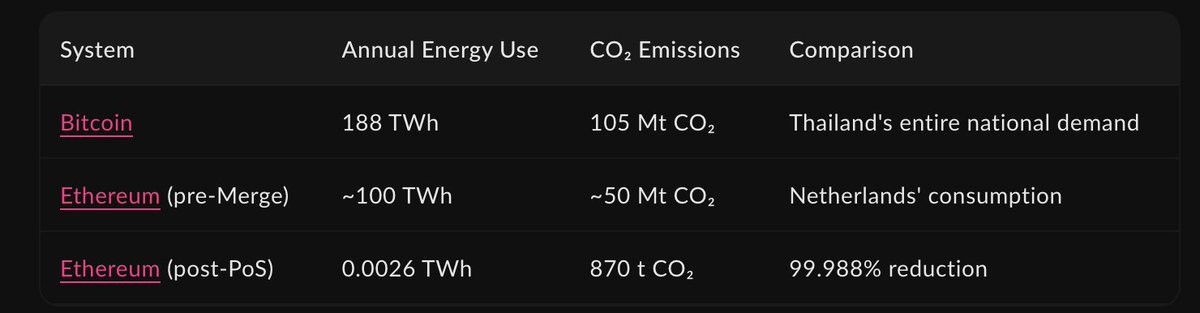
  • 以太坊转向权益证明(Proof-of-Stake)后,能源消耗减少了99.95%,同时仍然保持了安全性:
Source: SURF Co-Pilot

  • Layer-2 解决方案在继承以太坊去中心化的同时,能够实现数千 TPS 的处理能力。

  • 人工智能代理可以提供决策效率,这些效率可以被引入 DAO 中,优化人类的不足。

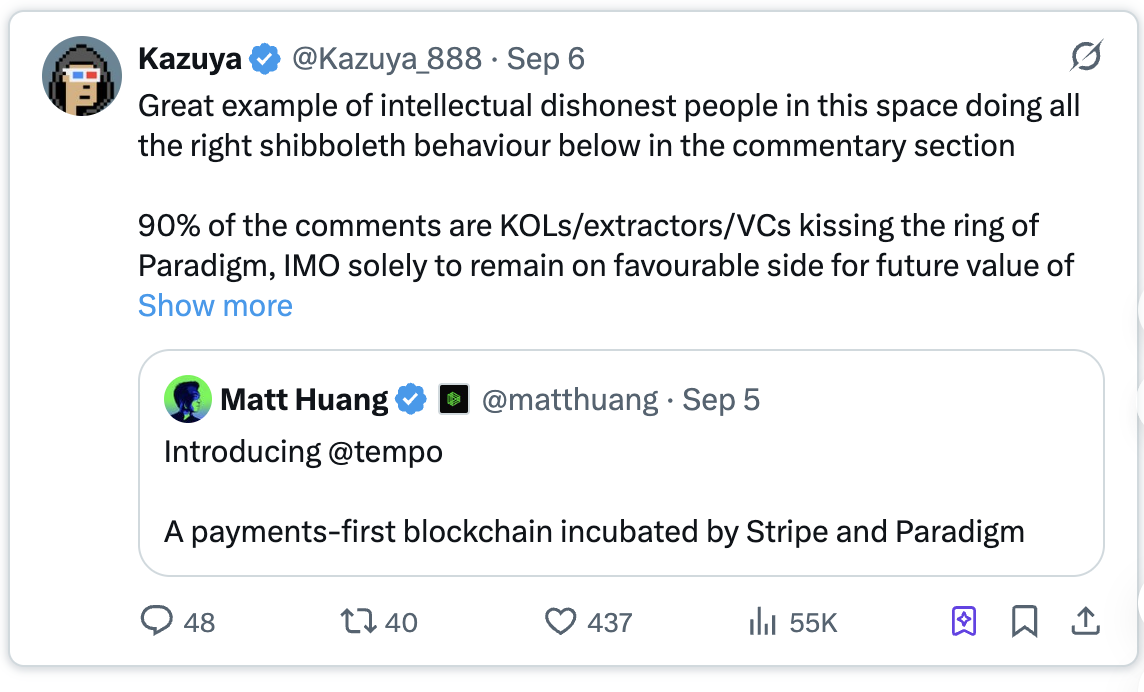
因此,赛博朋克倡导者质疑 Tempo 选择替代的 Layer-1 解决方案是可以理解的:
原推文链接:点击此处

@matthuang 也明确表示,以太坊生态系统(包括Layer-2)在应对即将到来的链上支付热潮方面发展速度不够快。因此有必要独立构建 @tempo

“从运营的角度来看,我们感到必须为即将到来的需求进行建设,并减少依赖关系,包括对以太坊 L1 进展速度的依赖。”

这种迟缓确实是一个问题,但它并没有削弱去中心化能够表现出色的领域。两者可以同时成立。

  1. 去中心化的优势

a) 抗审查能力

在一个中心化平台可以因政治压力而“封杀”用户或限制内容的时代,去中心化系统提供了不可阻挡的创新空间。

当然,这其中也有弊端,因此找到适当的平衡至关重要。但这更多是人性的问题,而非技术的缺陷。

例如,基于 Bittensor 的网络上的 AI 开发无法被任何单一权力关闭,从而支持对敏感但重要领域的研究。

b) 系统弹性

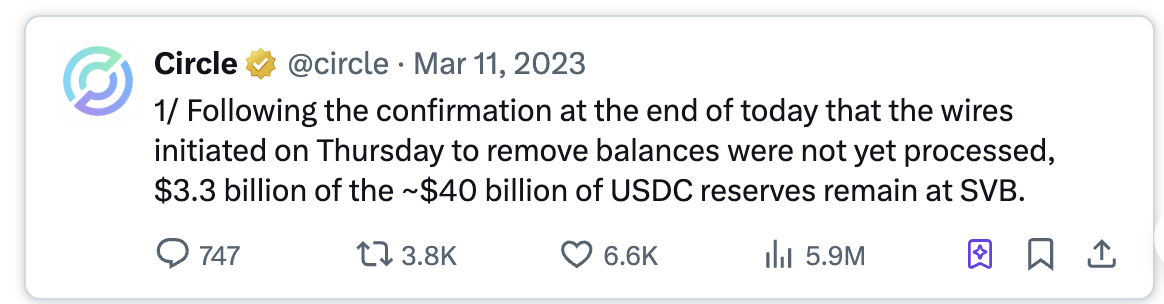
2023 年,USDC 因硅谷银行(Silicon Valley Bank)崩溃而脱锚,展示了中心化系统如何造成单点故障的风险。
原推文链接:点击此处

像 Ethena 的 USDe 这样的去中心化替代方案采用跨多个场所的 delta 中性策略,从而降低了对手方风险。

c) 民主资源获取

中心化的云服务提供商在关键 AI 基础设施上形成了寡头垄断。

而像 @Rendernetwork 这样的网络通过数千个节点以有竞争力的价格提供计算能力,打破了大科技公司对 AI 开发资源的垄断。

  1. 可持续生态系统的投机炒作

是的,战壕里偶尔会有逃跑者,因为本能的赌瘾是通过对下一个“肯定的事情”的赌注来满足的。

然而,如今市场的成熟让人们更关注基本面,尤其是机构投资者,他们更倾向于依赖自己最擅长的东西——收入。

原推文链接:点击此处

尽管 AI 与加密的交叉领域产生了大量的市场炒作,但真正的去中心化推动了基于实际效用的可持续生态系统,而不仅仅是投机。

我同意许多项目利用 AI 热潮获利,但却没有提供功能性价值:
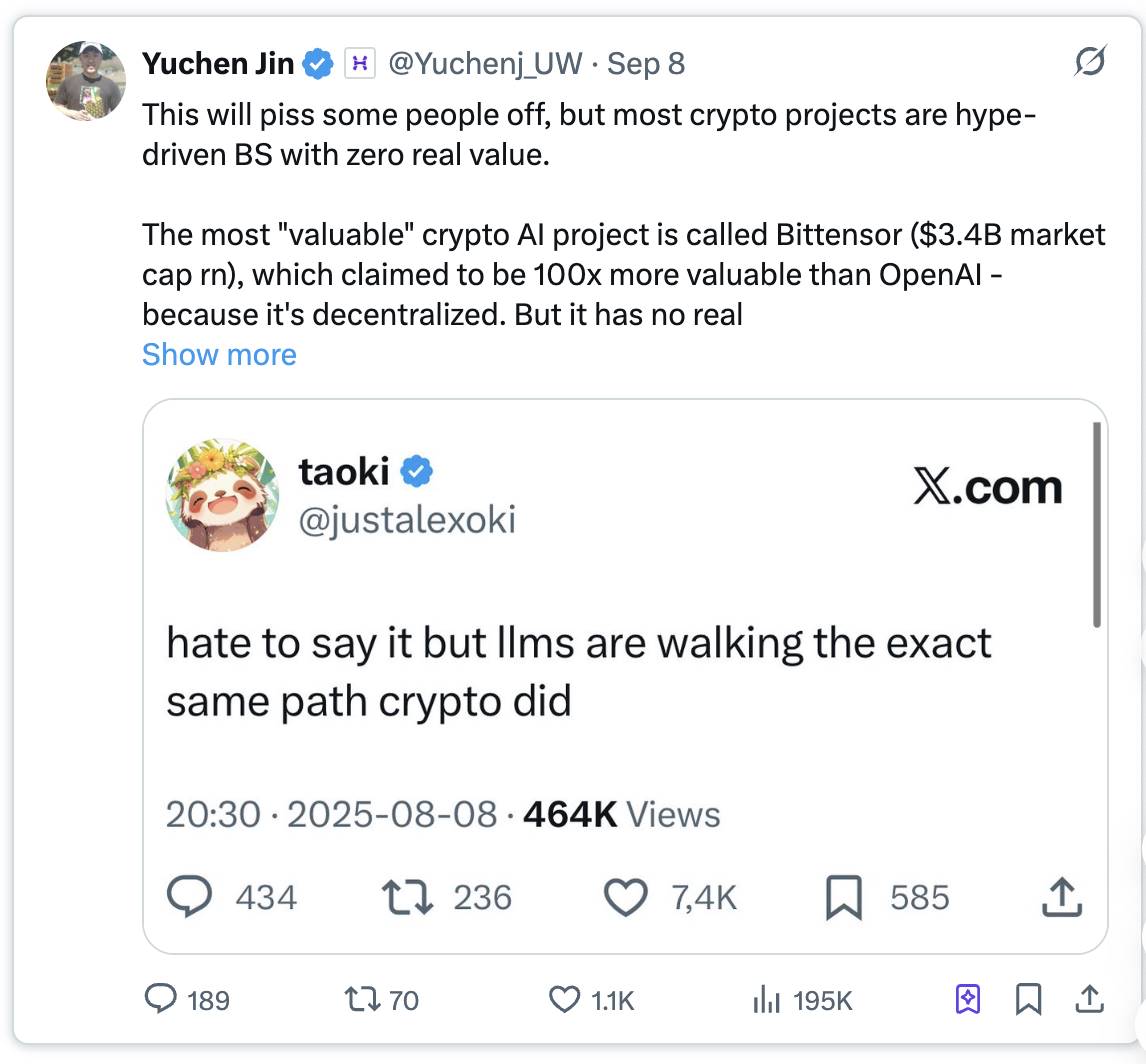
原推文链接:点击此处

但就像任何新领域的情况一样,有很多虚幻的没有实际价值意义的东西最终会被实际价值所取代。

例如:

  • Fetch.ai 构建了自主 AI 代理执行任务的网络

  • Ocean Protocol 创建了安全数据共享的市场,这是 AI 训练的关键

  • Bittensor 为 AI 模型建立了竞争竞技场

  • @Caesar_data, @openservai @Surf_copilot 提供了特定领域的精调模型,性能优于中心化的通用替代方案。

在这些系统中,代币不仅仅是投机资产,还被用作访问服务、激励贡献和治理网络的工具,从而创建了一个超越短期市场趋势的强大、自我维持的经济体。

假设这些项目的代币经济模型能够优化并将价值回馈给代币持有者,可以参考以下关于加密 AI 产品收入的具体示例:
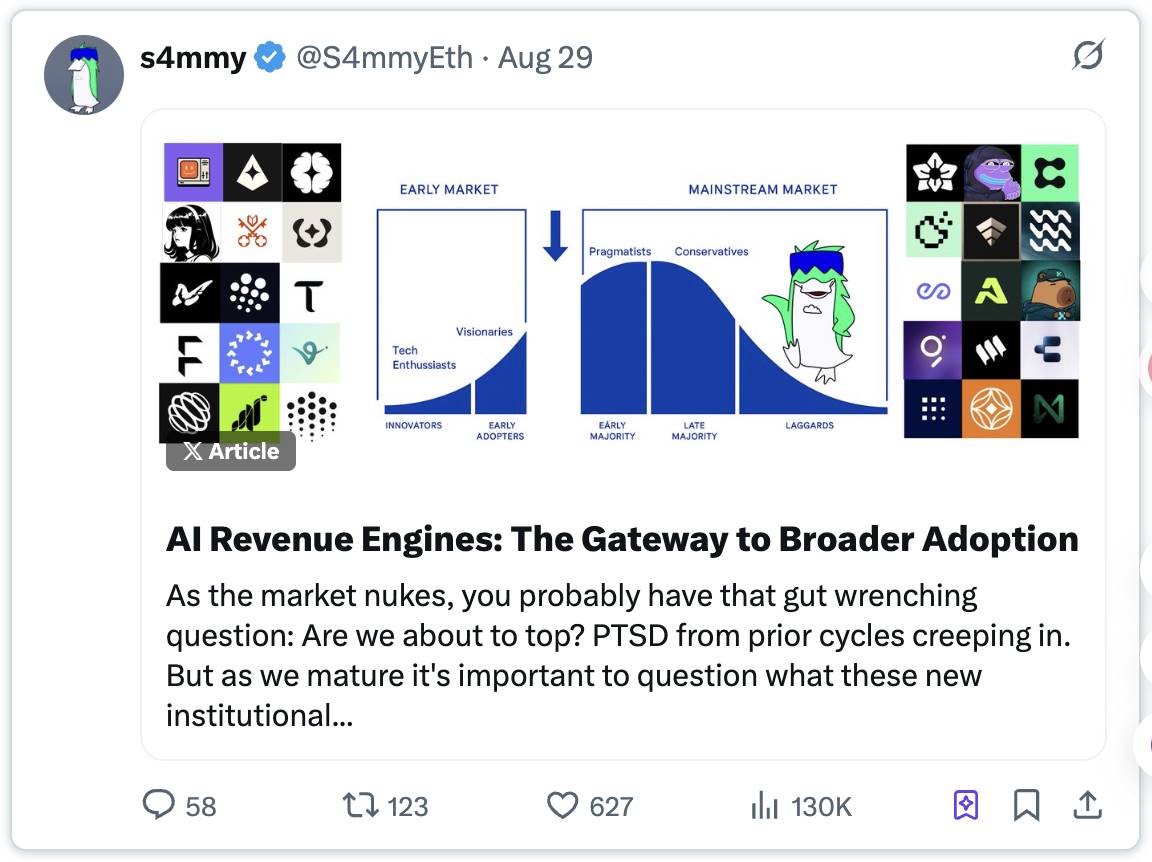
原推文链接:点击此处

  1. 混合模式的未来

那么,什么才是最优的平衡点?

纯粹的赛博朋克愿景变得愈发具有挑战性,尤其是在传统系统开始采用加密技术的轨道时。

原推文链接:点击此处

但肯定有一种观点认为,最佳结果应更多地向分布式系统倾斜,而非由单一实体控制。
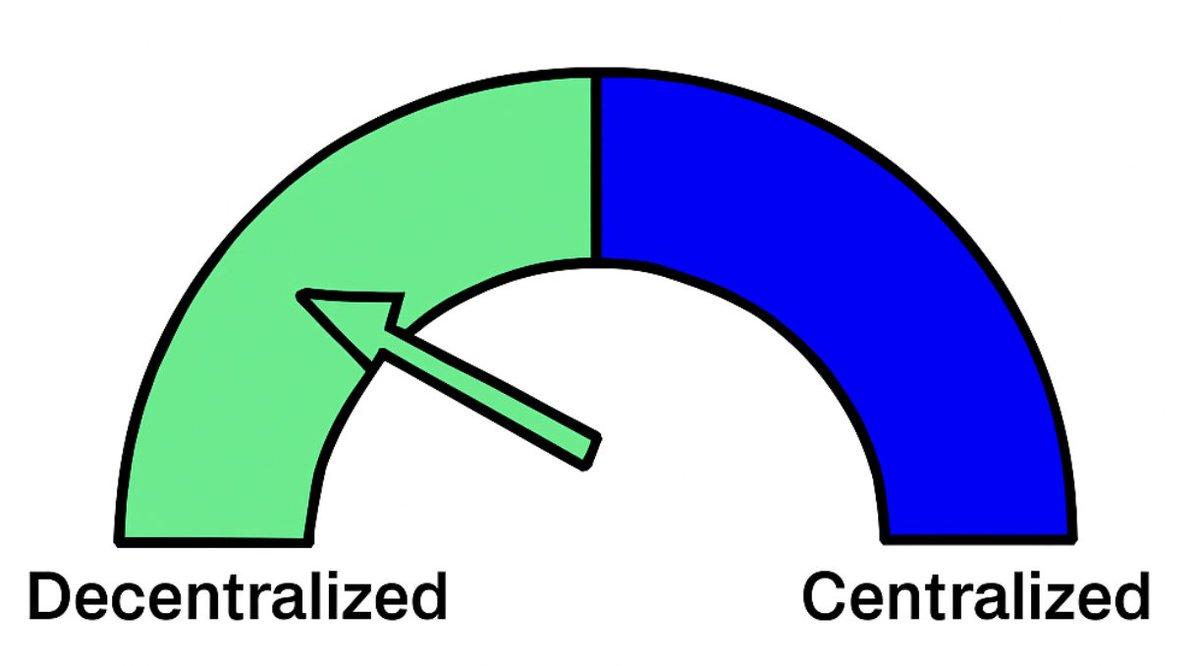
最优的方式并不是全面去中心化,而是战略性地在最重要的领域实现去中心化

关键基础设施从更分布化的状态中受益:

  • 金融轨道

  • AI训练网络

  • 数据市场

而面向用户的应用可以保持一定程度的中心化,以优化用户体验(UX)。

这正是人工智能代理的优势所在——通过更普遍认可、用户友好的系统,彻底改造加密领域糟糕的UI/UX。

这也是为什么我高度支持加密与 AI 的交叉点。

AI 因加密的无权限轨道而得以赋能,而加密则通过 AI 产品被推广至大众。

总结

去中心化确实面临现实挑战,但通过更好的技术和治理设计,这些问题是可以解决的。

问题的核心不是是否要全面去中心化,而是去中心化在哪些领域提供了不可替代的优势:在那些推动创新、抵制审查以及公平分配价值的基础层中。

未来属于混合系统——它们在关键基础设施中战略性地实现去中心化,同时通过中心化界面优化用户体验。这种平衡的方法既捕捉了去中心化的变革潜力,又务实地解决了其局限性。

至于 Tempo,它是否会重蹈覆辙 Libra 的命运,还是会成为传统系统转变对加密轨道认知的“@Paradigm”(双关语)式契机?时间将揭晓答案。


免责声明:本文内容不构成投资或财务建议,仅供参考和教育之用。

作者持有部分文中提及的资产,并与部分项目有合作关系。
 

Letture associate

From Mining Pool to Mars: Why Is Wang Chun in the SpaceX Cockpit?

Title: From Mining Pool to Mars: Why Wang Chun is in the SpaceX Cockpit? When SpaceX announced that Wang Chun, co-founder of F2Pool, would command the first commercial crewed interplanetary mission, many were shocked. Why would a Bitcoin mining pool founder be on a Mars mission roster? However, understanding Wang Chun's journey over the past decade and the deepening ties between the crypto industry and SpaceX reveals this is not accidental, but an inevitable result of a new era taking shape. Today's Mars plan is no longer just a space engineering project; it is evolving into a civilization-upgrading experiment driven by global tech capital, AI, computing power, energy, and the crypto economy. Wang Chun stands precisely at the intersection of these forces. Part 1: From F2Pool to SpaceX – Wang Chun's Leap F2Pool, founded when Bitcoin was still niche, is one of the earliest large-scale mining pools and once held a significant share of global Bitcoin hash rate. Wang Chun belongs to the first generation of Chinese Bitcoin advocates and infrastructure builders—idealists and engineers who believed in a new value network independent of traditional finance. Miners like him built the hardware, energy, and computing power foundational to decentralized networks. This aligns with the long-term, high-engineering, future-oriented vision required for space civilization. Elon Musk’s space endeavors value such long-term builders over mere capital players, which explains Wang Chun's entry into the SpaceX ecosystem. Part 2: Why Crypto and SpaceX Are Growing Closer The core of global tech competition is shifting from internet applications to next-generation infrastructure. Both crypto and SpaceX are part of this. SpaceX's goal is to drastically reduce space access costs. If successful, it could enable orbital servers, space-based energy, global satellite internet, and Martian bases. These new frontiers will require new payment systems, value networks, and global financial architectures. Cryptocurrencies, inherently global and trustless, are poised to become key to off-planet economies. Moreover, crypto and SpaceX share a high-risk, long-termist ethos—believing in ambitious, world-changing goals despite early skepticism. Part 3: Human Spaceflight Enters the Commercial Era Space exploration, long dominated by state actors, is now being transformed by commercial entities like SpaceX. Wang Chun's involvement signifies that future deep-space participants may include not just career astronauts, but also entrepreneurs, engineers, and AI researchers. This mirrors the Age of Exploration, where commercial capital eventually drove global expansion. Wang Chun has emphasized that Mars colonization must not be delayed for future generations, countering a potential over-focus on nearer-term, commercial lunar projects. His presence symbolizes how new capital, technical communities, and idealists from the crypto world are now entering the interstellar age. In summary, the true significance is not an individual's journey to Mars, but the shift in the driving force of human civilization expansion from state machinery to tech companies, AI systems, and global technology capital. Wang Chun's path—from mining pool to Mars, from the Bitcoin network to starships—may be a preview of technological civilization's evolution in the coming decades.

marsbit7 h fa

From Mining Pool to Mars: Why Is Wang Chun in the SpaceX Cockpit?

marsbit7 h fa

Trading

Spot
Futures
活动图片