Токен Kinto рухнул на 81% после решения о закрытии блокчейна L2

cryptonews.ruPubblicato 2025-04-07Pubblicato ultima volta 2025-09-08

Проект Ethereum Layer 2 Kinto объявил о прекращении работы своего блокчейна 30 сентября. Это решение стало следствием взлома на $1,6 млн в июле и последующей неспособности привлечь дополнительное финансирование на фоне ухудшения рыночных условий.

После взлома Kinto привлекла $1 млн в качестве кредита для восстановления торговли на своей модульной бирже. Необходимость возникла после общеотраслевого взлома в июле, в результате которого украли около 577 ETH на сумму примерно $1,6 млн.

Однако ухудшение рыночной ситуации свело на нет дальнейшие планы по сбору средств, что вынудило криптопроект закрыться, как сообщил Kinto в воскресенье на Medium.

«С каждым днем наши средства тают все больше. Мы работаем без зарплат с июля, и после того как последний вариант финансирования провалился, у нас остался один ответственный выбор: аккуратно закрыться и максимально защитить пользователей и кредиторов».
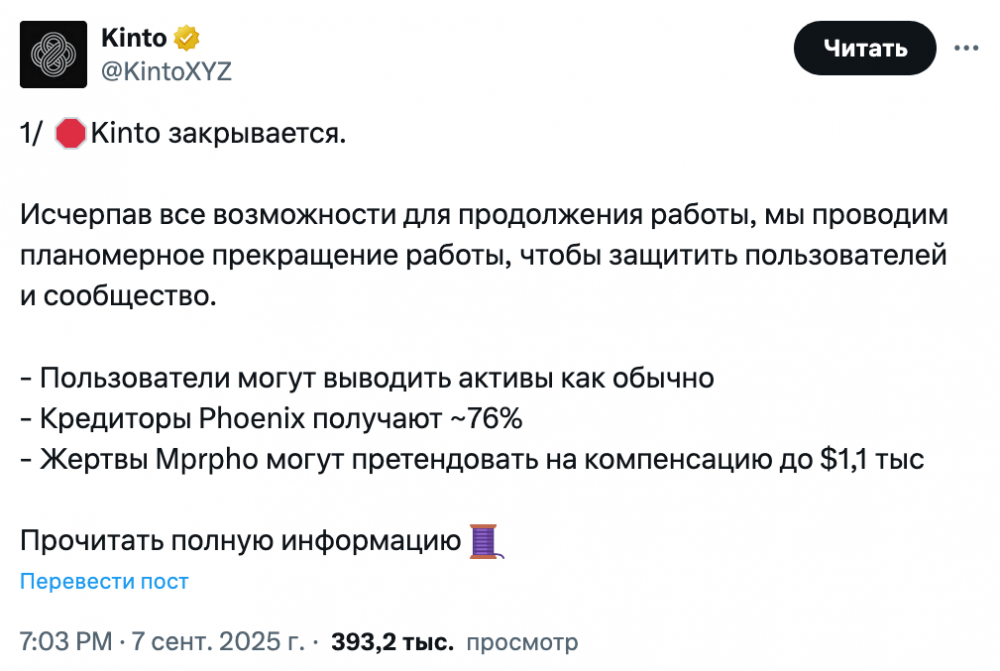

Источник: Kinto.

Взлом на $1,6 млн стал результатом уязвимости в стандарте прокси ERC-1967. Это общая кодовая база OpenZeppelin, которая позволяет обновлять смарт-контракты без изменения их адресов. Пострадали и несколько других проектов.

В то время как Kinto объяснила сбой взломом и растущим финансовым давлением, один из наблюдателей указал на чрезмерно высокую годовую доходность стейблкоинов, которую предлагала Kinto даже после взлома, когда компания испытывала трудности с получением прибыли.

Один из основателей Kinto Рамон Рекуэро отметил в апреле, что стейкинг K предлагал 130% годовой доходности в USDC. Это один из самых высоких показателей во всем секторе DeFi. Другие децентрализованные финансовые платформы с высокой доходностью также переживали непростые времена.

Проект, построенный на Arbitrum (ARB) и использовавший основную сеть Ethereum для расчетов, также предлагал торговлю токенизированными акциями таких компаний, как Apple, Microsoft и Nvidia.

Его модульная биржа пыталась объединить эффективность централизованных платформ с функциями безопасности, которые предлагают децентрализованные биржи.

Kinto представила план восстановления

Kinto заявила, что все оставшиеся активы, включая $800 000 ликвидности Uniswap (UNI), будут распределены между кредиторами Phoenix, которые помогли Kinto перезапустить проект. Ожидается, что они вернут 76% основного долга.

Kinto и Рекуэро также создают грант доброй воли для жертв взлома. Каждый пострадавший адрес получит по $1100. Рекуэро заявил, что выделит более $130 000 из собственных средств для оказания помощи.

Kinto заявила, что продолжит возвращать потерянные активы. Если сумма возврата превысит сумму, уплаченную жертвой, компания сообщит об этом сообществу через Snapshot. Это платформа для голосования, которую обычно используют децентрализованные автономные организации.

Команда Kinto призвала пользователей вывести активы до 30 сентября. После этой даты им необходимо будет заявить о своих правах на активы через бессрочный контракт, который Kinto планирует создать.

Kinto — второй провалившийся криптопроект Рекуэро

Kinto стала вторым криптопроектом Рекуэро, который закрылся после Babylon Finance. Тот проект прекратил работу в ноябре 2022 года после взлома на $3,4 млн ранее в том же году.

Рекуэро также заявил тогда, что его команда не смогла переломить негативную динамику, вызванную взломом. Это вынудило закрыть Babylon всего через шесть месяцев после публичного запуска.

Токен K упал почти на 80%

С момента объявления новости стоимость токена Kinto (K) упала на 81,4% до $0,46. Его рыночная капитализация едва превышает отметку в $1 млн, согласно данным CoinGecko.

Падение произошло почти через месяц после достижения исторического максимума в $14,5 млн 14 августа. Токен Kinto запустили всего четыре месяца назад, в апреле.
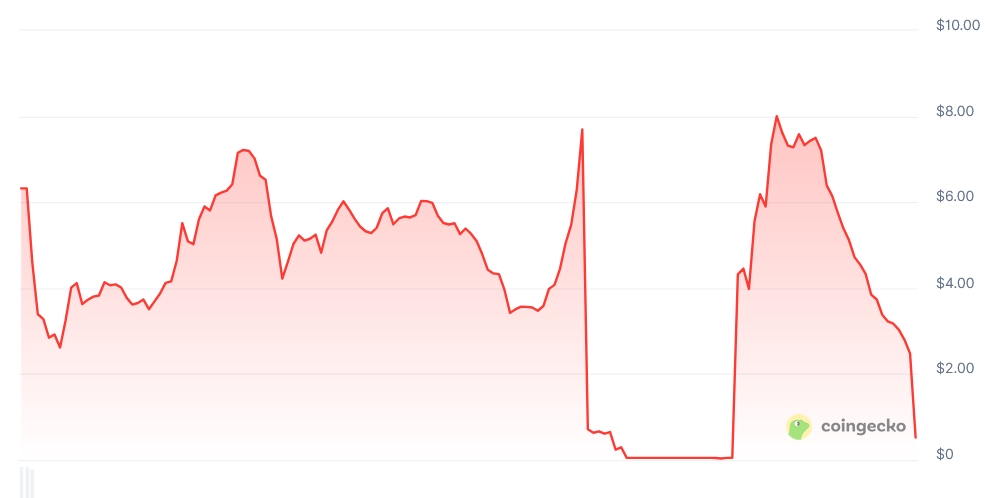

Изменение рыночной капитализации Kinto с 31 марта 2025 года. Источник: CoinGecko

Crypto di tendenza

Letture associate

Jensen Huang's Daughter: From Chef to an $8 Million Annual Salary

Madison Huang, daughter of NVIDIA founder Jensen Huang, recently made a rare public appearance in Beijing during the 2026 World Robot Conference. As the Senior Director of Product and Technology Marketing for NVIDIA's Physical AI Platform, with an annual salary of approximately $1.2 million, her visit focused on evaluating leading Chinese robotics companies like UBTech, Unitree, and others. This highlights NVIDIA's strategic interest in the burgeoning Chinese robotics ecosystem, a key battleground for the development of Physical AI—technology that enables machines to understand and interact with the physical world. Huang's career path is unconventional. Initially pursuing her passion, she studied culinary arts, worked as a chef, and later held a marketing role at LVMH. She joined NVIDIA as an intern in 2020 after completing an MBA, quickly rising through the ranks. Her brother, Spencer Huang, followed a similar path, closing a cocktail bar he co-founded to also join NVIDIA, where he now works on robotics software. Jensen Huang has publicly addressed nepotism concerns, humorously noting that some "second-generation" employees outperform their parents. The conference itself underscored China's vibrant robotics sector, marked by Unitree's recent blockbuster IPO and a pipeline of companies preparing to go public. While hardware development and manufacturing are advancing rapidly, industry leaders like Wang Xingxing of Unitree point to the next critical challenge: developing the "brain" or AI that allows robots to perform diverse, unseen tasks based on simple instructions. With massive manufacturing scale and diverse real-world testing scenarios, China is positioned as a central player in the global race to define the future of robotics.

marsbit1 h fa

Jensen Huang's Daughter: From Chef to an $8 Million Annual Salary

marsbit1 h fa

He Gave Wang Xingxing the First 2 Million, Now Serves as Chairman for the Next 'Unitree'

On August 19, 2024, Unitree Robotics, China's "first humanoid robotics stock," went public. Its founder, Wang Xingxing, started a decade ago with his self-developed XDog. In 2016, at a critical funding juncture, he received his first angel investment of 2 million RMB from Yin Fangming. This bet has since yielded a return of over 140 times. Yin Fangming is more than just a key investor. He was a co-founder of the AI robotics company ROOBO, whose own venture ultimately struggled. This firsthand experience with the hardware challenges in robotics gave him unique insight when backing Unitree, a company renowned for its hardware R&D and cost control. While his own company faltered, Yin continued investing shrewdly. He partially cashed out some Unitree shares early, reinvesting the proceeds into sectors like energy (e.g., solid-state battery firm TaiLan) and commercial aerospace (e.g., small launch vehicle developer XianDeng Aerospace). However, his most significant move after Unitree is his deep involvement with Galaxy General, a leading embodied AI unicorn. In July 2024, Yin stepped from behind the scenes to officially become its Chairman, indicating a role far beyond a typical investor. This comes as Galaxy General is viewed as preparing for future capital moves. Yin's career has consistently been ahead of the curve—from mobile internet to AI and robotics. Known for his foresight and low profile, he declined an interview for this story, offering only a statement encouraging support for visionary entrepreneurs like Wang Xingxing.

marsbit1 h fa

He Gave Wang Xingxing the First 2 Million, Now Serves as Chairman for the Next 'Unitree'

marsbit1 h fa

Coldcard Theft Reflection: Source Code Visibility Does Not Equal Security

The article examines the open-source vs. closed-source debate in crypto, prompted by a theft of over $100M in Bitcoin from Coldcard hardware wallets. It clarifies key terminology: true "Free and Open Source Software" (FOSS) grants four essential freedoms (use, study, share, modify), while "source available" code, like Coldcard's firmware, may have usage restrictions. The piece argues that visible source code alone does not guarantee security; actual safety depends on the economic incentives for thorough, ongoing review by skilled individuals. Using Bitcoin Core as a model, the article describes a successful, transparent open-source development culture built on public review and consensus. It contrasts this with the Coldcard case, where a critical bug in a lightly-reviewed, source-available library went undetected for years, highlighting a "tragedy of the commons" scenario where assumed but absent scrutiny creates vulnerability. The economics of licensing are crucial: restrictive licenses can limit the pool of motivated commercial reviewers. Finally, the article explores AI's impact. It cites the Bitcoin Red Team's use of AI to rapidly audit codebases and find vulnerabilities at scale, demonstrating a powerful new tool for security. However, AI also floods projects with low-quality code, straining maintainers. The piece concludes that in high-stakes crypto, only well-audited projects—whether open or closed-source—can withstand evolving threats, with AI both challenging and aiding security practices.

marsbit1 h fa

Coldcard Theft Reflection: Source Code Visibility Does Not Equal Security

marsbit1 h fa

Trading

Spot

Articoli Popolari

Come comprare LAYER

Benvenuto in HTX.com! Abbiamo reso l'acquisto di Solayer (LAYER) semplice e conveniente. Segui la nostra guida passo passo per intraprendere il tuo viaggio nel mondo delle criptovalute.Step 1: Crea il tuo Account HTXUsa la tua email o numero di telefono per registrarti il tuo account gratuito su HTX. Vivi un'esperienza facile e sblocca tutte le funzionalità,Crea il mio accountStep 2: Vai in Acquista crypto e seleziona il tuo metodo di pagamentoCarta di credito/debito: utilizza la tua Visa o Mastercard per acquistare immediatamente SolayerLAYER.Bilancio: Usa i fondi dal bilancio del tuo account HTX per fare trading senza problemi.Terze parti: abbiamo aggiunto metodi di pagamento molto utilizzati come Google Pay e Apple Pay per maggiore comodità.P2P: Fai trading direttamente con altri utenti HTX.Over-the-Counter (OTC): Offriamo servizi su misura e tassi di cambio competitivi per i trader.Step 3: Conserva Solayer (LAYER)Dopo aver acquistato Solayer (LAYER), conserva nel tuo account HTX. In alternativa, puoi inviare tramite trasferimento blockchain o scambiare per altre criptovalute.Step 4: Scambia Solayer (LAYER)Scambia facilmente Solayer (LAYER) nel mercato spot di HTX. Accedi al tuo account, seleziona la tua coppia di trading, esegui le tue operazioni e monitora in tempo reale. Offriamo un'esperienza user-friendly sia per chi ha appena iniziato che per i trader più esperti.

462 Totale visualizzazioniPubblicato il 2025.02.11Aggiornato il 2026.06.02

Come comprare LAYER

Discussioni

Benvenuto nella Community HTX. Qui puoi rimanere informato sugli ultimi sviluppi della piattaforma e accedere ad approfondimenti esperti sul mercato. Le opinioni degli utenti sul prezzo di LAYER LAYER sono presentate come di seguito.

活动图片