Linea空投查询已开放,TGE前你必须知道的几件事

Odaily星球日报Pubblicato 2025-09-04Pubblicato ultima volta 2025-09-04

原创 | Odaily 星球日报(@OdailyChina

作者 | Asher(@Asher_ 0210

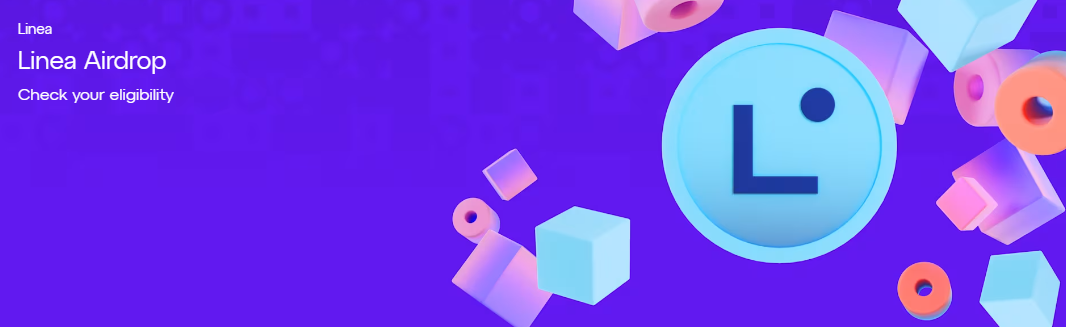
今日下午,ConsenSys 旗下以太坊 Layer 2 网络 Linea(Linea 项目基本信息可点击此处查看)在 X 平台发文宣布现已开放空投查询(链接:https://linea.build/hub/airdrop),并将于 9 月 10 日 TGE。

因此,Odaily 星球日报快速为大家梳理 Linea TGE 前你需要知道的几件事。

总供应量的 9% 将用于空投且无锁定期

根据官方文档,Linea 代币总供应量为 72,009,990,000 枚,相当于 ETH 初始流通量的 1,000 倍。其分配方式与以太坊的创世分配方式相呼应,以表明其与更广泛的生态系统的长期一致性,即 85% 的供应量专用于生态系统,剩余 15% 分配给 Consensys 国库,代币详细分配比例如下:

  • 早期贡献者:代币总供应量的 10%。其中,早期用户将获得代币总供应量的 9%,并且 TGE 时将进行空投并无锁定期。分配的群体为获得 LXP 的用户。另外的代币总供应量的 1% 将预留给 Linea 生态系统中的战略建设者且 TGE 时完全解锁;
  • 生态系统:代币总供应量的 75%。该部分代币分配给生态系统基金(将设立于一家总部位于美国的非股份制实体),该基金由 Linea 联盟管理(由以太坊原生开发者组成的理事会),成员包括 ENS Labs、Eigen Labs、SharpLink、Status 和 Consensys;
  • 国库:代币总供应量的 15%。该部分代币将锁定五年并且锁定期间不可进行转让,但可以在生态系统内部署,例如作为流动性或质押资金,以支持协议的健康和一致性。
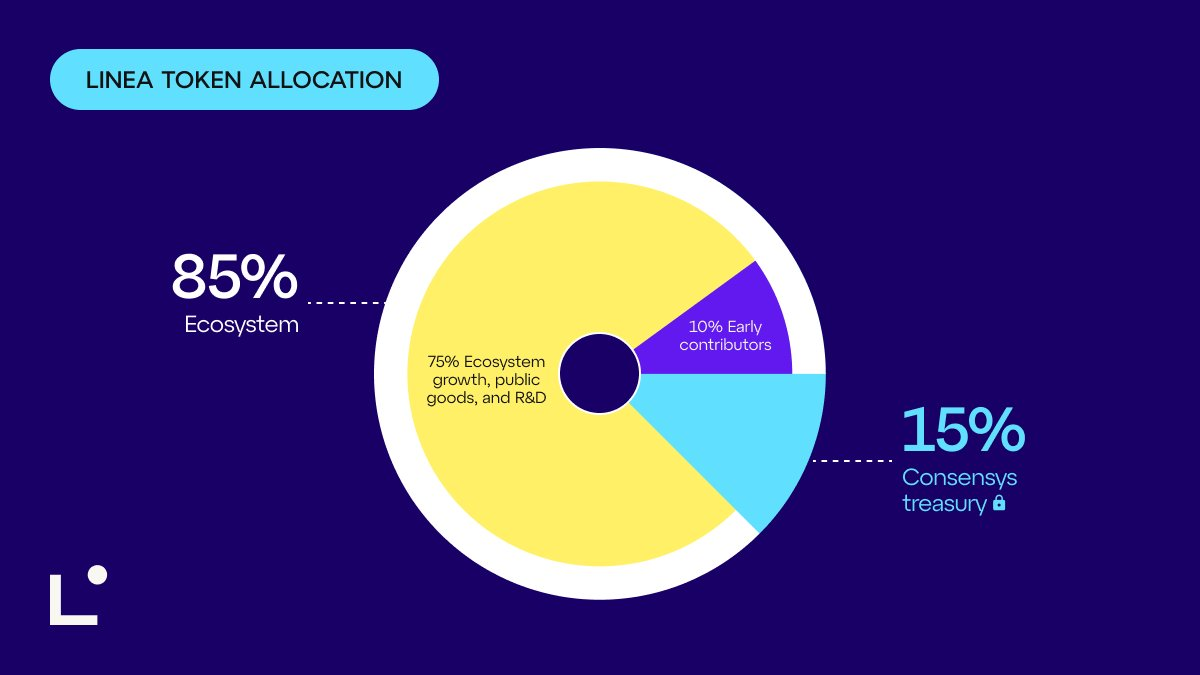
Linea 代币经济模型

此外,在 TGE 时约有 22% 的代币供应量(158 亿 LINEA 代币)将用于流通,其中包括早期贡献者的空投、生态系统激活计划以及流动性供应的分配。

谁有资格获得空投?

至少持有 2000 LXP 或 1500 LXP-L 的用户可获得空投资格(符合条件的地址需满足活跃度门槛,且未被识别为女巫账户)。根据官方信息,空投总计 9,361,298,700 枚 LINEA 分配给 749,662 个符合条件的地址。

此外,Linea 还为部分活跃地址准备了代币加成奖励,具体规则为:

  • EIP-4844 升级前活跃地址:主网上线至 2024 年 3 月 27 日期间至少完成一笔交易。
  • LXP Voyages 活动后活跃地址:2024 年 8 月 1 日(区块高度:7533487)至 2025 年 6 月 30 日(区块高度:20473167)之间,至少有 6 个不同月份进行过合约交互(月份不必连续)。
  • MetaMask 使用地址:在 2025 年 6 月 30 日(区块高度:7533487)之前的任何时间,使用 Linea 的 MetaMask 兑换或桥接、MetaMask 质押或 MetaMask 卡,满足任何一点即可获得 10% 提升(不可叠加)。

(Linea 主网上的地址为:0x1789e0043623282D5DCc7F213d703C6D8BAfBB04)

LXP 等级决定代币分配数量

Linea 的奖励体系采用分级设计,LXP 持有者被划分为七个等级,等级越高,获得的 LINEA 份额越大(LXP 查询链接:https://dune.com/linea/tge-boost-checker),具体 LXP 等级划分为:

  • Tier 1: 2,000 - 2,999 LXP;
  • Tier 2: 3,000 - 3,999 LXP;
  • Tier 3: 4,000 - 4,499 LXP;
  • Tier 4: 4,500 - 4,999 LXP;
  • Tier 5: 5,000 - 6,499 LXP;
  • Tier 6: 6,500 - 7,999 LXP;
  • Tier 7: 8,000+ LXP。

同等级内的分配则与持有数量成正比,例如持有 5500 LXP 的用户将比 5300 LXP 的用户获得更多代币。

空投申领时间与规则

本次空投将从 9 月 10 日正式启动,领取期长达三个月,截止至 12 月 9 日。所有符合条件的代币份额都会一次性释放,用户无需担心归属或分批解锁问题。但如果在期限内未完成申领,份额将在 12 月 9 日之后自动收回,重新注入 Linea 生态系统基金。

仍可参与的空投活动:Linea 流动性激励计划

Linea 官方宣布将启动流动性激励计划 Linea Ignition,计划分发 10 亿 LINEA 代币作为激励,以为 Linea 额外吸引 10 亿美元 TVL。

活动将持续至 2025 年 10 月 26 日,启动阶段符合资格的合作协议包括 Etherex、Aave、Euler,后续预计还将增加 Turtle Club。代币激励中的 40% 将在 10 月 27 日解锁,剩余 60% 在 45 天内线性解锁。


Letture associate

New AMD Paper Overturns Conventional Wisdom: FP4 Training Instability's Cause Is Not Insufficient Randomness

AMD's new research challenges the conventional understanding of FP4 training instability. While reducing precision from FP8 to FP4 promises doubled computational throughput and is supported by new hardware like NVIDIA Blackwell and AMD MI350 series, training large language models natively with FP4 has been notoriously unstable, often attributed to insufficient stochasticity. The paper "Pretraining large language models with MXFP4 on Native FP4 Hardware" demonstrates successful end-to-end FP4 pre-training of Llama 3.1-8B on AMD MI355X GPUs using the MXFP4 format, achieving a 9-10% overall speedup over FP8. Crucially, it identifies the root cause of instability: not randomness, but the accumulation of *structural micro-scaling errors* along the sensitive weight gradient (Wgrad) path. Through controlled experiments, researchers found that quantizing the Wgrad operation to FP4 caused significant convergence degradation. Counterintuitively, common stochasticity-based mitigation techniques like stochastic rounding and randomized Hadamard transforms worsened performance. In contrast, applying a *deterministic* Hadamard transform successfully stabilized training by ensuring consistent error patterns, reducing the extra token cost from 26-27% to just 8-9%. This work has significant implications: 1) It provides a clear diagnostic for low-precision training instability, steering focus towards structural errors. 2) It pushes FP4 from a primarily inference-focused format into the realm of viable training. 3) It leverages the open OCP Microscaling (MX) standard, promoting cross-vendor compatibility. The research marks a critical step towards more economical large model training by further pushing the boundaries of low-precision computation.

marsbit1 min fa

New AMD Paper Overturns Conventional Wisdom: FP4 Training Instability's Cause Is Not Insufficient Randomness

marsbit1 min fa

Will ONDO's 'Tokenization Narrative' Change After Its CEO's Unexpected Passing?

Ondo Finance founder and CEO Nathan Allman has passed away unexpectedly. Allman, a Brown University graduate with a background in private credit and Goldman Sachs' digital asset team, was a key architect of Ondo's pivot from DeFi structured yield products to becoming a leading Real-World Asset (RWA) protocol. He drove the strategy to tokenize traditional financial assets like US Treasuries (OUSG), yield-generating dollar assets (USDY), and US stocks/ETFs (Ondo Global Markets) for on-chain accessibility. The company announced that President Ian De Bode, a former McKinsey partner with a strong institutional strategy and operations background, will succeed Allman as CEO. While Allman's sudden departure presents a near-term challenge, testing market confidence and Ondo's continuity, the project is seen as more than a founder-driven narrative. It has an established product suite and a management team with deep traditional finance experience. The long-term impact hinges on the new leadership's ability to execute. De Bode's expertise in compliance, distribution, and institutional partnerships aligns with RWA's next phase of scaling infrastructure. The core question is whether Ondo can maintain its product momentum and institutional relationships. Ondo's native ONDO token represents governance and RWA narrative value, not direct revenue from the underlying assets. Its future as a "top tokenization play" will depend on the team's continued delivery of product growth, asset scale, and real-world demand, moving beyond the initial emotional shock.

marsbit47 min fa

Will ONDO's 'Tokenization Narrative' Change After Its CEO's Unexpected Passing?

marsbit47 min fa

Bankless Co-founder's Confession on Selling Off ETH: Ethereum Did the Right Thing, but 'ETH as Money' Has No Future

Bankless co-founder David Hoffman recently sold his remaining ETH holdings, sparking debate within the Ethereum community. In a detailed explanation, Hoffman clarifies that his decision was not based on bearish sentiment towards Ethereum itself, which he remains highly optimistic about, but rather on the conclusion that the "ETH is Money" narrative has largely run its course. Hoffman argues that for ETH to achieve its envisioned status as global money, Ethereum needed to execute flawlessly across multiple layers—governance, technology, and market dominance—in a highly coordinated manner. He acknowledges Ethereum's significant successes and current justified valuation but suggests the window for a major revaluation based on this monetary narrative is closing. The post examines several challenges: the strong correlation between L1 chain activity/fees and native token value; the perceived failure of the "strong version" of crypto (user-owned, egalitarian systems) versus the rise of a "weak version" (efficient ledger technology for traditional finance); and the possibility that ETH's momentum as money was uniquely tied to the distorted conditions of the 2020-2021 period. Crucially, Hoffman highlights a structural tension: Ethereum is architected as a "giver, not a taker," providing critical infrastructure like secure block space and tokenization at cost. This ethos benefits the broader ecosystem (applications, L2s) but doesn't prioritize extracting maximum value for ETH itself. The "ETH is Money" thesis required Ethereum to win a war of overwhelming market dominance—a war its design philosophy refuses to explicitly fight. Therefore, while he sees continued immense success for the Ethereum network and its ecosystem (following a "fat application" theory where value accrues to apps and L2s), Hoffman finds it increasingly difficult to foresee a structural upward revaluation for the ETH asset based on the monetary narrative. His capital reallocation reflects a belief that this particular investment thesis has played out.

Odaily星球日报53 min fa

Bankless Co-founder's Confession on Selling Off ETH: Ethereum Did the Right Thing, but 'ETH as Money' Has No Future

Odaily星球日报53 min fa

Trading

Spot
Futures

Articoli Popolari

Come comprare LAYER

Benvenuto in HTX.com! Abbiamo reso l'acquisto di Solayer (LAYER) semplice e conveniente. Segui la nostra guida passo passo per intraprendere il tuo viaggio nel mondo delle criptovalute.Step 1: Crea il tuo Account HTXUsa la tua email o numero di telefono per registrarti il tuo account gratuito su HTX. Vivi un'esperienza facile e sblocca tutte le funzionalità,Crea il mio accountStep 2: Vai in Acquista crypto e seleziona il tuo metodo di pagamentoCarta di credito/debito: utilizza la tua Visa o Mastercard per acquistare immediatamente SolayerLAYER.Bilancio: Usa i fondi dal bilancio del tuo account HTX per fare trading senza problemi.Terze parti: abbiamo aggiunto metodi di pagamento molto utilizzati come Google Pay e Apple Pay per maggiore comodità.P2P: Fai trading direttamente con altri utenti HTX.Over-the-Counter (OTC): Offriamo servizi su misura e tassi di cambio competitivi per i trader.Step 3: Conserva Solayer (LAYER)Dopo aver acquistato Solayer (LAYER), conserva nel tuo account HTX. In alternativa, puoi inviare tramite trasferimento blockchain o scambiare per altre criptovalute.Step 4: Scambia Solayer (LAYER)Scambia facilmente Solayer (LAYER) nel mercato spot di HTX. Accedi al tuo account, seleziona la tua coppia di trading, esegui le tue operazioni e monitora in tempo reale. Offriamo un'esperienza user-friendly sia per chi ha appena iniziato che per i trader più esperti.

286 Totale visualizzazioniPubblicato il 2025.02.11Aggiornato il 2025.03.21

Come comprare LAYER

Discussioni

Benvenuto nella Community HTX. Qui puoi rimanere informato sugli ultimi sviluppi della piattaforma e accedere ad approfondimenti esperti sul mercato. Le opinioni degli utenti sul prezzo di LAYER LAYER sono presentate come di seguito.

活动图片