Криптоинвесторов ждет «красный сентябрь» — Decrypt

cryptonews.ruPubblicato 2025-04-30Pubblicato ultima volta 2025-09-01

Стоимость крупных цифровых активов, и особенно биткоина, рискует упасть по причине традиционных сентябрьских сезонных колебаний, заявили опрошенные изданием Decrypt эксперты.

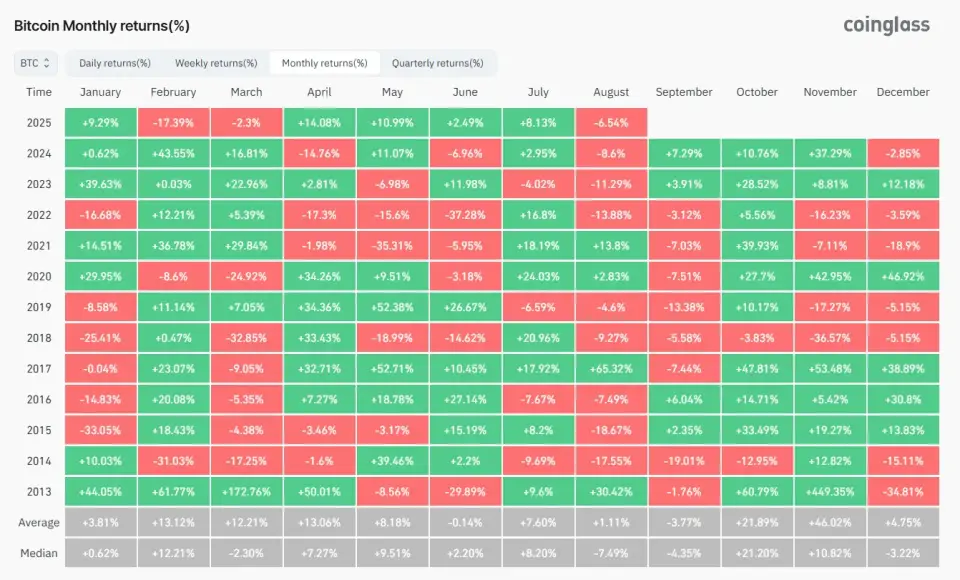
Криптовалютный рынок обычно демонстрирует худшие результаты именно в сентябре, обратили внимание эксперты. Наблюдения аналитических платформ, таких как Coinglass, демонстрируют, что сезонный эффект «красного сентября» чаще повторялся, чем нет:
150.png

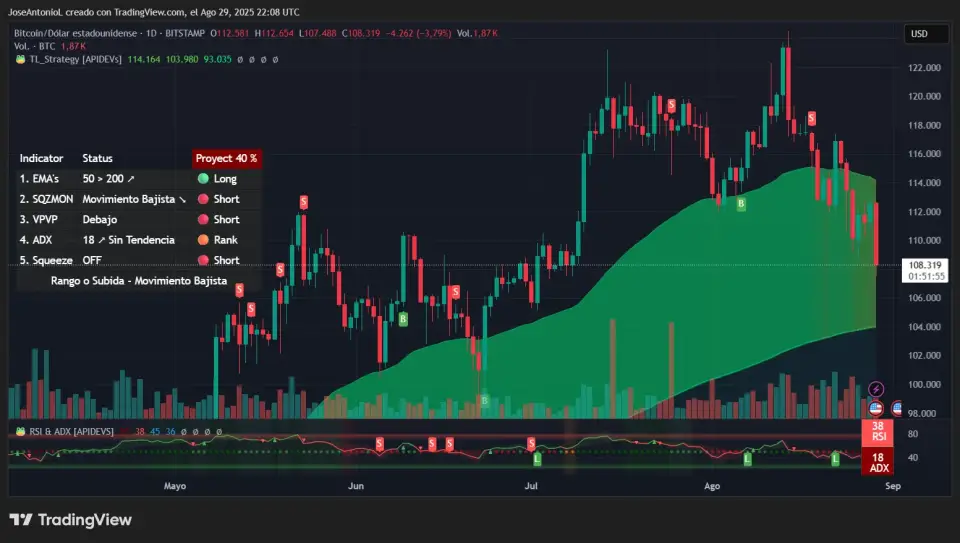
С 2013 по 2024 год биткоин восемь раз демонстрировал обвал именно в первый месяц осени — со средним снижением цены на 3,77%. Однако сейчас индикаторы рынка сигнализируют о вероятности более глубокой просадки, поскольку первая криптовалюта пробила уровень поддержки $110 000 по 50-дневной скользящей средней. Военные конфликты в Европе и на Ближнем Востоке, торговая политика США и нарушения цепочек поставок добавляют новых причин нестабильности, пишет Decrypt.
151.png

Собеседники Decrypt предположили, что проблемы «красного сентября» в большей мере являются следствием психологических аномалий и мало соответствуют реальным рыночными сигналам.

«Красный сентябрь превратился в ежегодный психологический эксперимент. Мы наблюдаем, как весь рынок сам себя подталкивает к распродаже, основываясь на исторических данных, а не на текущих фундаментальных показателях», — заявил изданию консультант швейцарского поставщика криптовалютной ликвидности FinchTrade Юрий Берг (Yuri Berg).

С выводами Берга согласился генеральный директор платформы DYOR Бен Курланд (Ben Kurland).

«После нескольких лет сентябрьских распродаж криптовалютное сообщество само приучило себя ожидать слабости. Это создает самоусиливающийся цикл, в котором страх перед падением оборачивается падением. Если перспективы кажутся мрачными, не волнуйтесь: после красного сентября наступит октябрь, который исторически является лучшим месяцем года для биткоина», — посоветовал Курланд.

Глава DYOR считает, что сезонный тренд может ослабевать по мере «взросления криптовалют», а «приток институциональных инвестиций в криптоотрасль» сейчас более глубок, чем когда-либо.

Накануне аналитики инвестиционной компании Bitwise опубликовали долгосрочный прогноз стоимости биткоина, где предположили, что первая криптовалюты может достичь к 2035 году $1,3 млн. Причинами аналитики назвали ограниченное предложение BTC и высокий спрос крупных компаний.


Letture associate

The "Impossible Triad" Is Fundamentally a Pseudo-Problem

The article argues that blockchain's fundamental limitation is not the scalability trilemma (decentralization, scalability, security), which has been largely solved, but the lack of **privacy** and, until recently, clear **legitimacy**. Blockchain is described as a slow, expensive, globally shared computer whose core value is censorship resistance and verifiability. While ideal for native digital assets like money (e.g., stablecoins), its default transparency acts as a **tax**, exposing all transactions and enabling MEV extraction, which deters serious institutional capital. Simultaneously, its permissionless nature created regulatory ambiguity. The piece contends that **privacy** is the missing critical feature. It rejects the false choice between total transparency and complete anonymity. Modern cryptography (like zero-knowledge proofs) enables **compliant privacy**: users can prove facts (solvency, KYC status, compliance) without revealing the underlying sensitive data (specific holdings, identities). This preserves auditability for regulators and eliminates the leak of financial information. With recent regulatory progress (e.g., the GENIUS Act) addressing legitimacy, adding default, provably compliant privacy becomes a pure upgrade. It transforms blockchain from a costly, public ledger into a confidential settlement layer, finally bridging the gap to mainstream institutional and individual adoption of on-chain finance.

链捕手12 h fa

The "Impossible Triad" Is Fundamentally a Pseudo-Problem

链捕手12 h fa

Optical Chips: Collective Capacity Expansion

The global optical chip industry is experiencing a massive wave of expansion driven by surging AI data center demand. Major players across the US, Japan, Europe, and China are aggressively investing to ramp up production capacity. In the US, Coherent is expanding its 6-inch Indium Phosphide (InP) semiconductor fab in Texas, supported by CHIPS Act funding and a $2 billion strategic investment from NVIDIA. Lumentum is building a new factory for InP optical devices, and Nokia is scaling its advanced photonic chip packaging and testing capabilities. NVIDIA's investments aim to secure future supply of critical lasers and optical interconnect products for AI infrastructure. Japan's JX Advanced Metals, a leading InP substrate supplier, plans a multi-billion yen investment to increase its capacity 7-10 times, strengthening its grip on the crucial upstream materials market. In Europe, IQE and Tower Semiconductor settled a patent dispute and signed a multi-year InP epitaxial wafer supply agreement, highlighting that next-generation silicon photonics platforms will integrate high-performance InP components. STMicroelectronics and Sivers Semiconductors are also expanding silicon photonics production and partnerships. China is rapidly building out its domestic supply chain. Dongshan Precision's subsidiary, Source Photonics, announced a $12 billion project to expand optical chip and module production. Companies like Sanan Optoelectronics and Yunnan Germanium are scaling up InP chip manufacturing and substrate production, moving towards vertical integration from materials to modules. While debate continues around the exact future architecture—whether CPO (Co-Packaged Optics), NPO, or pluggables will dominate—analysts like Morgan Stanley argue the underlying driver is unchangeable: the explosive growth in bandwidth demand. This will inevitably increase the volume of optical engines, lasers, and related content per GPU, regardless of the final technical path. The competition for "more light" in the AI era has intensified into a global, full-chain capacity race.

marsbit14 h fa

Optical Chips: Collective Capacity Expansion

marsbit14 h fa

Trading

Spot
Futures
活动图片



