Fluid:DeFi 的新主宰?

深潮Pubblicato 2025-08-31Pubblicato ultima volta 2025-09-01

重点说明其为何是一个资本效率高的协议。

撰文:Castle Labs

编译:AididiaoJP,Foresight News

货币市场是 DeFi 的核心,用户可以利用多种策略获得特定资产的敞口。随着时间的推移,这一垂直领域在锁仓价值(TVL)和功能方面都有所增长。随着新协议如 @MorphoLabs、@0xFluid、@eulerfinance 和 @Dolomite_io 的引入,借贷协议所能实现的功能范围已经逐渐扩大。

在本报告中,我们重点关注其中一个协议:Fluid。

Fluid 已推出多项功能,其中最有趣的是智能债务和智能抵押品。它不能被视作一个普通的借贷协议,因为它还结合了其 DEX 功能,为用户提供更多服务。

Fluid 在 DEX 和借贷垂直领域均呈现出显著的增长轨迹,总市场规模(以总存款计)超过 28 亿美元。
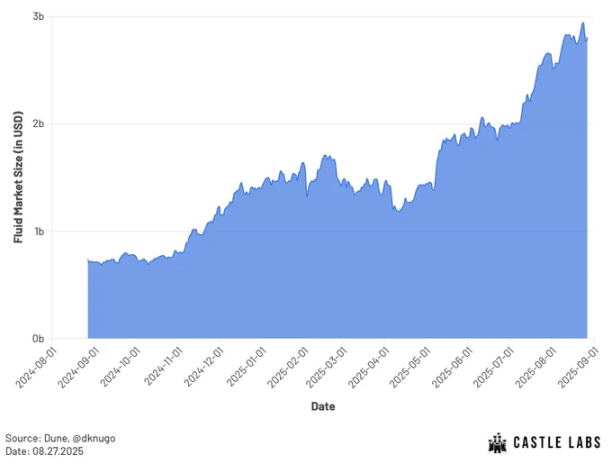
Fluid 市场规模,来源:Dune,@dknugo

Fluid 市场规模代表协议中的总存款。选择该指标而非 TVL 的原因是,债务在协议中是一种生产性资产,并为交易所流动性做出贡献。

概述 Fluid 组成部分和运作方式

本节简要概述 Fluid 协议的组成部分,并解释其运作方式,重点说明其为何是一个资本效率高的协议。

Fluid 采用统一流动性模型,多个协议可以共用流动性,包括 Fluid 借贷协议、Fluid Vaults 和 DEX。
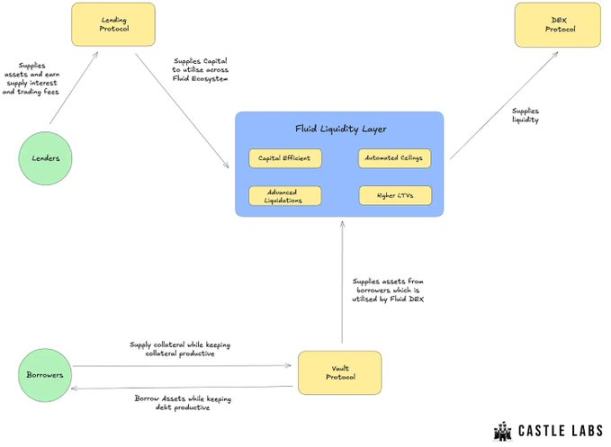
Fluid 借贷允许用户提供资产并赚取利息。此处提供的资产在整个 Fluid 生态系统中使用,从而提高了它们的资本效率。它还开启了长期收益机会,该协议会不断适应市场借贷方的变化。

Fluid Vaults 是单一资产、单一债务的保险库。这些保险库的资本效率极高,因为它们允许高 LTV(贷款价值比),最高可达抵押品价值的 95%。这个数字决定了用户的借款能力,与存入的抵押品形成对比。

此外,Fluid 采用独特的清算机制,将清算罚金降至低至 0.1%。该协议仅清算必要的金额以使头寸恢复健康状态。Fluid 上的清算过程灵感来自 Uniswap V3 的设计。它将头寸按其 LTV 的刻度或范围进行分类,并在抵押品价值达到清算价格时执行批量清算。然后,DEX 聚合器将这些批次用作流动性:清算罚金转化为交易者交换时的折扣。

Fluid DEX 通过交换产生的交易费用为流动性层赚取额外的收益层,这进一步降低了借款人的头寸利息,同时提高了整个协议的资本效率。不同的 DEX 聚合器,如 KyberSwap 和 Paraswap,利用 Fluid DEX 作为流动性来源,以获取更深的流动性并增加交易量。

在 Fluid 上,用户可以将他们的抵押品存入 DEX,并同时赚取借贷费用和交易费用,使其成为智能抵押品(Smart Collateral)。

如果用户希望以其抵押品借款,他们可以借入资产或借入智能债务头寸,使债务具有生产性。例如用户可以从 ETH 和 USDC/USDT 池中借款,他们可以存入 ETH 作为抵押品并借入 USDC/USDT。作为交换,他们将获得 USDC 和 USDT 存入钱包,并随意使用它们,同时从该流动性池中赚取的交易费用用于减少未偿债务。

Fluid 的最新进展与扩张

根据过去 7 天的交易量数据,Fluid DEX 排名第 4,仅次于 @Uniswap、@Pancakeswap 和 @AerodromeFi。Fluid 与 Jupiter Lend 的合作已经上线,该功能从本月初开始处于私人测试阶段,而 Fluid DEX Lite 已经上线。

此外,Fluid DEX v2 即将投入使用。
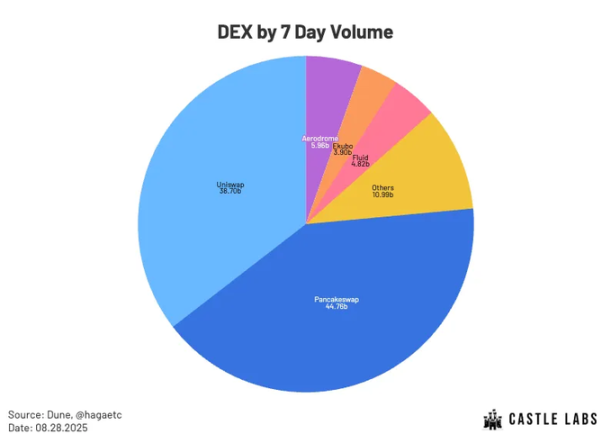
按 7 天交易量排名的 DEX,来源:Dune,@hagaetc

除此之外,该协议还预计进行代币回购,因为其年收入已超过 1000 万美元。Fluid 最近也在其治理论坛上发布了相关内容;该帖子开启了关于回购的讨论,并提出了三种方法。

在此查看不同的提议方法:

https://x.com/0xnoveleader/status/1957867003194053114

经治理批准(讨论后),回购将于 10 月 1 日开始,并有 6 个月的评估期。

Jupiter Lend:Fluid 进入 Solana

Fluid 向 Solana 的扩张是与 @JupiterExchange 合作完成的。

Jupiter 是 Solana 上最大的 DEX 聚合器,累计交易量超过 9700 亿美元,同时也是 Solana 上领先的永续合约交易所和质押解决方案。

Solana 借贷的 TVL 目前超过 35 亿美元,其中 @KaminoFinance 是主要贡献者。Solana 上的借贷垂直领域为 Fluid 的增长提供了巨大潜力。
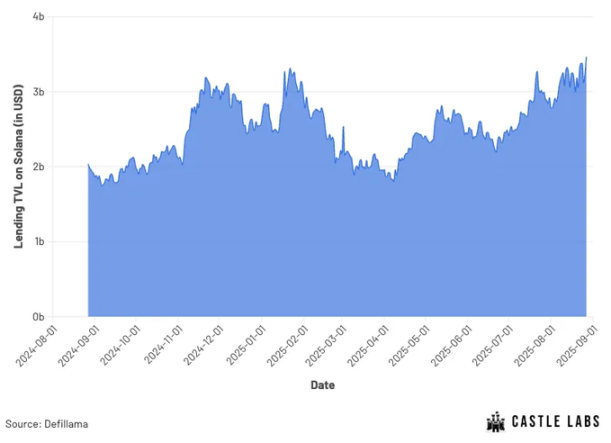
@jup_lend 的公开测试版在经历了几天私人测试后于近期上线。目前其 TVL 已超过 2.5 亿美元,使其成为 Solana 区块链上第二大货币市场,仅次于 Kamino。
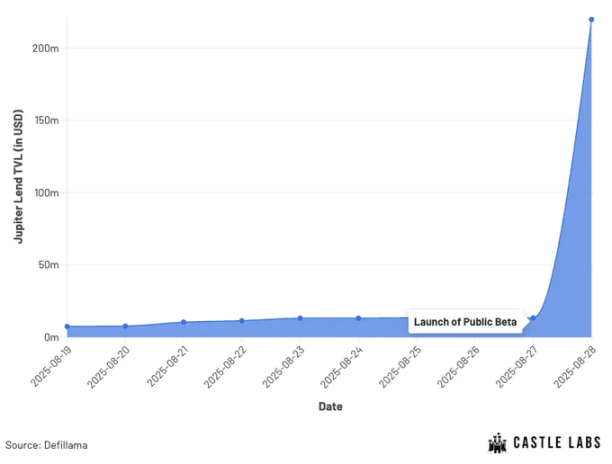
与 Fluid 合作推出的 Jupiter Lend 提供类似的功能和效率,智能抵押品和智能债务预计将于今年晚些时候在该平台上推出。

此外,该平台 50% 的收入将分配给 Fluid。

Fluid DEX 的迭代

Fluid 已经上线了其 DEX Lite,并计划很快推出 V2。本节将涵盖这两者,并解释这些迭代将如何帮助 Fluid 进一步发展。

Fluid DEX Lite

Fluid DEX Lite 于 8 月推出,并作为 Fluid 上的信用层,使其能够直接从 Fluid 流动性层借款。它已开始为相关交易对提供交易量服务,从 USDC-USDT 对开始。

这个版本的 Fluid DEX gas 效率非常高,与其他版本相比,进行交换的成本降低了约 60%。它的创建是为了在相关交易对交易量中占据更大份额,而 Fluid 在此已经是主导协议。

在推出的第一周,Fluid Lite 产生了超过 4000 万美元的交易量,初始流动性为从流动性层借入的 500 万美元。
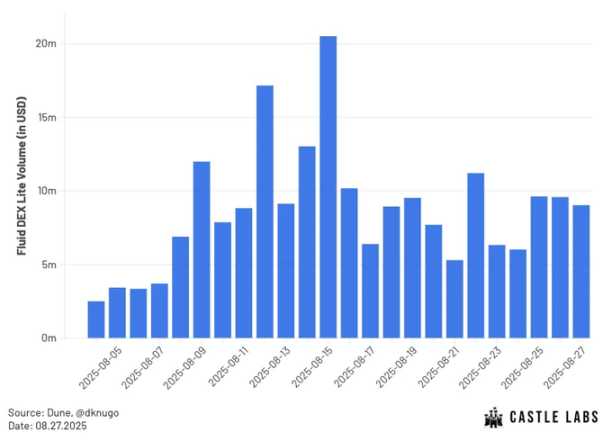
Fluid DEX Lite 交易量,来源:Dune,@dknugo

Fluid DEX V2

Fluid DEX V1 于 2024 年 10 月推出,在以太坊上仅用 100 天就累计交易量超过 100 亿美元,速度超过任何去中心化交易所。为了支持这一增长,Fluid 正在推出其 V2 版本,该版本设计时考虑了模块化和无需许可的扩展,允许用户创建多个自定义策略。

首先,V2 将在协议内引入四种不同类型的 DEX,其中两种从其 V1 延续而来。Fluid 支持的 DEX 类型将不限于这四种,更多类型可通过治理部署。
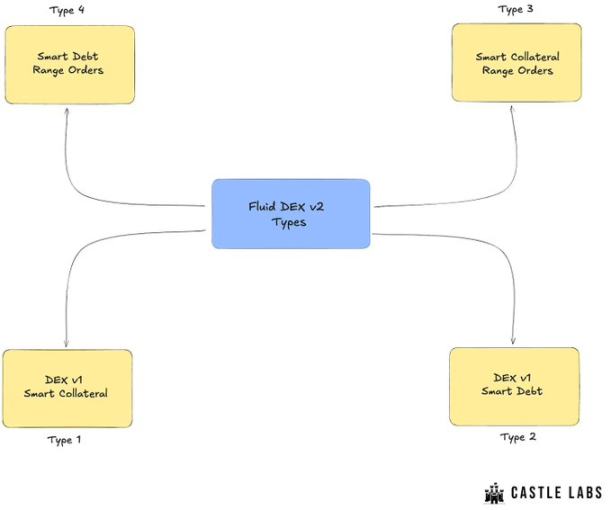
引入的两种新类型是智能抵押品范围订单和智能债务范围订单。两者都允许借款人帮助提高其资本效率。

智能抵押品范围订单的功能类似于 Uniswap V3,用户可以通过在特定价格范围内存入抵押品来提供流动性,同时还能赚取借贷年利率(APR)。

智能债务范围订单的工作方式类似,允许用户在债务端通过借入资产创建范围订单,并赚取交易年利率(APR)。

此外,它还引入了诸如 hooks(类似于 Uniswap V4)用于自定义逻辑和自动化、闪电记账以提高 CEX-DEX 套利的手续费效率,以及链上收益累积限价订单,这意味着限价订单在等待成交的同时也能赚取借贷年利率(APR)。

结论

Fluid 通过提供一系列独特的功能来持续增长和改进,以变得更具资本效率。

智能抵押品:平台上存入的抵押品可用于赚取借贷利息和交易费用。

智能债务:智能债务通过使用债务产生的交易费用支付部分债务来减少债务,从而使用户借入的债务具有生产性。

统一流动性层:Fluid 的统一流动性层通过提供更高的 LTV、先进的清算机制和自动上限以实现更好的风险管理等功能,提高了整个生态系统的资本效率。

其通过与 Jupiter 合作最近向 Solana 的扩张,将其在借贷类别的市场份额扩展到了非 EVM 网络。同时,Fluid DEX Lite 和 DEX V2 旨在增强 EVM 链上的用户体验并增加交易量。

此外 DEX V2 预计将于今年晚些时候在 Solana 上推出,这将使 Fluid 能够涉足 Solana 的借贷和交易所垂直领域。
Letture associate

U.S. Liquidity Support Has Arrived, This is the Core Positive Catalyst

The U.S. Treasury announced on August 19th an expansion of its liquidity support repurchase operations for long-term bonds. The single-operation limit for older, off-the-run nominal coupon securities in the 10-20 year and 20-30 year maturities will be increased from $2 billion to at least $4 billion, effective from September 9th until the end of the current quarterly refunding on November 4th. The market reacted positively to the news, with yields on 10-year and 30-year Treasury notes falling. This action is seen as a key relief for assets like tech stocks, long-term bonds, gold, and cryptocurrencies, as a lower long-end yield reduces discount rate pressure on valuations. However, analysts caution against interpreting this as a form of quantitative easing (QE). The operation specifically targets less liquid older bonds to improve market functioning, unlike QE which involves the Federal Reserve expanding its balance sheet. The move is viewed primarily as a signal that the Treasury is unwilling to let liquidity deteriorate in the long-end of the bond market, prompting short-covering and a relief rally. Its impact is constrained by the scale (a potential maximum of around $14 billion in additional repurchases this quarter), funding sources that may shift pressure to other maturities, and overarching macro factors like inflation and Fed policy. The sustainability of the resulting market rebound will be tested by the Treasury's November quarterly refunding statement. If it includes sustained repurchases and a slowdown in long-term net issuance, the valuation support for long-duration assets could persist. If not, the operation may prove to be merely a tactical measure to reduce short-term volatility without altering the long-term pressures from deficits and inflation.

marsbit50 min fa

U.S. Liquidity Support Has Arrived, This is the Core Positive Catalyst

marsbit50 min fa

SEC New Regulations Released, Bulls Are Here

The U.S. Securities and Exchange Commission (SEC), under Chairman Paul Atkins, has released a draft of the "Regulation Crypto Assets." This proposal introduces a new regulatory framework for crypto asset issuance and fundraising. A key feature is the establishment of an "Investment Contract Safe Harbor" mechanism, allowing projects to raise up to $5 million (or higher amounts for larger projects) over four years without full securities registration. To exit this safe harbor and potentially shed securities status, project teams must self-certify via a Form TR, declaring they have completed or permanently ceased their previously stated "essential managerial efforts." The SEC retains the power to challenge this certification after the fact. This shift moves the regulatory focus from pre-approval to a system of issuer self-attestation and SEC post-facto enforcement. It clarifies the process for determining when a token may transition from being an investment contract to a non-securities asset. The rules also specify that airdrops and network rewards may be counted toward fundraising limits, and they incentivize fundraising activities to remain within the U.S. jurisdiction. The draft is seen as a move away from the previous "regulation by enforcement" approach and an effort to provide clearer guidelines while Congressional legislation like the CLARITY法案 faces delays. The proposal is currently open for public comment.

marsbit1 h fa

SEC New Regulations Released, Bulls Are Here

marsbit1 h fa

Trading

Spot
活动图片