第一批00后Web3打工人已经开始“退圈”了

Odaily星球日报Pubblicato 2025-08-22Pubblicato ultima volta 2025-08-22

原创 | Odaily 星球日报(@OdailyChina

作者|Golem(@web 3_golem

我不想工作了”,在一次周中会,我蓬头垢面、两眼空洞地对着会议屏幕说(这次没开摄像头,他们也看不到我这副形象)。在我说完这句话后,会议气氛凝固了两秒,“Golem,会后你留一下”,主编的声音打破了这种宁静。

庆幸的是,会后主编真的在解决我的问题,而不是解决我。经过几番交流(主要是问我喜欢干嘛),大家得出了一致结论:我需要出去走走,换换环境。于是我去贵阳看了音乐节,然后又在昆明待了一个星期。

来自全国各地的摇滚爱好者在音乐节上狂欢

Web 3 已不再是我心中的白月光

这种低能量和茫然的状态在我身上并不是第一次出现,2025 年以来,我多次感到这样的情绪弥漫全身。很多朋友关心我是不是因为上着班的原因,毕竟没有人类当牛马是快乐的。

这样说的人显然不懂 Web 3。我们这个行业应该是班味最不浓的行业——高于同龄人的薪资水平、远程办公的自由、灵活的上班时间、无上下班打卡制、开放扁平的管理结构,这里面哪项红利放在当今内卷的就业环境下都是降维打击同辈。

如果以 5 年为职场代际划分,在“05 后”已经开始在 Web 3 职场崭露头角的今天,02 年生的我也算是第一批“00 后”Web 3 打工人。尽管这些职场福利仍未改变,但 Web 3 已不再是我心中的白月光。

2021 年在学校开始接触 Web 3,2023 年正式系统性学习 Web 3 行业知识并且以实习生身份进入职场。在我的印象里,这个行业应该是理想主义者最多的行业,我当初满怀着对区块链、去中心化的热爱和“革命”精神步入 Web 3,认为这个行业能够将我们这个世界向更好的方向改造。数据所有权、个人隐私保护、无信任货币、去中心化金融、开放透明的 Web 3……我要为我的理想、我心中的事业前仆后继、赴汤蹈火。

然而,现实却告诉我,这个行业只向“钱”看。“我可能对于 Web 3 和区块链的理解太过于理想化和浅薄了,我希望新的一年能有更深入的认识”,2024 年末老板问我对 2025 年的计划时,只毕业半年的我对自己提出了这样的期待。

记者当然是一个观察、学习 Web 3 的好角色,我们每天输入海量的原始、一手行业信息,经过整理和加工又输出给市场,我原本对 Web 3 积极的认识也在被重塑。看看我们从 2024 年到 2025 年都经历了什么?没人再真正关心技术价值、没人再谈论理想,不顾一切地向“钱”看。

2024 年上半年我们开始对 VC 和项目方解构,低价筹码解锁砸盘、借空投造虚假数据盘、“发币即终点”的躺平策略,我们意识到被 VC 包装的技术叙事下,“钱”才是目的;后来 Meme 季爆发,各怀鬼胎的玩家以去中心化、共同理念为旗帜建设社区,三流开发者在“AI Agent 圣徒”拥簇下被捧得老高,圈外名人发币受到隆重“礼遇”,最终都走向发币→FOMO→放弃社区/项目的结局,“钱”还是目的;在一切流动性将要被榨干之际,聪明的加密人又将目光投向股票市场,借壳上市、建立上市公司财库成为了寻找“新钱”的手段,而这些公司是干什么的依旧不重要。

由此,我对 Web 3 的认识从“这是一个能使世界变得更好的行业”变为“这不过是一个来钱相对较快的行业”,我也向“钱”看了。

虽然我仍持续关注行业动态、密集研究新项目和风向,但我的个人推特已经很久没有更新加密相关的内容。会有粉丝私信问我为何不再公开分享项目(感谢对我的认可),我的理由是除了投机外,已经没有项目让我真心提起兴趣,就失去了分享的欲望。

"Golem,你需要的是刺激感,尽管是在工作方面",副主编对我说。这句话让我怀念起了 2023 年正式入圈在某大厂实习写研报的时光,那时我每天沉浸在对 Web 3 的痴迷和兴奋中,我会追着 mentor 讨论跨链桥究竟是怎么实现资产在两条链上转移的,L 2 排序器的垄断会带来哪些区块链伦理问题,我会在杭州滨江边一面骑车一面问朋友:账户抽象究竟该怎么通俗理解啊?然而一切再回不去。
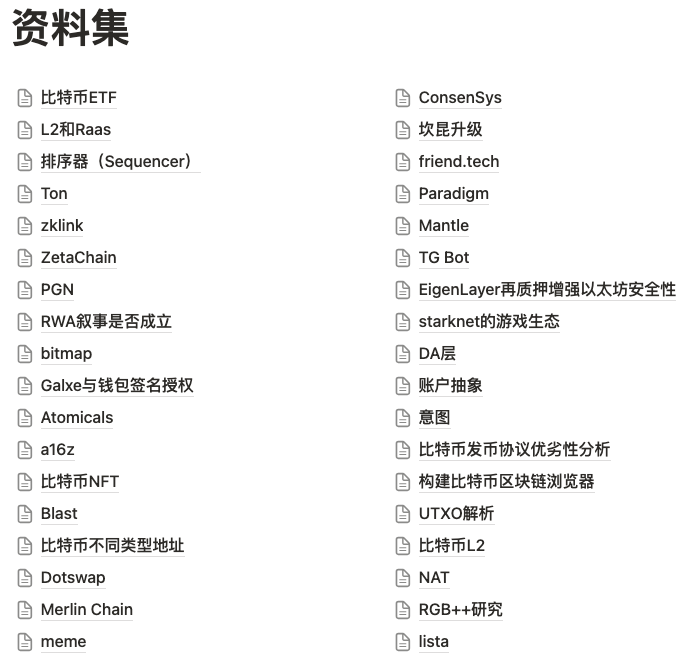
入圈初期为学习 Web 3 整理的部分资料

也有人对我说,这只是因为市场不好或者你没赚到钱,熊市中内部矛盾会激化,只要熬到牛市大家都会开心的。钱或许是一个很大的因素,但无获得感才是真正的原因。

第一批 00 后 Web 3 打工人已经开始退/淡圈了

当社交媒体上充斥着各种 00 后炒币一夜暴富或 Web 3 职场中登要听 00 后发号施令的故事时,一部分 00 后 Web 3 打工人已经默默退圈了。许多昔日的伙伴已经转向了其他行业。

王岳是一名与我入圈经历相似的 00 后,2023 年在某 VC 当实习生,后来进入一家 Web 3 企业工作。而在今年七月末,他选择离职并做外贸创业。王岳告诉我,离职后并不意味着从此再也不关注 Web 3 和炒币,有机会还是得冲,只是不再像以前一样投入了。“其实我对自己的炒币投机能力并不看好,相对之下可能还是在实体行业做实事更适合我一些吧”,这是他最后对我说的话。

王岳与外贸合伙人谈创业想法

越来越多的 00 后开始意识到,币圈是一个合适的理财选择,而不是合适的职业选择。桃子是一名浙大毕业的 00 年研究生,上学期间活跃于学生区块链组织并且在 Web 3 项目中当过实习生,但她毕业后成为了家乡的一名公务员。“我是一个体验派,而且我认为生活大于工作,所以只把 Web 3 当成一个理财的副业”,桃子对我这样解释为什么毕业不选择全职 Web 3 的原因。

甚至一些 00 后创业团队们也开始放弃 Web 3。“我加入的时候项目是有 Web 3 规划的,但各种原因到现在还是纯 Web 2 模式”,这样说的是 00 后小雨,其毕业前在一家 Web 3 基金实习,后来加入了目前这个与日本二次元社区相关的创业团队,今年她刚刚接任了项目 CEO。曾经我们会在同一个社区里探讨 Web 3,不过从 2024 年开始小雨就没有再将精力留在 Web 3,作为初创公司,小雨告诉我他们依旧在想办法完成业务闭环,短时间内已经不考虑 Web 3 规划了。

但有一点相似是,不管是当公务员还是独立创业,曾在 Web 3 呆过的人再也无法忍受传统行业对打工人高压环境。“我现在主业其实是神婆,副业才是打工”,玫玫非常认同“人在 Web 3 滚了一圈之后,再也打不了一点工”的观点。玫玫并不是一个标准的 00 后,但作为 99 年 5 月生的她,也曾是我的学习对象。

不过最近她也告诉我,自己正在逐渐退出 Web 3。一方面原因是公司业务转型,玫玫公司的业务原本是 Web 3 游戏,而现在做的则是与 Web 3 毫不相关的投资业务。“Web 3 游戏并不在这轮周期的叙事里面,而且老板想做一点自己喜欢感兴趣的东西”,玫玫解释了公司这么大跨度转型的原因。

与其他将币圈仍作为理财选择的退圈人士不同的是,玫玫的退圈完成度是较高的,甚至已经没有在投资比特币。“我觉得对钱没感觉的人真的不适合来 Web 3,因为如果你理解不了投机分子的心理,你就无法得到兴奋的感觉”,玫玫说她就是这样的人,Web 3 让她感到疲惫。

把 Web 3 当成毕生事业的人正在逐渐减少。大和是我的同校学弟,他在大学期间便深入参与 Web 3,并且作为应届生,他已经加入了一家 Web 3 公司,毕业便拿到了过万的月薪,这在 Web 3 并不稀奇,但已超越许多应届生。不过他最近告诉我,“趁年轻多搞搞钱,如果下半年熊市我就去考公”,听到这样的回答我感到些许诧异,作为享受红利的人为什么还对 Web 3 如此不信任。他说,“只是觉得在 Web 3 工作太不稳定了,等赚够钱,迟早也会退出吧。”

看山不是山,看水不是水

以上的交谈都发生在我从昆明游玩回来的前后。

随着加密行业与传统金融交汇加深,全球监管对 Web 3 张开怀抱,比特币、Web 3、区块链实际已经被大众熟知。但这个世界一直有两个 Web 3,一个是只重视加密资产属性,使其被传统金融体系吞没的 Web 3;另一个是不断向生态内卷,充满毫无破圈希望、只服务加密精英的项目的 Web 3。

这是两个割裂感极强的 Web 3,我曾经一头扎在后者,但除了看见生命周期只有几个月的项目、除了账号“欢乐豆”增增减减、除了感到虚无,没什么其他获得感,我开始理解为什么王小二赚了钱后会给环卫工人发免费餐券了。这个行业除了有各种方法和模式重新分配财富,能让这个世界变得更美好吗?

在昆明的滇池里会有若干随浪浮动的草方块,与广阔的湖面形成对比。我特意查了一下,这些草方块是用来改善水质的措施,降低水体富营养化程度。

但这种任风和浪摆布的场景,实在让我联想到自己也身处 Crypto 这片汪洋大海,失去方向,风拍浪打。

注:文中王岳、桃子、小雨、玫玫、大和均为化名。

Letture associate

Investment Philosophy of Gavin Baker, an Early Nvidia Investor: Long AI Infrastructure Bottlenecks, Short Overall Market Risk

Gavin Baker, an early investor in Nvidia and founder of Atreides Management, outlines his investment philosophy: going long on AI infrastructure bottlenecks while hedging against broader market risk. He argues AI is not a bubble but a supercycle driven by constraints in power, wafers (semiconductors), and compute efficiency (tokens per watt). True alpha, he believes, lies not in application-layer companies like OpenAI but in "picks and shovels" providers—companies solving physical bottlenecks in GPU connectivity (e.g., Astera Labs), memory (Micron), inference chips (Cerebras, Positron), advanced manufacturing (TSMC, ASML), and energy supply. His portfolio reflects this barbell strategy: concentrated bets on key infrastructure players alongside a significant put position on the QQQ ETF to hedge overall market downside. Baker contends this cycle differs from the dot-com bubble because demand is fueled by the strong balance sheets of hyperscalers (Google, Meta, Amazon, Microsoft), not debt, and physical supply constraints (e.g., chip manufacturing capacity) prevent runaway overinvestment. He highlights the growing importance of inference (vs. pre-training), vertical/small language models, sovereign infrastructure deployment speed, and the convergence of energy and space (e.g., orbital compute). His long-term view is that performance-per-watt and token cost reduction will dictate winners as AI scaling hits fundamental physical limits.

marsbit11 min fa

Investment Philosophy of Gavin Baker, an Early Nvidia Investor: Long AI Infrastructure Bottlenecks, Short Overall Market Risk

marsbit11 min fa

Apple Re-invented Image Compression with AI: Same Quality, One-Third the File Size

Apple’s PICO: An AI-Powered Image Codec That Cuts File Size by Two-Thirds at Equal Perceived Quality In 2025, JPEG AI became the first international standard for learned image compression. However, it, like most codecs, still prioritizes mathematical metrics like PSNR over true perceptual quality—what the human eye finds pleasing. Apple researchers have introduced PICO (Perceptual Image Codec), a neural codec designed to optimize for human perception. It tackles key practical challenges: 1) Speed: A novel "one-shot context model" accelerates entropy encoding without sacrificing compression efficiency. 2) Artifacts: A dedicated TextFidelity loss preserves text clarity, and a TilingArtifact loss eliminates color seams between image tiles processed in parallel. 3) Control: It avoids the "hallucinations" common in GAN-based perceptual models. In a large-scale human evaluation (74,925 comparisons), PICO achieved the same perceived quality as standards like AV1, VVC, and JPEG AI while using only 30-43% of the bitrate. It also outperforms other learned perceptual codecs by 20-40%. Remarkably, it runs in 230ms (encode) and 150ms (decode) on an iPhone 17 Pro Max. While less efficient on synthetic graphics, PICO represents a significant shift from optimizing mathematical scores to directly targeting human visual experience, making high-quality perceptual compression practical for consumer devices. The work builds on expertise from WaveOne, whose team joined Apple and previously advanced neural video compression.

marsbit47 min fa

Apple Re-invented Image Compression with AI: Same Quality, One-Third the File Size

marsbit47 min fa

Shanghai's Leading Large Model Company Initiates A-Share Listing

Shanghai-based AI large language model leader MiniMax has initiated the process for an A-share listing in China, having filed a pre-IPO tutoring report with the Shanghai Securities Regulatory Bureau on May 29. This move positions it to compete with Zhipu AI for the title of the first major domestic LLM company to list on the A-share market. Having already completed an IPO in Hong Kong in January 2026, MiniMax's stock price has surged approximately 409% since its debut, with its market capitalization reaching around HK$263.45 billion (approximately RMB 227.55 billion) as of May 29. The company's rapid growth is supported by strong business performance. Its Annual Recurring Revenue (ARR) has grown over 100% in the past two months and now exceeds $300 million. It serves over one million global enterprise and developer clients and has around 300 million users worldwide. For the full year 2025, MiniMax reported revenue of $79.038 million, with a gross margin of 25.4%. While it reported an adjusted net loss of $250 million, the loss rate has narrowed significantly year-over-year. On the product front, MiniMax has released several flagship models this year, including MiniMax-M2.5, M2.6, and M2.7, with the first and last being open-sourced. Its models gained significant traction earlier in the year, briefly becoming the top model provider by usage share on the OpenRouter platform in February. The company has also upgraded its AI agent product, now named Mavis, and is preparing to launch its next-generation MiniMax-M3 model. Technical previews indicate M3 will feature a novel "MiniMax Sparse Attention" mechanism, promising substantial improvements in inference speed. MiniMax's push for an A-share listing reflects a broader trend among China's leading AI firms, including Zhipu AI, Moonshot AI, StepFun, and 01.AI, to seek public listings. This strategy aims to secure broader financing channels to support the immense computational costs and ongoing commercialization efforts inherent in developing advanced large language models.

marsbit49 min fa

Shanghai's Leading Large Model Company Initiates A-Share Listing

marsbit49 min fa

Trading

Spot
Futures
活动图片