谁将引爆下一轮牛市?

深潮Pubblicato 2025-08-18Pubblicato ultima volta 2025-08-19

三大加密叙事关键指标与头部项目深度透视。

撰文:hoeem

编译:Tim,PANews

DeFi、DeFAI、DeSci 是如今加密领域最强劲的三大叙事,若未持续追踪其心智份额、价格走势、KOL 观点及催化剂,无异于浪费了波动市场中的巨大收益机会。

我将按以下结构逐一概述这些叙事:

  • 心智份额:用于找到最受关注的项目

  • 市场情绪:大家都在看好的项目

  • 聪明关注者:了解头部账号在关注什么

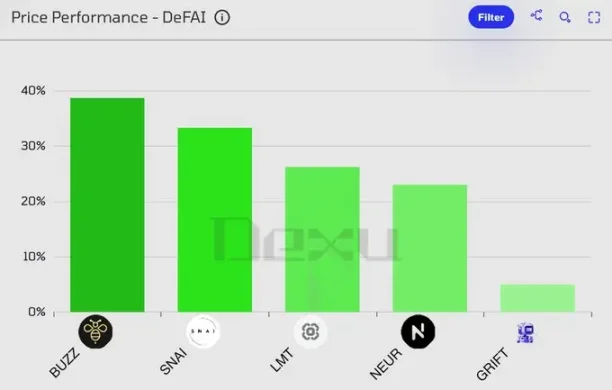
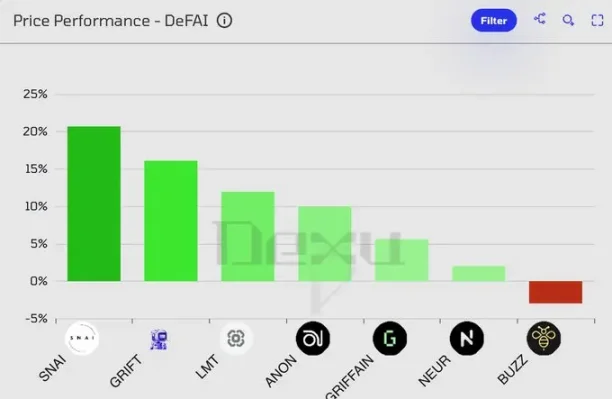
  • 表现最佳者:找出此叙事中过去 7 天和过去 24 小时内走得最快的项目

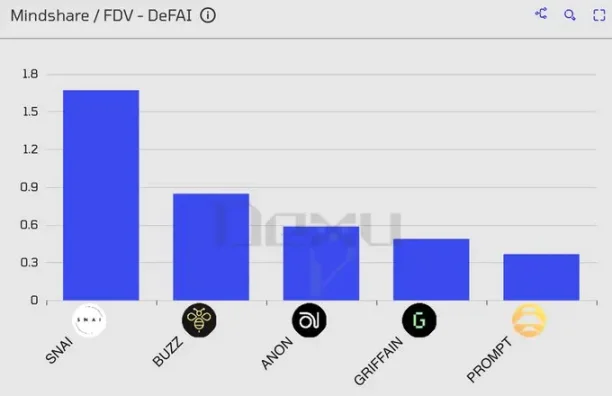
  • 心智份额 /FDV :探索注意力与估值的关系

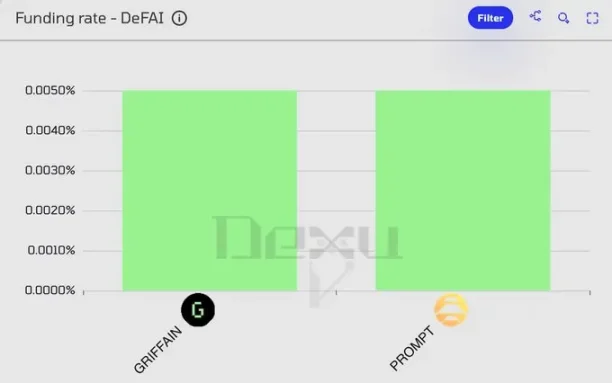
  • 资金费率:看看多头或空头是否过分狂热

DeFAI 叙事总览

1.心智份额

  • $GRIFT—86.84%(主要因为这个词在加密推特上出现频率很高,仅个人观点)

  • $GRIFFAIN—13.16%

2.市场情绪

$ANON 的市场情绪最佳

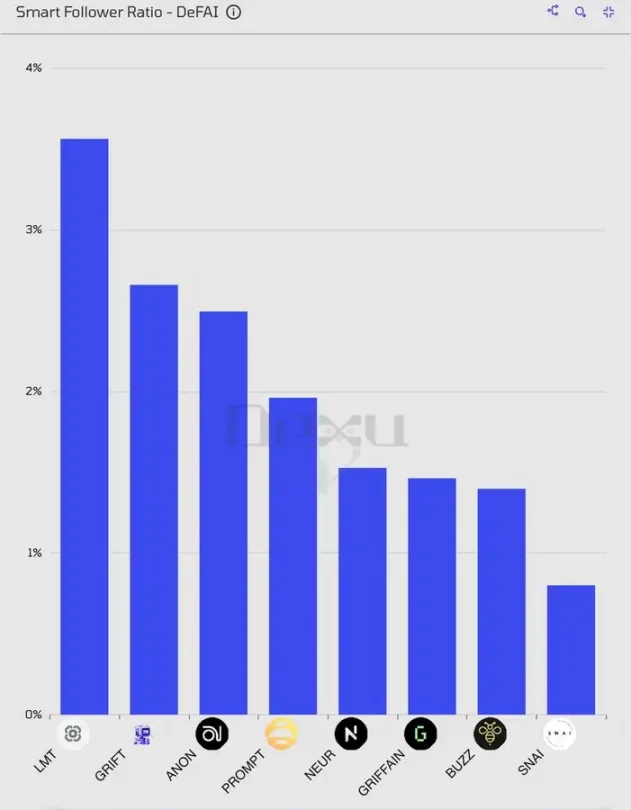
3.聪明关注者

$LMT 领跑该榜单,$GRIFT 及 $ANON 紧随其后
4.表现最佳者

过去 7 天
过去 24 小时
5. 心智份额 /FDV

我移除了 GRIFT 这个项目,因为其社区热度主要来自人们在时间线上揭露骗局的行为。经过调整的图标能更真实反映代币实际心智份额与 FDV 的对比情况:
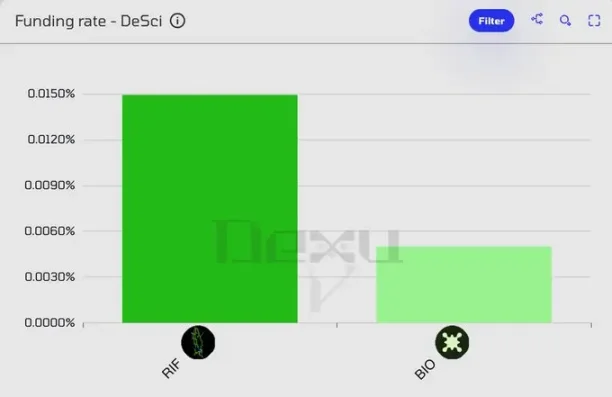
6.资金费率

多头正在永续合约市场增加资金。
DeFi 叙事总览

1.心智份额

  • $LINK—14.26%

  • $MNT—14.26%

  • $AAVE—11.71%

  • $PENDLE—10.87%

  • $ENA—6.62%

  • $UNI—6.62%

  • $EIGEN—5.09%

  • $EUL—5.09%

  • $ENS—4.24%

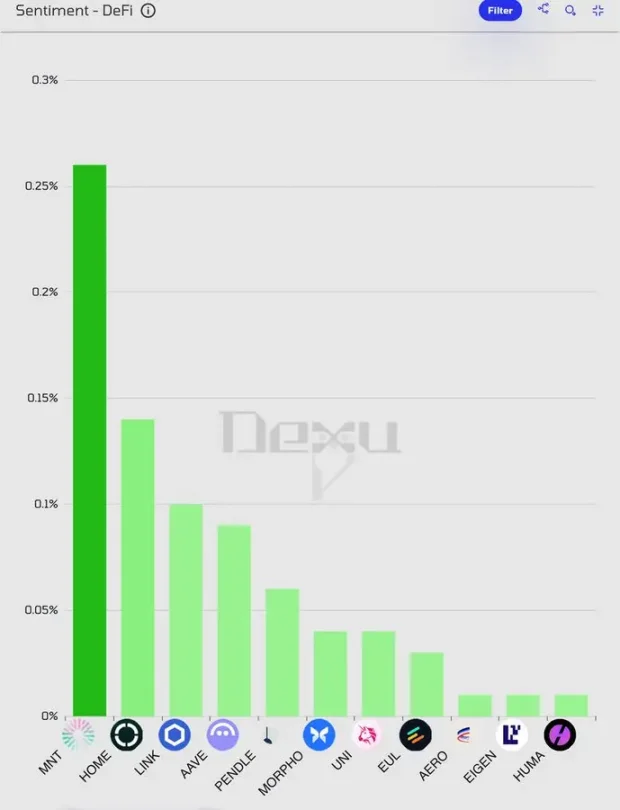
2.市场情绪

$MNT 引领看涨情绪。

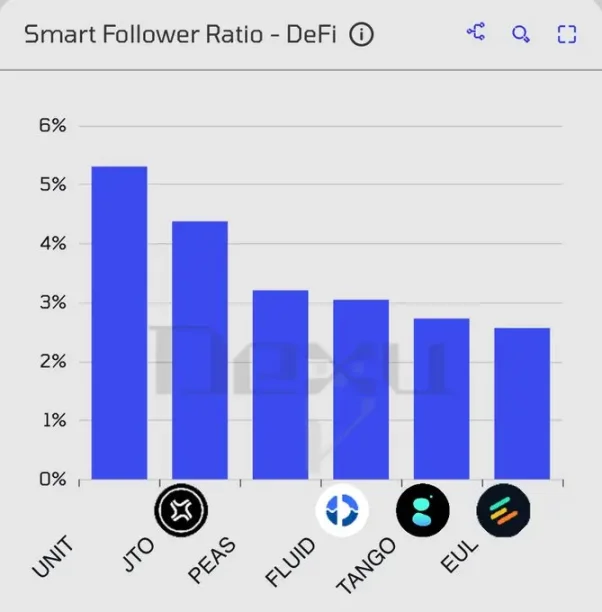
3.聪明关注者

$UNIT 领跑此图表
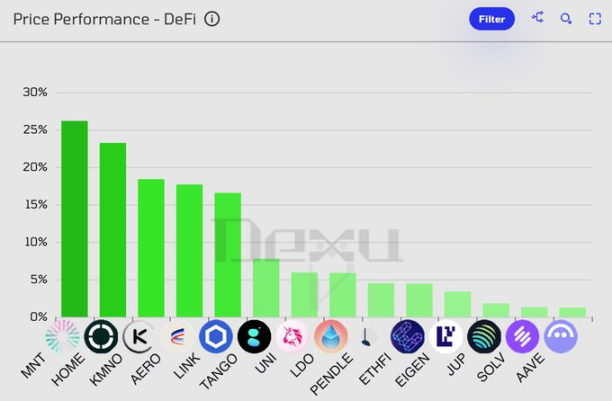
4.表现最佳者

过去 7 天
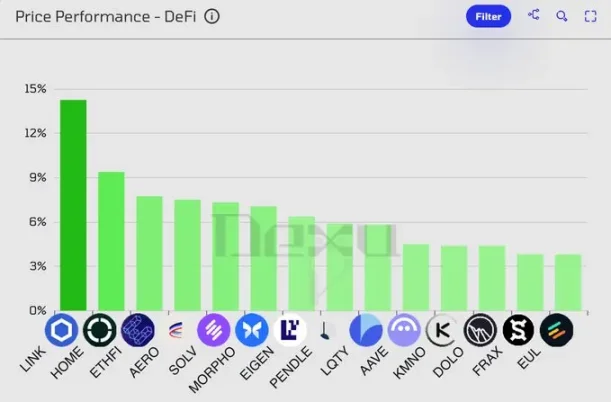
过去 24 小时
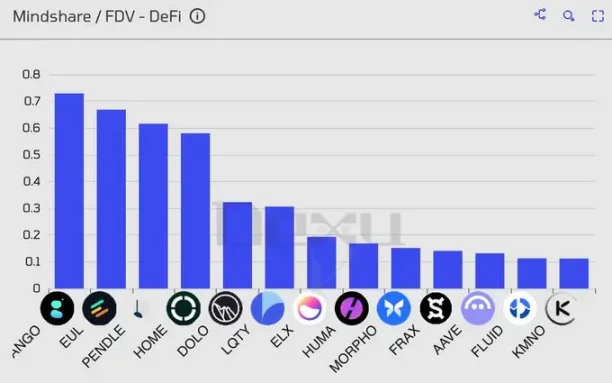
5. 心智份额 /FDV

当前排名前五的相关代币:$TANGO、$EUL、$PENDLE、$HOME、$DOLO.
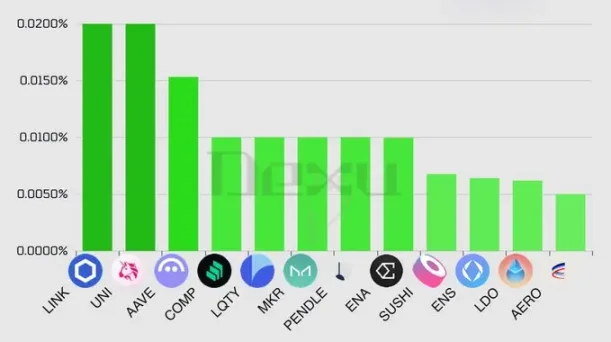
6.资金费率

今天散户们一起推动 $LINK 上涨。
DeSci 叙事总览

1.心智份额

  • $BIO—37.5%

  • $CRYO—12.50%

  • $RIF—12.50%

  • $RSC—12.50%

  • $URO—12.50%

  • $YNE—12.50%

2.市场情绪

$URO 是目前展现出最强烈看涨情绪的代币。

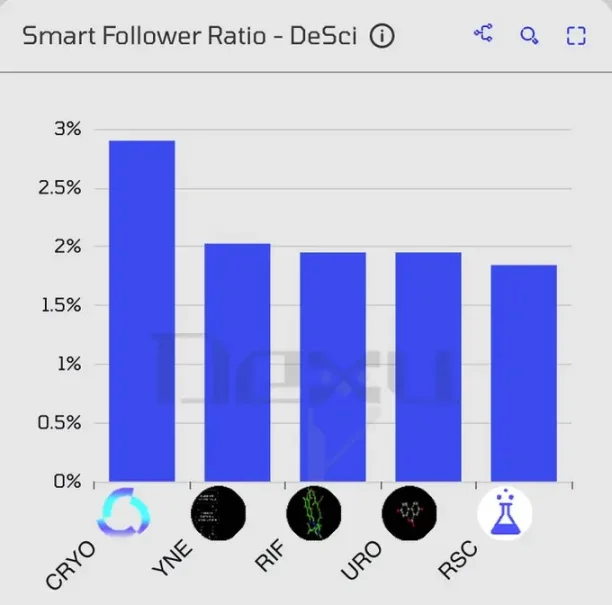
3.聪明关注者

$CRYO 拥有最高的聪明关注者比例
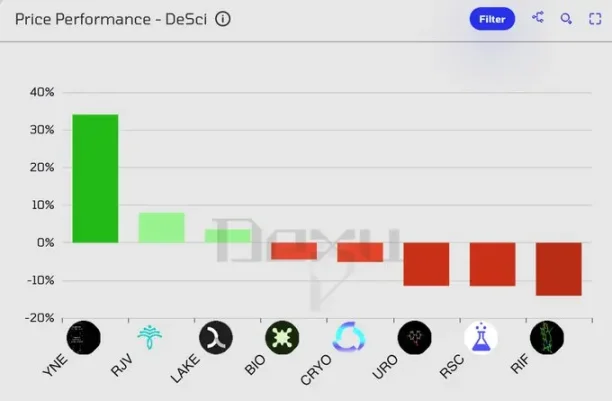
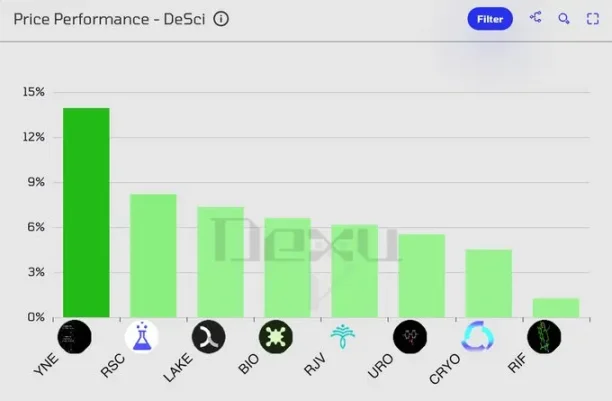
4.表现最佳者

过去 7 天
过去 24 小时
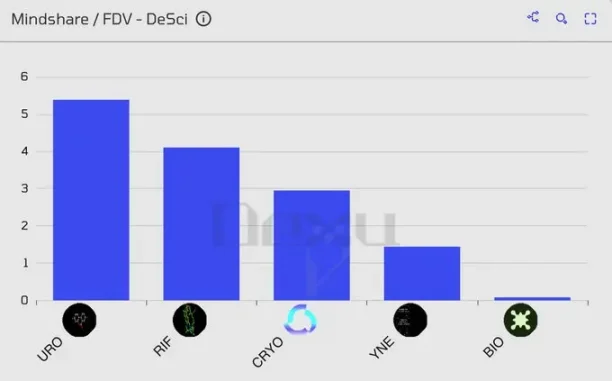
5.心智份额 /FDV

与其 FDV 相比,$URO 拥有最高的市场心智份额。
6.资金费率
本篇内容,到此结束。

Letture associate

Kalshi and Coinbase Receive CFTC Approval, Ushering in the Most Regulation-Friendly Era for the Crypto Industry?

The U.S. Commodity Futures Trading Commission (CFTC) took two landmark actions on May 29. It approved Kalshi's application to list a Bitcoin perpetual futures contract and issued a no-action letter to Coinbase Financial Markets. This allows Coinbase to offer certain perpetual futures products to U.S. customers through a subsidiary, with digital assets permitted as collateral. These moves, coupled with a new CFTC policy statement, provide a clearer regulatory pathway for perpetual contracts in the U.S., moving them from a regulatory gray area. CFTC Chair Mike Selig stated this is a key step for U.S. crypto leadership but noted the policy is not yet permanent. The article explains that CFTC's previous reluctance stemmed from legal ambiguities, as perpetual contracts lack an expiration date. However, such contracts dominate global crypto derivatives, accounting for ~78% of centralized exchange volume in 2025, forcing U.S. regulators to adapt to competition from offshore platforms like Hyperliquid. The approvals offer two compliance paths: Kalshi's direct listing and Coinbase's model using foreign futures. This is expected to attract institutional capital back to regulated U.S. venues, stimulate the launch of more products like ETH perpetuals, and enhance U.S. competitiveness in the global crypto derivatives market. The author suggests this may signal a "regulatorily friendly" era for crypto.

marsbit2 h fa

Kalshi and Coinbase Receive CFTC Approval, Ushering in the Most Regulation-Friendly Era for the Crypto Industry?

marsbit2 h fa

Sharplink CEO: Ethereum's Future Is Playing Out Now

This article presents a perspective from Joseph Chalom, CEO of Sharplink and a former BlackRock executive. He argues that current controversies surrounding the Ethereum Foundation (EF) and ETH's price miss the bigger picture for institutional adoption. Chalom asserts that Ethereum is decisively winning in the three key attributes institutions value most: trust, security, and liquidity. He cites its dominance in stablecoin settlement, tokenized real-world assets (RWA), and high-value DeFi as evidence. This success is attributed to the EF's consistent, long-term protocol development over a decade, including major upgrades like The Merge and a robust future roadmap. He defends Ethereum's decentralization as a core strength, not a weakness, stating institutions require a neutral infrastructure not controlled by any single entity. Comparing ETH to Amazon, Chalom suggests critics focusing on short-term price are missing its potential to become the foundational settlement layer for the entire global financial system. The article encourages a contrarian "be greedy when others are fearful" investment approach, drawing parallels to Warren Buffett's strategy and BlackRock's continued investment during crypto winters. Chalom concludes that while the EF correctly focuses on core protocol attributes (CROPS: Censorship Resistance, Capture Resistance, Open Source, Privacy, Security), a leadership gap exists in market-facing narrative and institutional adoption. He calls for ecosystem participants, including his own firm Sharplink, to become more vocal advocates to support Ethereum's impending "supercycle" of institutional adoption.

链捕手3 h fa

Sharplink CEO: Ethereum's Future Is Playing Out Now

链捕手3 h fa

Deconstructing the Investment Methodology of the 'Stock God Serenity' in One Article

"Serenity's Bottleneck Investment Methodology: A Deep Dive" This article dissects the "bottleneck point investment" strategy of the pseudonymous investor Serenity, known for exceptional returns (YTD 4502.45%). The core methodology involves identifying a major technological trend (e.g., AI compute expansion), mapping its supply chain, and investing early in the most irreplaceable, supply-constrained upstream component before the market fully values it. The framework is broken down into a five-factor model: 1. **Deterministic Demand**: Anchored in a large, validated trend. 2. **Constrained Supply**: The component must be difficult to replicate or scale quickly. 3. **Low Market Attention**: Opportunities exist where coverage is sparse. 4. **Value Capture**: The company must have pricing power, high margins, and customer lock-in. 5. **Catalyst**: A near-term event to trigger price discovery (earnings, customer ramp, etc.). The article provides illustrative examples like $AXTI (InP substrates for photonics), $RPI (edge hardware for AI agents), and $AAOI/$LITE (components for cloud ASICs). To apply this method, a six-step process is outlined: identify the macro trend, map the supply chain, pinpoint the true bottleneck, gather evidence (client wins, certifications), assess risks ("anti-thesis table"), and size the position according to research depth. Crucially, the article notes significant limitations: risk of overfitting inferences from sparse data, valuation challenges for pre-revenue companies, liquidity/reflexivity risks due to Serenity's own market influence, and survivor bias amplified by a strong AI bull market. The key takeaway is to emulate the rigorous research process—finding the trend, the bottleneck, the evidence—rather than blindly copying specific stock picks, emphasizing the discipline of "walking through the narrow gate."

marsbit3 h fa

Deconstructing the Investment Methodology of the 'Stock God Serenity' in One Article

marsbit3 h fa

One Article Deconstructs the Investment Methodology of 'Stock God Serenity'

This article deconstructs the "bottleneck point" investment methodology of the renowned investor known as "Serenity" (aleabitoreddit). Characterized by a YTD return of over 4500%, the strategy involves identifying a major, confirmed trend (e.g., AI data center expansion), mapping its supply chain, and then pinpointing a critical, hard-to-replace upstream bottleneck that the market has yet to fully price in. The core framework is a five-factor model: 1) **Certain Demand** from a clear megatrend; 2) **Constrained Supply** with high barriers to entry and slow replication; 3) **Low Market Attention**, where the company is overlooked; 4) **Value Capture** potential through pricing power and market share; and 5) a near-term **Catalyst** to trigger re-evaluation. Case studies include **$AXTI** (InP substrates for photonics), **$RPI** (edge hardware for AI agents), and companies like **$AAOI** and **$LITE** tied to hyperscaler-specific ASIC demand (e.g., Microsoft Maia, Amazon Trainium). The article provides a six-step guide for applying this approach: 1) Identify a validated macro trend; 2) Map the entire supply chain; 3) Find the true bottleneck; 4) Gather concrete evidence (e.g., filings, customer contracts); 5) Perform rigorous risk assessment ("anti-thesis"); 6) Match position size to depth of research. Key limitations are also noted: the risk of narrative overfitting, difficulty in valuing early-stage companies, Serenity's own market-moving influence creating reflexivity, and potential survivorship bias due to the AI bull market. The essence of the method is not to copy picks but to adopt the research process: find the trend, locate the bottleneck, verify with evidence, assess valuation, await a catalyst, and then invest with discipline. The philosophy is summarized as "walking through the narrow gate"—seeking non-consensus, structurally vital points within booming industries before they become widely recognized.

链捕手3 h fa

One Article Deconstructs the Investment Methodology of 'Stock God Serenity'

链捕手3 h fa

Trading

Spot
Futures
活动图片