Майкл Сэйлор сигнализирует о намерении Strategy покупать биткоины на спаде

cryptonews.ruPubblicato 2025-06-17Pubblicato ultima volta 2025-08-18

Соучредитель Strategy Майкл Сэйлор намекнул на возможные новые покупки биткоинов компанией, поскольку цена BTC колеблется около $117 тыс., что ниже исторического максимума, превысившего $124 тыс, достигнутого на прошлой неделе.

Последнее приобретение биткоинов Strategy состоялось в понедельник — компания купила 155 BTC за $18 млн, увеличив свой совокупный портфель до 628 946 BTC общей стоимостью более $74,2 млрд.

Согласно данным SaylorTracker, инвестиции компании в BTC принесли более 60% прибыли, что эквивалентно $28 млрд нереализованного дохода.
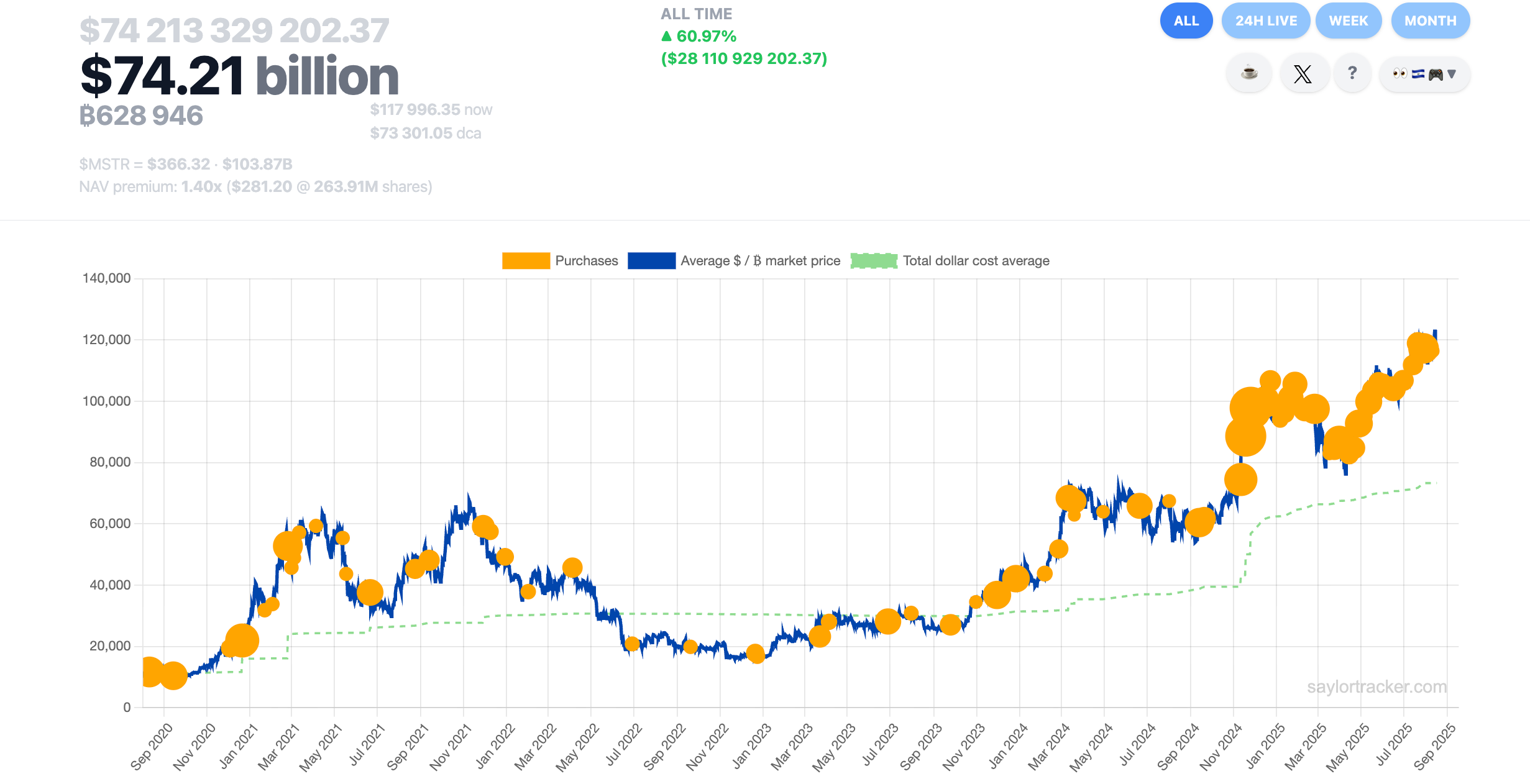

История покупок биткоинов компанией Strategy. Источник: SaylorTracker

Strategy продолжает оставаться основным инструментом косвенных инвестиций в биткоин для институциональных фондов, которые не могут напрямую владеть криптовалютой из-за регуляторных ограничений, а также для розничных инвесторов, предпочитающих не хранить цифровые активы самостоятельно.

Компания стала первопроходцем в использовании модели корпоративного казначейства на основе биткоина, что вызвало волну подражателей, включая компании, создающие казначейства альткоинов.

Сэйлор не выражает беспокойства по поводу роста числа компаний, работающих с альткоинами. В августовском интервью Bloomberg он заявил: «Я убежден, что подавляющая часть капитала в этой сфере по-прежнему направляется в биткоин. Только за последние полгода число компаний, использующих биткоин, выросло с 60 до 160, поэтому моё внимание полностью сосредоточено на биткоине».

С момента избрания Дональда Трампа президентом США в ноябре 2024 года Strategy более чем удвоила свои биткоин-активы, приобретя 376 726 BTC всего за девять месяцев. Для сравнения: на накопление предыдущих 252 220 BTC у компании ушло более четырёх лет до ускорения темпов покупок после президентских выборов 2024 года.

Strategy начала инвестировать в биткоин в 2020 году, что привело к росту стоимости её акций почти на 2600% за пять лет, привлекло внимание институциональных инвесторов, криптотрейдеров и частных инвесторов.

Согласно данным BitcoinTreasuries, Strategy является крупнейшим корпоративным держателем биткоинов. Её резервы в 628 946 BTC превышают совокупные запасы десяти следующих крупнейших корпоративных держателей биткоина, что обеспечивает компании значительное конкурентное преимущество.


Letture associate

Institutions Have Already Bought the Dip: Is Bitcoin at $70,000 the Start of a Bull Run or a Local Top?

Institutional Investors Piled into Bitcoin Ahead of Rally: Is $70K a New Bull Market Start or Local Top? Bitcoin surged past $70,000 following pro-crypto remarks from former U.S. President Donald Trump on August 20. However, institutional investors had been accumulating exposure in Q2 2026, even as the price fell. 13F filings reveal that while total Bitcoin ETF holdings declined, institutional holdings increased by 7.5%, reaching a record 44.2% share of ETF assets. Key institutional moves include Jane Street increasing its Bitcoin ETF and MicroStrategy (MSTR) exposure by over $800 million, BlackRock adding ~$290 million in Bitcoin-related holdings (MSTR, its own IBIT ETF, and ASST), and JPMorgan boosting its IBIT position by $85.6 million. UBS significantly increased its call option exposure on IBIT. Notably, Paul Tudor Jones's fund reversed a multi-quarter selling trend to add IBIT shares. Market opinions are divided post-rally. The "bear market over" camp includes F2Pool's co-founder declaring the bear market ended, Strive's CEO citing a favorable macro backdrop for Bitcoin, and Standard Chartered targeting $100,000 by year-end. Conversely, the "not yet bottomed" camp includes CZ stating the super cycle hasn't arrived, CryptoQuant analysts warning of elevated retail demand often preceding local tops, and analysis from VanEck and Glassnode suggesting on-chain data shows a prolonged "capitulation phase" is still unfolding, indicating current price strength may be a relief rally rather than a definitive trend reversal.

Odaily星球日报13 min fa

Institutions Have Already Bought the Dip: Is Bitcoin at $70,000 the Start of a Bull Run or a Local Top?

Odaily星球日报13 min fa

Viewpoint: A $4 Billion Buyback Can Fix Liquidity, But Not U.S. Fiscal Health

On August 19, the U.S. Treasury announced it would increase its maximum single-operation buyback size for long-term bonds from $2 billion to at least $4 billion, aiming to improve market liquidity. This move initially led to a pullback in long-term yields, such as the 30-year Treasury yield which had recently hit a 2007 high near 5.34%, sparking talk of potential "Treasury support." However, an opposing perspective argues this is merely a temporary fix. While buybacks can enhance trading conditions for older, less-liquid bonds, they do not address the underlying fiscal pressures. The Treasury's actions are a form of debt management, not monetary stimulus like QE; the funds used for buybacks ultimately come from cash balances or new borrowing. They do not reduce the government's overall financing needs. The core issue is growing fiscal supply. With the federal deficit reaching a record $432 billion in July 2026 and cumulative deficits already surpassing the prior fiscal year's total, the market faces a massive wave of new debt issuance. The recent surge in long-term yields may reflect a repricing of this persistent fiscal risk and the associated term premium, rather than just a liquidity shortage. Furthermore, demand-side challenges loom. Foreign holdings of U.S. Treasuries have recently declined, and if official demand weakens, the market will rely more on price-sensitive private investors, potentially requiring higher yields to clear future auctions. In essence, the Treasury can use buybacks to soothe market "trading problems," but it cannot buy away the nation's "fiscal problem." The key factors to watch will be the appetite at long-term bond auctions, the trajectory of the fiscal deficit, and whether higher yields can sustainably attract buyers. Without improvement in these areas, the yield relief provided by the $4 billion buyback expansion is likely just a short-term buffer.

marsbit22 min fa

Viewpoint: A $4 Billion Buyback Can Fix Liquidity, But Not U.S. Fiscal Health

marsbit22 min fa

Trading

Spot
活动图片