30-Day Doubling, 15-Fold Year-to-Date Gain: Why is the English-Speaking Crypto Community FOMOing Over $ZEC Again?

marsbitPubblicato 2026-05-09Pubblicato ultima volta 2026-05-09

Introduzione

Over the past week, ZEC has surged back into the spotlight on English Crypto Twitter, driven by endorsements from prominent figures like Naval, Arthur Hayes, and Mert Mumtaz, alongside a public "significant" position announcement from Multicoin Capital at Consensus Miami. The price has skyrocketed, with ZEC gaining over 110% in 30 days and 1500% year-to-date, now ranking among the top 20 cryptocurrencies by market cap. The primary catalyst is a shifting investment thesis. Multicoin Capital's Tushar Jain argues that while Bitcoin resists censorship, its transparent ledger leaves holdings vulnerable to potential wealth confiscation via taxation. Zcash's shielded pool, using zk-proofs to obscure transaction details, is positioned as "insurance against Bitcoin" for true financial privacy. Arthur Hayes has set a long-term price target of 10% of Bitcoin's value. Further momentum comes from technical developments announced at Consensus, including a roadmap for quantum-recoverable wallets and full post-quantum security within 12-18 months. Institutional adoption signals are growing, with a Grayscale ETF application pending, Robinhood listing ZEC, and Foundry launching a mining pool. However, a critical caveat is the recent departure of the entire original Zcash development team (ECC) due to governance conflicts, leaving the project's future development uncertain. While narrative and institutional interest are clearly fueling the current rally, distinguishing between genuine adopti...

Author: Curry, Deep Tide TechFlow

If you've been browsing English Crypto Twitter lately, you've likely seen ZEC all over the screen.

Names like Naval, Arthur Hayes, Mert Mumtaz, Balaji, and Cobie are popping up repeatedly around the same topic. Coupled with Multicoin Capital's public announcement of a significant position and multiple privacy-focused panels at Consensus Miami, ZEC's social media buzz over the past week has reached its highest point since the rally at the end of 2025.

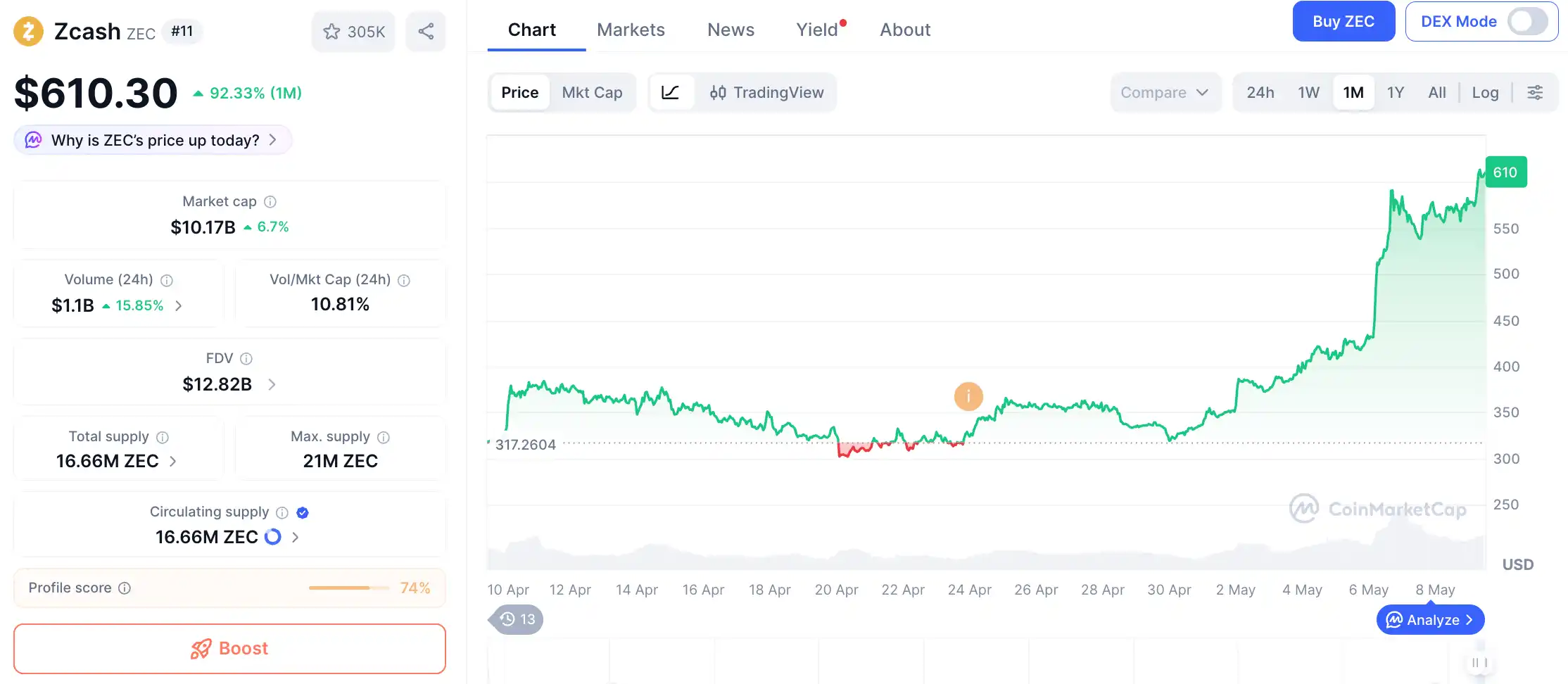
The price has already run ahead of the narrative. At the time of writing, ZEC is trading around $580, with gains exceeding 110% over the past 30 days and cumulative year-to-date gains surpassing 1500%. Its market cap has exceeded $9.5 billion, overtaking the veteran privacy coin Monero (XMR) and climbing into the top 20 on CoinGecko.

On May 6th, ZEC surged nearly 30% in a single day, triggering over $62 million in short liquidations, with shorts accounting for $46.7 million of that.

So the question is: What's driving this wave?
Multicoin's Heavy Position: "Bitcoin is Censorship-Resistant, But It Can't Stop a Wealth Tax"

The most direct catalyst came from Multicoin Capital.

On May 6th, Multicoin Capital co-founder and managing partner Tushar Jain publicly stated during a panel at Consensus Miami that the firm had built a "significant position" starting in February. He didn't disclose the specific size but provided a clear investment logic framework.

In a subsequent long post on X, Jain wrote: "Bitcoin is censorship-resistant; nobody can freeze your BTC or stop you from using it. But it does not stop governments from confiscating known holdings via a wealth tax."

His direct evidence is California's Initiative 25-0024 proposal, which aims to impose a one-time 5% wealth tax (including unrealized gains) on residents with a net worth exceeding $1 billion, expected to raise approximately $100 billion.

Jain's core thesis is: Bitcoin is insurance against fiat currency, but its on-chain balances are completely transparent; a tax agency with a blockchain explorer can see everything. ZEC's shielded pool, using zero-knowledge proof technology, hides the sender, receiver, and amount, making on-chain assets invisible to external observers.
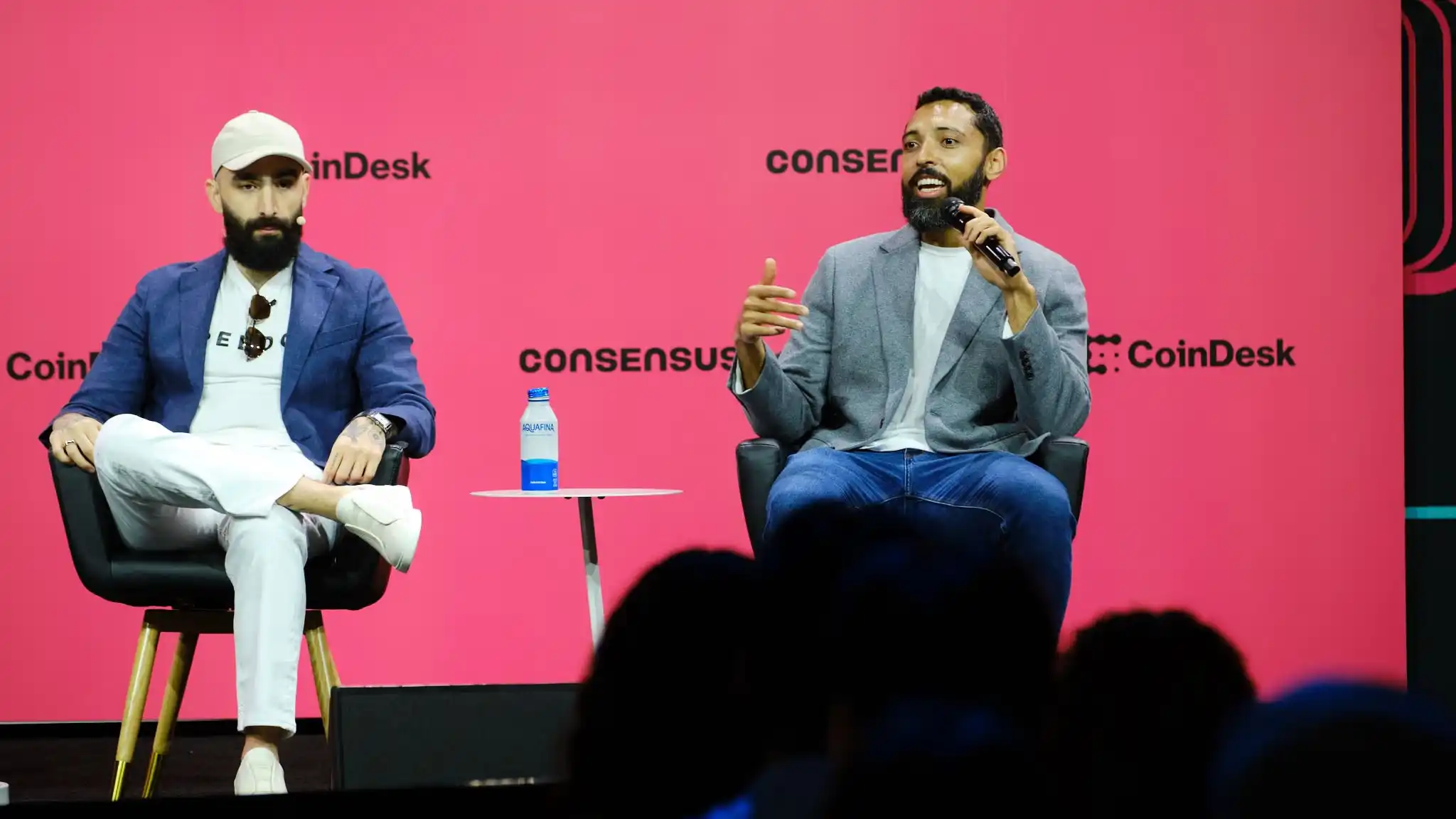
"We think there is clear product-market fit for truly private, censorship- and seizure-resistant assets, and demand is accelerating," Jain wrote, "Zcash is the cleanest way to express this thesis in public markets."

This represents a clear shift in stance for Multicoin.

In 2019, the fund published an article arguing that "privacy is a feature of valuable cryptocurrencies, not a standalone product," suggesting users shouldn't sell BTC or ETH to buy ZEC just for privacy.

Seven years later, this public statement looks like they are betting real money to overturn their past conclusion.

KOLs Rally, Arthur Hayes Calls for "10% of BTC's Price"

The seeds for this ZEC narrative were actually planted in the second half of 2025.

BitMEX co-founder Arthur Hayes, AngelList co-founder Naval Ravikant (also an early Zcash investor), Helius founder Mert Mumtaz, along with other top crypto KOLs like Balaji Srinivasan and Cobie, began voicing strong support for ZEC intensively starting last fall.

Naval tweeted in October last year: "Bitcoin is insurance against fiat. Zcash is insurance against Bitcoin."

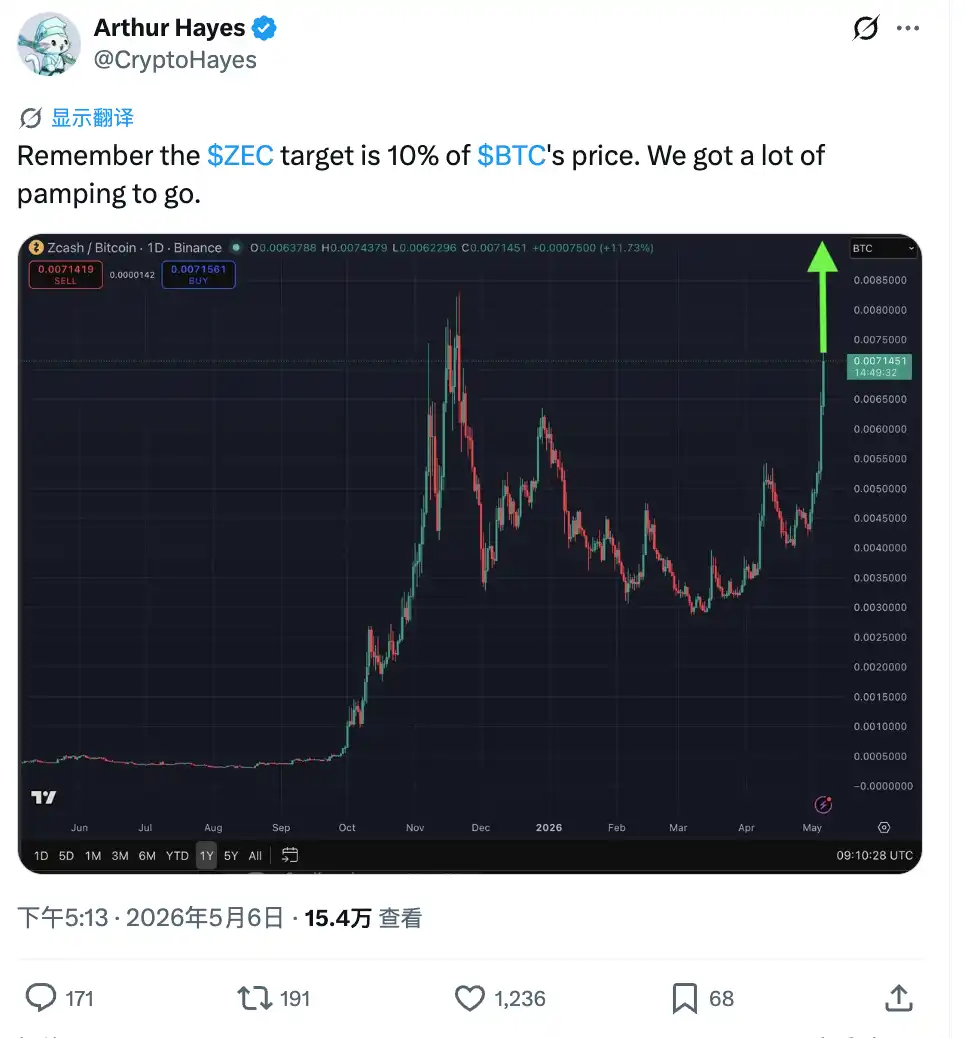
Hayes's stance was more aggressive. At Consensus 2026, he bluntly stated ZEC's long-term target price should be "10% of Bitcoin's price." Based on BTC's current price of around $80,000, this implies a target of approximately $8,000 for ZEC, representing over 13x upside from the current price. Tyler Winklevoss also endorsed a thesis this week targeting $9,700 for ZEC based on capturing offshore wealth.

These calls themselves might not be reliable investment advice, but their concentrated emergence indicates one thing: the top capital and top voices in the English-speaking crypto space are simultaneously tilting towards the privacy sector.
The Quantum-Resistant Narrative at Consensus Miami

If Multicoin and the KOLs provided catalysts on the capital and narrative fronts, the release of the technical roadmap at Consensus Miami gave the market a fundamental story.

At a dedicated privacy panel on May 8th, Zcash Open Development Lab founder and CEO Josh Swihart announced that quantum-recoverable wallets will launch within a month, and Zcash plans to achieve full post-quantum security within 12 to 18 months.
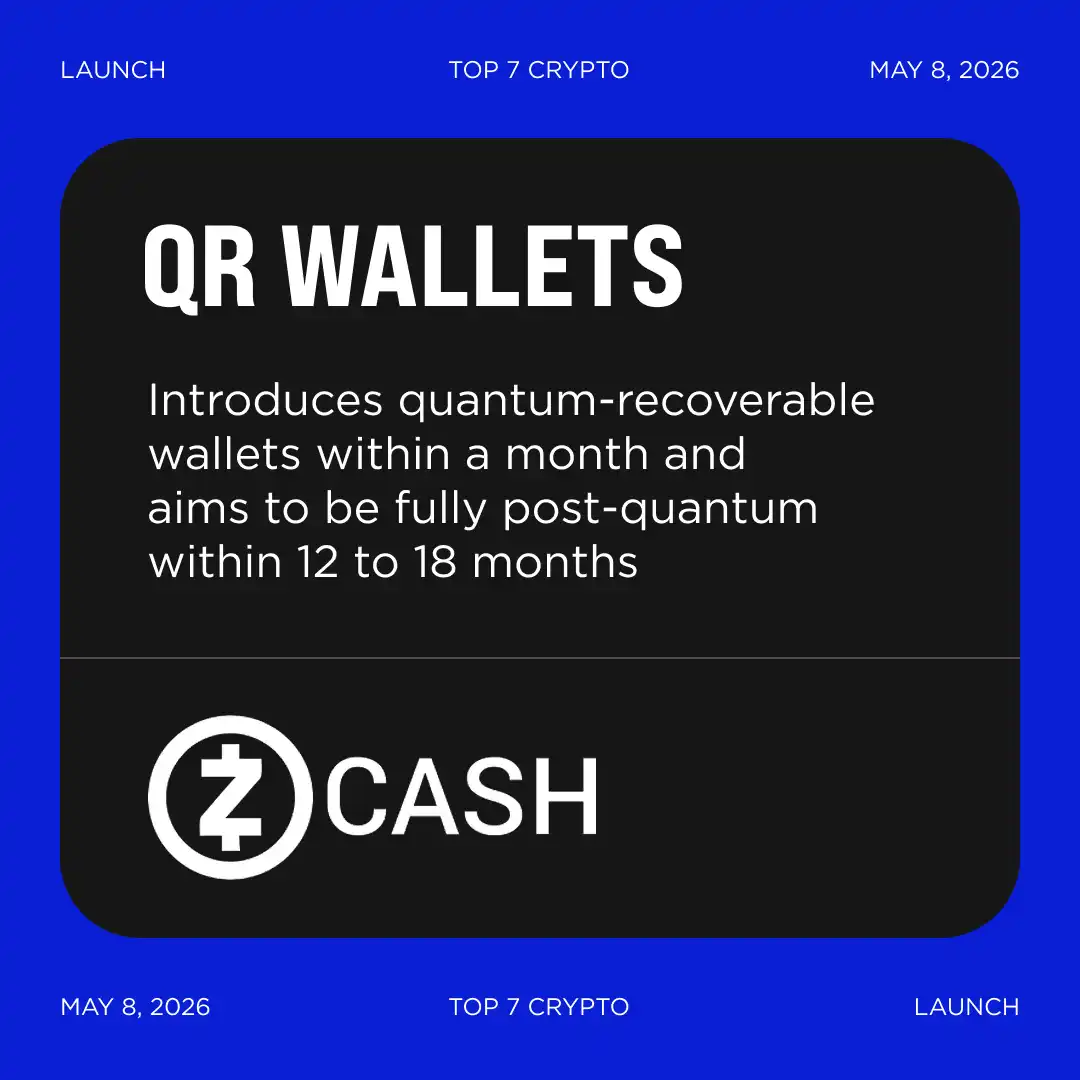
The logic here is: the ECDSA signature algorithm used by most cryptocurrencies today will become vulnerable once quantum computing matures. A more dangerous scenario is the "harvest now, decrypt later" strategy, where adversaries record encrypted data now and decrypt it later when quantum hardware is available. For a privacy coin whose entire value proposition is built on the confidentiality of transaction data, this is an existential threat.

Swihart also disclosed that since the ECC wallet integrated Near Intents cross-chain swap functionality last October, $6-7 billion has flowed in and out through this channel, primarily swapping for dollars and USDC. Zcash's shielded pool currently holds about 30% of the circulating ZEC supply, the highest level in history.

Institutional Entry Signals: Grayscale ETF, Robinhood Listing, Foundry Mining

Beyond Multicoin's heavy position, ZEC is accumulating more institutional-level catalysts.

Grayscale has filed for a ZEC spot ETF, still awaiting an SEC ruling. Grayscale has previously stated publicly that ZEC's upside potential is closely tied to the "repricing of financial privacy in an AI-driven world."

Robinhood recently listed ZEC for trading, opening up a retail gateway. Foundry (under Digital Currency Group) announced the launch of large-scale ZEC mining pool operations. This is the second asset supported by the company after Bitcoin, adding credibility to ZEC's mining security and institutional acceptance.

On the on-chain data front, Santiment data shows retail investor interest in privacy coins is rising, driven by tighter exchange compliance rules and growing data tracking concerns. In a March report, CoinDesk Research stated that Zcash has reached a "encryption supremacy" tipping point, driven by the convergence of three forces: AI tools can de-anonymize users on transparent blockchains by tracking transaction patterns, the threat of quantum computing to current crypto wallet security is becoming more real, and quarterly trading volume has surpassed $100 billion.

However, The Team That Built Zcash Has All Left

The catalysts above paint a bullish picture, but one fact shouldn't be ignored: the core team that built Zcash is gone.

In January of this year, Electric Coin Company (ECC) CEO Josh Swihart and the entire ECC team resigned collectively, citing governance conflicts with the Bootstrap Project board and characterizing the departure as "constructive discharge." ECC was the core organization that created and maintained Zcash. The team's departure means the chain is now operating without its original engineering team.

Therefore, what's more apparent with ZEC currently is that the narrative hype is far outpacing the fundamentals. KOL calls, fund heavy positions, consecutive Consensus panels—these are stories of capital and attention, but on-chain public transaction volume hasn't grown much.

Because transactions in the shielded pool are, by design, invisible, you can't use on-chain data to distinguish between "real adoption" and "speculative capital sitting idle."

But lacking fundamentals is the norm for most coins. In this wave of "old guard coin" revival, ZEC is undoubtedly one of the brightest stars, but it likely won't be the last.


Domande pertinenti

QAccording to the article, what is the main reason behind Multicoin Capital's significant investment in ZEC?

AMulticoin Capital's main investment thesis is that while Bitcoin resists censorship, it does not protect against government confiscation via mechanisms like wealth taxes on transparent holdings. They believe ZEC, with its shielded pool using zero-knowledge proofs, offers a truly private, censorship-resistant, and confiscation-resistant asset, which they see as having clear product-market fit with accelerating demand.

QWhat ambitious price target for ZEC was mentioned by BitMEX co-founder Arthur Hayes?

AArthur Hayes stated that the long-term price target for ZEC should be "10% of Bitcoin's price." With Bitcoin around $80,000, this would imply a ZEC target price of approximately $8,000.

QWhat key technical development for ZEC was announced at Consensus Miami?

AAt Consensus Miami, it was announced that quantum-recoverable wallets for ZEC will launch within a month, with the goal of achieving full post-quantum security for the Zcash network within 12 to 18 months to address the threat posed by future quantum computers.

QWhat major organizational change has recently occurred concerning Zcash's core development team?

AThe entire team of the Electric Coin Company (ECC), the core organization that created and maintained Zcash, including its CEO Josh Swihart, resigned in January. This departure was due to governance conflicts with the Bootstrap Project board, leaving the chain to operate without its original engineering team.

QBesides Multicoin Capital's investment, what are two other institutional-level catalysts mentioned for ZEC?

ATwo other institutional catalysts mentioned are: 1) Grayscale has filed for a ZEC spot ETF, which is pending SEC approval, and 2) Robinhood has listed ZEC for trading, providing a major retail access point.

Letture associate

After 50x Storage Surge, Justin Sun Always Looks to the Next Decade

Sun Yuchen, known for his controversial stunts like a $30 million lunch with Warren Buffett (canceled due to a kidney stone) and eating a $6.2 million duct-taped banana, is often overshadowed by a significant fact: his decade-long track record of spotting major investment trends. In 2016, he famously advised young people to invest in Bitcoin, Nvidia, Tesla, and Tencent instead of buying property. A hypothetical $20,000 investment in Nvidia and Tesla from that list would now be worth over 50 million RMB. His latest major call was on November 6, 2025, predicting a "50x storage opportunity" tied to the AI boom, which materialized with Sandisk's stock surging nearly 50-fold by 2026. Looking ahead, Sun now focuses on the next frontier: Physical AI. He identifies four key areas: 1. **Embodied AI/Robotics**: He sees this reaching its "iPhone moment," with companies like UBTech and Galaxy General leading in commercialization. 2. **Drones**: Viewed as the first commercially viable form of Physical AI, revolutionizing sectors from warfare (e.g., AeroVironment's Switchblade) to logistics. 3. **Spatial Computing**: Beyond VR, it's about AI understanding physical space, a foundational technology for robotics and autonomous systems, exemplified by Apple's Vision Pro. 4. **Space Exploration**: After a 2025 suborbital flight with Blue Origin, Sun advocates for space as the ultimate frontier, discussing blockchain's potential role in space asset management and data transactions. His investment philosophy involves betting on entire, inevitable trends rather than single companies. For robotics, he sees Tesla (the body/manufacturer) and Nvidia (the brain/AI platform) as complementary plays. In defense drones, he highlights companies making tanks obsolete (AeroVironment) and those augmenting fighter jets (Kratos). For space, he participated in Blue Origin's flight and anticipates SpaceX's potential IPO to redefine the sector's valuation. Sun Yuchen's vision frames the next two decades not as a revolution in information flow (like the internet), but in the fundamental operation of the physical world through AI-powered robots, autonomous systems, and spatial intelligence, ultimately extending human and AI activity into space. While many still focus on conventional assets, he continues to look toward the next technological horizon.

marsbit37 min fa

After 50x Storage Surge, Justin Sun Always Looks to the Next Decade

marsbit37 min fa

The Billionaires Behind the Most Expensive Midterm Election in History

"The Most Expensive Midterm Elections and Their Billionaire Backers" This analysis details the unprecedented scale of spending in the 2026 midterm elections, highlighting the key billionaire donors shaping the political landscape. Jeff Yass, founder of Susquehanna International Group, has contributed over $81 million, ranking third among individual donors behind George Soros ($102.6M) and Elon Musk ($84.8M). Yass is a major donor to Trump's MAGA Inc. and supports school choice and various candidates. Overall, federal committees have raised over $4.7 billion this cycle, with political ad spending projected to reach $10.8 billion. Republican-aligned groups are significantly out-raising their Democratic counterparts. "Dark money" from undisclosed sources continues to grow. The core stakes involve control of Congress and policy direction for Trump's final term. Donors are also motivated by specific issues: Sergey Brin and Chris Larsen are funding opposition to a proposed California wealth tax and supporting crypto-friendly policies. Other top donors include OpenAI's Greg Brockman and his wife Anna ($50M total to MAGA Inc. and an AI-focused PAC), Richard Uihlein ($45.3M to conservative causes), venture capitalists Marc Andreessen and Ben Horowitz (each over $44M to crypto/AI PACs and MAGA Inc.), Miriam Adelson ($42.6M to GOP leadership PACs), Paul Singer ($33.9M), and Diane Hendricks ($25.8M to MAGA Inc.). The article notes that the peak fundraising period is still ahead, with major primaries approaching.

marsbit40 min fa

The Billionaires Behind the Most Expensive Midterm Election in History

marsbit40 min fa

The Largest IPO in History Is Approaching, Surpassing SpaceX, 28 Years of AI Self-Iteration, Countdown to Intelligence Explosion

"Anthropic Nears Trillion-Dollar IPO, Fueled by Explosive Growth and 2028 'Intelligence Explosion' Warning Anthropic is considering a deal valuing the AI company near $1 trillion, potentially leading to one of the largest IPOs ever and surpassing SpaceX. Its revenue has skyrocketed, with Annual Recurring Revenue (ARR) reaching $45 billion in May 2026—a 500% increase in just five months. This vertical growth curve is attributed to its key products, Claude Code and Cowork, dominating AI coding and enterprise collaboration. Beyond commercial success, co-founder Jack Clark issued a pivotal warning in an interview: there is a greater than 50% chance that by the end of 2028, AI systems will achieve recursive self-improvement—the ability to autonomously build a 'better version' of themselves, initiating an 'intelligence explosion.' This prophecy underpins the company's astronomical valuation, as the market prices in the potential for transformative and disruptive AI. Further signaling its ambition, Anthropic formed a $1.5 billion joint venture with Goldman Sachs and Blackstone, aiming to disrupt traditional consulting firms like McKinsey by deploying Claude AI for complex strategic work. This move tests AI's capacity to replace high-level cognitive labor, a precursor to its predicted autonomous evolution. The narrative presents a dual future: unprecedented economic opportunity alongside significant risks like economic restructuring and security threats. Anthropic's meteoric rise and Clark's 2028 prediction frame the coming years as a countdown to a potential technological singularity."

marsbit51 min fa

The Largest IPO in History Is Approaching, Surpassing SpaceX, 28 Years of AI Self-Iteration, Countdown to Intelligence Explosion

marsbit51 min fa

Trading

Spot
Futures

Articoli Popolari

Come comprare ZEC

Benvenuto in HTX.com! Abbiamo reso l'acquisto di Zcash (ZEC) semplice e conveniente. Segui la nostra guida passo passo per intraprendere il tuo viaggio nel mondo delle criptovalute.Step 1: Crea il tuo Account HTXUsa la tua email o numero di telefono per registrarti il tuo account gratuito su HTX. Vivi un'esperienza facile e sblocca tutte le funzionalità,Crea il mio accountStep 2: Vai in Acquista crypto e seleziona il tuo metodo di pagamentoCarta di credito/debito: utilizza la tua Visa o Mastercard per acquistare immediatamente ZcashZEC.Bilancio: Usa i fondi dal bilancio del tuo account HTX per fare trading senza problemi.Terze parti: abbiamo aggiunto metodi di pagamento molto utilizzati come Google Pay e Apple Pay per maggiore comodità.P2P: Fai trading direttamente con altri utenti HTX.Over-the-Counter (OTC): Offriamo servizi su misura e tassi di cambio competitivi per i trader.Step 3: Conserva Zcash (ZEC)Dopo aver acquistato Zcash (ZEC), conserva nel tuo account HTX. In alternativa, puoi inviare tramite trasferimento blockchain o scambiare per altre criptovalute.Step 4: Scambia Zcash (ZEC)Scambia facilmente Zcash (ZEC) nel mercato spot di HTX. Accedi al tuo account, seleziona la tua coppia di trading, esegui le tue operazioni e monitora in tempo reale. Offriamo un'esperienza user-friendly sia per chi ha appena iniziato che per i trader più esperti.

247 Totale visualizzazioniPubblicato il 2024.12.12Aggiornato il 2025.03.21

Come comprare ZEC

Discussioni

Benvenuto nella Community HTX. Qui puoi rimanere informato sugli ultimi sviluppi della piattaforma e accedere ad approfondimenti esperti sul mercato. Le opinioni degli utenti sul prezzo di ZEC ZEC sono presentate come di seguito.

活动图片