XRP 期货反超 Solana:32.8 亿解锁能否守住 3.50 美元?

ambcryptoPubblicato 2025-08-11Pubblicato ultima volta 2025-08-11

Introduzione

期货数据一直支持 XRP 多头,但托管可能会带来一些危险。

8月10日,XRP在图表上的收盘价为3.1879美元,仅24小时内就下跌了3.8%。此前,美国证券交易委员会(SEC)撤销对Ripple Labs的诉讼的消息传出后,XRP曾短暂反弹,随后出现回调。

然而,机构活动仍然很活跃,Remittix 的 1850 万美元赏金旨在彻底改革其支付系统。

受此影响,在撰写本文时,XRP 的价格似乎同时闪烁着看涨和看跌信号——这是交易者谨慎的迹象。

期货狂热提振看涨阵营

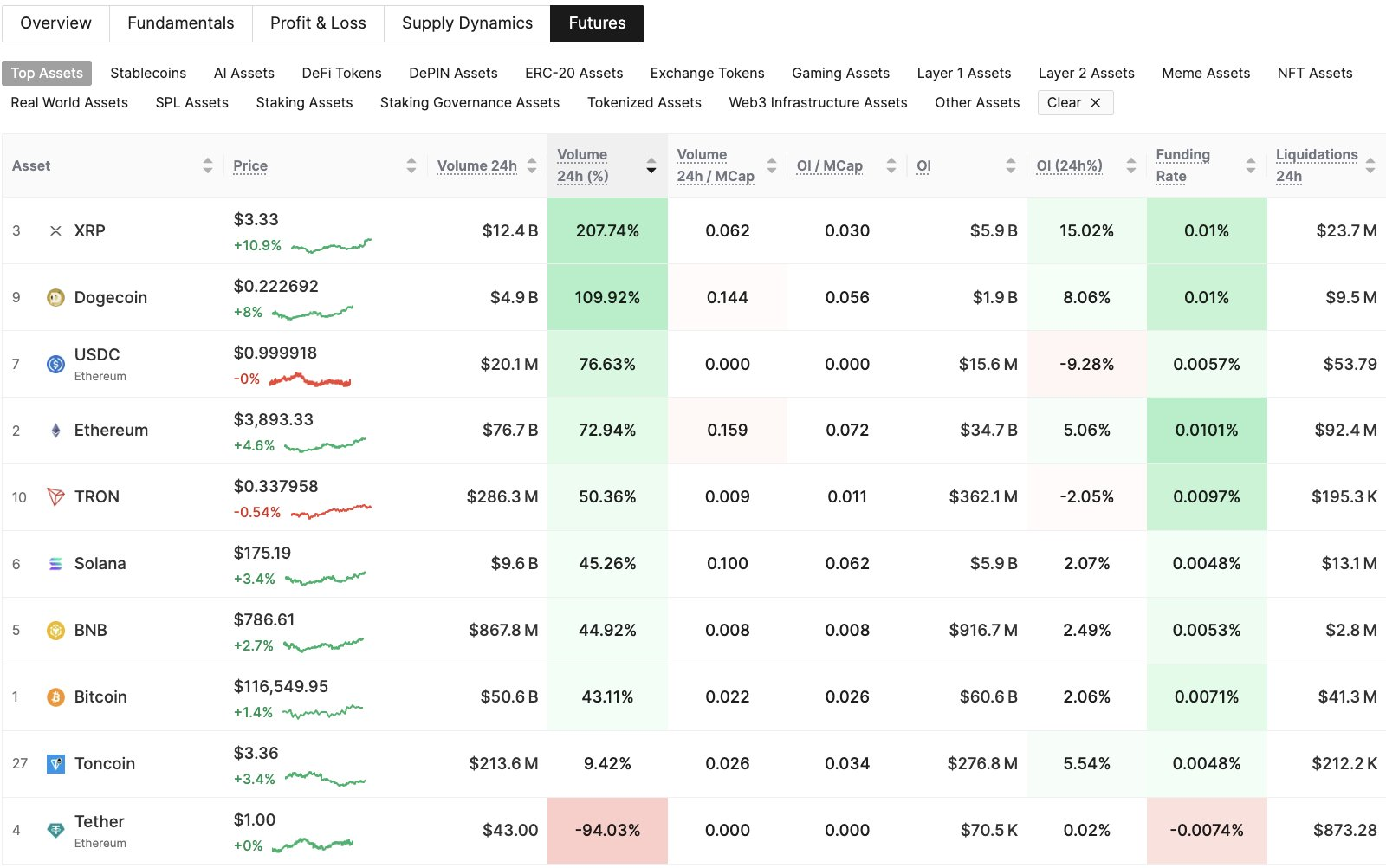
XRP 的 24 小时期货交易量飙升 207.74%,达到 124 亿美元,超过 Solana 的 96 亿美元。

未平仓合约攀升 15.02%,达到 59 亿美元,超过狗狗币 [DOGE]、以太坊 [ETH]、Solana [SOL]和 Toncoin [TON] ——这些币的持仓量均超过 10 亿美元,但落后于 XRP 的增长。

融资利率也变为正值,表明买家可能正在支付空头资金以维持仓位。

由于这一势头,XRP成为 24 小时清算量最高的加密货币(不包括稳定币)列表中第三名。

高杠杆订单存在风险

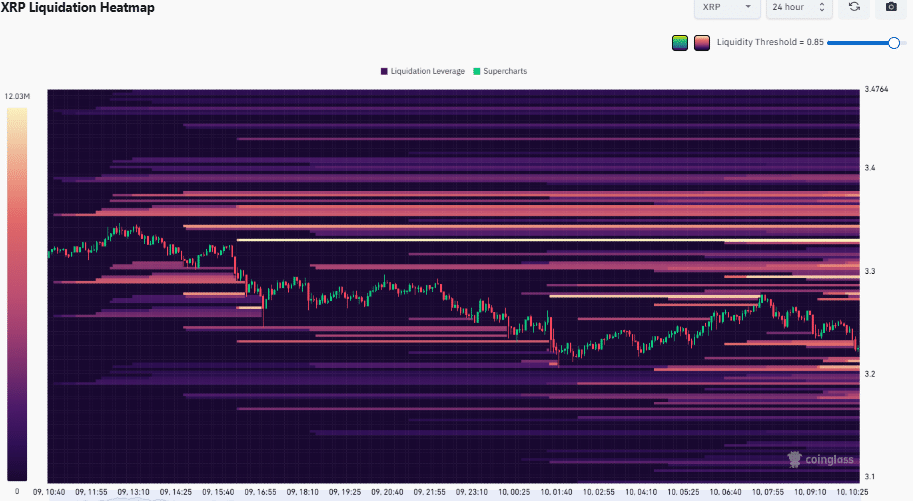
正如预期的那样,这些看涨信号使价值约 1.5 亿美元的高杠杆空头面临清算风险。这些订单的成交价在 3.27 美元至 3.37 美元之间。

如果价格在多头的掌控之下,这些空头的涌入可能会导致轧空。这可能会导致XRP价格突破图表上的3.50美元水平。

截至发稿时,持仓数量有所减少——这表明交易员更倾向于看涨押注。然而,其规模似乎远小于卖方订单的间接成本。

托管解锁威胁供应冲击

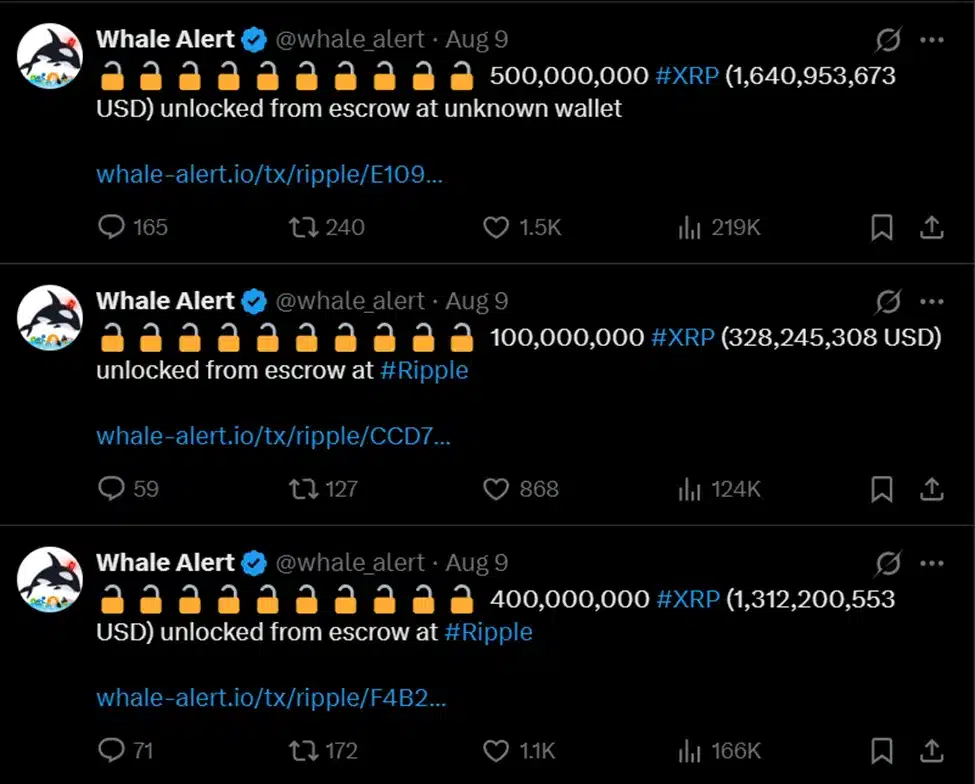
8 月 9 日,超过 32.8 亿美元的 XRP 从托管账户解锁。据Whale Alert报道,此次解锁被拆分为 16.4 亿美元、3.28 亿美元和 13.2 亿美元的交易批次。

向未知钱包发布可能会扩大流通供应量,从而增加抛售压力。

从历史上看,此类事件会对 XRP 的价格造成压力,尤其是当需求无法满足流入量时。

截至发稿时,虽然看涨指标似乎超过看跌信号,但托管解锁的规模给市场注入了一些不确定性。

因此,交易者可能更愿意等待更清晰的突破或崩溃,然后再进行大额持仓。

Letture associate

Xiaomi MiMo's 99% Price Cut is Not Marketing! Luo Fuli Posts on X to Refute Critics

The price of Xiaomi's MiMo-V2.5 series API has been permanently reduced by up to 99%, specifically for the "Input (Cache Hit)" cost, which covers users re-reading historical context in long conversations. MiMo's head, Luo Fuli, published a detailed technical blog to clarify that this drastic price cut stems from genuine engineering breakthroughs, not a marketing stunt or a simple price war. The core of the achievement lies in six key engineering optimizations. First, the model architecture adopts a Hybrid Sliding Window Attention (SWA), reducing the memory footprint (KVCache) to 1/7th of a traditional model. Second, a dual-pool memory management system actually utilizes these savings, allowing a single GPU to handle over 5 times more concurrent users. Third, an upgraded prefix caching mechanism achieves a cache hit rate of 93-95% for repeated reads, meaning most such requests bypass GPU computation entirely. Fourth, a self-developed distributed cache (GCache) utilizes idle SSD space on existing GPU servers, eliminating additional storage costs. Fifth, an intelligent scheduling system (LLM-Router) efficiently routes requests to maximize cache reuse and performance. Sixth, Multi-Token Prediction (MTP) accelerates the model's text generation ("output") side. Together, these systemic optimizations dramatically lower the real computational cost per request, enabling the 99% price reduction for cached inputs while reportedly maintaining positive gross margins. Luo Fuli's disclosure aims to shift the narrative from "price war" to a demonstration of substantive AI engineering progress.

marsbit30 min fa

Xiaomi MiMo's 99% Price Cut is Not Marketing! Luo Fuli Posts on X to Refute Critics

marsbit30 min fa

$26 Billion: An 'All-Chinese Team' Backs the World's Highest-Valued AI Programming Company

Cognition AI, the company behind the AI programmer "Devin," has raised over $1 billion in new funding at a valuation of $26 billion, just eight months after reaching a $10.2 billion valuation. The round was led by Lux Capital, General Catalyst, and 8VC. Founded by three young Chinese entrepreneurs with strong competitive programming backgrounds, Cognition initially gained fame with Devin, marketed as the world's first AI software engineer capable of handling tasks from start to finish. While its early demos were impressive, real-world usage revealed reliability and cost-effectiveness issues, leading to a significant price cut for Devin in 2025. A pivotal moment came when Cognition acquired the assets of AI IDE company Windsurf after a failed acquisition by OpenAI. This move gave Cognition a crucial developer-facing tool, allowing it to pursue a two-pronged strategy: Devin for autonomous task execution and Windsurf for integrated, collaborative coding within an IDE. This shift helped the company move away from the controversial "AI replacement" narrative towards a model of augmenting human engineers, particularly for repetitive or maintenance tasks. This strategic pivot is backed by strong commercial metrics. The company reports a 10x increase in enterprise usage this year, with an annual revenue run-rate of $492 million and a 50% month-over-month growth in enterprise Devin usage over the past six months. Its client list now includes major corporations like Goldman Sachs and Mercedes-Benz, as well as government agencies like NASA and the U.S. Army. Investors are betting on Cognition becoming a foundational piece of next-generation software engineering infrastructure, positioning it at the center of a hybrid future where AI agents and human developers work in tandem.

marsbit45 min fa

$26 Billion: An 'All-Chinese Team' Backs the World's Highest-Valued AI Programming Company

marsbit45 min fa

The Hottest 00s Generation on Wall Street

"Wall Street's Hottest '00s Phenom: The 25-Year-Old Fund Manager Who Bet on AI's 'Boring' Backbone" At just 25, Leopold Aschenbrenner, once fired by OpenAI, now runs a hedge fund worth $13.7 billion. His strategy? Betting against the consensus. While others chased AI chips, he invested early in the physical infrastructure powering the AI boom: electricity, data centers, and energy. Expelled from OpenAI's safety team in 2024, Aschenbrenner foresaw the coming bottleneck. He argued that AI progress would be limited not by algorithms, but by power, chip capacity, and space. Acting on this, he founded Situational Awareness LP to go long on these "old economy" assets. His bets have paid off spectacularly. His fund's assets soared from $255 million in late 2024 to $13.7 billion by Q1 2026. His portfolio is a direct reflection of his thesis: major long positions in fuel cell company Bloom Energy and data center/bitcoin mining firms like CleanSpark and Riot Platforms, which control critical land and power resources. Conversely, he holds massive put options against overheated semiconductor giants like NVIDIA and AMD. A notable exception was his bullish bet on storage company SanDisk, which surged ~160% in Q2. Aschenbrenner's vision is materializing. Tech giants like Amazon, Alphabet, and Meta are ramping up colossal capital expenditure on data centers. Global data center power consumption is projected to skyrocket, with AI accounting for over half by 2030. The demand for enabling technologies like optical fiber and modules is also exploding. His story underscores a fundamental truth of the AI era: the ethereal intelligence of algorithms rests on a very physical, heavy, and power-hungry foundation. The future is being built not just in code, but in concrete, copper, and kilowatts.

marsbit3 h fa

The Hottest 00s Generation on Wall Street

marsbit3 h fa

Review of Cathie Wood's Masterstroke Operation on Circle

A Recap of Cathie Wood's Masterful Trading in Circle's IPO This article analyzes the strategic moves made by ARK Invest's Cathie Wood around the IPO of Circle (CRCL). Despite her typical long-term, narrative-driven investment style, Wood executed a textbook "buy low, sell high" trade. Wood secured a core position of approximately 4.49 million shares at the $31 IPO price. The stock debuted at $69, surged to a high of $299 in June 2025 fueled by stablecoin regulatory news (the GENIUS Act), and then entered a prolonged decline. During this rally, ARK systematically sold around 1.7 million shares at an average price near $210, driven partly by internal fund rebalancing rules triggered by the stock's soaring weight. This move locked in substantial profits. As the stock later fell due to lockup expirations, new share issuance, and interest rate concerns—even dipping below $50—Wood began repurchasing shares. Starting in November 2025 around $86, she continued buying on the way down, eventually rebuilding her position to roughly the original size by Q1 2026. Key takeaways include: 1) Having a strong, independent long-term thesis (viewing Circle as critical digital dollar infrastructure). 2) Trading in tranches instead of trying to time exact tops or bottoms. 3) Maintaining strict position-sizing discipline, using rules to force profit-taking and preserve buying power. For most retail investors, chasing the dramatic "pop" at open is dangerous, as the subsequent 83% drawdown showed. Wood's success hinged on pre-IPO access, a clear investment thesis, and disciplined execution.

marsbit4 h fa

Review of Cathie Wood's Masterstroke Operation on Circle

marsbit4 h fa

Sharplink CEO: Ethereum's Future is Unfolding Now

In an article titled "Sharplink CEO: Ethereum's Future is Unfolding," Joseph Chalom, a former BlackRock executive and current Sharplink CEO, argues that the current debates surrounding the Ethereum Foundation (EF) and ETH price miss the bigger picture. He asserts that Ethereum's long-term institutional adoption is secured by its foundational strengths: trust, security, and liquidity. Chalom highlights Ethereum's dominance in settling stablecoin value, tokenizing real-world assets (RWA), and facilitating high-value DeFi transactions as evidence of its winning position. He defends the Ethereum Foundation's focus on rigorous protocol development and a decade-long track record of major upgrades (The Merge, EIP-1559, Dencun, etc.), viewing its upcoming technical roadmap as the most ambitious in the industry. Contrary to critics, Chalom posits that Ethereum's decentralization and reliable neutrality are core strengths for institutional adoption, not weaknesses, as they prevent control by any single entity. Drawing a parallel to Amazon's early days, he suggests that ETH's intrinsic value is tied to the expansion of its network, which is poised for a step-change in transaction volume across stablecoins, RWAs, DeFi, and agentic finance. Chalom advocates for a "be greedy when others are fearful" approach, citing historical examples from Warren Buffett and his own experience at BlackRock during the crypto winter. He concludes that while the EF should remain focused on core protocol attributes (CROPS: Censorship Resistance, Capture Resistance, Open Source, Privacy, Security), there is a leadership gap in market outreach. Chalom calls for ecosystem participants, including Sharplink and other key players, to become more vocal advocates to support the coming institutional adoption supercycle, asserting that "Ethereum's future is unfolding now."

marsbit4 h fa

Sharplink CEO: Ethereum's Future is Unfolding Now

marsbit4 h fa

Trading

Spot
Futures

Articoli Popolari

Cosa è XRP 2.0

XRP 2.0: Una Nuova Frontiera nel Paesaggio delle Criptovalute Introduzione a XRP 2.0 Nel mondo in continua evoluzione delle criptovalute, nuovi progetti emergono continuamente, cercando attenzione e adozione. Una tale iniziativa promettente è XRP 2.0, un nuovo progetto di criptovaluta progettato per sfruttare avanzate tecnologie blockchain e metodologie di crittografia robuste. Anche se il nome richiama alla mente l'XRP di Ripple, è fondamentale notare che XRP 2.0 opera in modo indipendente, concentrandosi sul miglioramento della sicurezza delle transazioni, della privacy e della scalabilità. Mentre il panorama finanziario digitale abbraccia sempre di più soluzioni decentralizzate, XRP 2.0 mira a contribuire in modo significativo al web3 e all'espansione generale dei progetti crypto. Cos'è XRP 2.0? Alla sua base, XRP 2.0 è un progetto di criptovaluta che mira a creare un ecosistema di valuta digitale sicuro e decentralizzato. La sua tecnologia fondamentale integra principi di blockchain sofisticati con tecniche di crittografia all'avanguardia. L'obiettivo principale di XRP 2.0 è quello di affermarsi come una piattaforma affidabile ed efficiente in grado di consentire un'esecuzione rapida delle transazioni, dando priorità a migliori protezioni della privacy per i suoi utenti. Il progetto è promosso come una soluzione a molte limitazioni affrontate dalle criptovalute esistenti, proponendo un sistema in grado di gestire un volume maggiore di transazioni con migliorata velocità e privacy. Questa versatilità pone XRP 2.0 come un significativo competitor in un mercato affollato di varie valute digitali. Chi è il Creatore di XRP 2.0? L'identità del creatore dietro XRP 2.0 è stata segnalata come 'Wilbur'. Tuttavia, i dettagli completi riguardanti Wilbur o l'entità associata rimangono sfuggenti. L'anonimato di molti creatori di criptovalute non è un fenomeno raro nel settore, spesso progettato per mantenere un certo grado di privacy e sicurezza. Chi sono gli Investitori di XRP 2.0? Al momento, informazioni specifiche relative alle fondazioni o organizzazioni di investimento a supporto di XRP 2.0 non sono disponibili pubblicamente. Nel settore delle criptovalute, il supporto di investitori rinomati può influenzare significativamente la credibilità e il successo di un progetto, tuttavia la trasparenza riguardo ai sostenitori finanziari di XRP 2.0 non è stata stabilita. Come Funziona XRP 2.0? XRP 2.0 si distingue per l'impiego di una combinazione di tecnologia blockchain e algoritmi di crittografia avanzati che garantiscono transazioni sicure e decentralizzate. La sua struttura innovativa include caratteristiche uniche progettate per promuovere il coinvolgimento degli utenti e ampliare le funzionalità oltre le transazioni convenzionali delle criptovalute. Tra queste caratteristiche, XRP 2.0 incorpora capacità alimentate da intelligenza artificiale, come funzionalità di testo in immagini e testo in voce. Queste aggiunte sono progettate per migliorare l'esperienza interattiva per gli utenti, promuovendo una maggiore applicabilità in vari settori. Unendo progressi tecnologici con design incentrati sugli utenti, XRP 2.0 mira a catturare l'attenzione di una vasta gamma di individui e aziende che cercano di integrare soluzioni di criptovaluta nei loro framework operativi. Cronologia di XRP 2.0 Comprendere XRP 2.0 richiede di esaminare i traguardi che hanno definito il suo percorso fino ad ora: 23 luglio 2023: XRP 2.0 viene introdotto come un nuovo progetto di criptovaluta, mirante a rivoluzionare le capacità di transazione sicura e decentralizzata nel dominio blockchain. 8 settembre 2023: Si verifica il lancio di un altro progetto, XRP20, marcando l'emergere di un token ERC-20 sulla blockchain di Ethereum che resta non correlato a XRP 2.0. 13 novembre 2023: Il ledger XRP subisce un significativo aggiornamento con il rilascio della versione 2.0.0 del software server rippled. È essenziale notare che questo sviluppo è scollegato dal progetto di criptovaluta XRP 2.0. Punti Chiave su XRP 2.0 Per distillare l'essenza di XRP 2.0, emergono diversi fattori critici: Caratteristiche Uniche: L'inclusione di funzionalità come il testo in immagini e testo in voce alimentato da intelligenza artificiale diversifica ulteriormente le potenziali applicazioni di XRP 2.0. Tecnologia Blockchain: Il framework utilizza meccanismi blockchain avanzati e protocolli di crittografia, garantendo un ambiente sicuro e decentralizzato per le transazioni. Scalabilità e Privacy: XRP 2.0 dà priorità a migliori protezioni della privacy nei processi di transazione e alla scalabilità necessaria per accogliere una base di utenti in crescita. Nessuna Affiliazione con Ripple: È importante notare che, nonostante il suo nome, XRP 2.0 non ha alcuna fedeltà o collaborazione con l'XRP di Ripple, distinguendo il proprio framework operativo e obiettivi all'interno dell'ecosistema delle criptovalute. Conclusione XRP 2.0 rappresenta un'ambiziosa venture nell'ambito delle criptovalute, mirante a offrire una combinazione di sicurezza, privacy ed efficienza nelle transazioni digitali. Integrando tecnologie sofisticate e caratteristiche user-friendly, il progetto si propone di ampliare gli orizzonti di ciò che le criptovalute possono realizzare nell'economia digitale odierna. Sebbene l'anonimato del suo creatore e la mancanza di investitori dichiarati possano sollevare domande per alcuni, il focus di XRP 2.0 su funzionalità avanzate e decentralizzazione ne amplifica l'appeal in un mercato crypto sempre più affollato. Man mano che il panorama delle criptovalute continua a evolversi, XRP 2.0 potrebbe emergere come un attore decisivo nell'espansione di soluzioni blockchain sicure e scalabili.

166 Totale visualizzazioniPubblicato il 2024.04.05Aggiornato il 2024.12.03
Cosa è XRP 2.0

Come comprare XRP

Benvenuto in HTX.com! Abbiamo reso l'acquisto di XRP (XRP) semplice e conveniente. Segui la nostra guida passo passo per intraprendere il tuo viaggio nel mondo delle criptovalute.Step 1: Crea il tuo Account HTXUsa la tua email o numero di telefono per registrarti il tuo account gratuito su HTX. Vivi un'esperienza facile e sblocca tutte le funzionalità,Crea il mio accountStep 2: Vai in Acquista crypto e seleziona il tuo metodo di pagamentoCarta di credito/debito: utilizza la tua Visa o Mastercard per acquistare immediatamente XRPXRP.Bilancio: Usa i fondi dal bilancio del tuo account HTX per fare trading senza problemi.Terze parti: abbiamo aggiunto metodi di pagamento molto utilizzati come Google Pay e Apple Pay per maggiore comodità.P2P: Fai trading direttamente con altri utenti HTX.Over-the-Counter (OTC): Offriamo servizi su misura e tassi di cambio competitivi per i trader.Step 3: Conserva XRP (XRP)Dopo aver acquistato XRP (XRP), conserva nel tuo account HTX. In alternativa, puoi inviare tramite trasferimento blockchain o scambiare per altre criptovalute.Step 4: Scambia XRP (XRP)Scambia facilmente XRP (XRP) nel mercato spot di HTX. Accedi al tuo account, seleziona la tua coppia di trading, esegui le tue operazioni e monitora in tempo reale. Offriamo un'esperienza user-friendly sia per chi ha appena iniziato che per i trader più esperti.

1.4k Totale visualizzazioniPubblicato il 2024.12.10Aggiornato il 2025.03.21

Come comprare XRP

Discussioni

Benvenuto nella Community HTX. Qui puoi rimanere informato sugli ultimi sviluppi della piattaforma e accedere ad approfondimenti esperti sul mercato. Le opinioni degli utenti sul prezzo di XRP XRP sono presentate come di seguito.

活动图片