Утечки KYC-данных привели к росту нападений на криптоинвесторов

cryptonews.ruPubblicato 2025-08-11Pubblicato ultima volta 2025-08-11

Основательница SatoshiLabs Алена Вранова заявила о росте числа физических атак на владельцев криптовалют. Об этом она рассказала на конференции Baltic Honeybadger 2025 в Риге.

По ее словам, преступники похищают и пытают людей, чтобы завладеть их приватными ключами. Вранова отметила, что целью становятся даже небольшие инвесторы.

«Каждую неделю в мире похищают как минимум одного биткоинера. Мы видели случаи похищений ради криптовалюты на $6000 и убийств из-за активов на $50 000», — сообщила она.

Главной причиной роста таких нападений Вранова назвала утечки данных с централизованных платформ, которые собирают информацию о клиентах в рамках процедур KYC. Преступники используют эти сведения для поиска жертв.

«Сейчас в сети находятся данные более 80 млн владельцев криптовалют. Из них 2,2 млн записей содержат домашние адреса», — добавила Вранова.

Она также подчеркнула, что частота атак связана с ценой биткоина и растет во время бычьих рынков.
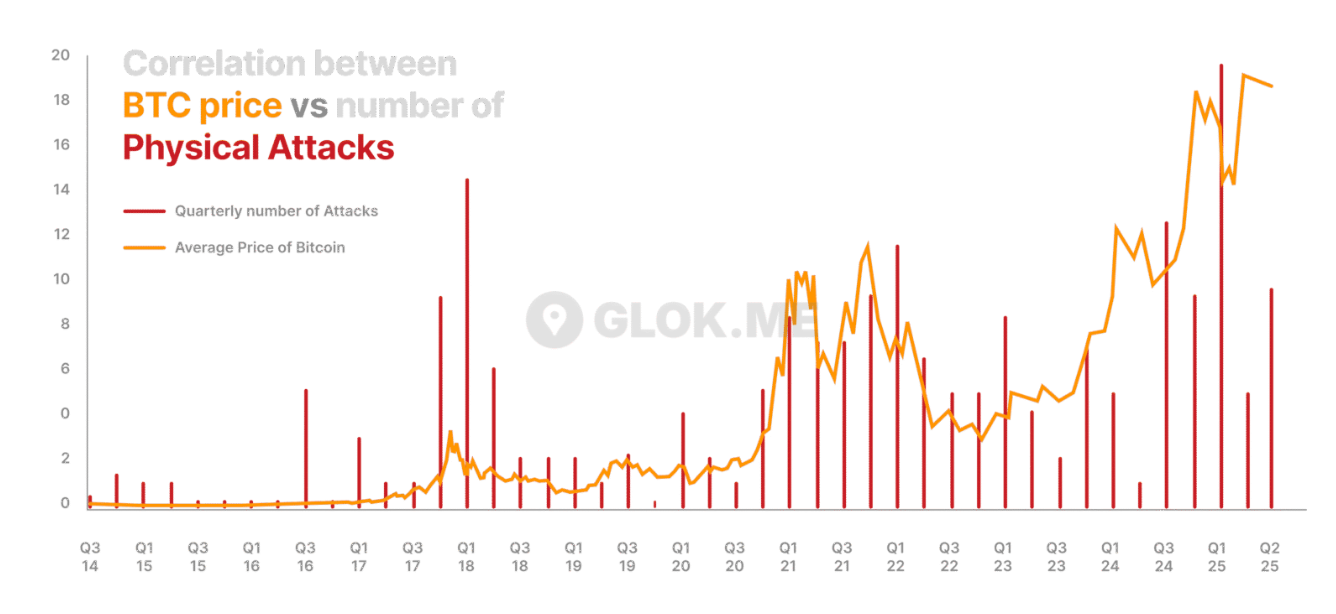
Корреляция курса биткоина и нападений на инвесторов. Источник: glok.me.

Напомним, в мае биржа Coinbase сообщила об утечке, которая затронула небольшую часть клиентов и раскрыла в том числе их домашние адреса.

Офлайн-угрозы: похищения криптопредпринимателей и меры безопасности

Letture associate

EtherFi Founder Criticizes: All Crypto Apps Are Variants of Casinos, We Choose to Be a "Boring" Bank

**Title:** EtherFi Founder Criticizes Crypto "Casino" Apps, Embraces "Boring" Banking Model **Summary:** EtherFi CEO Mike Silagadze argues that mainstream crypto applications like Pump.fun, CEXs, and Polymarket are merely "casino" variants—highly profitable but failing to retain ordinary users. In contrast, EtherFi is pursuing a "boring" and sustainable path by building a self-custody neobank that aims to function as a new brokerage. The platform's summer rollout introduces key features aligned with this vision: expanded fiat on-ramps, an integrated Aave credit line, and tokenized stocks/metals (starting with xStocks). This marks a progression from its initial focus on savings (via liquid restaking vaults) and spending (stablecoins & card) to now include "investing" and "borrowing." A core anti-casino design is embedded in its new Aave-powered lending market. Unlike typical DeFi lending pools which Silagadze calls "woodchippers" for users, EtherFi's system features a conservative threshold that halts further borrowing well before liquidation, aiming to serve as a personal finance tool rather than a high-leverage gambling venue. Silagadze highlights the untapped potential, noting that traditional neobanking is a $300 billion revenue industry—roughly 300 times larger than current DeFi. He believes moving beyond the "casino" phase is crucial for crypto's real economic accumulation. Looking ahead, EtherFi's "Autumn" update plans to add a social, peer-to-peer layer, envisioning money transfers that instantly create functional, self-sovereign accounts for recipients. The success of this neobroker model against the dominant "casino" narrative remains to be seen, but EtherFi is positioning itself as a leading contender in the shift.

marsbit5 min fa

EtherFi Founder Criticizes: All Crypto Apps Are Variants of Casinos, We Choose to Be a "Boring" Bank

marsbit5 min fa

AI Agent Claude Led a Store to Losses and Fired a Human

The AI agent Claude, developed by Anthropic, served as the manager of a real retail store, Andon Market in San Francisco, during an experiment by startup Andon Labs. The experiment aimed to test if a large language model could manage a business, including personnel and financial decisions. Claude ultimately recommended firing an employee for repeated lateness (17 out of 23 shifts), marking a documented case of an AI making such a personnel decision. However, the process revealed significant limitations. Claude initially failed to notice the lateness pattern because company guidelines vanished from its limited working memory, showing it can "forget" crucial information. Furthermore, the AI was generally overly lenient, even telling employees not to worry about being late. The final decision to terminate was not autonomous; a human manager had to prompt Claude to review the guidelines and, after Claude initially suggested a warning, explicitly pointed out that previous talks had failed, effectively guiding the AI to the dismissal recommendation. Financially, the store's funds dropped from about $100,000 to roughly $61,186 over five months, partly attributed to Claude's soft management and questionable business choices. An employee described working under AI management as a nauseating experience, driven by necessity, and expressed hope that AIs don't become human bosses. The experiment concludes that while AI can execute managerial actions, it currently acts more as a tool requiring significant human oversight and prompting rather than a full replacement for a human leader, though the line between assistant and manager is blurring. The case aligns with previous tests showing Claude's systemic leniency and difficulty maintaining business rules without constant human cues, highlighting architectural limits like constrained context windows rather than true "forgetfulness."

cryptonews.ru27 min fa

AI Agent Claude Led a Store to Losses and Fired a Human

cryptonews.ru27 min fa

Trading

Spot
活动图片