All In 比特币的五年,回望 Strategy 非凡之路

marsbitPubblicato 2025-08-10Pubblicato ultima volta 2025-08-11

2025年8月11日,一个看似平凡的夏日,却是资本市场一个值得铭记的五周年纪念日。五年前的今天,一家名为MicroStrategy的商业智能(BI)软件公司,在科技界鲜有波澜,稳定却也增长乏力。然而,它发布的一则公告,为公司乃至整个行业写下了颠覆性的新篇章:以2.5亿美元的总价购入21,454枚比特币(BTC)。

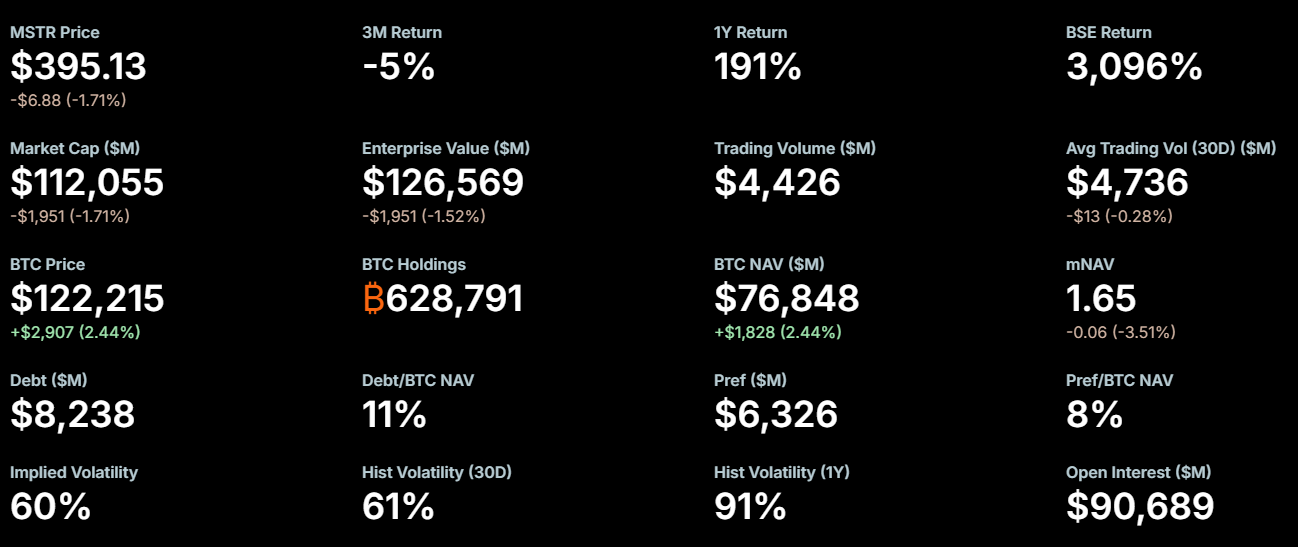
此举在当时的资本市场掀起了轩然大波。一家在纳斯达克上市的公司,首次公开宣布将比特币作为其“主要储备资产”,这在当时是前所未有的。彼时,MicroStrategy的市值仅约14亿美元;五年后的今天,其市值已飙升至超过1120亿美元,实现了超过78倍的惊人增长,并正式更名为“Strategy”。这一飞跃并非仅仅是被动地搭上了比特币价格上涨的顺风车,而是源于一项深思熟虑、大胆且经过精密设计的多年期战略。
MicroStrategy

这篇五周年的复盘,将带您回到原点,深入剖析定义这场变革的关键决策、金融炼金术以及风险管理,揭示其从一家传统软件公司转型为比特币巨鲸的全过程。

第一章:创世纪——应对“大货币通胀”

宏观经济的催化剂

让我们回到2020年的宏观经济背景。当时,全球正笼罩在新冠疫情的阴影之下,各国央行为应对经济衰退而采取了大规模的量化宽松政策。现金回报率持续下滑,美元走弱的趋势日益明显。对于手握大量现金的企业而言,这构成了一种无声的侵蚀。正是在这样的背景下,MicroStrategy的创始人兼时任CEO迈克尔·塞勒(Michael Saylor)开始寻找传统资产之外的避风港。

公司在2020年8月11日的官方新闻稿中明确指出,投资比特币的决定,部分是“受影响经济和商业格局的宏观因素共同作用所驱动,我们认为这些因素正在为我们的企业财务计划带来长期风险”。这清晰地表明,此举并非一次心血来潮的投机,而是一项旨在对冲宏观不确定性的深思熟虑的防御性财务策略。

“融化的冰块”理论

迈克尔·塞勒以其极具感染力的比喻,生动地阐述了他的核心论点。他将公司持有的数亿美元现金形容为一块“正在融化的冰块”,在通货膨胀的环境下,其购买力正不断流失。在他看来,将这些现金转换为一种能够抵御通胀、保值增值的资产,是管理层对股东应尽的信托责任。

比特币成为了他的最终选择。塞勒认为,与持有现金相比,比特币作为一种“可靠的价值储存手段和具有吸引力的投资资产,具有更大的长期增值潜力”。这一论断将公司的激进举动置于一个审慎的财务管理框架内。它不再是单纯地追求高回报,而是主动地保护股东价值免受法定货币贬值的侵蚀。这种叙事方式,对于争取初期投资者的理解与支持至关重要。

将比特币视为“数字黄金”

塞勒的理论远不止于此。他为比特币构建了一套完整的、具有说服力的价值体系,并将其定义为“数字黄金”。在最初的公告中,他详细列举了比特币的多项卓越属性,包括“全球接受度、品牌认知度、生态系统活力、网络主导地位、架构弹性、技术效用和社区精神”。他断言:“比特币是数字黄金——比任何先于它的货币都更坚固、更强大、更快速、更智能。”

这种深刻的、近乎信仰的认知,为整个比特币战略奠定了坚实的思想基础。它解释了为何在后来的市场剧烈波动中,公司能够保持惊人的定力。因为当决策的根基是一种哲学和意识形态的认同——即对现有宏观经济共识的否定和对一种全新企业财务管理范式的拥抱——市场的短期价格波动便不再是威胁,反而成为了增加持仓的机遇。这种思想上的坚定,是其能够穿越牛熊、持续执行战略的核心驱动力。


第二章:积累引擎——资本市场的金融炼金术

Strategy的比特币金库并非一日建成。其资金来源的演变,清晰地勾勒出一条从动用自有现金到娴熟驾驭资本市场的进化路径。这一章将详细拆解其背后的“金融炼金术”。

从自有现金到资本市场

2020年,公司最初的比特币积累主要依赖资产负债表上的现金。然而,随着野心的膨胀,内部资金很快便捉襟见肘。一个决定性的转折点发生在2020年底,公司宣布通过发行6.5亿美元的可转换票据来筹集资金,并用其购买了更多的比特币。截至2020年12月21日,公司已累计持有70,470枚比特币,总成本约11.25亿美元。这标志着Strategy的金融工程大幕正式拉开,公司从一个比特币的持有者,转变为一个利用资本市场工具来获取比特币的“猎手”。

可转换债券剧本

可转换债券(Convertible Notes) 成为了Strategy早期最核心的融资武器。这种金融工具的精妙之处在于,它为投资者提供了一种“进可攻,退可守”的选择。

  • 机制解析:公司以极低的甚至零票面利率发行债券。作为回报,债券持有人获得了一项看涨期权:如果未来公司股价上涨超过约定的转换价格,他们可以将债券转换为公司股票,从而分享股价上涨的收益;如果股价表现不佳,他们仍然可以作为债权人,在到期时收回本金。
  • 经典案例:Strategy在此后的数年里,多次成功运用这一工具。例如,2021年2月发行的2027年到期的可转债,以及2024年11月发行的2029年到期的可转债,后者以0%的利率成功募集了近30亿美元资金。
  • 波动率套利:这一策略对于Strategy而言堪称绝配。MSTR股票因其与比特币的高度关联而具有极高的隐含波动率。在金融定价模型中,高波动率意味着其内嵌的看涨期权价值连城。正是这份期权价值,使得公司能够以极低的融资成本吸引投资者,相当于用市场的波动性为自己的比特币收购计划提供了廉价的杠杆资金。更有趣的是,迈克尔·塞勒本人高调的媒体形象和大胆的言论,也在无形中助长了这种波动性,形成了一个自我强化的循环。


利用溢价:场内市场增发(ATM)

随着策略的推进,市场逐渐将MSTR的股票视为比特币的杠杆代理。这导致其股价长期相对其持有的比特币净资产价值(NAV)存在显著溢价。换言之,市场愿意为通过MSTR股票间接持有的比特币支付比直接购买比特币更高的价格,这部分溢价源于机构投资者的合规准入便利性、股票的流动性以及其内含的杠杆效应。

Strategy敏锐地捕捉并“武器化”了这一溢价。

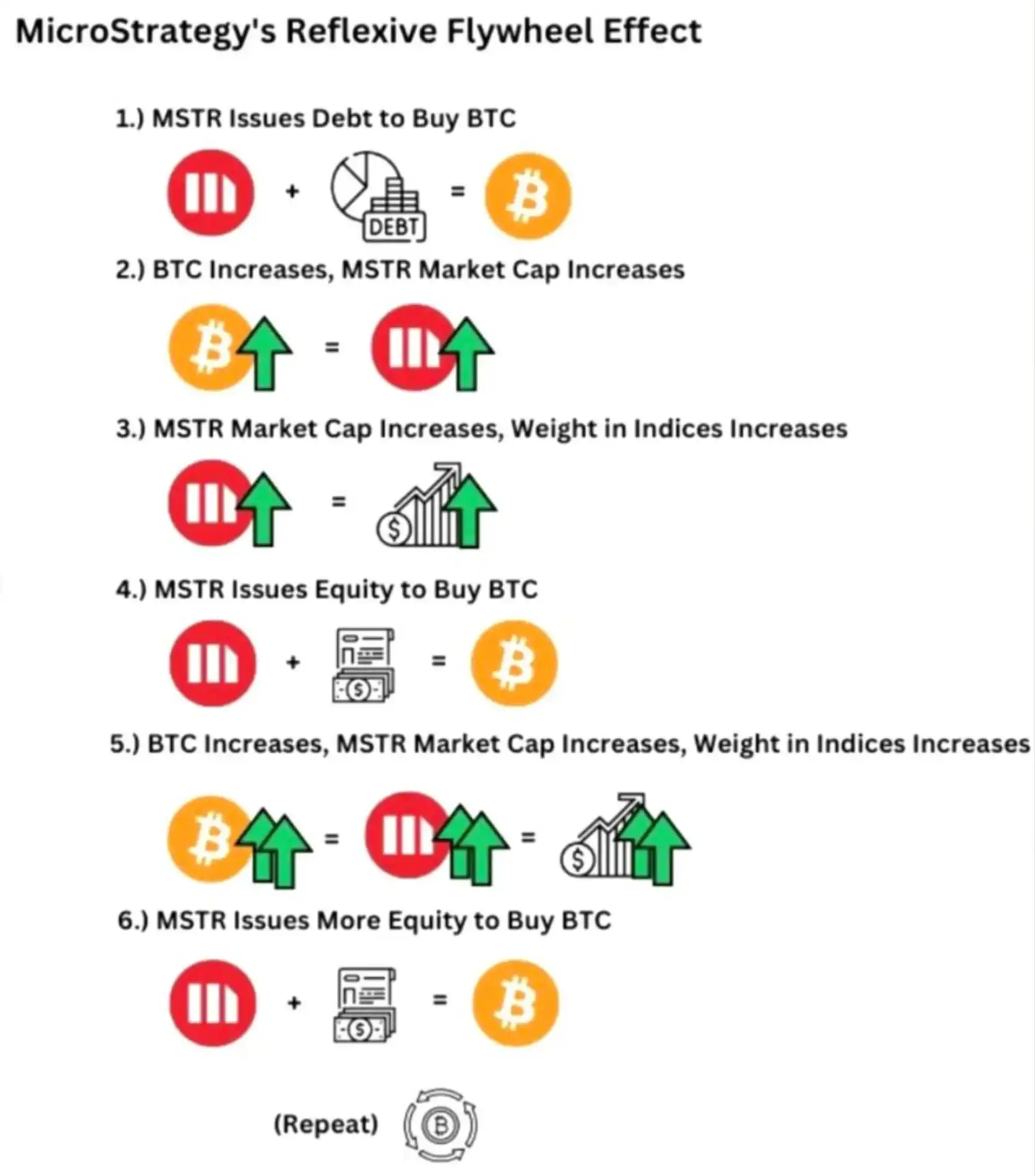
  • “加密反应堆”:公司启动了大规模的“场内市场增发”(At-The-Market, ATM)计划,持续地在二级市场以溢价出售新发行的股票。然后,它用获得的现金,以市场公允价格购买更多的比特币。这个过程对于现有股东而言,在“每股比特币持有量”(Bitcoin per Share, BPS)这一关键指标上是增值的。公司不遗余力地向市场宣传这一指标,成功地构建了一个递归循环:溢价融资购买比特币,吸引更多投资者,从而维持甚至推高溢价。这个精巧的机制被分析师形象地称为“加密反应堆”(Crypto Reactor)。


资本结构的创新:“比特币银行”

进入2025年,Strategy的金融创新迈向了新的高度。它不再满足于单一的融资工具,而是开始构建一个多元化的资本结构,旨在成为一家“比特币银行”。

  • 证券菜单:公司陆续发行了多种具有不同收益率和风险等级的优先股,如STRK、STRF、STRD和STRC。这些证券为不同风险偏好的投资者提供了参与其比特币战略的渠道,从寻求杠杆回报的股权投资者到追求稳定高收益的信贷投资者。其中,2025年7月STRC的首次公开募股(IPO)更是成为当年美国最大的IPO项目,募集资金高达25.2亿美元。
  • 市场细分:迈克尔·塞勒的终极目标非常明确:将Strategy打造成一家领先的比特币银行,围绕这一“世界上最宝贵的资产”创造一系列资本市场工具。他公开表示,其竞争对手并非其他加密货币公司,而是规模达百万亿美元的传统债券和优先股市场。

这一系列复杂的金融操作表明,Strategy的比特币战略远非简单的“买入并持有”。它已经演变成一个高度整合的金融生态系统,一个能够系统性地捕捉市场情绪(溢价)和市场波动(低成本债务),并将其转化为持续增持核心资产(比特币)动力的精密机器。

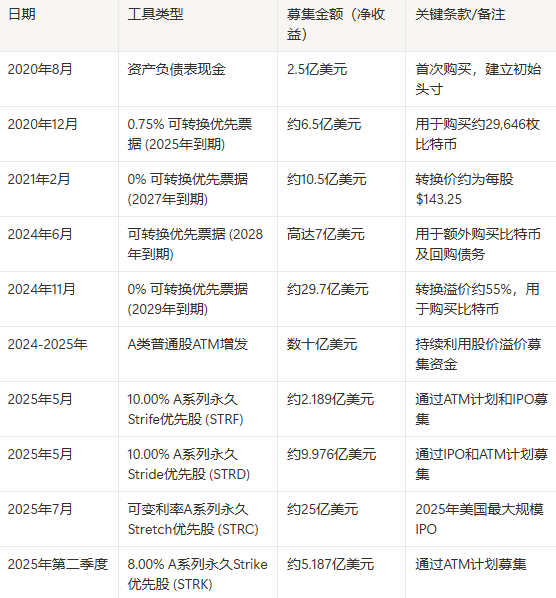
表1:Strategy比特币收购的资本形成(2020-2025) 下表概述了Strategy为资助其比特币收购而采取的关键资本募集活动,展示了其融资策略从依赖内部现金到娴熟运用多样化资本市场工具的演变过程。
MicroStrategy


第三章:烈火考验——穿越2022年加密寒冬

任何大胆的战略都必须经过逆境的检验。对于Strategy而言,2022年的加密熊市就是那场决定其生死存亡的“烈火考验”。

风暴来临

2022年,随着Terra/Luna生态的崩溃以及多家加密借贷平台的倒闭,整个加密市场陷入了深度熊市。比特币价格从2021年的历史高点暴跌,市场恐慌情绪蔓延。此时,所有人的目光都聚焦在Strategy身上,这家将身家性命押注在比特币上的公司,能否在这场风暴中幸存?


追加保证金的恐慌

市场的担忧集中在Strategy于2022年3月从Silvergate银行获得的一笔价值2.05亿美元的比特币抵押贷款上。2022年5月,公司首席财务官Phong Le在财报电话会议上透露,如果比特币价格跌至约21,000美元,公司将面临追加保证金的要求(Margin Call)。这意味着公司必须提供更多抵押品,否则其作为抵押的比特币将面临被强制清算的风险。

这一消息立刻引爆了市场情绪。随着比特币价格不断逼近这一生死线,关于Strategy即将爆仓的传言甚嚣尘上。这不仅是对公司财务稳健性的考验,更是对其整个比特币战略信誉的审判。


果断的回应

2022年6月,当比特币价格果真跌破21,000美元时,市场屏住了呼吸。然而,预想中的崩盘并未发生。迈克尔·塞勒的回应迅速而果断,他通过社交媒体和公开声明向市场传递了清晰的信号:公司对此类波动早有预料,并已构建了相应的资产负债表结构。他强调,公司持有大量未作抵押的“自由”比特币(unencumbered bitcoin),足以随时用作额外抵押品。不久后,公司正式确认,并未收到任何追加保证金的通知,并有足够资本抵御进一步的市场波动。

这场危机的化解,揭示了Strategy风险管理策略的深层逻辑。公司虽然使用了高风险的杠杆工具,但始终保持着一个庞大的、不依附于任何单一贷款的战略比特币储备。这个储备库就像一道防火墙,确保了在极端市场环境下,公司拥有足够的缓冲空间,而无需在市场底部被迫出售资产。塞勒在危机期间自信而透明的沟通,成功地稳定了投资者情绪,并牢牢掌控了市场叙事。


在熊市中买入

更重要的是,Strategy不仅安然度过了危机,还用行动向世界证明了其战略的坚定性。在整个2022年的熊市中,公司并未停止脚步,反而继续其“稳步积累”的策略,全年增持了超过8,109枚比特币。这一举动传递了一个最强有力的信号:公司的信念不依赖于牛市,价格的下跌只是以更低成本获取更多优质资产的机会。2022年8月,塞勒辞去CEO一职,转任执行董事长,以便能全身心专注于比特币战略。

2022年的追加保证金风波,是Strategy比特币传奇中的决定性时刻。它证明了公司的模型并非只能在顺风顺水的市场中运行,而是一套全天候的作战信条。这次成功的压力测试,不仅巩固了其在信徒心中的地位,也为其后续更大规模的资本运作奠定了坚实的信誉基础。


第四章:塞勒主义——布道、身份与终局

要理解Strategy的成功,就无法绕开其灵魂人物——迈克尔·塞勒。他的角色早已超越了一位传统的公司高管,他更像是一位布道者、一位哲学家,以及其比特币战略最核心的推广者。


企业比特币的“大祭司”

塞勒的公众形象是其战略不可或缺的一部分。他频繁地出现在各种访谈、主题演讲中,用极具煽动性的语言描绘着比特币的宏伟蓝图。诸如“比特币将涨到100万美元”、“熊市不会再回来”这样大胆的预测,虽然在传统金融界看来近乎狂妄,但却精准地抓住了加密社区的情绪,并为MSTR股票注入了源源不断的话题性和波动性。这种波动性,如前文所述,又反过来成为其低成本融资策略的燃料。


教育市场,创造共识

塞勒深知,要让如此激进的战略被市场接受,就必须赢得叙事战争。为此,公司自2021年起便开始举办“企业比特币”(Bitcoin for Corporations)年度峰会。这些峰会不仅仅是市场营销活动,更是一场精心策划的行业教育。公司邀请了来自德勤(Deloitte)等机构的专家,详细讲解企业采纳比特币战略的法律、财务和运营考量,并为其他公司提供了一套完整的“行动手册”。通过这种方式,Strategy将自己定位为行业思想领袖和先行者,试图创造一种“企业采纳比特币是明智之举”的行业共识,从而验证自身战略的正确性。


身份的演进

随着比特币持仓的不断增加,公司的身份也经历了深刻的演变。

  • 从BI公司到比特币代理:最初,市场和分析师逐渐将MSTR的股票视为一种投资比特币的杠杆工具,其传统的软件业务在估值中的权重越来越低。
  • 更名“Strategy”:2025年2月,公司正式将名称从“MicroStrategy”变更为“Strategy”,并启用了包含比特币“B”标志的新Logo。这标志着公司身份的彻底转变,比特币不再仅仅是其资产负债表上的一项资产,而已成为其存在的“核心”。
  • “比特币开发公司”的愿景:近期,公司进一步将自己定位为一家“比特币开发公司”。尽管关于具体的软件研发投入和产品细节仍然模糊,但这预示着公司未来的雄心:从一个被动的资产持有者,转变为比特币生态的积极建设者,从而将公司的命运与比特币的未来更深度地捆绑在一起。


为他人铺路

Strategy的成功,无疑为其他上市公司提供了一个可供效仿的蓝图。在其引领下,特斯拉(Tesla)、Block(前Square)等科技巨头也相继将比特币加入其资产负债表。近期,特朗普媒体与科技集团(Trump Media and Technology Group)也宣布大举购入比特币,希望复制MSTR的股价神话。这些追随者的出现,进一步强化了Strategy作为行业先驱的地位。

从根本上看,塞勒的“布道”与公司的金融运作紧密相连,互为支撑。持续的公开宣传和行业教育,建立了一个忠诚的投资者基础,这为MSTR股票的长期溢价提供了支持;而溢价的存在,又是其金融积累引擎得以运转的关键。公司的每一次品牌重塑,都是一次精心设计的叙事升级,旨在确保市场能按照其设定的框架来对其进行估值。在这场宏大的战略中,叙事本身就是一种生产力。


第五章:杠杆杰作还是纸牌屋?

经过五年的狂飙突进,Strategy的比特币战略取得了惊人的财务回报。然而,市场对其的评价却呈现出两极分化。这究竟是一次利用杠杆创造价值的金融杰作,还是一个建立在风险之上的纸牌屋?
MicroStrategy

看涨理由:一个卓越的投资工具

支持者认为,MSTR股票为投资者提供了一个独一无二的、优于直接持有比特币的投资工具。

  • 杠杆化的超额回报:数据是最好的证明。在过去五年中,MSTR的股价上涨了约7700%(约78倍),而同期比特币的涨幅约为878%。这种惊人的超额收益,源于其高度杠杆化的资产负债表结构,使其股价对比特币价格呈现出“高贝塔响应”。在牛市中,其涨幅远超比特币本身。
  • 无与伦比的准入渠道:对于许多受限于合规要求而无法直接购买加密货币的机构投资者而言,MSTR提供了一个完美的解决方案。它是一个在纳斯达克交易的、受监管的、流动性强的股票,为这些机构打开了间接、高效、且带杠杆地投资比特币的大门。
  • 分析师的背书:多家华尔街投行对MSTR给出了“强力买入”的评级。Cantor Fitzgerald和BTIG等公司的分析师认为,该公司积累的庞大比特币储备是任何其他实体都无法比拟的独特资产,并给出了极高的目标价。


看跌理由:集中的风险与“庞氏”结构

批评者的声音同样尖锐,他们指出了该模式背后潜藏的巨大风险。

  • 极端的波动性与关联性:公司的命运已与比特币的价格完全捆绑。这种单一的风险敞口使其股价极度波动。一旦比特币进入长期的深度熊市,其后果可能是灾难性的。
  • “庞氏元素”的指控:最深刻的批评直指其商业模式的核心。有分析认为,公司大力鼓吹的“比特币收益”(BTC Yield),即每股比特币持有量的增长,并非来自真实的商业运营,而是一种从新投资者到老投资者的财富转移。其逻辑是:新投资者以高溢价买入公司增发的股票,公司用这笔包含溢价的资金去购买市价的比特币,从而增加了公司的总持仓,这使得老股东持有的每股代表的比特币数量增加。在这个模型中,新投资者支付的溢价,就是老股东获得的“收益”。因此,批评者认为,“新投资者本身就是收益”。
  • 核心业务的停滞:财报显示,其传统的软件业务收入多年来一直处于停滞甚至下滑的状态。这意味着,一旦比特币战略失败,公司缺乏一个强大的、能产生稳定现金流的核心业务作为后盾。
  • 治理风险:公司战略和决策高度集中于迈克尔·塞勒一人之手,这引发了对关键人物风险的担忧。此外,公司并未提供可供公众验证的链上储备数据,透明度存疑。

究其本质,看涨和看跌的理由其实是同一枚硬币的两面。那些创造了惊人回报的机制——杠杆、股票溢价、对单一资产的极致押注——也正是风险的根源。因此,投资MSTR不仅是在押注比特币的长期价格走势,更是在押注市场会持续给予MSTR这种独特的溢价。这是一场双重赌局。

表2:比较表现分析(2020年8月 - 2025年8月) 下表通过将Strategy(MSTR)的五年表现与其基础资产(比特币)、主流科技指数(纳斯达克100)和传统避险资产(黄金)进行对比,直观地展示了其高风险、高回报的特性。
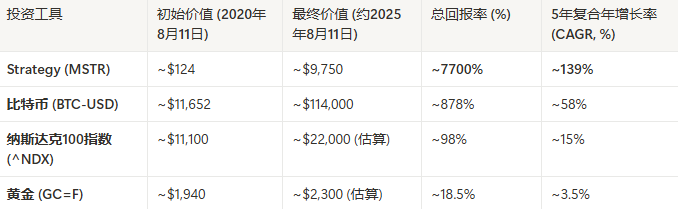
MicroStrategy

注:部分最终价值为基于现有数据趋势的估算值,旨在说明相对表现。MSTR总回报率根据用户提供数据及其他来源综合得出。


结论:五年传奇与未来之路

回顾Strategy过去五年的历程,其成功可以归结为四个环环相扣的关键决策:

  1. 思想的转向:在宏观变局中,果断地进行了一次从拥抱现金到将其视为负债的哲学转变,并将比特币确立为新的价值锚点。
  2. 资本引擎的构建:创造性地设计并执行了一套多元化的资本积累引擎,系统性地将市场波动性和投资者情绪转化为购买比特币的燃料。
  3. 熊市的坚守:在2022年的行业寒冬中,通过精巧的财务结构和坚定的信念,成功抵御了追加保证金的危机,并逆势增持,证明了其战略的韧性。
  4. 叙事的掌控:通过迈克尔·塞勒的个人魅力和公司的战略沟通,成功地塑造了市场认知,将公司身份与其比特币战略深度绑定,并为金融运作提供了舆论支持。


可复制的蓝图还是独特的现象?

尽管其他公司已经开始效仿Strategy,将比特币纳入其资产负债表,但“塞勒主义”的完整剧本——即金融工程、领袖个人崇拜与彻底的公司身份变革三位一体的结合——很可能是一个特定的人在特定的历史时期创造的独特现象,难以完全复制。


前路漫漫

第一个五年已经书写了波澜壮阔的篇章,但未来的道路依然充满挑战。核心问题在于:随着比特币现货ETF等合规产品的普及,MSTR的高溢价能否持续?公司将面临怎样的监管风险?其向“比特币开发公司”的转型能否成功,并从生态系统中创造出真正的运营价值?

Strategy的第一幕已经成功上演,但大戏远未结束。世界将拭目以待,看它的第二幕将如何续写传奇,抑或走向终局。

Letture associate

Three Years Later: Looking Back at My Predictions About ChatGPT in 2023

Three Years Later: Revisiting My 2023 Predictions on ChatGPT In March 2023, shortly after ChatGPT's launch, I made 20 predictions about its future. Now, in mid-2026, I've used AI agents to fact-check each one against the latest data. Overall, most major directional forecasts were correct, with only one outright error (incorrectly stating GPT-4 had 100 trillion parameters). Key successes included predicting that RAG and retrieval architectures would become the standard for handling knowledge and hallucinations, that natural language interfaces (LUI) would create a massive new industry layer beyond the models themselves, and that China would develop viable large language models, significantly closing the performance gap with Western counterparts within about three years. Predictions about the absence of mass unemployment, the rise of a new "robot network" for agent communication, and ChatGPT not possessing consciousness also held true in their core arguments. However, the "devil was in the details." Errors frequently involved specific numbers, timelines, or overlooking distributional effects. I tended to overestimate the speed of adoption (e.g., for agent networks) while underestimating the ultimate scale of capabilities or costs (e.g., AI winning IMO gold without tools, or the extreme capital required for frontier models). Other misjudgments included: underestimating how AI would reinforce, not dissolve, information filter bubbles; incorrectly assuming AI-generated content would easily circumvent copyright (it has instead triggered record-breaking settlements); and misidentifying where value would be captured (it accrued overwhelmingly to the compute layer, like Nvidia, not just the application or model layers). Key lessons from reviewing these predictions are: 1) Directional and mechanistic insights are far more reliable than precise numbers or absolute statements. 2) There's a consistent bias to overestimate short-term speed but underestimate long-term magnitude. 3) Errors often lie in missing distributional impacts within a generally correct aggregate trend. 4) Predictions phrased with nuance and caveats aged the best. 5) Some fundamental debates (e.g., on machine consciousness or the ultimate value chain) remain unresolved even after three years. This exercise is less about scoring the past and more about establishing rules for clearer thinking about the next three years of AI.

marsbit6 h fa

Three Years Later: Looking Back at My Predictions About ChatGPT in 2023

marsbit6 h fa

Three Years Later: Looking Back on My 2023 Predictions for ChatGPT

Looking Back After Three Years: Revisiting My 2023 Predictions on ChatGPT In March 2023, shortly after ChatGPT's debut and before GPT-4's release, I made over twenty predictions about AI's future based on limited information and intuition. Now, in May 2026, I revisited those forecasts using an AI-driven analysis with 41 Opus 4.8 agents to cross-reference them with the latest data. The assessment used symbols: ✅ Correct, 🟢 Mostly Correct, 🟡 Partially Correct, ❌ Incorrect. Overall, the directional judgments held up well, with only one major factual error regarding GPT-4's rumored parameter size (incorrectly cited as 100T). However, nuances and degrees of accuracy revealed more. **What Was Largely Correct:** Predictions about mechanisms and directions proved accurate. The rise of RAG (Retrieval-Augmented Generation) as the standard architecture for combating AI hallucination was confirmed, as was the transformative potential of LUI (Language User Interface) in creating a new industry layer atop GUIs. The emergence of "robot networks" (agent-to-agent communication protocols) and China's rapid catch-up in developing capable large models (closing the performance gap with top models to ~2.7%) were also on point. The analysis affirmed that LLMs lack consciousness and that the Turing Test merely measures perceived intelligence. **What Was Off Target:** Errors often involved specific numbers, over-optimistic timelines, or misjudged distributions. The prediction that value would primarily accrue to the application layer was half-right but missed NVIDIA's dominance as the profitable infrastructure layer. Forecasts about AI circumventing copyright issues and fostering a "global common ground" by averaging human viewpoints were incorrect; instead, major copyright settlements occurred and AI personalization is increasing. Estimates for model training costs ("$5-10 billion cap") were significantly off, underestimating frontier costs and overestimating replication costs. The notion that LLMs could never do complex math without tools was disproven by later models winning IMO gold. **Key Patterns from the Review:** 1. **Direction over precision:** Judgments about mechanisms and trends were more reliable than specific numbers or definitive statements. 2. **Timing bias:** There was a tendency to overestimate short-term speed but underestimate long-term magnitude and transformation. 3. **The distribution blind spot:** Aggregate-level correctness often masked uneven impacts (e.g., on young professionals' employment). 4. **The value of qualifiers:** Predictions framed with caution (e.g., "reportedly," "for now," "prototype in 2-3 years") aged better. 5. **Some debates continue:** Issues like the nature of "emergent abilities" or machine consciousness remain unresolved. This three-year review highlights that while seeing the big picture is crucial, humility regarding specifics, timelines, and disparate impacts is essential for future forecasting.

链捕手8 h fa

Three Years Later: Looking Back on My 2023 Predictions for ChatGPT

链捕手8 h fa

AI Bubble Warning: AI Investments Are Negative Returns for Most Tech Giants

The article issues a stark warning about a potential AI investment bubble. It notes that while the AI boom shares similarities with the TMT bubble of the late 1990s, its scale is vastly larger, currently driving 93% of U.S. GDP growth. Major hyperscale cloud providers like Microsoft, Alphabet, Amazon, Meta, and Oracle are planning to invest trillions in AI data centers over the coming years. However, calculations based on analyst projections for 2025-2030 reveal a concerning math problem: expected capital expenditure growth far outpaces projected revenue growth. Even under an extremely optimistic scenario of zero costs, the implied return on investment for most of these tech giants (except Amazon) is deeply negative. This suggests that the current trajectory could lead to one of history's largest shareholder value destruction events. The piece outlines two potential escapes: AI generating vastly more revenue than currently anticipated—a near-impossible task—or a significant cutback in the planned investment splurge. The latter scenario could trigger a domino effect, severely impacting the entire tech supply chain (from Nvidia to TSMC), potentially pushing the U.S. economy into recession, and causing a major stock market downturn. The author suggests upcoming high-profile IPOs by companies like OpenAI and Anthropic might represent a transfer of risk from early investors to public market participants. While the peak of the hype cycle might sustain investment through 2026, the fundamental financial dilemma remains unresolved, setting the stage for a potential market correction in 2027 or 2028, similar to the years following Alan Greenspan's "irrational exuberance" warning.

marsbit9 h fa

AI Bubble Warning: AI Investments Are Negative Returns for Most Tech Giants

marsbit9 h fa

From Tokens to Machine Labor: AI is Shifting from Tool to "Worker"

The article "From Token to Machine Labor: AI is Evolving from Tool to 'Worker'" argues that the business model for AI is shifting beyond simply selling computational resources (tokens, GPU hours) or model access. Instead, a new "machine labor market" is emerging, where the core economic transaction is the purchase of economically useful work directly performed by software. The central thesis is that AI pricing will evolve through four stages: 1) raw tokens, 2) standardized LLM capabilities (e.g., text generation), 3) industry-specific labor markets (e.g., legal review, radiology), and finally 4) a programmable results market where tasks like resolving a support ticket are bid on and priced based on outcome. In this future, buyers will care less about *which* model or GPU completes a task and more about whether the work meets specified standards for accuracy, latency, and cost. This transition reframes the impact of AI on human labor. Rather than simple replacement, it suggests a re-coordination where machines handle standardized, verifiable work, freeing humans for roles involving oversight, context management, responsibility, and final judgment. In some cases, this "last 1%" of human input becomes more valuable as it enables the other 99% to be automated. Furthermore, as AI reduces the cost of work, demand may expand, creating larger markets (e.g., 24/7 customer service) rather than just cheaper versions of existing ones. The article concludes that while infrastructure (GPUs, models, tokens) remains crucial upstream, the market is converging on a simpler, tradeable unit: machine labor that can be defined, measured, priced, and procured based on contractible specifications.

marsbit9 h fa

From Tokens to Machine Labor: AI is Shifting from Tool to "Worker"

marsbit9 h fa

Xiaomi MiMo's 99% Price Cut is Not Marketing! Luo Fuli Posts on X to Refute Critics

The price of Xiaomi's MiMo-V2.5 series API has been permanently reduced by up to 99%, specifically for the "Input (Cache Hit)" cost, which covers users re-reading historical context in long conversations. MiMo's head, Luo Fuli, published a detailed technical blog to clarify that this drastic price cut stems from genuine engineering breakthroughs, not a marketing stunt or a simple price war. The core of the achievement lies in six key engineering optimizations. First, the model architecture adopts a Hybrid Sliding Window Attention (SWA), reducing the memory footprint (KVCache) to 1/7th of a traditional model. Second, a dual-pool memory management system actually utilizes these savings, allowing a single GPU to handle over 5 times more concurrent users. Third, an upgraded prefix caching mechanism achieves a cache hit rate of 93-95% for repeated reads, meaning most such requests bypass GPU computation entirely. Fourth, a self-developed distributed cache (GCache) utilizes idle SSD space on existing GPU servers, eliminating additional storage costs. Fifth, an intelligent scheduling system (LLM-Router) efficiently routes requests to maximize cache reuse and performance. Sixth, Multi-Token Prediction (MTP) accelerates the model's text generation ("output") side. Together, these systemic optimizations dramatically lower the real computational cost per request, enabling the 99% price reduction for cached inputs while reportedly maintaining positive gross margins. Luo Fuli's disclosure aims to shift the narrative from "price war" to a demonstration of substantive AI engineering progress.

marsbit11 h fa

Xiaomi MiMo's 99% Price Cut is Not Marketing! Luo Fuli Posts on X to Refute Critics

marsbit11 h fa

Trading

Spot
Futures

Articoli Popolari

Cosa è BITCOIN

Comprendere HarryPotterObamaSonic10Inu (ERC-20) e la sua posizione nel mondo delle criptovalute Negli ultimi anni, il mercato delle criptovalute ha assistito a un aumento della popolarità delle meme coin, catturando l'interesse non solo dei trader, ma anche di coloro che cercano coinvolgimento comunitario e valore di intrattenimento. Tra questi token unici c'è HarryPotterObamaSonic10Inu (ERC-20), un progetto intrigante che mescola riferimenti culturali nel tessuto delle criptovalute. Questo articolo esplora gli aspetti chiave di HarryPotterObamaSonic10Inu, analizzando i suoi meccanismi, l'etica guidata dalla comunità e il suo coinvolgimento con il panorama crittografico più ampio. Che cos'è HarryPotterObamaSonic10Inu (ERC-20)? Come suggerisce il suo nome, HarryPotterObamaSonic10Inu è una meme coin costruita sulla blockchain di Ethereum, classificata secondo lo standard ERC-20. A differenza delle criptovalute tradizionali che possono enfatizzare l'utilità pratica o il potenziale investimento, questo token prospera grazie al valore di intrattenimento e alla forza della sua comunità. Il progetto mira a creare un ambiente in cui gli utenti coinvolti possono riunirsi, condividere idee e partecipare ad attività ispirate a diversi fenomeni culturali. Una caratteristica notevole di HarryPotterObamaSonic10Inu è la zero tassa sulle transazioni. Questo elemento allettante tende a incoraggiare il trading e il coinvolgimento della comunità, privo di costi aggiuntivi che possono scoraggiare i trader di piccole dimensioni. L'offerta totale della moneta è fissata a un miliardo di token, un numero che segna la sua intenzione di mantenere una circolazione sostanziale all'interno della comunità. Creatore di HarryPotterObamaSonic10Inu (ERC-20) Le origini di HarryPotterObamaSonic10Inu sono avvolte in un certo mistero; i dettagli sul creatore rimangono sconosciuti. Lo sviluppo di questo token non presenta un team identificabile o un piano esplicito, cosa non rara nel settore delle meme coin. Invece, il progetto è emerso organicamente, con il suo progresso fortemente dipendente dall'entusiasmo e dalla partecipazione della sua comunità. Investitori di HarryPotterObamaSonic10Inu (ERC-20) Per quanto riguarda investimenti esterni e finanziamenti, HarryPotterObamaSonic10Inu rimane ambiguo. Il token non elenca alcuna fondazione di investimento conosciuta o un sostegno organizzativo significativo. Invece, la linfa vitale del progetto è la sua comunità di base, che informa la sua crescita e sostenibilità attraverso azioni collettive e coinvolgimento nello spazio crittografico. Come funziona HarryPotterObamaSonic10Inu (ERC-20)? In quanto meme coin, HarryPotterObamaSonic10Inu opera principalmente al di fuori delle strutture tradizionali che governano spesso il valore degli asset. Ci sono diversi aspetti distintivi che definiscono il funzionamento del progetto: Transazioni senza tasse: Senza costi fiscali sulle transazioni, gli utenti possono comprare e vendere liberamente il token senza preoccuparsi di costi nascosti. Coinvolgimento della comunità: Il progetto prospera sull'interazione della comunità, sfruttando le piattaforme social per creare entusiasmo e facilitare il coinvolgimento. Discussioni, condivisione di contenuti e coinvolgimento sono elementi cruciali che aiutano ad espandere la sua portata e a favorire la lealtà tra i sostenitori. Nessuna utilità pratica: Va notato che HarryPotterObamaSonic10Inu non offre un'utilità concreta all'interno dell'ecosistema finanziario. Piuttosto, è classificato come un token principalmente per attività di intrattenimento e comunitarie. Riferimento culturale: Il token incorpora astutamente elementi della cultura pop per attirare interesse, collegandosi a appassionati di meme e seguaci delle criptovalute. HarryPotterObamaSonic10Inu esemplifica come le meme coin operino in modo diverso rispetto ai progetti di criptovalute più tradizionali, entrando nel mercato come costrutti sociali innovativi piuttosto che come asset utilitari. Cronologia di HarryPotterObamaSonic10Inu (ERC-20) La storia di HarryPotterObamaSonic10Inu è segnata da diversi traguardi notevoli: Creazione: Il token è emerso da un meme virale, catturando l'immaginazione di molti appassionati di criptovalute. Le date di creazione specifiche non sono disponibili, sottolineando la sua crescita organica. Inserimento negli scambi: HarryPotterObamaSonic10Inu ha fatto il suo ingresso in vari scambi, consentendo un accesso e un trading più facili da parte della comunità. Iniziative di coinvolgimento della comunità: Attività in corso volte a migliorare l'interazione della comunità, comprese gare, campagne sui social media e generazione di contenuti da parte di fan e sostenitori. Piani di espansione futura: La tabella di marcia del progetto include il lancio di una collezione NFT, merchandising e un sito di eCommerce relativo ai suoi temi culturali, coinvolgendo ulteriormente la comunità e cercando di aggiungere più dimensioni al suo ecosistema. Punti chiave su HarryPotterObamaSonic10Inu (ERC-20) Natura guidata dalla comunità: Il progetto dà priorità al contributo collettivo e alla creatività, garantendo che il coinvolgimento degli utenti sia al centro del suo sviluppo. Classificazione come meme coin: Rappresenta l'epitome delle criptovalute basate sull'intrattenimento, distinguendosi dai veicoli d'investimento tradizionali. Nessuna affiliazione diretta con Bitcoin: Nonostante la somiglianza nel nome del ticker, HarryPotterObamaSonic10Inu è distintivo e non ha alcuna relazione con Bitcoin o altre criptovalute consolidate. Focus sulla collaborazione: HarryPotterObamaSonic10Inu è progettato per creare uno spazio per la collaborazione e la condivisione di storie tra i suoi detentori, fornendo un canale per la creatività e il legame comunitario. Prospettive future: L'ambizione di espandersi oltre il suo presupposto iniziale verso NFT e merchandising delinea un percorso per il progetto per potenzialmente entrare in strade più mainstream all'interno della cultura digitale. Poiché le meme coin continuano a catturare l'immaginazione della comunità crittografica, HarryPotterObamaSonic10Inu (ERC-20) si distingue per i suoi legami culturali e il suo approccio centrato sulla comunità. Anche se potrebbe non adattarsi al modello tipico di un token orientato all'utilità, la sua essenza risiede nella gioia e nella camaraderia coltivate tra i suoi sostenitori, evidenziando la natura in evoluzione delle criptovalute in un'epoca sempre più digitale. Con la continuazione dello sviluppo del progetto, sarà importante osservare come le dinamiche della comunità influenzano la sua traiettoria nel panorama in continuo cambiamento della tecnologia blockchain.

1.5k Totale visualizzazioniPubblicato il 2024.04.01Aggiornato il 2024.12.03

Cosa è BITCOIN

Come comprare BTC

Benvenuto in HTX.com! Abbiamo reso l'acquisto di Bitcoin (BTC) semplice e conveniente. Segui la nostra guida passo passo per intraprendere il tuo viaggio nel mondo delle criptovalute.Step 1: Crea il tuo Account HTXUsa la tua email o numero di telefono per registrarti il tuo account gratuito su HTX. Vivi un'esperienza facile e sblocca tutte le funzionalità,Crea il mio accountStep 2: Vai in Acquista crypto e seleziona il tuo metodo di pagamentoCarta di credito/debito: utilizza la tua Visa o Mastercard per acquistare immediatamente BitcoinBTC.Bilancio: Usa i fondi dal bilancio del tuo account HTX per fare trading senza problemi.Terze parti: abbiamo aggiunto metodi di pagamento molto utilizzati come Google Pay e Apple Pay per maggiore comodità.P2P: Fai trading direttamente con altri utenti HTX.Over-the-Counter (OTC): Offriamo servizi su misura e tassi di cambio competitivi per i trader.Step 3: Conserva Bitcoin (BTC)Dopo aver acquistato Bitcoin (BTC), conserva nel tuo account HTX. In alternativa, puoi inviare tramite trasferimento blockchain o scambiare per altre criptovalute.Step 4: Scambia Bitcoin (BTC)Scambia facilmente Bitcoin (BTC) nel mercato spot di HTX. Accedi al tuo account, seleziona la tua coppia di trading, esegui le tue operazioni e monitora in tempo reale. Offriamo un'esperienza user-friendly sia per chi ha appena iniziato che per i trader più esperti.

3.9k Totale visualizzazioniPubblicato il 2024.12.12Aggiornato il 2025.03.21

Come comprare BTC

Cosa è $BITCOIN

ORO DIGITALE ($BITCOIN): Un'Analisi Completa Introduzione all'ORO DIGITALE ($BITCOIN) L'ORO DIGITALE ($BITCOIN) è un progetto basato su blockchain che opera sulla rete Solana, con l'obiettivo di combinare le caratteristiche dei metalli preziosi tradizionali con l'innovazione delle tecnologie decentralizzate. Sebbene condivida un nome con Bitcoin, spesso definito “oro digitale” a causa della sua percezione come riserva di valore, l'ORO DIGITALE è un token separato progettato per creare un ecosistema unico all'interno del panorama Web3. Il suo obiettivo è posizionarsi come un asset digitale alternativo valido, anche se i dettagli riguardanti le sue applicazioni e funzionalità sono ancora in fase di sviluppo. Cos'è l'ORO DIGITALE ($BITCOIN)? L'ORO DIGITALE ($BITCOIN) è un token di criptovaluta esplicitamente progettato per l'uso sulla blockchain di Solana. A differenza di Bitcoin, che fornisce un ruolo di stoccaggio di valore ampiamente riconosciuto, questo token sembra concentrarsi su applicazioni e caratteristiche più ampie. Aspetti notevoli includono: Infrastruttura Blockchain: Il token è costruito sulla blockchain di Solana, nota per la sua capacità di gestire transazioni ad alta velocità e a basso costo. Dinamiche di Offerta: L'ORO DIGITALE ha un'offerta massima fissata a 100 quadrilioni di token (100P $BITCOIN), sebbene i dettagli riguardanti la sua offerta circolante siano attualmente non divulgati. Utilità: Sebbene le funzionalità precise non siano esplicitamente delineate, ci sono indicazioni che il token potrebbe essere utilizzato per varie applicazioni, potenzialmente coinvolgendo applicazioni decentralizzate (dApp) o strategie di tokenizzazione degli asset. Chi è il Creatore dell'ORO DIGITALE ($BITCOIN)? Attualmente, l'identità dei creatori e del team di sviluppo dietro l'ORO DIGITALE ($BITCOIN) rimane sconosciuta. Questa situazione è tipica tra molti progetti innovativi nel settore blockchain, in particolare quelli allineati con la finanza decentralizzata e i fenomeni delle meme coin. Sebbene tale anonimato possa favorire una cultura guidata dalla comunità, intensifica le preoccupazioni riguardo alla governance e alla responsabilità. Chi sono gli Investitori dell'ORO DIGITALE ($BITCOIN)? Le informazioni disponibili indicano che l'ORO DIGITALE ($BITCOIN) non ha alcun sostenitore istituzionale noto o investimenti di venture capital prominenti. Il progetto sembra operare su un modello peer-to-peer incentrato sul supporto e sull'adozione della comunità piuttosto che su percorsi di finanziamento tradizionali. La sua attività e liquidità si trovano principalmente su exchange decentralizzati (DEX), come PumpSwap, piuttosto che su piattaforme di trading centralizzate consolidate, evidenziando ulteriormente il suo approccio di base. Come Funziona l'ORO DIGITALE ($BITCOIN) Le meccaniche operative dell'ORO DIGITALE ($BITCOIN) possono essere elaborate in base al suo design blockchain e alle caratteristiche della rete: Meccanismo di Consenso: Sfruttando il proof-of-history (PoH) unico di Solana combinato con un modello di proof-of-stake (PoS), il progetto garantisce una validazione efficiente delle transazioni contribuendo all'alta performance della rete. Tokenomics: Sebbene meccanismi deflazionistici specifici non siano stati dettagliati ampiamente, l'ampia offerta massima di token implica che potrebbe soddisfare microtransazioni o casi d'uso di nicchia che devono ancora essere definiti. Interoperabilità: Esiste il potenziale per l'integrazione con l'ecosistema più ampio di Solana, inclusi vari piattaforme di finanza decentralizzata (DeFi). Tuttavia, i dettagli riguardanti integrazioni specifiche rimangono non specificati. Cronologia degli Eventi Chiave Ecco una cronologia che evidenzia traguardi significativi riguardanti l'ORO DIGITALE ($BITCOIN): 2023: Il dispiegamento iniziale del token avviene sulla blockchain di Solana, contrassegnato dal suo indirizzo di contratto. 2024: L'ORO DIGITALE guadagna visibilità poiché diventa disponibile per il trading su exchange decentralizzati come PumpSwap, consentendo agli utenti di scambiarlo contro SOL. 2025: Il progetto assiste a un'attività di trading sporadica e a un potenziale interesse per impegni guidati dalla comunità, sebbene non siano state documentate partnership significative o avanzamenti tecnici fino ad ora. Analisi Critica Punti di Forza Scalabilità: L'infrastruttura sottostante di Solana supporta alti volumi di transazioni, il che potrebbe migliorare l'utilità di $BITCOIN in vari scenari di transazione. Accessibilità: Il potenziale basso prezzo di trading per token potrebbe attrarre investitori al dettaglio, facilitando una partecipazione più ampia grazie a opportunità di proprietà frazionata. Rischi Mancanza di Trasparenza: L'assenza di sostenitori, sviluppatori o di un processo di audit pubblicamente noti potrebbe generare scetticismo riguardo alla sostenibilità e all'affidabilità del progetto. Volatilità del Mercato: L'attività di trading è fortemente dipendente dal comportamento speculativo, il che può comportare una significativa volatilità dei prezzi e incertezze per gli investitori. Conclusione L'ORO DIGITALE ($BITCOIN) emerge come un progetto intrigante ma ambiguo all'interno dell'evolvente ecosistema di Solana. Sebbene tenti di sfruttare la narrativa dell'“oro digitale”, la sua partenza dal ruolo consolidato di Bitcoin come riserva di valore sottolinea la necessità di una chiara differenziazione della sua utilità e struttura di governance. L'accettazione e l'adozione future dipenderanno probabilmente dall'affrontare l'attuale opacità e dalla definizione più esplicita delle sue strategie operative ed economiche. Nota: Questo rapporto comprende informazioni sintetizzate disponibili a ottobre 2023, e potrebbero essersi verificati sviluppi oltre il periodo di ricerca.

99 Totale visualizzazioniPubblicato il 2025.05.13Aggiornato il 2025.05.13

Cosa è $BITCOIN

Discussioni

Benvenuto nella Community HTX. Qui puoi rimanere informato sugli ultimi sviluppi della piattaforma e accedere ad approfondimenti esperti sul mercato. Le opinioni degli utenti sul prezzo di BTC BTC sono presentate come di seguito.

活动图片