
特朗普强推亲加密联储理事,九月降息已成定局?

深潮Pubblicato 2025-08-09Pubblicato ultima volta 2025-08-10

本周稳定币持续增发,美国比特币、以太坊现货ETF持续净流入,以太坊在本周突破4000美金,表现亮眼。

作者:Hotcoin Research

加密货币市场表现
当前,加密货币总市值为 3.86万亿美元,BTC占比 60%,为 2.3万亿美元。稳定币市值为 2698亿美元,最近7日增幅1.04%,其中USDT占比61.21%。

CoinMarketCap前200的项目中,大部分上涨小部分下跌,其中:MNT 7日涨幅41.91%,PENDLE 7日涨幅31.81%,PUMP 7日涨幅29.16%,MYX 7日涨幅1420.3%,TOSHI 7日涨幅22.52%。

本周,美国比特币现货ETF净流入:2.536亿美元;美国以太坊现货ETF净流入:3.264亿美元。

市场预测(8月11日-8月15日):

本周稳定币持续增发,美国比特币、以太坊现货ETF持续净流入,以太坊在本周突破4000美金,表现亮眼。RSI指数为62.75,呈现超买。恐惧贪婪指数为68(指数高于上周)。

BTC:大概率在114,500-118,500美元区间震荡,突破方向将取决于美国CPI数据。若数据支持降息预期,有望测试120,000美元;若数据强劲,可能回落至112,500美元支撑;

ETH:表现可能继续强于BTC,主要波动区间3,750-4,200美元。SEC关于现货ETF的任何积极信号都可能推动ETH继续突破。

短期投资者:可采取区间交易策略,在支撑位附近买入,阻力位附近部分获利了结。

中长期投资者:应利用可能的回调机会分批建仓,重点关注BTC 112,500美元和ETH 3,300美元附近的强支撑区域。

了解现在

回顾一周大事件

1. 8 月 6 日,美国证券交易委员会发布关于流动性质押活动的声明,称流动性押活动不被视为证券;

2. 8 月 6 日,Base 发布宕机事故报告,其于 8 月 5 日出现了 33 分钟的区块生成中断,原因是其切换到了一个备份排序器,而该排序器未正确设置以处理交易;

3. 8 月 5 日,京东旗下京东币链表示,已关注到市场上的不实报道和谣言,京东币链特此回应,正在进行香港稳定币牌照申请的准备工作;

4. 8 月 7 日,据 Etherscan 数据,以太坊网络昨日日交易笔数升至 187 万笔,接近 2024 年 1 月 14 日创下的 196 万笔历史最高纪录;

5. 8 月 6 日,芝加哥期权交易所(CBOE)旗下 Cboe BZX 已向美国证券交易委员会提交 19b-4 文件,要求允许 VanEck 以太坊 ETF 通过受信任的质押提供商质押 ETH,以获得奖励作为收入;

6. 8 月 6 日,芝加哥期权交易所(CBOE)旗下 Cboe BZX 已向美国证券交易委员会提交 19b-4 文件,要求允许 VanEck 以太坊 ETF 通过受信任的质押提供商质押 ETH,以获得奖励作为收入。SEC与Ripple正式结束为期4年的法律战,维持一审判决;

7. 8 月 8 日,特朗普宣布提名「亲加密」官员Stephen Miran担任美联储理事。

宏观经济

1. 8 月 6 日,美国白宫表示,特朗普签署一项行政令,对来自印度的商品额外加征 25% 的关税,以回应印度继续购买俄罗斯石油。特朗普对印度出台新的关税后,油价短线走高,触及日内高点;

2. 8 月 7 日,英国央行降息 25 个基点,将基准利率从 4.25% 下调至 4%,为本轮降息周期的第五次降息,符合市场预期;

3. 8 月 7 日,美国至 8 月 2 日当周初请失业金人数 22.6 万人,预期 22.1 万人;

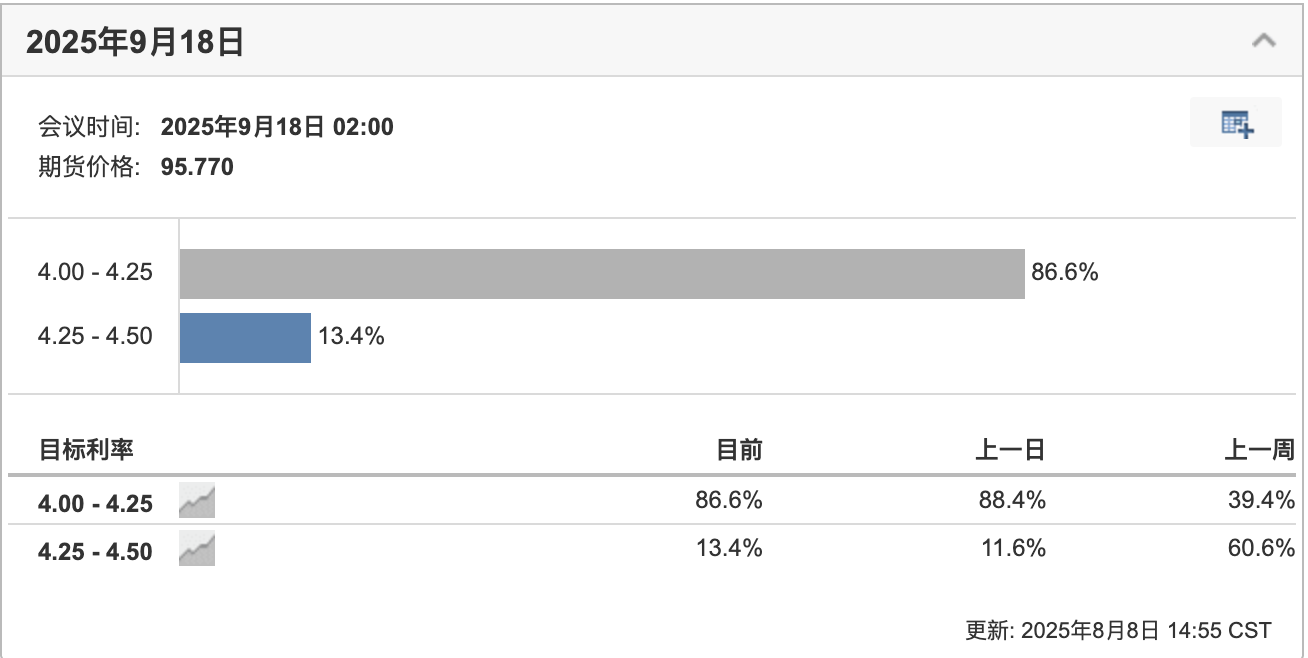
4. 8 月 8 日,据 CME「美联储观察」数据,9 月降息 25 个基点的概率为 92.7%,维持利率不变的概率为 7.3%。

ETF
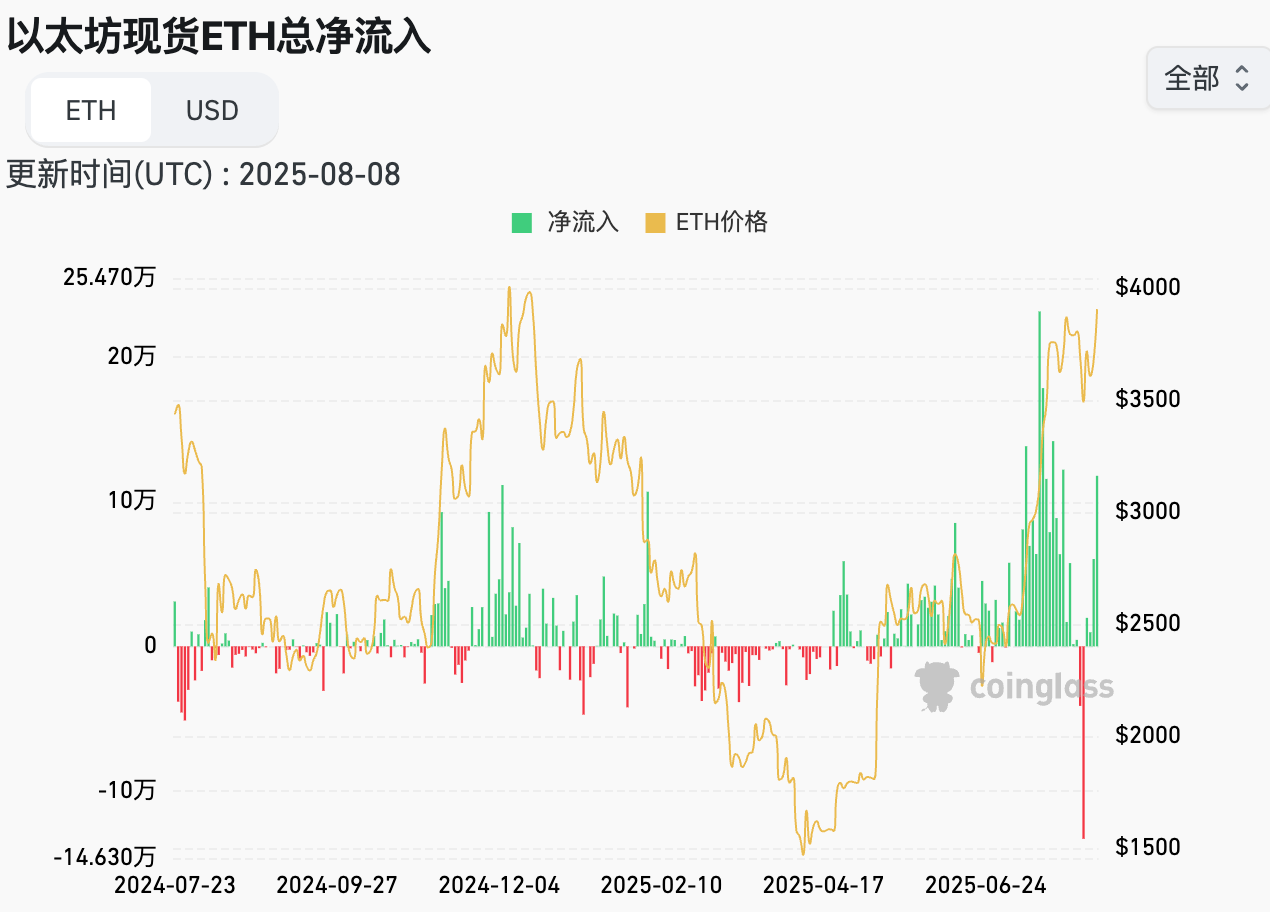
据统计,在8月4日-8月8日期间,美国比特币现货ETF净流入:2.536亿美元;截止到8月8日,GBTC(灰度)共计流出:236.62亿美元,目前持有210.58亿美元,IBIT(贝莱德)目前持有859.56亿美元。美国比特币现货ETF总市值为:1520.24亿美元。

美国以太坊现货ETF净流入:3.264亿美元。

预见未来

活动预告

1. Coinfest Asia 2025 将于8 月 21 日至 22 日在印度尼西亚巴厘岛举办;

2. WebX Asia 2025 将于 8 月 25 日至 26 日在日本·东京举办;

3. Bitcoin Asia 2025 将于 8 月 28 日至 29 日在香港会议展览中心举办。

重要事件

1. 8月12日12:30,澳洲联储将公布利率决议;

2. 8月12日20:30,美国将公布 7月未季调CPI(年率);

3. 8月14日20:30,美国将公布 上周季调后初请失业金人数(千人)(至0809)。

代币解锁

1. Aptos(APT)将于8月12日解锁 1130万枚代币,价值5304万美元,占流通量的2.2%;

2. Avalanche(AVAX)将于8月15日解锁167万枚代币,价值约3914万美元,占流通量的0.33%;

3. Starknet(STRK)将于8月15日解锁1.26亿枚代币,价值1618万美元,占流通量的5.98%;

4. Sei(SEI)将于8月15日解锁5556万枚代币,价值约1712万美元,占流通量的1.21%;

5. Arbitrum(ARB)将于8月16日解锁9263万枚代币,价值约3911万美元,占流通量的2.04%。

Letture associate

Polymarket Revival: The Mainstreaming of Crypto Prediction Markets and Future Prospects

Polymarket, a crypto-based prediction market platform, has made a significant comeback in 2025 by re-entering the U.S. market through regulatory-compliant means, including the acquisition of regulated trading and清算 entities. This resurgence is further supported by institutional capital investment and integration with mainstream platforms like the MetaMask wallet, allowing users to trade directly without leaving their wallets. Mainstream financial data platforms have also begun displaying prediction market data, increasing market visibility. Once viewed primarily as a gambling or speculative platform, Polymarket is increasingly recognized as a mechanism for information pricing in financial markets. Widespread participation from both retail and institutional users has made its probability assessments of future events more representative and liquid. Prediction market data is now being incorporated by traditional financial media and data platforms, highlighting its growing potential. However, challenges remain. Prediction markets are not always accurate, with studies showing limited predictive reliability in certain contexts. Questions about platform neutrality and business models have emerged, such as the employment of internal market makers, which could undermine trust. Information asymmetry and insider risks are inherent, potentially disadvantaging ordinary users when some participants access information early. Regulatory, tax, and disclosure requirements also present ongoing uncertainties. The revival and transformation of Polymarket signify a broader shift of prediction markets from niche experiments toward mainstream financial infrastructure. By converting public expectations into tradable probabilities, these markets may complement traditional analysis and polling, providing real-time, decentralized signals in areas like macroeconomics, policy, technology, and geopolitics. As traditional financial institutions invest in compliance and structured products, DeFi is evolving beyond an alternative asset pool to resemble traditional financial infrastructure. Prediction market applications are expanding beyond crypto to potentially include stocks, macroeconomic indicators, sports events, and tech product launches, tightening the link between crypto and the real world. If platforms like Polymarket continue on a path of compliance, stable operation, and integration with mainstream financial services, they could become next-generation market infrastructures—event-driven financial tools alongside stocks, bonds, and options. Key factors for development include platform neutrality, prediction accuracy, regulatory environment, participant diversity, and the maturity of related financial products. In summary, Polymarket’s comeback represents a move of prediction markets from the fringe into the core of financial systems, reflecting deeper changes in how information is priced and how financial infrastructure is rebuilt. This shift brings not only new trading methods but also potential changes in how investors perceive and engage with future events and asset valuation.

cointelegraph_中文4 min fa

Polymarket Revival: The Mainstreaming of Crypto Prediction Markets and Future Prospects

cointelegraph_中文4 min fa

Stablecoins at a Crossroads: Clear Regulations Drive Adoption, Systemic Risks Remain

Stablecoins are at a critical juncture, with regulatory clarity driving their rapid evolution from crypto trading tools to mainstream payment and settlement infrastructure. The U.S. GENIUS Act and the EU’s MiCA framework have established federal and regional standards for issuance, reserves, and auditing, accelerating their adoption. Market capitalization has surpassed $300 billion, with USD-pegged stablecoins dominating, though euro and other fiat-backed alternatives are growing. Use cases are expanding significantly, with enterprises adopting stablecoins for cross-border payments, payroll, and treasury management due to their 24/7 availability and low transaction costs. They are increasingly integrated into traditional finance as settlement and custody solutions. However, systemic risks remain. USD-pegged stablecoins face potential de-pegging risks, insufficient reserve transparency, and high centralization, which could trigger liquidity crises. Large holdings of sovereign bonds or fixed-income assets may also impact bond markets and monetary policy. The IMF has warned about financial stability risks and dollarization concerns. For stablecoins to mature into reliable, compliant, and interoperable digital infrastructure—rather than just survive—they require transparent issuance mechanisms, robust regulatory coordination, and effective systemic risk controls.

cointelegraph_中文28 min fa

Stablecoins at a Crossroads: Clear Regulations Drive Adoption, Systemic Risks Remain

cointelegraph_中文28 min fa

Trading

Spot
Futures
活动图片