SoFi创始人携Figure闯关IPO,RWA万亿资产争夺战正式开打

比推Pubblicato 2025-08-04Pubblicato ultima volta 2025-08-04

image.png

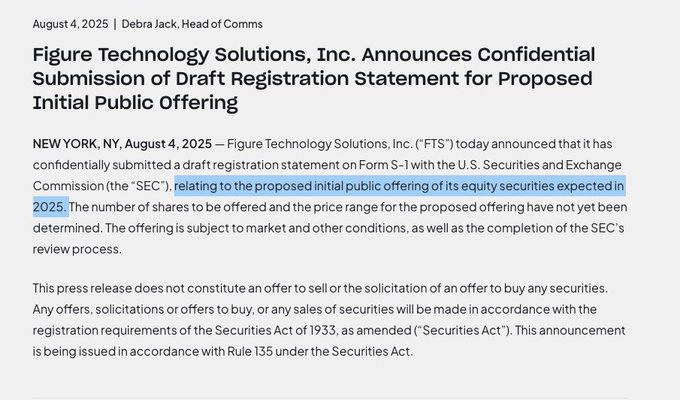
SoFi联合创始人 Mike Cagney 创立的区块链金融公司 Figure,今日官宣了已向美国SEC递交IPO申请,计划于年内上市。这一举动不仅被视为对Figure自身商业模式成功的有力验证,也标志着RWA(现实世界资产)赛道正从概念走向现实,一场万亿级市场的重构战争已然打响。
Image

Figure何以成为RWA赛道的“扛把子”?

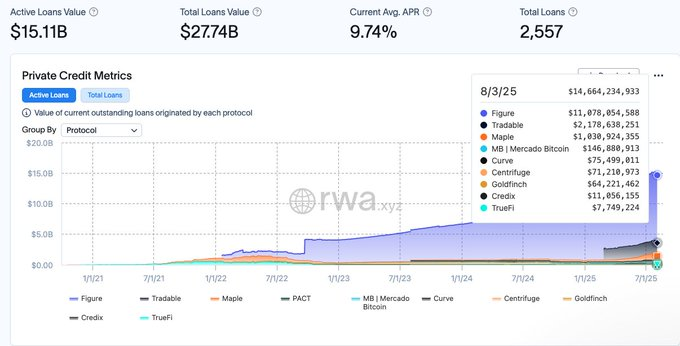
Figure的IPO背后,是其在RWA私人信贷代币化领域的绝对主导地位。根据数据显示,在总计277.4亿美元的代币化私人信贷市场中,Figure的累计贷款规模已达110亿美元,占据了近50%的市场份额。这种压倒性优势,让Figure毫无悬念地成为行业“代名词”。
Image

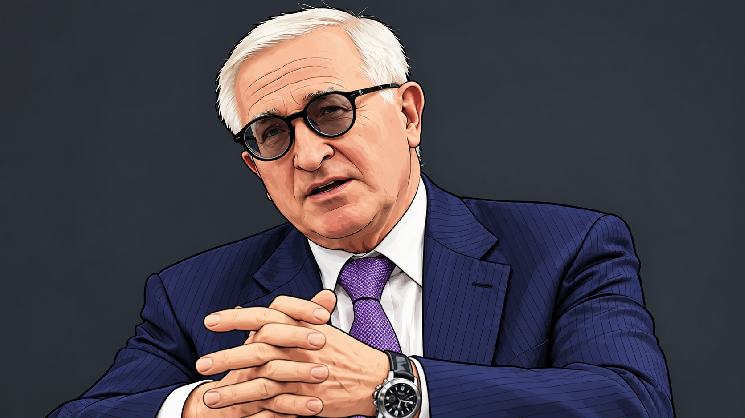
创始人Mike Cagney的背景无疑是Figure崛起的关键助力。作为SoFi的联合创始人,Cagney早在消费金融领域建立了巨大的声誉。在离开SoFi之后,他敏锐察觉到区块链技术在金融基础设施上的变革潜力,毅然转向RWA这一新兴赛道,并于2018年创立Figure,提出“用区块链重塑信贷市场”的宏大愿景。

与许多仅停留在概念层的“链改金融”项目不同,Figure打造了从资产发行、贷款发起,到证券化和交易的完整闭环,真正将传统金融资产“搬”上了链:

  • 自主开发的Provenance Blockchain,成为业内首个专为金融服务设计的公链,支持资产实时清算与可组合性;

  • Figure推出的 “Connect平台”,打通贷款发起方与投资者,实现资产的高效匹配与流转;

  • 最近发布的 YLDS稳定币,则成为全球首个通过美国SEC注册的收益型稳定币,为链上资产引入主流合规的收益载体。

这一切构成了Figure强大“产品护城河”,也让它在加密市场中逆势扩张——仅在过去一个月,其新增贷款资产就超过8亿美元,增速惊人。

Figure之于RWA赛道:变革先行者与行业“定标者”

Figure的崛起,契合了RWA赛道整体的爆发趋势。数据显示,过去24小时,RWA类加密资产整体上涨6.9%,其中包括Provenance Blockchain(HASH)、Stellar(XLM)、Injective(INJ)等主流代币的显著涨幅,说明投资者在不确定环境下更加青睐与实体经济相关联的“硬资产”。

但RWA真正的潜力,远远不止于当前的表现,万亿级蓝海已经打开。

首先,私人信贷市场本身已是一个规模高达3万亿美元的庞大产业。其次,根据普华永道(PwC)预测,整个RWA市场的潜在代币化空间可达31万亿美元,涵盖美元、美债、黄金、房地产、应收账款等多个传统金融资产类别。

不仅如此,华尔街巨头已纷纷入场:

贝莱德(BlackRock)推出首个代币化基金 BUIDL;

富兰克林邓普顿(Franklin Templeton)将货币市场基金部署到公链;

阿波罗(Apollo)与汉密尔顿·莱恩(Hamilton Lane)等顶级私募机构,也正通过代币化工具降低投资门槛,将传统高净值产品逐步“平民化”。

Figure通过其平台,将原本只对机构和富人开放的资产类别“民主化”,从某种意义上来说,其在做的是“链上版的贝莱德+SoFi”的融合创新。

RWA通往主流的三道门槛:Figure能否继续领跑?

虽然Figure已经跑在最前,但RWA的广泛普及仍面临三大关键挑战:

  1. 链上资产与链下实体的“信任锚”:如何确保代币真正代表现实中的资产,并在法律上拥有清晰归属?

  2. 资产结构化是代币化的前提:并非所有资产都能直接“上链”。更可行的做法是,先通过传统金融机制结构化(如基金、ABS),再代币化,提高效率和合规性。

  3. RWA的价值不是“新发明”,而是“效率工具”:区块链不是要“创造”新的金融产品,而是让已有资产在更透明、更实时的技术框架下流通。

在这三个问题上,Figure的优势在于其既懂传统金融(Cagney本身是华尔街出身,又创办过SoFi),又有区块链底层设施的掌控力,因此具备技术能力+合规经验+产品落地的三重护城河。

Figure的IPO,不只是一个公司的故事

Figure此次冲击IPO,是RWA从概念走向现实的标志性事件,它证明区块链是可以切实赋能传统资产流通、降低门槛、提升效率的关键工具

Mike Cagney和Figure正试图搭建起传统金融与加密世界之间的“信任之桥”。这不仅关乎一个创业者的愿景,更可能重塑我们理解资本市场、资产配置和金融民主化的方式。

在未来的十年,谁能掌握RWA,谁就有机会掌控下一个万亿美元金融新时代的入场券。


Twitter:https://twitter.com/BitpushNewsCN

比推 TG 交流群:https://t.me/BitPushCommunity

比推 TG 订阅: https://t.me/bitpush
说明: 比推所有文章只代表作者观点,不构成投资建议

Letture associate

Where the AI Bubble Really Is: Which Layer of Players Are Naked

AI Bubble: Where It Really Is and Who's Swimming Naked This analysis dissects the AI industry not as a single entity but as a five-layer pyramid, arguing that bubbles are concentrated in specific tiers, not uniformly distributed. **Key Distinction from the 2000 Dot-com Bubble:** Unlike 2000, where companies had stock prices before revenue, today's leading AI players have massive, contract-backed revenue driving their valuations. Core infrastructure demand is real, with every GPU running at full capacity for paying customers. **The Five-Layer Pyramid & Bubble Assessment:** * **L0 (Fab/Manufacturing) & Top L4 (Leading AI Apps): NO BUBBLE.** Companies like TSMC, NVIDIA, major cloud providers (Microsoft, Google, Meta, Amazon), and top AI labs have real revenues and orders. Supply is tightly constrained by TSMC's disciplined capacity control and physical limits like power/land for data centers, preventing a supply glut. * **L1 (Memory): BATTLEGROUND.** Sky-high HBM margins could signal a new structural cycle or a classic "boom before bust." The oligopoly of three major players may enforce supply discipline, making this a high-stakes bet. * **L2 (Interconnect/Optical Modules): BUBBLE TERRITORY.** Companies like Lumentum and AAOI have seen stock surges (4-10x) far outpacing revenue growth. This hardware segment has lower physical barriers to expansion than fabs, allowing speculation. It mirrors the 2000 bubble's epicenter—optics. * **L3 (Infrastructure/"GPU Landlords"): VULNERABLE.** GPU leasing companies profit from the current compute shortage but own no long-term moat. Their business model relies on a temporary bottleneck that will ease as big tech expands and new tech (e.g., potential space-based data centers) emerges. * **L4 Long Tail (VC-backed Startups): STRONG BUBBLE SIGNALS.** VC funding concentration in AI is twice that of the 1999 peak. Many startups with little revenue use the valuation logic of successful giants to justify their own, creating high risk of a "valuation crunch" when funding dries up. **Critical Risks to Monitor:** 1. **GPU Depreciation & Accounting:** Companies extending the assumed useful life of GPUs artificially boost profits. The true economic life depends on future generational leaps from NVIDIA. 2. **"GPU Credit" & Off-Balance-Sheet Leverage:** Emerging structures where shell companies borrow to buy GPUs and lease them out (with chipmakers sometimes investing) move debt off major balance sheets. This echoes the "vendor financing" of 2000 and the securitization risks of 2008, though currently small-scale. 3. **TSMC Abandoning Caution:** If the primary supply bottleneck (TSMC's conservative capacity planning) breaks, runaway supply could trigger a bust. 4. **Algorithmic Efficiency Breakthrough:** A major leap in software efficiency could drastically reduce the need for raw compute hardware, undermining the investment thesis. **Conclusion:** The AI boom is expensive and has frothy areas, but its core is underpinned by real demand and physical supply constraints. The bubble risk is layered: most present in optical components, GPU leasing, and the long-tail startup ecosystem, while the foundational chip manufacturing and leading application layers remain relatively solid—for now.

marsbit9 min fa

Where the AI Bubble Really Is: Which Layer of Players Are Naked

marsbit9 min fa

Standing in the Light: A Comprehensive Guide to the Optical Module and CPO Supply Chain

"Standing in the Light: Understanding the Optical Module and CPO Industry Chain" This article analyzes the critical role of optical communication technology, specifically optical modules and Co-Packaged Optics (CPO), as the "nervous system" for modern AI data centers. With exponential growth in AI computational demands (e.g., NVIDIA's Vera Rubin architecture), traditional electrical interconnects using copper cables face severe bottlenecks in bandwidth, power consumption, and signal integrity over distance. The core function of an optical module is to act as a "translator," converting electrical signals from chips into optical signals for transmission over fiber (and vice-versa). Key internal components include lasers, modulators, photodetectors, drivers, and DSP chips. The industry is currently transitioning from 800G to 1.6T modules. However, the future lies in CPO. This next-generation technology integrates the optical engine directly with the switch ASIC/XPU on the same package substrate, drastically reducing power consumption (by ~3.5x according to NVIDIA), overcoming bandwidth density limits, and minimizing signal attenuation compared to traditional pluggable modules. Key challenges for CPO include advanced packaging capacity (dominated by TSMC), thermal management, repairability, and standardization. The article details the broader technology landscape, including Near-Packaged Optics (NPO, a pragmatic intermediate step), Linear-drive Pluggable Optics (LPO), Optical I/O (OIO for chip-level integration), and Optical Circuit Switches (OCS). A comprehensive CPO industry chain is mapped, highlighting shifting power dynamics: * **Architecture Definers:** NVIDIA, Broadcom, and Marvell now hold greater influence. * **Advanced Packaging & Manufacturing:** TSMC is central; Fabrinet is a key EMS player. * **Lasers ("The Heart"):** A strategic bottleneck. EML lasers are led by Lumentum and Coherent (both receiving major NVIDIA investments). CW lasers, favored for CPO/silicon photonics, see strong Chinese players like Source Photonics and Sicoya. * **Silicon Photonics Chips:** The mainstream path for CPO engines, with key players like Broadcom, Intel, Marvell, and China's Accelink. * **Fiber Connectivity Components:** A major new, high-growth market created by CPO, including Fiber Array Units (FAU), Polarization-Maintaining Fiber (PMF), and MPO connectors. Companies like Tianfu Communication and US Conec are leaders. * **Fiber & Cable:** Experiencing a super-cycle (e.g., Corning, Yangtze Optical Fiber). * **PCB/Substrates:** Requiring advanced materials (e.g., Shengyi Tech). * **DSP & SerDes:** Functions are integrated into switch ASICs in the CPO era (e.g., Broadcom, Astera Labs). * **Optical Module Makers:** Transitioning from standalone module suppliers to providers of optical engines and NPO/LPO solutions while riding the current pluggable boom (e.g., Zhongji Innolight, Eoptolink). The investment timeline is segmented: Short-term (2026-2027) features the "last feast" for pluggable modules and CPO's initial rollout. Medium-term (2027-2029) will see CPO expand and NPO peak. Long-term (2029-2032+) involves CPO/OIO penetration into intra-rack scaling. In conclusion, optical interconnects are fundamental to AI infrastructure. The competitive landscape sees US firms leading in architecture and high-end chips, TSMC in advanced packaging, and Chinese firms holding strong positions in modules, connectivity components, CW lasers, and fiber/cable. The future belongs to companies that can navigate the technological shift from "selling shovels" (modules) to "building highways" (CPO/OIO infrastructure).

marsbit19 min fa

Standing in the Light: A Comprehensive Guide to the Optical Module and CPO Supply Chain

marsbit19 min fa

Trading

Spot
Futures
活动图片