标普500调整大幕已拉开,盯紧关键点位

比推Pubblicato 2025-08-04Pubblicato ultima volta 2025-08-04

一、一周行情回顾:(07.28~08.01)

周一开盘价6397.69点,周四创出最高价6427.02点,周五触及最低价6212.69点,最终收盘价6238.01点,周振幅214.33点,跌幅2.36%,周线收出一根阴K线,收盘价收在5周均线之下,继续创出标普500指数的历史新高。

标普500指数周K线图:(动能量化模型*情绪量化模型)
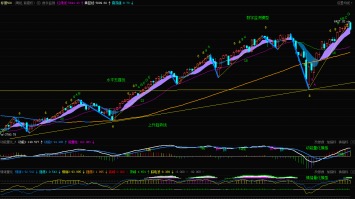
image.png

(图一)

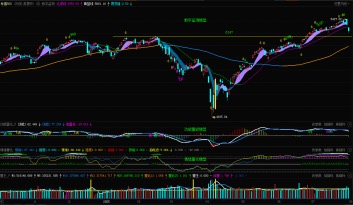
标普500指数日K线图:

image.png

(图二)

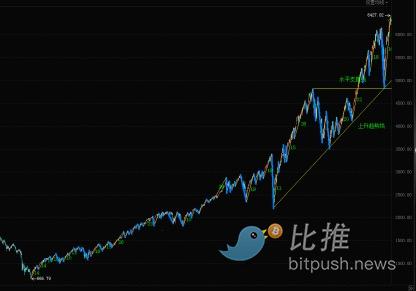
标普500指数周线图:(历史数据回测)

image.png

(图三)

自4月7日反弹以来,指数已经连续上涨17周,共计81个交易日,累计最大涨幅达到32.92%。本周指数跌幅2.36%,周线收出一根中阴K线。

笔者上周文章的题目是《标普500上涨进入高风险区,短期谨防剧烈震荡》,在文章中运用多周期量化模型指标以及十几年历史数据回测,并结合当前宏观经济层面对金融市场的影响,提示下周指数还会创出新高,但由于指数处于技术超买+上涨时间周期末端,提醒投资者切勿被强势表象所迷惑,行情已进入高风险区;预测下周行情维持高位震荡结构,留意盘中剧烈波动,谨防单日大阴线快速杀跌。

从本周走势来看,周一小幅震荡,日线收出十字星;接下来两天连续收出阴线,跌幅不大;周四股价大幅高开并创出历史新高6427.02点后,开始缓慢下跌,收出一根高开低走的阴线,成交量明显放大,震荡幅度加大;周五股价跳空低开后持续下跌,当日收出一根低开低走的中阴线,日线留下跳空缺口。本周指数走势与笔者预测基本相符。

接下来,笔者从多维度层面分析当前指数所发生的变化:

(一)、量化模型信号分析:

1、周线视角(见图一):

①、动能量化模型:持续发出高位钝化信号,动能1号线运行方向从向上转为走平状态,能量柱与上周相比开始缩短。

②、情绪量化模型,指标仍然在处在高位,但是与上周相比减少。情绪1强度是0.54(取值范围0~10)左右,情绪2强度是1.99左右。

③、数字监测模型:上周收盘价是6388.64点,监测信号显示数字D(取值A~E),本周信号消失。如果接下来每周的收盘价均小于6388.64点,预示数字D见顶信号有效。震荡值0.73(取值范围0~1)。

④、顶峰信号:数值是4.65,指数仍在高风险区域。

2、日线视角(见图二):

①、动能量化模型:处在高位顶背离状态,周二动能1号线高位死叉动能2号线开始向下运行,两条信号线由粘合转为向下张口,能量(绿)柱逐步放大,预示做空力量加强。

②、情绪量化模型:指标脱离高位区,开始减小。

③、数字监控模型:周二监测信号显示高位数字9,随后三天信号消失,预示日线级别见顶(以收盘价为标准)信号有效。

④、顶峰信号:数值从周二最高值8.49降到周五2.13,说明指数开始调整。

⑤、量能方面:本周后两天成交量明显放大,呈现放量下跌状态,初现调整特征。

(二)、趋势时序与历史数据回测分析(图三):

①、回测数据区间:2009年3月6日2025年4月4日,共计840根周K线。

②、设定调整规则是:回调≤2周且跌幅≥5%,或者回调≥3周,回测数据中符合条件的调整共有52次。

③、统计历史数据寻找规律:每当指数从低点连续上涨16周后,出现调整的概率高达81%左右,并且出现大幅调整的概率较大。

④、从4月7日到7月25日,指数已经连续上涨16周时间,本周是第17周。指数在本周如期出现明显调整,静观行情后续走势。

二、下周行情预测:

1、笔者认为下周指数还会向下调整,重要支撑位在6147点附近,一次有效跌破的概率不大;指数调整到此处会有反弹,第一压力位在6300点附近,重要压力位在6247点附近。

2、指数盘中出现拉升时,借机调整仓位,切勿盲目追高,警惕指数形成二次顶的风险。

3、提醒投资者密切关注市场消息面的变化,关注大市值权重股的异动。

三、下周操作策略:

1、下周重点关注6147点的得失。若支撑有效,继续维持高位宽幅震荡;若有效跌破,则调整幅度加大,注意下跌风险。

1、中线仓位:笔者连续提示投资者,将21日均线作为止盈位。目前指数已经跌破,建议中线仓位减少到原有仓位的30%。个股亦可参照操作。

2、短线仓位:按照笔者给出的关键点位,设置好止损点,小仓位逢低做多,逢高做空。个股亦可参照操作

3、如果想得到更加精确的操作,可以把分析周期切换到小周期,例如60分钟或者120分钟周期。

以上各种模型是本人操作时遵守的交易规则,不构成任何买卖依据。个人观点,仅作参考。

作者:Cody Feng


Twitter:https://twitter.com/BitpushNewsCN

比推 TG 交流群:https://t.me/BitPushCommunity

比推 TG 订阅: https://t.me/bitpush

说明: 比推所有文章只代表作者观点,不构成投资建议

Letture associate

STRC Breaks Below $95: Why Does It Continue to Depeg? Is There Default Risk?

"STRC Falls Below $95: Why the Persistent Depegging and Is There Default Risk?" The article discusses the recent decline in the price of STRC, a perpetual preferred stock issued by Strategy (MSTR) designed to trade around a $100 par value. As of publication, STRC traded at $94.65, raising market concerns. STRC is described as a high-yield cash flow product, offering an 11.50% annual dividend paid monthly. Its "preferred" status grants it priority over common stock for dividends and in liquidation. Key reasons cited for the price depegging include: 1. **Bitcoin's Price Drop:** MSTR's assets are heavily tied to Bitcoin (BTC), which fell over 21% from its recent high, pressuring all Strategy-related products. 2. **Competitive Pressure:** Rival Strive Asset Management's similar product, SATA, offers daily dividends and has maintained its $100 par value with a ~13% yield. In response, Strategy has proposed changing STRC's dividend frequency from monthly to bi-weekly, pending shareholder vote. 3. **Technical Selling:** A break below $100 may have triggered algorithmic selling and stop-losses, exacerbating the decline. Regarding default risk, the analysis suggests it is currently low. Strategy founder Michael Saylor confirmed the June 2026 dividend rate remains at 11.50% with no cuts or suspensions. The company's massive reserve of 843,706 BTC provides a significant backstop for its obligations. Industry opinions are mixed. Some analysts view the BTC holdings as reliable support for dividends, while critics like Peter Schiff warn of potential dividend cuts leading to price crashes and lawsuits. Others highlight inflation risk and the company's ability to reduce dividends without a formal default. In summary, STRC's drop is attributed to BTC volatility, competition, and technical factors. While immediate default risk appears contained, the product faces challenges from market conditions and competitive dynamics.

marsbit56 min fa

STRC Breaks Below $95: Why Does It Continue to Depeg? Is There Default Risk?

marsbit56 min fa

AI Trading Cools, South Korean Stocks Plunge 1.8%, Spot Gold Rises 1%, Bitcoin Dives

A sell-off in AI-related stocks, triggered by Broadcom's disappointing earnings forecast, sent shockwaves through global markets. South Korea's KOSPI led Asia's decline, plunging 1.8% as the risks from concentrated chip stock gains and surging leveraged investments came to the fore. The tech-heavy Nasdaq 100 futures fell 0.5% following Broadcom's 14% after-hours plunge, which signaled a slower-than-expected transition to AI clients. This pullback extended Wall Street's weakness, halting the S&P 500's nine-day rally amid hawkish Fed signals and renewed Middle East tensions. South Korean authorities convened an emergency meeting, pledging "immediate measures" against market volatility and warning of record-high stock margin debt. The adjustment rippled across assets: Bitcoin fell to around $64,000, its lowest since February, while safe-haven gold rose 1% on bargain hunting. Oil prices dipped on Middle East ceasefire news. Market analysts noted the sell-off was driven by profit-taking after massive gains, particularly in chip stocks like Samsung and SK Hynix, which now dominate the KOSPI. Wall Street banks are divided on Korea's outlook, with Goldman Sachs raising its target while Citigroup and others warn of overvaluation and a potential bubble. Bridgewater's Ray Dalio noted that great technological shifts often create bubbles. Meanwhile, Fed officials' hints at potential future rate hikes added to the cautious mood ahead of key U.S. jobs data.

华尔街日报1 h fa

AI Trading Cools, South Korean Stocks Plunge 1.8%, Spot Gold Rises 1%, Bitcoin Dives

华尔街日报1 h fa

Trading

Spot
Futures
活动图片