Grayscale Launches Story Trust Offering  Exposure To $IP Token

TheCryptoTimesPubblicato 2025-07-03Pubblicato ultima volta 2025-07-31

Grayscale, the leading independent provider of digital asset investment products, today announced the launch of Grayscale Story Trust, allowing accredited investors to gain exposure to $IP, the native token of the Story network a blockchain protocol designed to transform intellectual property (IP) into programmable, on-chain assets.

The Story network allows the creator and the company to tokenize various forms of intellectual property, including music, media, personal likeness, and real-world data such as voice and video. Smart contracts include embedded licensing terms, royalty flows, and attribution rules in the assets. 

So, there are no intermediaries, and ownership and monetization of content become easier, scalable, and AI-ready.

Grayscale’s initiative comes when institutional interest in blockchain-based infrastructure only continues to grow. Having witnessed more than 1.7 million IP transactions and 200,000 monthly users, Story has already begun demonstrating growing adoption.  

One of its key initiatives, Poseidon, feeds verified real-world data into AI systems like autonomous vehicles and surgical robots.

“Story is laying the foundation for the global intellectual property economy,” said Rayhaneh Sharif-Askary, Head of Product & Research at Grayscale. “That includes not just creative content, but real-world data—now one of the most powerful assets in the AI era.”

SY Lee, CEO of PIP Labs and a core contributor to Story, added, “This launch brings programmable intellectual property into institutional markets. $IP represents not only an asset but an entirely new framework for owning and licensing digital content.”

As is with all the other Grayscale products, the Story Trust will be available daily, but its subscription will only be available to accredited investors, although it might not be listed on a secondary market. The company still cautions that the investment risks are high because the technology is still emerging.

Yet the promise is promising. As AI and digital content continue to balloon in growth, tools like Story are well poised to execute nuances in IP ownership, royalty distribution, and usage in real-time making IP not just a legal concept but a dynamic, programmable asset class.

Grayscale’s launch is symptomatic of a larger trend, too: intellectual property is fast becoming one of the most valuable assets in the digital economy and it is going on-chain.

Also Read: Circle’s Native USDC and CCTP V2 Coming to Hyperliquid


Letture associate

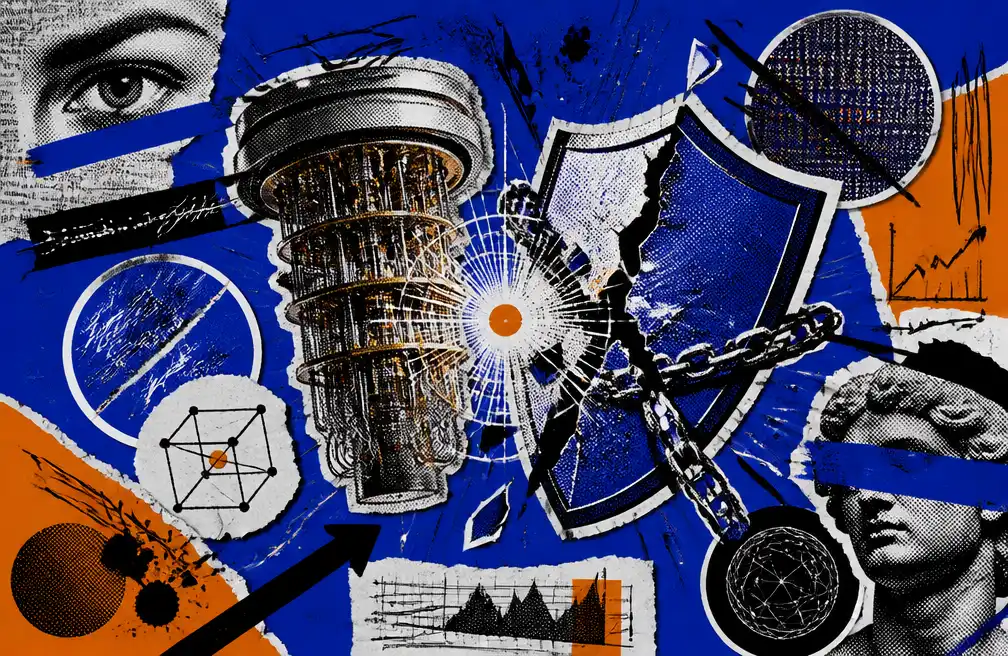
IOSG: Q-Day Countdown, Will Quantum Computing End Cryptocurrency?

IOSG: The Q-Day Countdown – Will Quantum Computing End Cryptocurrency? This analysis explores the looming threat quantum computing poses to blockchain technology. Quantum computers, leveraging Shor's algorithm, could theoretically break the elliptic curve cryptography (ECC) underpinning cryptocurrencies like Bitcoin and Ethereum. The article outlines a hypothetical "Q-Day" scenario where exposed public keys from dormant assets are compromised, leading to fund theft and a deep governance crisis. The core risk is not the complete erasure of blockchains but a systemic reset of public-key cryptography. Bitcoin faces significant challenges due to its "code-is-law" ethos and the immense social consensus required for migration. Its primary vulnerability lies in legacy UTXOs with publicly exposed keys. Ethereum's path involves a more complex, full-stack cryptographic agility upgrade across execution, consensus, and data layers. The industry has a limited "engineering comfort window" of 5-8 years to coordinate a migration to post-quantum cryptography (PQC), such as lattice-based or hash-based signatures. While the existential threat is often overstated, the real bottleneck is the immense coordination required across protocol developers, node operators, wallet providers, exchanges, and custodians. Market repricing of crypto assets may occur well before an actual Q-Day if quantum hardware roadmaps accelerate or regulatory pressure mounts. The article concludes that quantum computing is not a doomsday weapon but a severe stress test for blockchain's foundational security model and governance structures.

marsbit16 min fa

IOSG: Q-Day Countdown, Will Quantum Computing End Cryptocurrency?

marsbit16 min fa

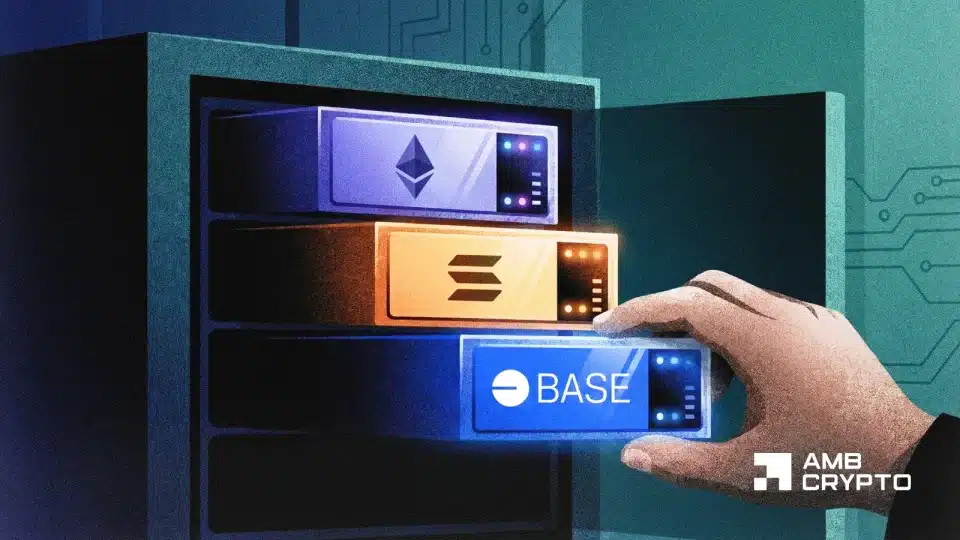
Why 2026 could redefine Ethereum, Solana, Base and Avalanche

Blockchain infrastructure is undergoing a major coordinated transformation, driven by institutional demand for reliability, compliance, and predictable settlement. Over $30 billion in Real-World Assets (RWA) on-chain has exposed network weaknesses. Major blockchains are responding with foundational upgrades, moving beyond incremental speed improvements. Ethereum's "Glamsterdam" upgrade, planned for H1 2026, will significantly increase gas limits and introduce features like PBS (pre-blocked state) for enhanced settlement and parallel execution. Solana's "Alpenglow," targeting a mainnet launch in H2 2026, focuses on reducing finality time dramatically and freeing network resources to improve reliability. Beyond speed, compliance is critical. Base's "Beryl" upgrade in Q3 2026 will introduce a standardized, regulatory-compliant token framework (B20). Avalanche's "Octane" upgrade aims to boost transaction processing and reduce costs for enterprise applications. Even Bitcoin is evolving with the potential activation of OP_CAT by late 2026/early 2027. The competition is shifting. While technical upgrades are widespread, institutions will ultimately allocate capital based on proven execution, operational resilience, and regulatory compatibility during market stress. Ethereum currently leads in tokenized assets, while networks like Base and Solana are strengthening their institutional offerings. The blockchain that best delivers reliable, compliant, and uninterrupted service is poised to attract the greatest share of future institutional capital.

ambcrypto54 min fa

Why 2026 could redefine Ethereum, Solana, Base and Avalanche

ambcrypto54 min fa

Tiger Research: Take RWA Tokenization Overseas First

This article discusses the strategic choices facing financial institutions in jurisdictions lacking mature regulatory frameworks for Real-World Asset (RWA) tokenization. With the market growing rapidly, institutions must choose between waiting for local legislation, using regulatory sandboxes, or—the recommended priority—expanding into overseas markets to gain early experience. Successfully launching cross-border RWA tokenization requires meticulous preparation across six key areas: establishing an overseas base (e.g., Hong Kong, Singapore, the U.S.), securing necessary licenses, defining the tokenized asset (with bonds being simpler than non-standard assets), defining the target investor scope, deciding on settlement currencies/payment flows, and designing operational requirements like custody and on-chain governance. The article outlines two primary strategic paths: a direct "onshore" path and a "native on-chain" path. The direct path involves setting up a legal entity and obtaining licenses in a mature jurisdiction like Hong Kong, Singapore, or the U.S., leveraging existing platforms (e.g., DigiFT, Securitize) for efficiency. The alternative native on-chain path involves partnering with compliant, decentralized platforms (e.g., Ondo, Plume Nest) that use structures like offshore SPVs to facilitate tokenization and access DeFi liquidity, offering speed and broader reach but with greater structural complexity. The core argument is that institutions should not wait for perfect domestic regulation. A detailed hypothetical case study illustrates the multi-step, 6-12 month process of launching an overseas tokenized bond. The key takeaway is that the essence of a tokenization business lies not in the technology but in successfully executing the entire sales and operational process. The market is moving forward, and the time to act is now.

marsbit1 h fa

Tiger Research: Take RWA Tokenization Overseas First

marsbit1 h fa

Trading

Spot
活动图片