XRP 蓄势待发 能否继续领跑山寨币市场?

金色财经Pubblicato 2025-07-31Pubblicato ultima volta 2025-07-31

作者:Steven Ehrlich 来源:Unchained 翻译:善欧巴,金色财经

一直以来,我对 Ripple Labs 和 XRP 的战略及其长期市场定位都抱有不少疑问。但不可否认的是,XRP 拥有忠实的粉丝群,而且在本月创下历史新高后,这一群体还在持续壮大。

为了更好地了解市场接下来的走势,我采访了一些业内专家。令我惊讶的是,尽管他们与我一样对 XRP 的一些基本面问题持保留态度,但他们对 XRP 的前景却非常看好,反而对以太坊(ETH)持谨慎态度。

他们还分享了一些观点,涉及下个季度可能上涨的其他代币。

ETH 势冲 4,000 美元,但技术面更青睐 XRP

市值高达 4,469 亿美元的以太坊正处于市场焦点中,但一位技术分析师认为,尽管 XRP 刚刚创下历史新高,它可能正酝酿一波更大行情。

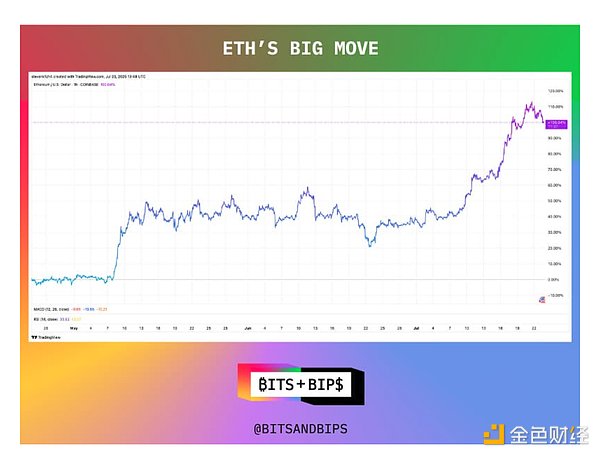
以太坊多头情绪高涨。在经历了 2025 年上半年落后于 BTC、SOL 和 XRP 等主流币之后,ETH 在过去三个月实现翻倍。尤其是在 GENIUS 法案签署成法、以太坊金库兴起的背景下,这波上涨来得恰逢其时。

“当前的市场中,那些被视为将从稳定币普及中受益的资产正在跑赢大盘,”Grayscale Investments 研究主管 Zach Pandl 在采访中表示。“最典型的例子就是以太坊,它承载了全球约一半的稳定币余额和近 40% 的稳定币交易。”

不过,随着 ETH 或将面临阶段性疲软(当前价格为 $3,601,近几日已下跌 7%),多位分析师认为 XRP 或将接棒上涨。

他们的观点依据于 XRP 的价格图表所展现出的积极趋势,以及市场(或许带有误判的)散户热情。围绕 XRP 的几个关键问题仍未明朗,例如 Ripple Labs 正在推进自家稳定币 RLUSD,XRP 在未来的定位如何?再比如 XRP Ledger 的原生链上使用率依然有限。

但加密市场的价格表现往往与基本面脱钩。分析师普遍认为,XRP 很可能再掀一波热潮。
jZTpsemkmaaU6IW8tOLZXRYdHMipJlKWIWfZ9hqT.png

多重利好催化 XRP 技术突破

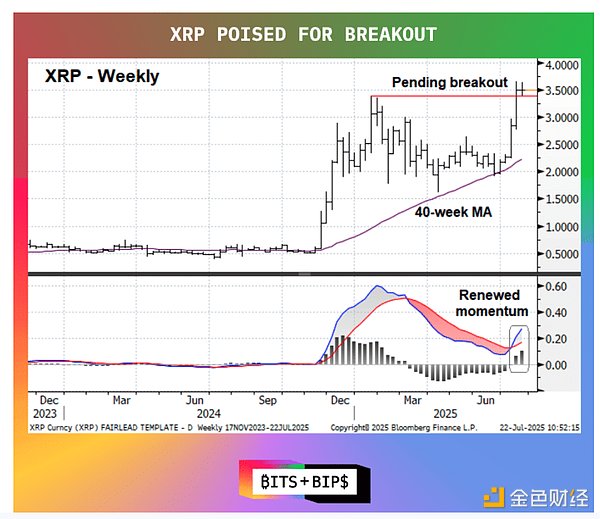
首先,XRP 的技术图形显示出强烈的看涨信号。“如果 XRP 能在周日收于 $3.40 之上,那么就能确认突破成立,”Fairlead Strategies 高级技术分析师 Will Tamplin 表示。“一旦确认突破,那将成为 XRP 中期上涨的催化剂。”

下方图表也显示出 XRP 动能可能继续突破该阻力位。作为动量判断工具的 MACD(指数平滑异同移动平均线)在周线图中已转为正向,这是典型的上涨信号。
NrU0MPsaH4KyJLqm8CypAuYcVyfWKScS4oT7WtZY.png

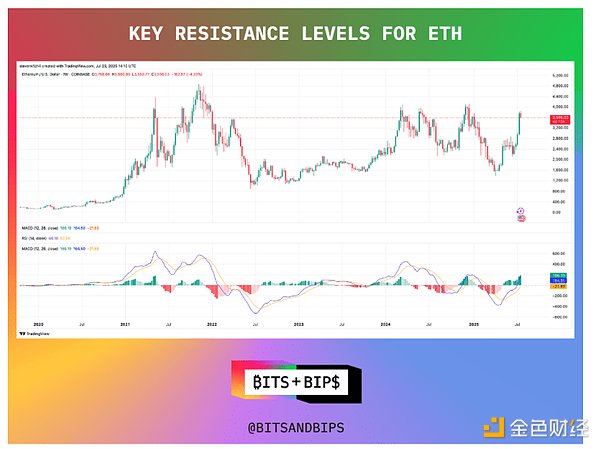
相比之下,Tamplin 也指出,仅靠来自华盛顿的政策利好,可能还不足以在短期内推动 ETH 突破 4,000 美元的关键价位。

事实上,他认为 XRP 的图形表现优于 ETH。“单从技术图表来看,XRP 的形态明显更占优势。XRP 正处在一个长期上升趋势中,有顺风在推。并不是说以太坊没有走入长期上涨通道的可能,但目前还没有形成明确趋势。”Tamplin 表示。

这并不是说 ETH 图形看跌。ETH 的动能仍然积极,例如 MACD 仍处于正值区域;但它正在逼近 4,000 美元这一关键阻力位,而这个价位过去三年来已三次未能成功突破。“这是一个心理门槛,一旦被市场反复确认,它的阻力意义就会变得更强。”Tamplin 补充说。

此外,一些此前推动 ETH 本轮上涨的场外交易(OTC)也可能正在逐渐减弱。

“就在这波 ETH 大涨启动前几周,我们看到有大量期权大单成交,主要集中在 9 月至 12 月的交割期,”Wintermute 场外交易负责人 Jake Ostrovoskis 在采访中表示。“这些交易规模非常大,足以引起市场重视,也让大家开始更认真地看待‘从 BTC 转向 ETH’这波轮动交易。随后我们确实看到 ETH 出现明显跟涨。从期权价格曲线来看,直到本周,ETH 的买盘量都远高于 BTC。”
znPFKYDgWP2zNcDVOTzBtjmOriT6ufdZ09wSUupj.png

但这还不是全部。XRP 还激发了散户群体中的“动物精神”——他们似乎并不那么在意传统的估值指标或链上实际使用情况。

“像 XRP 这样的传统 ‘恐龙币’,在那些经历过 2021 牛市的散户中仍有极强共鸣,”Ostrovoskis 表示。“此外,它还受益于单位价格偏差——也就是人们不看市值,只看单价。”

这句话指的是一种常见的交易误区:由于单价更低,投资者往往误以为某个资产“更便宜”,却忽略了市值和流通量的巨大差异。这也就是为什么一些公司会在股价过高时进行拆股,让股票“看起来更便宜”。目前 XRP 的价格为 $3.36,而 ETH 的价格为 $3,596。但需要注意的是,XRP 的总供应量为 1,000 亿枚,而 ETH 仅为 1.209 亿枚

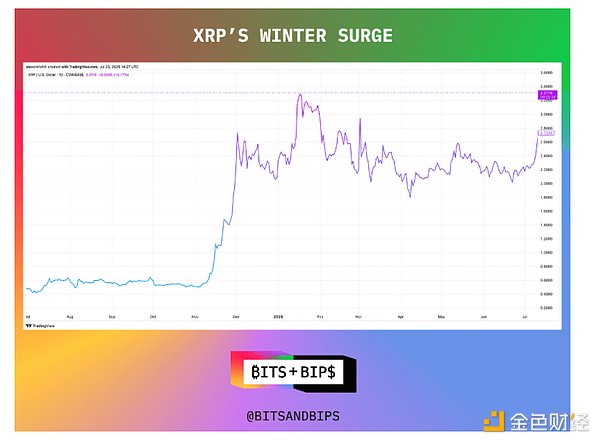
Ostrovoskis 还指出,XRP 在 2024 年底的大涨走势——从 $0.50 飙升至 $3.30,发生在特朗普于 2025 年 1 月上任前夕——至今仍深植人心。

“去年底 XRP 的表现太强势了,很多投资者带有很强的‘近期偏差’,”他说,“如果市场行情再次向好,人们会下意识地想,去年谁涨得最多?那就是 XRP。”

Delta Blockchain Fund 创始人兼管理合伙人 Kavita Gupta 表示,XRP 的另一个重大利好,可能就是其即将到来的 现货 ETF。“这将是推动 XRP 上涨的关键因素之一,”Gupta 在 Unchained 的采访中表示。据彭博分析师 James Seyffart 和 Eric Balchunas 预测,XRP 现货 ETF 在 10 月前获得美国证券交易委员会(SEC)批准的概率高达 95%。
eGn1PmAjx1SLpVU9RT9esr7tYghaGzBqgIjibkSQ.png

接下来关注什么?

除了持续关注 XRP 是否会迎来新一轮突破外,本文采访的分析师还指出,今年剩余时间内有几个重要资产和板块值得留意。

首先,由于《GENIUS 法案》规定:美国市场上的储备支持型稳定币将被禁止向用户支付收益,这有望让 DeFi 领域使用的稳定币趁势抢占市场份额,从而利好整体 山寨币与 DeFi 市场

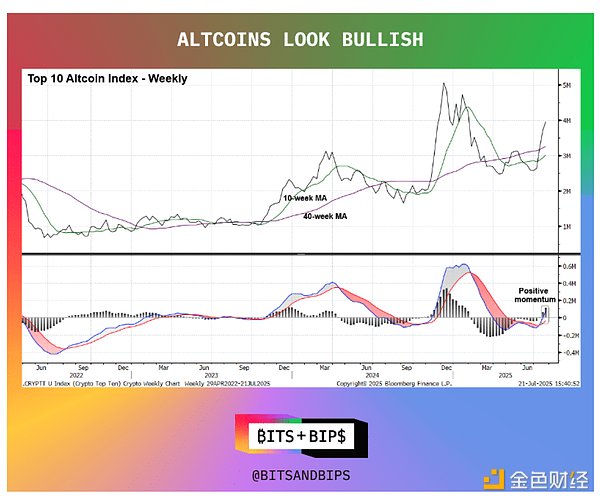
目前,前十大山寨币的等权重指数刚刚突破其 10 周与 40 周均线,MACD 也刚刚翻转,显示出上行动能增强的信号。

其中,Solana是一个值得特别关注的资产。一些大型交易员似乎已在为年底的大动作做准备。

“选举之后,Solana 明显受到追捧。它成了风险偏好资金的主要流向标的,大家开始对它设定一些看起来‘荒唐’的目标价,”Wintermute 的 Ostrovoskis 表示,“但我认为过去三个月,市场对 SOL 配置不足,因为当时资金更多流向 ETH。我们现在在交易台上观察到,这种配置倾向正在发生微妙变化,表现为投资者开始买入一些‘深度虚值’的远期期权,目标日期多在年底或未来三个月内。”
C29hSf5380e7G5aou2XnOJRLgdPj6isNPvs6okSE.png

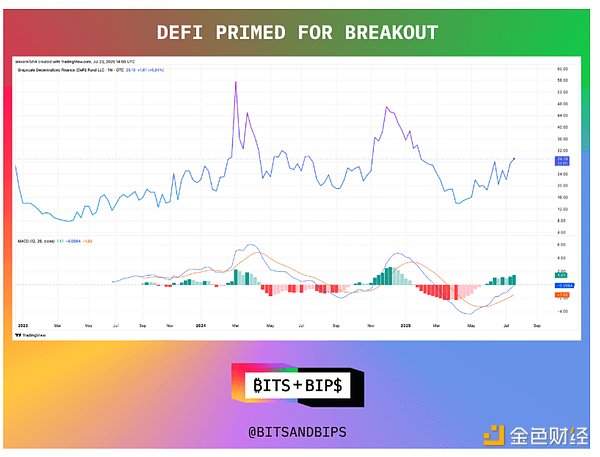
DeFi 板块方面,分析师指出,由于相关衍生品市场尚不成熟,许多投资者更倾向于在现货市场购买蓝筹类 DeFi 资产以获得分散敞口,比如 AAVE。观察市场上代表性较强的 DeFi 综合基金 —— Grayscale DeFi Fund(DEFG),也显示该赛道正处于新一轮上升趋势的初期阶段,动能正在积聚。
DNVaSJCv6GKYv8v1VEIb3ozhklbYfeZSWsN0ULbq.png

Letture associate

Single-Day Plunge of 30%, Arthur Hayes Suddenly Liquidates: Why Did ZEC Get Exploded by Security Issues?

On June 5th, Zcash founder Zooko Wilcox disclosed a critical soundness vulnerability in the project's latest Orchard privacy pool. This flaw, found in the elliptic curve multiplication constraints, could allow an attacker to create unlimited counterfeit ZEC within the shielded pool, with transactions appearing valid. The vulnerability was discovered in late May by security researcher Taylor Hornby, who utilized Anthropic's new Opus 4.8 AI model for a targeted audit. The Zcash ecosystem had already performed an emergency network upgrade to patch the issue. However, the detailed disclosure triggered severe market panic, causing ZEC's price to plummet over 30% in a single day. Notably, prominent investor Arthur Hayes announced he had sold his entire ZEC position following the news. The incident starkly challenges the "technological trust" narrative central to privacy coins. Despite years of top-tier cryptographic audits, the bug persisted until uncovered with advanced AI-assisted research. This highlights the growing gap between theoretical perfection and practical implementation in privacy technology. The event serves as a industry-wide warning: in an AI-driven security landscape, the assumption that "undiscovered equals safe" is obsolete. It underscores the urgent need for continuous, proactive security practices combining AI audits, formal verification, and rapid response mechanisms.

foresightnews_api1 h fa

Single-Day Plunge of 30%, Arthur Hayes Suddenly Liquidates: Why Did ZEC Get Exploded by Security Issues?

foresightnews_api1 h fa

Breaking the Curse of DeFi Cascading Liquidations, Vitalik Proposes a New Solution

**Vitalik Buterin Proposes New DeFi Design to Eliminate Forced Liquidations** Ethereum co-founder Vitalik Buterin has published a proposal for a new decentralized finance (DeFi) architecture aimed at removing the automatic liquidation mechanisms prevalent in current lending protocols. The core idea involves creating synthetic assets using options as building blocks, fundamentally avoiding the抵押借贷结构 that triggers forced sell-offs. The proposal responds to a recurring flaw in DeFi: during sharp market downturns, mass自动清算 of under-collateralized positions can exacerbate price declines, creating systemic selling pressure and market instability, as evidenced by recent crypto market volatility. Buterin's model would split an asset like 1 ETH into two option-like derivatives, P and N, pegged to a price index with a set strike price and expiration. At expiry, an oracle determines the settlement price to allocate the underlying ETH between P and N holders. This design eliminates the "cliff" of instant liquidation. Instead, a position's value would gradually drift from its target peg if not actively rebalanced by the user, transferring the rebalancing decision from the protocol to the user or automated tools. A key advantage is the reduced reliance on high-frequency, real-time oracle price feeds, which are vulnerable to manipulation and errors in current systems. The delayed settlement in the options model allows for more robust, fault-tolerant oracle designs. However, significant challenges remain for practical adoption. High transaction costs (slippage) from frequent rebalancing on automated market makers (AMMs) could erode user funds. The model may not be suitable for stablecoins requiring a strict 1:1 dollar peg, as it inherently allows for value drift. Success would depend on developing new liquidity provisioning models and deep markets for these synthetic assets. The proposal represents a fundamental rethinking of DeFi risk management, challenging the industry to explore alternatives to被动集中平仓 rather than merely optimizing existing liquidation processes. It remains a theoretical framework awaiting implementation and testing by development teams.

foresightnews_api1 h fa

Breaking the Curse of DeFi Cascading Liquidations, Vitalik Proposes a New Solution

foresightnews_api1 h fa

Bitcoin's Decline Marks the Transformation of Crypto

Title: The Decline of Bitcoin Marks the Transformation of Crypto While Bitcoin's price recently fell below $70,000, down approximately 45% from its peak, the broader crypto industry is not following it into decline. Instead, crypto is maturing and evolving beyond its dependence on Bitcoin's price movements. Two of Bitcoin's core functions are being usurped. First, AI has captured its role as the primary speculative asset. AI, with its tangible revenue, explosive demand, and massive capital inflows ($700-830 billion in 2024), is siphoning off the speculative "hot money" that once drove Bitcoin. It also contributes to a sustained high-interest-rate environment, further tightening liquidity for assets like Bitcoin. Second, dollar-pegged stablecoins like USDC and USDT have replaced Bitcoin as the crypto market's foundational currency and primary on/off-ramp. Most trading pairs and on-chain transactions are now settled in stablecoins, severing the historical link where all capital inflows had to pass through Bitcoin first. This decoupling allows projects to thrive based on their own fundamentals rather than Bitcoin's price. Examples include Hyperliquid, an on-chain derivatives exchange with annual revenues of $8-13 billion, and prediction market platform Polymarket, valued at $200 billion with $3.65 billion in annual fees. These projects are evaluated on traditional metrics like revenue and user growth. New opportunities are emerging, particularly around privacy. Privacy coins like Zcash (ZEC) are seeing surging demand, while infrastructure like NEAR enables private, cross-chain asset transfers without requiring users to hold a specific token—privacy becomes a universal service layer. In this new paradigm, stablecoins are the universal cash, various project tokens represent equity, and privacy-enabled cross-chain coordination layers (like NEAR) act as the critical infrastructure connecting a fragmented, multi-chain ecosystem. Bitcoin is now just one asset among many. The era where the entire crypto market moved in lockstep with Bitcoin is over. The industry's health should now be judged by project fundamentals—real revenue, active users, and tokenomics that capture value—and the development of the underlying infrastructure enabling a mature, dollar-denominated crypto economy.

foresightnews_api1 h fa

Bitcoin's Decline Marks the Transformation of Crypto

foresightnews_api1 h fa

Lightspark CEO: In Ten Years, Bitcoin Will Be as Invisible as TCP/IP, Yet Power Trillions in Daily Transactions

A decade from now, Bitcoin will function like TCP/IP — invisible yet foundational, supporting trillions in daily transactions globally, according to Lightspark CEO David Marcus. In this future, a coffee shop in Lagos receives instant payment, a manufacturer in São Paulo settles an invoice with a supplier in Ho Chi Minh City, and a freelancer in Bangalore gets paid weekly from an Austin startup — all via Bitcoin's settlement layer, with none of the parties consciously interacting with it. This vision parallels the adoption of open protocols: first driven by necessity where existing systems fail, then scaling rapidly as tools mature and economic benefits become clear. The structural shift begins with wallets. Modern non-custodial wallets, like Spark, allow users to hold dollars, local currency, and Bitcoin in a single address, seamlessly switching between them. This eliminates friction and revolutionizes global custody, moving significant deposits to user-controlled keys not by ideology, but by superior utility. As a result, Bitcoin becomes the default savings layer for billions, as its fixed supply and appreciating value make it a rational choice for savers holding it alongside stablecoins in their everyday wallets. Businesses follow a similar path, from small companies in emerging markets to multinational corporations, holding Bitcoin alongside operational stablecoins. The latest trend is direct Bitcoin transactions for commerce. When both parties hold Bitcoin, transacting in it becomes the simplest option — no conversions, no intermediary currency. This starts in niche areas like high-value B2B settlements but grows as infrastructure makes sending Bitcoin as easy as stablecoins. An accelerating force is AI agents. By 2036, AI agents conducting commerce on behalf of individuals and firms will increasingly choose Bitcoin for settlement. Optimizing for speed, finality, and minimal counterparty risk across jurisdictions, they find Bitcoin's global, neutral, and programmable network ideal for netting and settling obligations. Thus, Bitcoin is becoming the native currency for machine commerce, just as it has become a native savings asset for humans. The global monetary system is being rebuilt from the protocol layer: open infrastructure, default self-custody, Bitcoin settling everything underneath, with stablecoins as the interface. Most users won't think about Bitcoin when they transact — and they won't need to.

foresightnews_api1 h fa

Lightspark CEO: In Ten Years, Bitcoin Will Be as Invisible as TCP/IP, Yet Power Trillions in Daily Transactions

foresightnews_api1 h fa

Trading

Spot
Futures

Articoli Popolari

Cosa è XRP 2.0

XRP 2.0: Una Nuova Frontiera nel Paesaggio delle Criptovalute Introduzione a XRP 2.0 Nel mondo in continua evoluzione delle criptovalute, nuovi progetti emergono continuamente, cercando attenzione e adozione. Una tale iniziativa promettente è XRP 2.0, un nuovo progetto di criptovaluta progettato per sfruttare avanzate tecnologie blockchain e metodologie di crittografia robuste. Anche se il nome richiama alla mente l'XRP di Ripple, è fondamentale notare che XRP 2.0 opera in modo indipendente, concentrandosi sul miglioramento della sicurezza delle transazioni, della privacy e della scalabilità. Mentre il panorama finanziario digitale abbraccia sempre di più soluzioni decentralizzate, XRP 2.0 mira a contribuire in modo significativo al web3 e all'espansione generale dei progetti crypto. Cos'è XRP 2.0? Alla sua base, XRP 2.0 è un progetto di criptovaluta che mira a creare un ecosistema di valuta digitale sicuro e decentralizzato. La sua tecnologia fondamentale integra principi di blockchain sofisticati con tecniche di crittografia all'avanguardia. L'obiettivo principale di XRP 2.0 è quello di affermarsi come una piattaforma affidabile ed efficiente in grado di consentire un'esecuzione rapida delle transazioni, dando priorità a migliori protezioni della privacy per i suoi utenti. Il progetto è promosso come una soluzione a molte limitazioni affrontate dalle criptovalute esistenti, proponendo un sistema in grado di gestire un volume maggiore di transazioni con migliorata velocità e privacy. Questa versatilità pone XRP 2.0 come un significativo competitor in un mercato affollato di varie valute digitali. Chi è il Creatore di XRP 2.0? L'identità del creatore dietro XRP 2.0 è stata segnalata come 'Wilbur'. Tuttavia, i dettagli completi riguardanti Wilbur o l'entità associata rimangono sfuggenti. L'anonimato di molti creatori di criptovalute non è un fenomeno raro nel settore, spesso progettato per mantenere un certo grado di privacy e sicurezza. Chi sono gli Investitori di XRP 2.0? Al momento, informazioni specifiche relative alle fondazioni o organizzazioni di investimento a supporto di XRP 2.0 non sono disponibili pubblicamente. Nel settore delle criptovalute, il supporto di investitori rinomati può influenzare significativamente la credibilità e il successo di un progetto, tuttavia la trasparenza riguardo ai sostenitori finanziari di XRP 2.0 non è stata stabilita. Come Funziona XRP 2.0? XRP 2.0 si distingue per l'impiego di una combinazione di tecnologia blockchain e algoritmi di crittografia avanzati che garantiscono transazioni sicure e decentralizzate. La sua struttura innovativa include caratteristiche uniche progettate per promuovere il coinvolgimento degli utenti e ampliare le funzionalità oltre le transazioni convenzionali delle criptovalute. Tra queste caratteristiche, XRP 2.0 incorpora capacità alimentate da intelligenza artificiale, come funzionalità di testo in immagini e testo in voce. Queste aggiunte sono progettate per migliorare l'esperienza interattiva per gli utenti, promuovendo una maggiore applicabilità in vari settori. Unendo progressi tecnologici con design incentrati sugli utenti, XRP 2.0 mira a catturare l'attenzione di una vasta gamma di individui e aziende che cercano di integrare soluzioni di criptovaluta nei loro framework operativi. Cronologia di XRP 2.0 Comprendere XRP 2.0 richiede di esaminare i traguardi che hanno definito il suo percorso fino ad ora: 23 luglio 2023: XRP 2.0 viene introdotto come un nuovo progetto di criptovaluta, mirante a rivoluzionare le capacità di transazione sicura e decentralizzata nel dominio blockchain. 8 settembre 2023: Si verifica il lancio di un altro progetto, XRP20, marcando l'emergere di un token ERC-20 sulla blockchain di Ethereum che resta non correlato a XRP 2.0. 13 novembre 2023: Il ledger XRP subisce un significativo aggiornamento con il rilascio della versione 2.0.0 del software server rippled. È essenziale notare che questo sviluppo è scollegato dal progetto di criptovaluta XRP 2.0. Punti Chiave su XRP 2.0 Per distillare l'essenza di XRP 2.0, emergono diversi fattori critici: Caratteristiche Uniche: L'inclusione di funzionalità come il testo in immagini e testo in voce alimentato da intelligenza artificiale diversifica ulteriormente le potenziali applicazioni di XRP 2.0. Tecnologia Blockchain: Il framework utilizza meccanismi blockchain avanzati e protocolli di crittografia, garantendo un ambiente sicuro e decentralizzato per le transazioni. Scalabilità e Privacy: XRP 2.0 dà priorità a migliori protezioni della privacy nei processi di transazione e alla scalabilità necessaria per accogliere una base di utenti in crescita. Nessuna Affiliazione con Ripple: È importante notare che, nonostante il suo nome, XRP 2.0 non ha alcuna fedeltà o collaborazione con l'XRP di Ripple, distinguendo il proprio framework operativo e obiettivi all'interno dell'ecosistema delle criptovalute. Conclusione XRP 2.0 rappresenta un'ambiziosa venture nell'ambito delle criptovalute, mirante a offrire una combinazione di sicurezza, privacy ed efficienza nelle transazioni digitali. Integrando tecnologie sofisticate e caratteristiche user-friendly, il progetto si propone di ampliare gli orizzonti di ciò che le criptovalute possono realizzare nell'economia digitale odierna. Sebbene l'anonimato del suo creatore e la mancanza di investitori dichiarati possano sollevare domande per alcuni, il focus di XRP 2.0 su funzionalità avanzate e decentralizzazione ne amplifica l'appeal in un mercato crypto sempre più affollato. Man mano che il panorama delle criptovalute continua a evolversi, XRP 2.0 potrebbe emergere come un attore decisivo nell'espansione di soluzioni blockchain sicure e scalabili.

166 Totale visualizzazioniPubblicato il 2024.04.05Aggiornato il 2024.12.03

Cosa è XRP 2.0

Come comprare XRP

Benvenuto in HTX.com! Abbiamo reso l'acquisto di XRP (XRP) semplice e conveniente. Segui la nostra guida passo passo per intraprendere il tuo viaggio nel mondo delle criptovalute.Step 1: Crea il tuo Account HTXUsa la tua email o numero di telefono per registrarti il tuo account gratuito su HTX. Vivi un'esperienza facile e sblocca tutte le funzionalità,Crea il mio accountStep 2: Vai in Acquista crypto e seleziona il tuo metodo di pagamentoCarta di credito/debito: utilizza la tua Visa o Mastercard per acquistare immediatamente XRPXRP.Bilancio: Usa i fondi dal bilancio del tuo account HTX per fare trading senza problemi.Terze parti: abbiamo aggiunto metodi di pagamento molto utilizzati come Google Pay e Apple Pay per maggiore comodità.P2P: Fai trading direttamente con altri utenti HTX.Over-the-Counter (OTC): Offriamo servizi su misura e tassi di cambio competitivi per i trader.Step 3: Conserva XRP (XRP)Dopo aver acquistato XRP (XRP), conserva nel tuo account HTX. In alternativa, puoi inviare tramite trasferimento blockchain o scambiare per altre criptovalute.Step 4: Scambia XRP (XRP)Scambia facilmente XRP (XRP) nel mercato spot di HTX. Accedi al tuo account, seleziona la tua coppia di trading, esegui le tue operazioni e monitora in tempo reale. Offriamo un'esperienza user-friendly sia per chi ha appena iniziato che per i trader più esperti.

1.5k Totale visualizzazioniPubblicato il 2024.12.10Aggiornato il 2026.06.02

Come comprare XRP

Discussioni

Benvenuto nella Community HTX. Qui puoi rimanere informato sugli ultimi sviluppi della piattaforma e accedere ad approfondimenti esperti sul mercato. Le opinioni degli utenti sul prezzo di XRP XRP sono presentate come di seguito.

活动图片