Криптовалютные активы публичных компаний выросли до 160 млрд долларов

cryptonews.ruPubblicato 2025-02-27Pubblicato ultima volta 2025-07-31

Совокупная рыночная капитализация публичных компаний, владеющих криптовалютой, достигла 160 миллиардов долларов по сравнению с примерно 90 миллиардами долларов в начале года. Этот рост отражает новую тенденцию, при которой инвесторы стремятся получить доступ к криптовалютам через акции американских компаний.

Увеличение капитализации за последние шесть месяцев свидетельствует о более масштабных изменениях в корпоративных казначейских стратегиях. Компании всё чаще рассматривают цифровые активы в качестве полноценных статей баланса. Акции некоторых из этих организаций продемонстрировали двузначный рост после объявлений о создании криптовалютных казначейств, что подтверждает растущий интерес рынка к данной тенденции.

Показатель mNAV (кратность стоимости чистых активов) играет ключевую роль в оценке деятельности таких казначейских операторов. Он рассчитывается путём умножения стоимости чистых активов токена на валютную кратность, которая определяется делением стоимости предприятия на стоимость чистых активов токена. Хотя многие казначейские компании торгуются с премией к mNAV, это не обязательно свидетельствует о использовании кредитного плеча, поскольку рост цен может быть вызван спекулятивными покупками. Премия отражает доверие рынка к профессиональному управлению криптоактивами и институциональной надёжности, а не просто наличие самих активов.

Казначейские фирмы предоставляют крупным держателям токенов стратегическую возможность выхода из позиций, позволяя избежать проблем с ликвидностью на традиционном рынке. Вместо прямой продажи токенов на биржах, что может привести к снижению их стоимости, крупные инвесторы переводят активы в казначейские инструменты в обмен на акции. Эти акции затем могут быть проданы на традиционных финансовых рынках, обеспечивая более высокую ликвидность и стабильное ценообразование, при этом сохраняя статус «диверсифицированного казначейства», а не просто фиксации прибыли.

Данная тенденция решает фундаментальные проблемы ликвидности на рынках токенов и создаёт новые возможности для взаимодействия традиционных финансовых рынков с криптовалютными. Устойчивость таких оценок будет зависеть от грамотной реализации стратегий и степени корреляции с базовыми криптоактивами.

Компания Strategy, один из наиболее известных корпоративных держателей биткоина на Уолл-стрит, укрепила свои позиции в качестве ключевого посредника в торговле биткоином, проведя крупное мероприятие по привлечению капитала. Во вторник компания завершила сделку на сумму 2,5 миллиарда долларов, ставшую крупнейшим размещением криптовалютных акций в этом году. Сделка была осуществлена через новый класс бессрочных привилегированных акций под названием STRC, предусматривающих плавающие ежемесячные дивиденды, начинающиеся с 9 процентов.

Согласно заявлению компании, вырученные средства были направлены на покупку 21 021 BTC по средней цене 117 256 долларов за монету. В результате общий объём биткоинов под управлением Strategy достиг впечатляющих 628 791 BTC, что по текущим рыночным ценам оценивается более чем в 74 миллиарда долларов.

Ожидается, что STRC начнёт торговаться на бирже Nasdaq в среду. После листинга эти акции станут первыми бессрочными привилегированными ценными бумагами, зарегистрированными на американской бирже, которые выпущены казначейской компанией биткоина и предусматривают ежемесячные дивидендные выплаты.

Привлечение капитала через STRC стало крупнейшим в истории Strategy, превзойдя выпуск конвертируемых облигаций на 800 миллионов долларов в июне 2024 года. Это событие последовало за запуском STRF в марте, который исполнительный председатель Strategy Майкл Сэйлор назвал «жемчужиной» компании. Продукт STRF был обеспечен программой акционерного капитала на 2,1 миллиарда долларов.

В отличие от STRF, ориентированного преимущественно на институциональных инвесторов, новый продукт STRC разработан с учётом потребностей розничных инвесторов. Плавающие ежемесячные выплаты и отсутствие срока погашения делают его привлекательным для тех, кто ищет стабильную доходность, привязанную к биткоину, без подверженности волатильности спотового рынка.

«Доходные продукты такого типа позволяют получать прибыль без прямого воздействия волатильности спотового рынка», — отметил Винсент Лю, директор по инвестициям Kronos Research. «Это значительный шаг вперёд в структурировании потоков капитала, который повышает ликвидность биткоина без создания давления на стакан цен».

Инновационная структура STRC отражает общую тенденцию среди корпоративных держателей биткоина, которые стремятся монетизировать свои резервы BTC и привлекать новые категории инвесторов.

Letture associate

A Group of Suzhou Engineers Unexpectedly Attain Financial Freedom

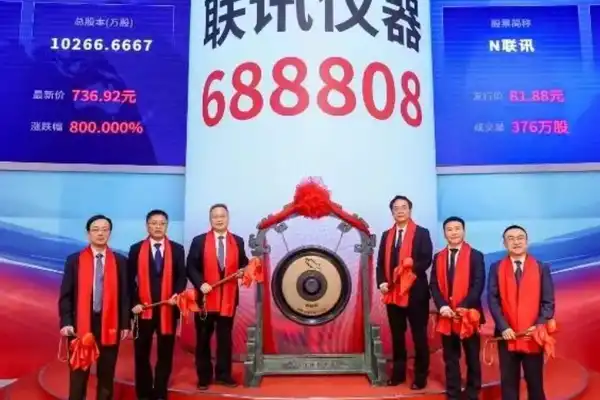
In Suzhou, a group of engineers from Lianxun Instruments, a leader in optical communication testing equipment, have achieved remarkable wealth after the company's IPO. Listed just two months ago on the STAR Market, the company's stock price surged approximately 30 times, making it the only A-share stock priced above 2,000 yuan. This surge created substantial fortunes for nearly 100 technical employees who held a collective 15.91% stake through employee stock ownership platforms, valued at over 36 billion yuan at the current market cap. Among them, nearly 40 became billionaires, while even the smallest holdings exceeded 5 million yuan in value. Founded in 2017 by Hu Haiyang, Yang Jian, and Huang Jianjun, Lianxun Instruments was established to address China's reliance on foreign high-end testing instruments. The company grew rapidly with a strong focus on R&D, where technical staff make up nearly 80% of its workforce. Early implementation of employee stock plans helped retain this core talent. The company's explosive growth is fueled by booming AI computing demand, with clients including major global optical module leaders. Its revenue skyrocketed from 276 million yuan in 2023 to 1.194 billion yuan in 2025, turning a profit in 2024. The IPO has also generated massive returns for early investors, including Suzhou's state-owned capital, which saw a hundredfold return. This story reflects a broader trend in China's markets, where technology firms in AI, semiconductors, and optics are creating new wealth, rewarding engineers and technical teams who are now central to modern capital-driven success stories, marking a shift from previous eras dominated by internet and real estate tycoons.

marsbit1 h fa

A Group of Suzhou Engineers Unexpectedly Attain Financial Freedom

marsbit1 h fa

NVIDIA's Annual 'Most Dangerous' Paper: AI Self-Replicating Code, Unlimited Leveling and Evolution

NVIDIA's "Red Queen Gödel Machine" (RQGM) paper proposes a potentially groundbreaking AI self-evolution framework. It breaks from the long-stalled concept of the "Gödel Machine," which required mathematically proven beneficial self-modifications, by adopting an evolutionary approach. The core, and most striking, innovation is that the AI does not just evolve its own code in a static environment. Instead, it co-evolves both the "student" (the task-performing agent) and the "examiner" (the evaluation system that judges it). This creates a dynamic, recursive self-improvement loop inspired by the biological "Red Queen Hypothesis"—where continuous adaptation is needed just to maintain relative fitness. The mechanism operates in epochs. Within an epoch, a fixed examiner evaluates all candidate code variants. At epoch boundaries, a new, potentially more rigorous examiner can replace the old one, but only if it proves statistically superior on a held-out "ground truth" dataset. This "controlled utility evolution" aims to ensure progress is measurable and grounded. The paper demonstrates RQGM's effectiveness across three domains: 1. **Code Generation:** It achieved a 71.7% test-set pass rate (improving over a 69.9% SOTA) while using 1.35-1.72x fewer computational tokens. 2. **Paper Writing:** In a subjective task, the co-evolved writer and reviewer achieved a 40.5% acceptance rate by a fixed human panel, up from 21.8%. 3. **Math Proofs:** It evolved more accurate graders (at 3x lower cost) and higher-scoring provers. Notably, RQGM also mitigated a known LLM bias where AI reviewers favor AI-generated content. By specifically rewarding reviewers that correctly rejected AI-written papers from a historical pool, the evolved system achieved impartiality while maintaining 80% accuracy. The research has sparked significant discussion about the acceleration of Recursive Self-Improvement (RSI). Some, like Anthropic's Jack Clark, have predicted a high probability of highly autonomous, self-evolving AI emerging by 2028. The paper suggests that when an AI begins to design its own evaluators and push itself toward ever-higher standards in a recursive loop, it may be taking a fundamental step toward redefining intelligence and autonomy.

marsbit1 h fa

NVIDIA's Annual 'Most Dangerous' Paper: AI Self-Replicating Code, Unlimited Leveling and Evolution

marsbit1 h fa

Apple and the Power Rebalancing with 'The Microns': Dissecting the Profit Ledger Behind the iPhone

The article analyzes the shifting profit dynamics and power balance between Apple and memory suppliers like Micron within the iPhone supply chain. It highlights a social media post criticizing Apple for raising iPhone prices while blaming memory chip cost increases, despite historically paying suppliers like Micron very little. An estimated iPhone 18 cost breakdown is referenced. Historically, memory was a minor cost component. In 2017's iPhone X, memory accounted for only about 1.6-2.3% of the price, with Apple capturing nearly 50% net profit. Over time, memory's share of the Bill-of-Materials (BOM) cost has grown significantly, reaching an estimated 12-15% for the iPhone 17 series. The core driver of this change is soaring demand for memory from the AI industry, particularly for High Bandwidth Memory (HBM) and AI servers, which is diverting production capacity and squeezing supply for consumer electronics. Memory manufacturers, after enduring periods of low profits, now hold greater pricing power. This is reflected in their recent strong financials, like Micron's 84.6% gross margin. Apple CEO Tim Cook initially described the memory price pressure as unprecedented in his 40-year career, later calling it a "once-in-a-century flood," before Apple announced price hikes across several product lines, causing a significant stock drop. Elon Musk echoed Cook's sentiment about the dramatic cost surge. The article concludes that the era of memory suppliers being at the mercy of Apple's pricing power has temporarily reversed, thanks to AI-driven demand. It notes Apple is reportedly seeking to diversify its supply chain, including exploring chips from China's CXMT.

Odaily星球日报3 h fa

Apple and the Power Rebalancing with 'The Microns': Dissecting the Profit Ledger Behind the iPhone

Odaily星球日报3 h fa

Conversation with the Founder of 42 Macro: The Fed's 'Boiling the Frog Slowly' and the K-Shaped Economy

In a conversation with Anthony Pompliano, Darius Dale, founder of 42 Macro, discusses the Federal Reserve's monetary policy and the K-shaped U.S. economy. Dale characterizes new Fed Chair Kevin Warsh as a "dove in hawk's clothing," expecting the Fed to signal or enact policy tightening in the coming quarters to create room for later easing. He argues current economic signals, including high deficit spending, debt monetization, and credit growth, strongly indicate inflation is not on a credible path back to 2%, forcing the Fed to act. The discussion highlights the stark "K-shaped" economic reality. While top earners, buoyed by massive cash savings (up ~$8 trillion since pre-pandemic), continue robust spending, those at the bottom face severe financial strain, with delinquency rates on consumer loans reaching crisis-era highs. Dale attributes much of the current social and political anxiety to this divergence, driven by the "Cantillon effects" of monetary expansion, which disproportionately benefits asset owners. He emphasizes that in this environment of "financial repression," individuals must participate in asset markets to avoid being left behind. On equities, Dale notes a rotation from the "Magnificent Seven" tech giants into broader AI-exposed companies, while warning that the tech giants' massive capital expenditure cycles could eventually puncture over-optimistic cash flow projections. Dale concludes by stressing that the core desire across all economic strata is simply the dignity to provide for one's family, a goal currently undermined by systemic policies that act as a "wealth siphon" from the bottom to the top.

marsbit3 h fa

Conversation with the Founder of 42 Macro: The Fed's 'Boiling the Frog Slowly' and the K-Shaped Economy

marsbit3 h fa

Trading

Spot
活动图片