Best Presales & Coins to Watch in July – Grok AI Points to 3 High-Upside Tokens That Could Explode

bitcoinistPubblicato 2025-07-25Pubblicato ultima volta 2025-07-25

Introduzione

Grok, the AI bot on X, has been meme’d to death. But being integrated straight into X, arguably one of...

Trusted Editorial content, reviewed by leading industry experts and seasoned editors. Ad Disclosure

Grok, the AI bot on X, has been meme’d to death. But being integrated straight into X, arguably one of the biggest crypto hubs online, has also helped it develop a weird knack for spotting trends before they go mainstream.

This week, the bot flagged some of the best crypto presales gaining serious traction across X and Discord. And yes, it’s got range.

Retail appetite is back with the market flipping into the greed zone. And meme coins are mutating into real infrastructure plays. The appetite for early-stage tokens, especially ones with a unique spin or actual utility, is heating up fast.

CoinMarketCap’s crypto fear and greed index.

So what made Grok’s shortlist?

One project is dragging Bitcoin out of the Stone Age. Another is embedding a full trading terminal inside Telegram. And the third is training AI models directly on-chain.

Whether you’re here for the best meme coins or the mechanics, these picks are worth a serious look.

Let’s break down what Grok’s watching.

1. Bitcoin Hyper ($HYPER) – Solana Speed Meets Bitcoin Security

Bitcoin Hyper ($HYPER) is exactly what it sounds like: Bitcoin, but juiced. It’s the first meme-centered Layer-2 for Bitcoin that integrates the Solana Virtual Machine (SVM).

Thanks to this, Hyper is bringing smart contracts, lightning-fast transactions, and meme-fueled dApps compatible with the oldest coin in crypto.

If Bitcoin was the dinosaur, $HYPER is the asteroid; except this time, it builds instead of destroys.

By integrating with Solana’s high-speed execution layer, Bitcoin Hyper gives $BTC the upgrade it never had. You can now send, stake, and build with wrapped Bitcoin at Solana speeds, without sacrificing L1 security.
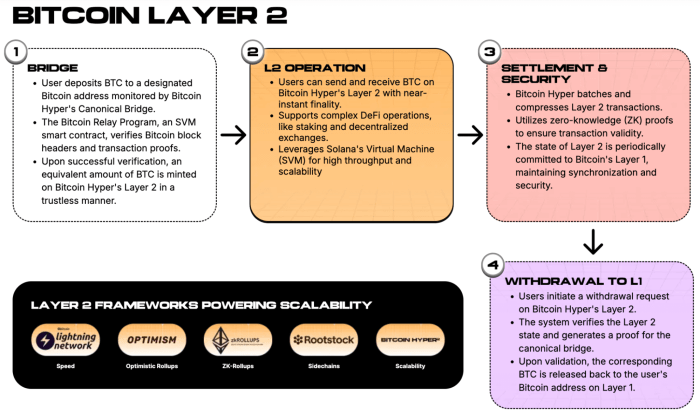
Bitcoin Hyper ($HYPER) layer 2 framework for powering scalability.

The Canonical Bridge handles trustless swaps between Bitcoin and Hyper’s L2, removing the middlemen and delays.

The presale has already raised over $4.7M, and early buyers can stake their $HYPER at a whopping 204% APY.

It’s a full-blown programmable ecosystem for Bitcoin, opening the door to everything from DeFi to meme coins, all settled back to Bitcoin. If Satoshi would be building in 2025, this is what it would look like.

Learn more with our guide to Bitcoin Hyper and our $HYPER price prediction.

If you want to get in early, join the Hyper presale now while the token sells for just $0.0124.

2. Snorter Bot ($SNORT) – Meme Bot That Actually Trades For You

Snorter Bot ($SNORT) isn’t just another Telegram token; it’s a full-blown trading suite stuffed inside your favorite group chat.

Built natively for Telegram, Snorter Bot lets you snipe tokens at launch, mirror top wallets, set dynamic stop-losses, and track your entire portfolio, all without leaving the app.

It’s lightning fast too. Thanks to a custom Solana RPC routing engine, Snorter executes trades in under a second, dodging MEV bots and front-runners in the process.

If you’ve ever missed a meme pump because your browser lagged or your wallet failed to confirm, Snorter is the antidote.

Comparison table of Snorter Bot vs numerous top Telegram trading bots.

The $SNORT token fuels it all. Hold it to unlock lower fees (just 0.85% vs 1.5% for other competing bots), premium features, staking perks (currently with 174% APY), and governance access.

This is what happens when memes meet actual infrastructure. And yes, the mascot is an aardvark with a snout for alpha.

Although it has already raised over $2.3M, you can still buy $SNORT for $0.0991 using $SOL, $ETH, $BNB, $USDT, $USDC, or even a debit card.

Our Snorter Token price prediction sees the coin hitting $0.9 after listing in Q4 this year. Learn all about $SNORT to get the facts before the official launch.

3. Lightchain AI ($LCAI) – Blockchain Infrastructure Meets AI Computation

Lightchain AI ($LCAI) is what happens when blockchain stops wasting energy and starts doing something useful.

Instead of burning electricity on pointless hash puzzles, Lightchain’s Proof-of-Intelligence (PoI) rewards nodes for completing real AI work – think model training, inference, and optimization.

At the core is the AIVM, or AI Virtual Machine: a programmable layer designed specifically for AI workloads. It’s built for privacy-first, federated learning, where data stays local but insights get shared. That means smarter models without the creepy surveillance or centralized control.

How Lightchain AI transforms blockchain and AI virtual machine.

The $LCAI token powers everything: gas, governance, rewards, and developer incentives. It’s priced at just $0.007125, with plenty of upside left in the presale.

And with features like decentralized governance, an AI memecoin launchpad, and a developer grant system, the project is clearly playing long-term.

If you’re betting on AI becoming the next crypto megatrend, Lightchain AI is where infrastructure meets narrative, before it goes mainstream.

Final Thoughts

Grok might be cracking jokes, but these presales are no punchline. $HYPER, $SNORT, and $LCAI are each carving out serious lanes – reviving Bitcoin, retooling Telegram, and rebuilding AI infra from the ground up.

The common thread? Utility. Projects with real-world use cases and early traction are dominating presale season, especially as retail chases the next wave of high-upside narratives.

Just remember: Grok is smart, but it’s still just a chatbot.

As usual, please do your own research (DYOR). Presales are high risk and volatile. Never invest more than you’re willing to lose. This is not investment advice.

Editorial Process for bitcoinist is centered on delivering thoroughly researched, accurate, and unbiased content. We uphold strict sourcing standards, and each page undergoes diligent review by our team of top technology experts and seasoned editors. This process ensures the integrity, relevance, and value of our content for our readers.

Aidan Weeks, a Master's graduate in Mechanical Engineering, has thrived as a content writer for over four years. Specializing in crypto, tech, engineering, AI, and B2B sectors, Aidan adeptly crafts web copy, blog posts, buying guides, manuals, product pages, and more, making complex concepts accessible and engaging. His transition from academia to full-time writing reflects his passion for bridging technical expertise with clear, informative content. Since joining Bitcoinist, Aidan has written extensively about DeFi, dApps, AI, and meme coins, solidifying his grasp on emerging blockchain technologies. An early adopter, he began investing in Solana in 2020, further deepening his insights into crypto markets and innovation. Today, he combines hands-on experience with a sharp editorial instinct to help readers cut through hype, spot real trends, and make sense of a fast-moving space.

Letture associate

Doubao and Qwen Will Discontinue Agent Functionality on July 15

On July 4th, Doubao and Tongyi Qianwen announced the impending shutdown of their user-created "AI Agent" features. Doubao confirmed its agent feature will be taken offline on July 15, directing users to ByteDance's CatBox app for similar needs. On the same day, Tongyi Qianwen notified users, specifying that personalized interactive agents and user-built agent functions will cease on July 10, with all agent features and services completely deactivated by July 15. After this date, access to agent configurations and historical chat records will be lost. This adjustment impacts core user scenarios like role-playing, personal assistants, and vertical tool agents. The shutdown date coincides with the official implementation of China's "Interim Measures for the Administration of Artificial Intelligence Human-like Interactive Services" on July 15. The new regulations impose strict rules on "human-like emotional interaction services," requiring platforms to implement measures like anti-addiction systems, minor verification, and content moderation. This move is widely seen as a proactive step by the platforms to align with regulatory timelines and mitigate compliance risks. Additionally, commercial challenges are a key driver. Analysis suggests that casual, human-like chat agents generate high-frequency, low-value interactions, leading to high computational costs with poor monetization. As the AI application market shifts from user growth to proving value, sustaining such "high-cost, low-efficiency" user-generated content becomes difficult. Both platforms have outlined transition plans. Doubao will allow data viewing and self-backup for a period after shutdown, with data scheduled for permanent deletion by October 15. Tongyi Qianwen similarly advised users to save important content via copying or screenshots before the deadline. This strategic retreat from C-end agent features signals a broader market shift. Compliance capability and sustainable business models are replacing user scale and feature richness as the new core competitive dimensions. Tongyi Qianwen's recent move to fully open its Agent and Skill platforms to third-party enterprises and developers further underscores a strategic pivot from low-value C-end services to high-value B-end enterprise scenarios.

marsbit42 min fa

Doubao and Qwen Will Discontinue Agent Functionality on July 15

marsbit42 min fa

Why Did Codex and ChatGPT Merge? What's Next for Codex? OpenAI Core Leader Answers Everything

In 2026, OpenAI's Codex saw explosive growth, with weekly active users surging over 5x to 5 million since January, driven largely by the February launch of its desktop app. Codex desktop lead Andrew Ambrosino explains key shifts behind its evolution. A core change is the inversion of development costs: implementation is now cheap, while curation and taste—judging which of many AI-generated prototypes is valuable—have become the new scarcities. Ambrosino defines taste as a blend of aesthetics, systems thinking, direction, and semantic coherence in interaction. He notes AI still struggles with design because evaluating it requires human cultural context and abstract reasoning about how components relate—capabilities beyond current models. Timing is critical: the same Codex app would have failed months earlier; success hinges on the model's capabilities at launch. Roles are blurring within his team, with engineers, designers, and PMs overlapping significantly. However, Ambrosino cautions against eliminating specialized roles entirely, as each field retains deep expertise. On AI-assisted development, the focus has shifted from measuring code written by AI to distinguishing between supervised and unsupervised generation. A current challenge is teaching models to simplify code, not just add complexity. The merger of Codex and ChatGPT stems from observed user behavior: non-developers adopted Codex for general knowledge work despite its developer-centric interface. This revealed a collapsing boundary between specialized tools and universal assistants. The vision is a "home base" that orchestrates tasks across external professional tools (like Excel or Premiere Pro) via connectors, rather than rebuilding everything internally. An internal example showed Codex helping edit video by interacting with Premiere Pro's files and even writing a plugin for it. The future direction is a unified, extensible platform that serves as a central hub for automating and managing work across any specialized tool the user employs.

marsbit53 min fa

Why Did Codex and ChatGPT Merge? What's Next for Codex? OpenAI Core Leader Answers Everything

marsbit53 min fa

Trading

Spot
活动图片