Linea终于要TGE了? 且看Layer 2独角兽的生死900天

marsbitPubblicato 2025-07-14Pubblicato ultima volta 2025-07-15

从千万级流量宠儿到沉寂低谷,一场代币延迟引发的信任危机与生态救赎。
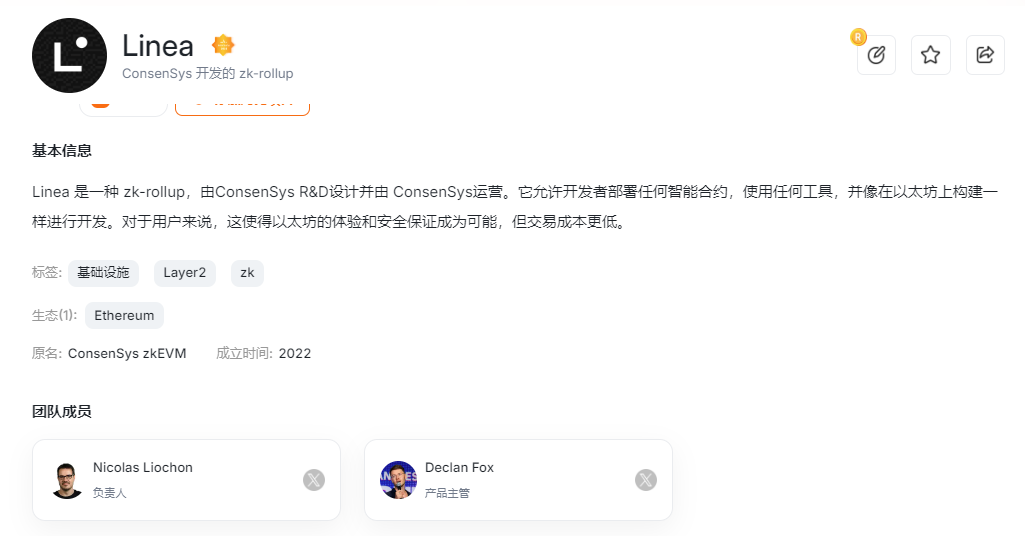
 Linea

2023年7月,当ConsenSys旗下Layer 2网络Linea携MetaMask的​​3000万月活用户​​流量强势登场时,整个加密世界为之侧目。主网上线首周跨链ETH突破​​1.1万枚​​,独立地址超6.5万个,生态项目迅速破百。彼时的Linea凭借​​zkEVM完全兼容性​​与ConsenSys的7.26亿美元融资背书,被视为颠覆Arbitrum、Optimism统治地位的头号挑战者。

然而短短一年后,这个明星项目却深陷用户信任危机。2024年1月,Adspower指纹浏览器大规模盗号事件中,黑客专门针对Linea地址发起攻击,损失高达500万美元。愤怒的社区将矛头直指项目方:“​​PUA那么久不TGE,给黑客可乘之机​​!” 彼时的Linea生态TVL停滞不前,开发者活动锐减,曾经的光环在迟迟未落的代币生成事件(TGE)中逐渐黯淡。

一、高光起点:含着金汤匙出生的Layer 2贵族

​​ConsenSys的嫡系血脉​​为Linea奠定了无可比拟的先天优势。作为以太坊联合创始人Joseph Lubin于2014年创立的区块链巨头,ConsenSys不仅坐拥MetaMask这一​​全球最大以太坊入口​​(2022年月活超3000万),更构建了包括Infura、Truffle、Codefi在内的完整开发者矩阵。这种生态协同效应在Linea的测试阶段即显露锋芒:

  • ​​2023年3月公共测试网上线​​,仅数周处理交易​​4600万笔​​,吸引​​550万个独立钱包​​参与
  • ​​无缝开发迁移体验​​让开发者无需重写合约即可部署DApp,与ConsenSys基础设施原生集成
  • ​​企业级安全架构​​通过恶意网站扫描、交易双重确认等设计,打造“无感”用户体验

技术定位上,Linea选择成为​​Type 2 zkEVM​​——在完全保持以太坊虚拟机兼容性的同时,通过零知识证明实现交易验证效率的指数级提升。这一路线虽牺牲部分性能,却最大程度降低了开发者的迁移门槛,成为其早期生态爆发的关键。


二、信任崩坏:延迟发币引发的生态塌方

尽管技术表现亮眼,Linea的​​代币经济模型长期悬而未决​​,为后续危机埋下伏笔。当2023年末Arbitrum、Optimism等竞品通过​​STIP短期激励计划​​发放数千万代币刺激生态时(Arbitrum单轮分配5000万枚ARB),Linea仅以“Voyage XP”积分体系作为空投预期维系用户,缺乏实质激励。

​​2024年1月的Adspower安全事件成为信任转折点​​。黑客利用指纹浏览器API漏洞,精准洗劫Linea链上精品钱包。社区怒火直指项目方:“​​两年了还在画饼!不TGE哪来安全预算?​​” 更深层矛盾在于:

  • ​​生态项目陷入流动性困局​​:头部借贷协议LineaBank存款APY仅4%,远低于主流Layer 2同类协议
  • ​​开发者持续流失​​:2024年Q1新部署合约量环比下降37%,社交与游戏类应用近乎停滞
  • ​​“吸血鬼攻击”加剧​​:Blast等新Layer 2以更高空投预期虹吸Linea存量用户

此时的Linea,俨然成为“​​技术优等生,代币差等生​​”的典型反面教材。


三、沉默进化:危机中的技术自救与生态重构

面对崩坏的社区信任,Linea团队选择了​​技术深耕而非仓促发币​​的救赎路径:

模块化证明系统突破​​

推动“​​Multi-Prover​​”(多证明者)架构落地,通过三家独立Layer 2共同验证交易,即使单点故障仍保障网络安全。该设计直指此前安全事件暴露的验证漏洞。


​​性能极限挑战​​

主网升级至​​Beta v2版本​​,集成“​​Limitless Prover​​”技术,目标成为“​​性能最高的EVM兼容Layer 2​​”。测试网TPS突破300,较初版提升15倍。


​​经济激励试水​​

2024年6月启动“​​Surge​​”流动性计划:


用户存入≥24美元等值资产即可赚取​​LXP-L积分​​,明确挂钩未来代币分配

引入​​积分衰减机制​​(每期减少10%),刺激早期参与

该计划首周锁仓量激增​​4.2亿美元​​,释放压抑已久的空投预期。


四、重生倒计时:代币经济终局与生态野望

 Linea

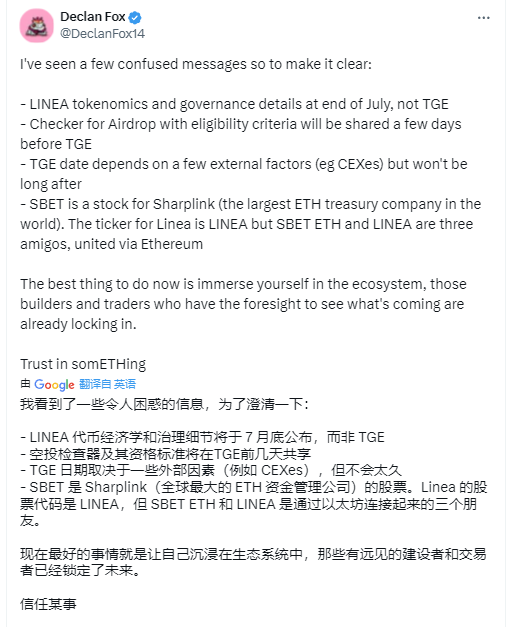
2025年7月14日,项目负责人Declan Fox的声明终于为漫长等待画上句点:

7月底发布代币经济模型​​:明确1万亿枚LINEA的分配机制,TGE时释放33%(含18%私募份额与15%公售)

空投资格透明化​​:TGE前数日上线查询工具,验证早期贡献者权益

CEX主导发行节奏​​:币安等交易所的上线排期成为TGE最终时间表的核心变量

更值得玩味的是其提出的“​​以太坊三剑客​​”构想:

LINEA将与ETH、Sharplink股票(SBET)形成战略三角。SBET作为全球最大ETH储备上市公司(近期从以太坊基金会购入1万枚ETH),成为连接传统资本与加密生态的桥梁。

这一布局暗示Linea正从单纯的技术扩容方案,向​​以太坊金融基础设施支柱​​跃迁。若SBET将其ETH储备注入Linea生态,将瞬间激活数十亿美元级流动性。


五、未竟之战:Layer 2终局博弈的三大生死劫

尽管曙光初现,Linea的复兴之路仍布满荆棘:

​​空投博弈的信任成本​​

“Surge”计划的LXP-L积分虽刺激TVL增长,但过度依赖空投预期的生态如同​​流动性堰塞湖​​——一旦代币释放不及预期,可能引发资金踩踏出逃。此前Arbitrum的STIP计划曾因代币集中抛压导致APY暴跌,Linea需设计更精细的释放曲线。


模块化战争的降维打击​​

OP Stack与Arbitrum Orbit已构建​​Layer 3生态矩阵​​:

  • OP Stack吸引Coinbase Base、opBNB等机构链入驻,形成“​​超级链​​”网络效应
  • Arbitrum Orbit支持Rust等非Solidity语言开发,突破EVM开发者天花板
  • Linea的Multi-Prover需证明其在跨链互操作领域的实质竞争力。


监管灰犀牛​​

SBET作为纳斯达克上市公司参与“三剑客”联盟,使Linea面临​​传统金融监管渗透​​。若美国SEC将以太坊质押服务纳入证券监管,Linea的机构流动性战略可能遭遇合规狙击。


尾声:信任的二次曲线

Linea的900天兴衰史,映照着Layer 2赛道从技术理想主义到经济现实主义的集体转向。当Declan Fox在推文结尾写下“​​Trust in somETHing​​”,这句双关语暗含对以太坊信仰的呼唤,更是对生态重建的隐喻。

在坎昆升级后的Layer 2战场,性能壁垒已被夷平,代币经济与生态协同成为真正的护城河。

随着7月底代币经济学的揭晓,Linea将迎来最后一次救赎机会——这一次,它需要证明自己不仅是ConsenSys的技术杰作,更是能承载十亿美元级流动性的​​经济有机体​​。若成功,Layer 2的竞争将从TPS数字游戏,跃迁至机构流动性、开发者文化、社区治理的立体战争。而以太坊扩容史诗的下半场,才刚刚拉开帷幕。


Crypto di tendenza

Letture associate

U.S. Stocks Trend (June 24): Korean Stock Plunge Ripples Global Chip Sector, Micron Tumbles Over 10%, Long-Term Supply Certainty Faces a 'Hard Test'

US Stock Market Trend (June 24): South Korean Market Plunge Disrupts Global Chips, Micron Drops Over 10%, Long-Term Supply Certainty Faces Hard Test On Monday, the South Korean KOSPI index plunged 10%, with SK Hynix and Samsung dropping over 12%, triggered by rumors that SK Hynix might slow its HBM4 production expansion. This shock quickly spread to the U.S. semiconductor sector. Micron plummeted 13.18% to $1,051.77, SanDisk fell 13.64%, and Marvell declined 8%. The Philadelphia Semiconductor Index closed down 7.87%, while the Nasdaq fell 2.21% to 25,587.04 points. The sell-off particularly hit memory chip stocks. Defensive sectors showed relative resilience, with gains in stocks like IBM and Johnson & Johnson. Market volatility spiked, with the VIX index jumping 12.79%. Commodities weakened, with WTI crude oil hitting a near three-month low and gold falling below $4,100. The core issue is not a challenge to AI demand itself, but a market reassessment of overly optimistic capacity expectations for memory chips, especially HBM. The rumor about SK Hynix undermined perceived certainty in the AI infrastructure cycle. Key upcoming events include Thursday's PCE inflation data, which will influence Fed rate expectations, and Micron's earnings report. The market will focus on Micron's HBM gross margins and its long-term capacity guidance. The shift indicates the AI investment cycle is moving from euphoria to rational pricing. Large institutions are questioning the sustainability of AI-related capital expenditure growth. Micron's repricing from an "AI infrastructure staple" to a more cyclical stock highlights this change. Thursday's data and earnings represent a critical juncture for assessing long-term supply certainty, which has now significantly decreased.

marsbit7 min fa

U.S. Stocks Trend (June 24): Korean Stock Plunge Ripples Global Chip Sector, Micron Tumbles Over 10%, Long-Term Supply Certainty Faces a 'Hard Test'

marsbit7 min fa

Preferred Stock Is Not the Trigger for Corporate Bankruptcy, MicroStrategy's Dollar Reserves Can Cover Dividend and Interest Payments Until February 2027

Preferred Shares Are Not the Catalyst for Corporate Bankruptcy; MicroStrategy's Dollar Reserves Can Cover Dividend and Interest Payments Until February 2027. This article analyzes the nature of preferred shares used by MicroStrategy (MSTR). Legally equity but economically similar to debt, these shares, including its Bitcoin-linked STR convertible preferred notes (STRC), offer fixed or floating dividends. Crucially, MicroStrategy's preferred shares lack rigid redemption clauses, meaning they are not classified as traditional debt. This eliminates principal repayment pressure and means missed dividends do not constitute default or trigger bankruptcy, creating a "self-contradictory virtuous cycle." The article clarifies that if funds are short, MicroStrategy can defer or suspend preferred share dividends (except for non-cumulative types like STRD) without immediate risk. The real potential crisis point lies with its convertible bonds. If a prolonged bear market prevents conversion, MicroStrategy might need to sell Bitcoin to repay these bonds starting from the earliest maturity in September 2027, potentially creating a downward spiral. Preferred dividend suspensions would only exacerbate market panic in such a scenario. Recent financial activity shows MicroStrategy strengthened its position through four weeks of common stock (MSTR) issuances, raising over $851 million without issuing new preferred shares. It increased its dollar reserves to approximately $1.4 billion, which is sufficient to cover all preferred share dividends and interest until around March 2027. While Bitcoin purchases slowed recently, this prioritization of cash reserves enhances the company's near-term financial safety. The analysis concludes that if the Bitcoin bear market ends by early 2025 as anticipated, MicroStrategy can resume issuing MSTR stock in a rising market to replenish reserves and manage future dividend obligations, thereby reducing the long-term pressure from its preferred share structure.

marsbit1 h fa

Preferred Stock Is Not the Trigger for Corporate Bankruptcy, MicroStrategy's Dollar Reserves Can Cover Dividend and Interest Payments Until February 2027

marsbit1 h fa

Giants Wage the Context War, Reconstructing AI Moats

The article "Giants Launch the Context War, Reconstructing AI's Moat" discusses how leading AI companies—OpenAI, Anthropic, and Google—are shifting their competitive focus from model size to acquiring, managing, and utilizing user context (Context). Initially, Context referred to the length of text a model could process, leading to a "arms race" for longer context windows. However, the competition has evolved through three key phases: expanding text capacity (long context windows), enabling memory across sessions, and finally, integrating AI into real user environments like browsers and desktops to capture dynamic task states. Each company is pursuing a distinct strategy. OpenAI is building Context around the ChatGPT account, turning it into a central hub that accumulates user understanding across various integrated applications and tools. Anthropic, lacking a major user base, focuses on high-value verticals like coding, empowering its Claude model to actively gather Context through GUI interaction (Computer Use) and system connections (MCP protocol). Google, with vast existing user data from products like Search and Gmail, faces the challenge of restructuring this data into actionable, AI-understandable Context for its Gemini model within its ecosystem. The core argument is that the nature of competitive advantage in AI is changing. The internet era prized network effects—connecting more users. The AI era values "individual depth": the ability to build deep, task-specific understanding of a user. This creates a new moat through 1) the compounding value of accumulated Context, 2) deep integration with user tools and permissions, and 3) the establishment of trust for complex tasks. Therefore, the battle for Context is fundamentally about capturing "task entry points" and converting existing digital ecosystems into environments where AI can effectively understand and act, rather than merely scaling user numbers.

marsbit2 h fa

Giants Wage the Context War, Reconstructing AI Moats

marsbit2 h fa

Foundation Steps Back, Ethlabs Steps Forward: Ethereum Undergoes Its Largest Restructuring in History

On June 23rd, the Ethereum ecosystem witnessed two major shifts, signaling a significant governance realignment. First, former Ethereum Foundation researchers established Ethlabs, a new independent non-profit. Backed by major ETH holders like Bitmine and SharpLink, Ethlabs aims to address practical needs for institutional adoption, including faster settlement, native asset issuance, cross-chain transactions, and mainnet scaling. Secondly, the Ethereum Foundation announced a major restructuring, laying off 54 employees (20% of its staff) to become a leaner entity focused on protocol governance and maintenance rather than being the primary builder. This move represents a pivotal correction. Criticisms had mounted over the Foundation's perceived slowness, lack of clear strategy, and over-reliance on Vitalik Buterin's influence. Ethlabs emerges as a more execution-oriented, "industrialized" layer focused on market adoption—bridging the gap between research and real-world use. Notably, Vitalik Buterin is absent from its list of supporters, interpreted as an intentional step to avoid excessive personal endorsement and allow the organization to build independent credibility. The Ethereum Foundation's downsizing and redefinition mark a retreat from its former central coordinating role. It now aims to share the "privilege of stewarding Ethereum" with other emerging groups like Ethlabs, the Ethereum Applications Guild, and The Ethereum Economic Zone. Analysts frame this dual shift as the Foundation ensuring Ethereum remains "correct" (credibly neutral), while Ethlabs must prove it remains "effective" (competitive and attractive for capital and adoption). This addresses community "shareholder-like anxiety" about ETH's market performance. While risks exist—such as concerns over shifting from Foundation centrality to large-holder influence—the consensus is that the greater risk for Ethereum was inaction, caught between technical idealism and organizational inertia. These steps aim to create a more multi-stakeholder, execution-driven future for the network.

链捕手9 h fa

Foundation Steps Back, Ethlabs Steps Forward: Ethereum Undergoes Its Largest Restructuring in History

链捕手9 h fa

Trading

Spot
Futures

Articoli Popolari

Come comprare LAYER

Benvenuto in HTX.com! Abbiamo reso l'acquisto di Solayer (LAYER) semplice e conveniente. Segui la nostra guida passo passo per intraprendere il tuo viaggio nel mondo delle criptovalute.Step 1: Crea il tuo Account HTXUsa la tua email o numero di telefono per registrarti il tuo account gratuito su HTX. Vivi un'esperienza facile e sblocca tutte le funzionalità,Crea il mio accountStep 2: Vai in Acquista crypto e seleziona il tuo metodo di pagamentoCarta di credito/debito: utilizza la tua Visa o Mastercard per acquistare immediatamente SolayerLAYER.Bilancio: Usa i fondi dal bilancio del tuo account HTX per fare trading senza problemi.Terze parti: abbiamo aggiunto metodi di pagamento molto utilizzati come Google Pay e Apple Pay per maggiore comodità.P2P: Fai trading direttamente con altri utenti HTX.Over-the-Counter (OTC): Offriamo servizi su misura e tassi di cambio competitivi per i trader.Step 3: Conserva Solayer (LAYER)Dopo aver acquistato Solayer (LAYER), conserva nel tuo account HTX. In alternativa, puoi inviare tramite trasferimento blockchain o scambiare per altre criptovalute.Step 4: Scambia Solayer (LAYER)Scambia facilmente Solayer (LAYER) nel mercato spot di HTX. Accedi al tuo account, seleziona la tua coppia di trading, esegui le tue operazioni e monitora in tempo reale. Offriamo un'esperienza user-friendly sia per chi ha appena iniziato che per i trader più esperti.

293 Totale visualizzazioniPubblicato il 2025.02.11Aggiornato il 2026.06.02

Come comprare LAYER

Discussioni

Benvenuto nella Community HTX. Qui puoi rimanere informato sugli ultimi sviluppi della piattaforma e accedere ad approfondimenti esperti sul mercato. Le opinioni degli utenti sul prezzo di LAYER LAYER sono presentate come di seguito.

活动图片