Брет Кенвелл: Международная напряженность подталкивает инвесторов к криптоактивам

cryptonews.ruPubblicato 2023-08-23Pubblicato ultima volta 2025-06-23

Американские частные инвесторы активно наращивают вложения в криптовалюты на фоне осложнения внешнеполитической ситуации и ослабления доллара, сообщили аналитики платформы eToro.

Согласно eToro, около 58% розничных инвесторов активно корректируют свои портфели, наращивая долю криптовалют, а 35% держат цифровые активы на своем балансе на постоянной основе — это рекордные показатели инвестиционной привлекательности цифровых активов за последние годы.

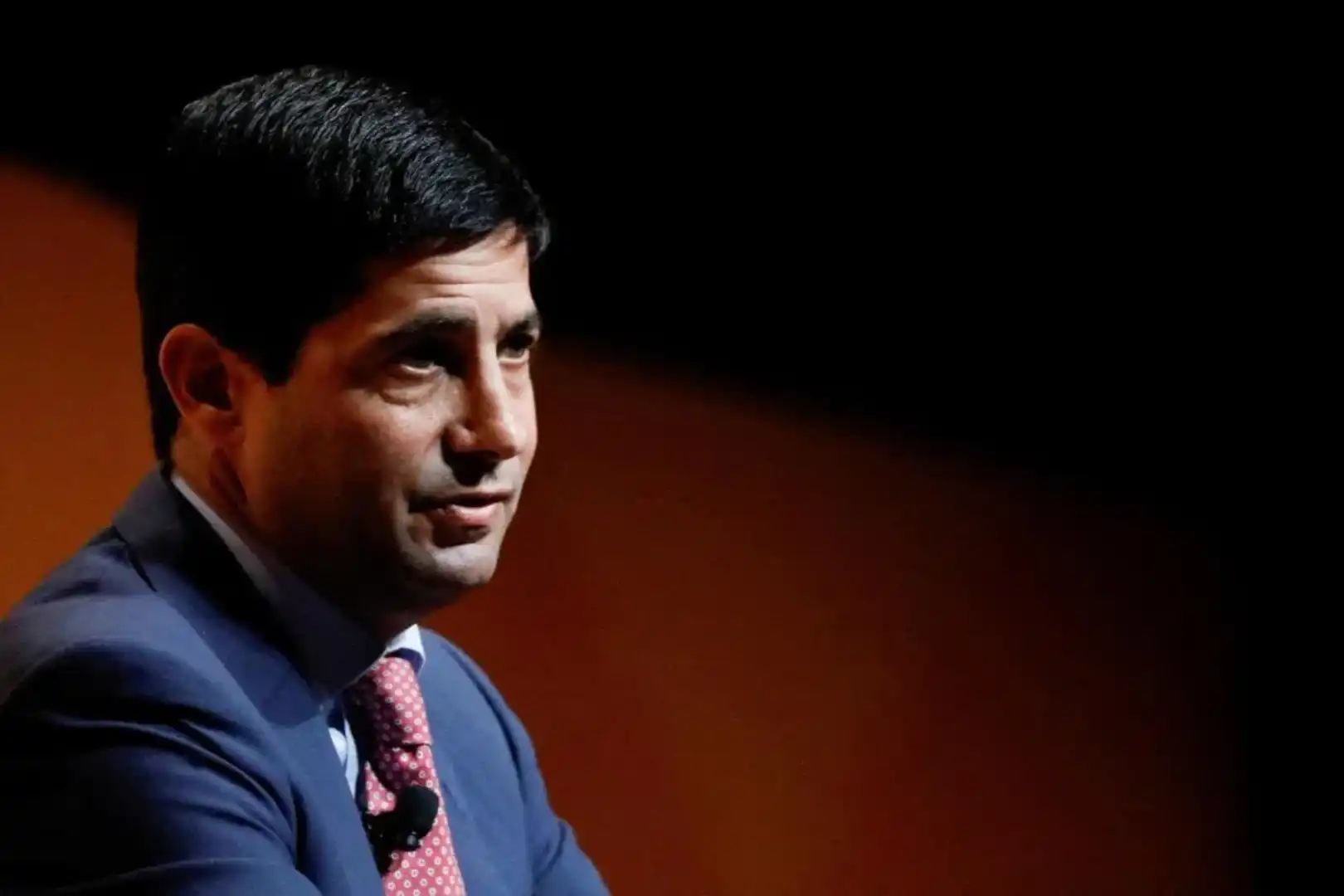
Аналитик eToro Брет Кенвелл (Bret Kenwell) в интервью Yahoo Finance объяснил рост интереса частных инвесторов к криптоактивам ожиданиями ослабления доллара США и возможной эскалацией военных действий на Ближнем Востоке.

«Суть тренда заключается в стремлении инвесторов диверсифицировать портфели и хеджировать риски в условиях экономической неопределенности. Биткоин с начала десятилетия вырос более чем на 1400%, что также подтверждает его силу как резервного актива», — сказал аналитик.

В eToro считают, что рост интереса инвесторов может стимулировать приток капитала и развитие инфраструктуры. По данным майского опроса eToro, более 10 000 респондентов подтверждают устойчивый интерес к криптовалютам.

«Молодежь, особенно поколение Z, продемонстрировала наибольшую уверенность в цифровых активах, что связано с ростом доверия к криптовалютам и их институциональной поддержкой, например, через ETF», — сказал Кенвелл.

По словам эксперта, около половины опрошенных респондентов заявили о необходимости диверсификации и сбалансированного подхода к инвестициям, особенно в волатильные активы, такие как криптовалюты. 28% видят главный риск в инфляции, а 25% опасаются глобальной рецессии. На этом фоне интерес вызывают традиционные активы, такие как золото, от которого 57% инвесторов ожидают роста рыночной стоимости в ближайший год, добавил Кенвелл.

Ранее эксперт по биржевым фондам издания Bloomberg Эрик Балчунас (Eric Balchunas) предположил, что растущий интерес к золоту в сочетании с высокой волатильностью биткоина и снижением интереса к спотовым биржевым ETF могут стать причинами отвлечения внимания трейдеров в пользу активов традиционного финансового рынка.

Letture associate

Introduction to the Concept of World Models: A Story from Psychology to the Main Battlefield of AI

**World Models: From Psychology to AI's Core Concept** "World model" is a trending but often confusing term in AI, describing a system that allows machines to internally simulate, predict, and rehearse potential outcomes before taking real-world action—like a mental "sandbox." While definitions vary—Yann LeCun emphasizes physical understanding, OpenAI's Sora is a video-based "world simulator," Google DeepMind's Genie 3 creates interactive 3D environments, and companies like Alibaba and Tesla focus on practical applications—the core goal is consistent: reduce reliance on vast real-world data by creating an internal, predictive model for safer and more efficient AI. The concept has deep roots, tracing back to psychologist Kenneth Craik (1943). In AI, it was revitalized by researchers like David Ha and Jürgen Schmidhuber (2018). Major technical approaches include: 1) generative video models (e.g., Sora) for visual realism; 2) abstract predictive models (e.g., LeCun's JEPA) for efficiency and physical reasoning; and 3) explicit 3D simulators (e.g., NVIDIA Omniverse) for precision. Fei-Fei Li proposes a classification based on the AI action loop: renderers (output observations), simulators (output world states), and planners (output actions). The emerging "World Action Model" (WAM) paradigm aims to unify future prediction and action generation. An industry framework is forming: upstream (data, compute, sensors), midstream (general and vertical platforms), and downstream applications (autonomous driving, robotics, gaming, etc.). Autonomous driving is currently the most mature use case. The current lack of a unified definition reflects the field's early, dynamic stage, similar to past tech revolutions. Different approaches—focusing on pixels, physics, or behavior—represent parallel explorations of how best to compress and understand the world. This diversity, while seemingly chaotic, signals that world models have moved from an academic idea to a critical industrial battleground, ultimately aiming to give machines the ability to understand, imagine, and reason about the world.

marsbit26 min fa

Introduction to the Concept of World Models: A Story from Psychology to the Main Battlefield of AI

marsbit26 min fa

Building the Bright Path While Secretly Crossing Chencang: Is Walsh Paving the Way for a September "Rate Cut"?

The title "Building the Plank Road Openly While Secretly Crossing at Chencang: Is Walsh Paving the Way for a September 'Rate Cut'?" suggests Federal Reserve Chair Kevin Walsh's hawkish stance may be a deliberate smokescreen. Academy Securities analyst Peter Tchir argues in a report that markets, currently pricing a 75% chance of a September hike, are missing a potential path to a September rate cut that Walsh himself might be quietly preparing. Tchir posits that Walsh's hawkish rhetoric aims to suppress long-term yield risks (with the 10-year Treasury yield falling recently) while creating room for a narrative shift based on upcoming data. The potential political endgame, according to this view, could be rate cuts in September and October, ahead of the midterm elections. This hinges on a political logic where the Trump administration's preference for lower rates remains unchanged. A core part of Tchir's argument involves redefining inflation metrics. He contends the Fed under Walsh may deprioritize the PCE index, criticizing its lagging components like Owners' Equivalent Rent (OER). Instead, he points to alternative, more real-time indicators like the New Tenant Repeat Rent Index (NTRR) and the Truflation daily index, which shows core inflation around 1.45%. He suggests the Fed could shift its data narrative to justify policy easing. Furthermore, Tchir downplays AI-driven inflation fears. He argues that consumer price sensitivity, evidenced by negative market reactions to price hikes (e.g., Apple), contradicts persistent inflation narratives. He also separates AI/data center spending—which he sees as relatively rate-insensitive—from broader consumer affordability issues, implying rate hikes are misdirected. Based on this analysis, Tchir sees a re-pricing of rate cut expectations as likely, creating opportunities in short-duration Treasuries. He maintains a neutral-to-slightly-bullish view on the long end of the yield curve. For equities, he recommends a significant overweight in energy (especially global nuclear assets) and, within defense/security themes, an overweight in biotech/pharma versus an underweight in semiconductors, expressing caution on AI/data center valuations.

marsbit53 min fa

Building the Bright Path While Secretly Crossing Chencang: Is Walsh Paving the Way for a September "Rate Cut"?

marsbit53 min fa

"King of Shilling" Hayes Strikes Again, This Time Setting His Sights on Deribit

On June 29, BitMEX co-founder Arthur Hayes acquired approximately 6.16 million SYN tokens via OTC platform Flowdesk, valued at around $2.2 million. Subsequently, Hayes publicly endorsed SYN on X, calling it one of the most asymmetric investments he's seen since HYPE and declaring it time for an on-chain options DEX to challenge industry leader Deribit, naming Hypercall as that challenger. The article details the evolution of the Synapse Protocol, originally launched in 2021 as a cross-chain messaging and liquidity network. While its TVL peaked above $1 billion during the last bull market, it has since declined. The protocol's team has since built Hypercall, an on-chain options trading platform on Hyperliquid's HyperEVM, which supports trading options on "any asset" with features like 24/7 trading and defined risk limited to the premium paid. Deribit, founded in 2016, is highlighted as the dominant centralized crypto options exchange, commanding roughly 85% market share in BTC and ETH options. Its strengths include deep liquidity and professional tools, though it faces critiques over custody risk, KYC requirements, and regulatory uncertainty. The analysis suggests Hypercall's potential lies in decentralization, permissionless access, and transparency, potentially carving a niche in DeFi-native and emerging asset options. However, it faces significant challenges competing with Deribit's established network effect and liquidity depth. The piece concludes by noting Hayes's recent and mixed "call" history, referencing his previous promotion and subsequent sale of HYPE, as well as a controversial price target report for CARDS from his family office, Maelstrom, which was followed by a significant price drop for the asset. This activity has drawn criticism, with some accusing Hayes of creating exit liquidity for his followers.

Foresight News1 h fa

"King of Shilling" Hayes Strikes Again, This Time Setting His Sights on Deribit

Foresight News1 h fa

Trading

Spot
活动图片