Цена биткоина встречает сопротивление

cryptonews.ruPubblicato 2024-07-04Pubblicato ultima volta 2025-06-04

Цена биткоина начала новое снижение и опустилась ниже зоны поддержки в 105 500 долларов. Биткоин даже опустился ниже уровня 105 500 долларов и протестировал следующую поддержку на уровне 103 200 долларов.

На уровне 103 200 долларов был сформирован минимум, и цена пытается восстановиться. Был достигнут уровень 104 500 долларов и уровень 23,6% коррекции Фибоначчи от недавнего снижения с максимума 110 500 долларов до минимума 103 200 долларов. Цена даже преодолела сопротивление на уровне 105 000 долларов.

Биткоин сейчас торгуется выше 105 000 долларов и 100-часовой простой скользящей средней. На часовом графике пары BTC/USD также формируется соединительная бычья трендовая линия с поддержкой на уровне 104 050 долларов. Ближайшее сопротивление находится на уровне 106 850 долларов. Это близко к уровню коррекции Фибоначчи 50% от недавнего снижения с максимума в 110 500 долларов до минимума в 103 200 долларов.
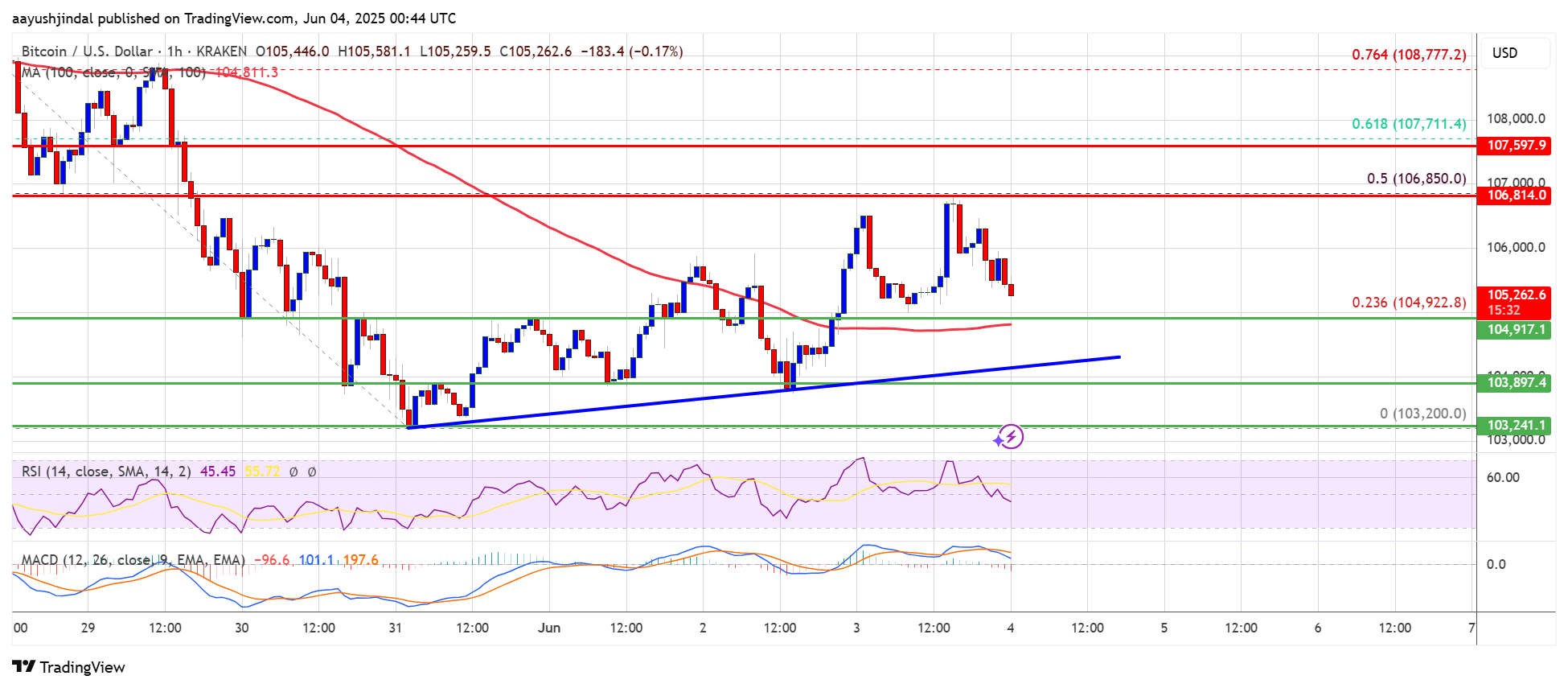
Первое ключевое сопротивление находится вблизи уровня 107 000 долларов. Следующим ключевым сопротивлением может стать уровень 107 800 долларов. Закрытие выше уровня 107 800 долларов может привести к дальнейшему росту цены. В этом случае цена может вырасти и протестировать уровень сопротивления 109 000 долларов. Дальнейший рост может привести к достижению уровня 110 000 долларов.

Очередное падение курса BTC?

Если биткоин не сможет подняться выше зоны сопротивления в 107 000 долларов, он может начать очередное снижение. Ближайшая поддержка находится на уровне 105 000 долларов. Первая крупная поддержка находится на уровне 104 000 долларов и на линии тренда.

Следующая поддержка находится сейчас в районе зоны 103 200 долларов. Дальнейшие потери могут привести к тому, что в ближайшей перспективе цена опустится к поддержке 102 500 долларов. Основная поддержка находится на уровне 101 200 долларов, ниже которого BTC может набрать медвежий импульс.

Технические индикаторы:

Почасовой MACD — MACD сейчас теряет темп в бычьей зоне.

Почасовой RSI (индекс относительной силы) — RSI для BTC/USD сейчас ниже уровня 50.

Основные уровни поддержки — 105 000 долларов, затем 104 000 долларов.

Основные уровни сопротивления — 107 000 и 107 800 долларов.
Letture associate

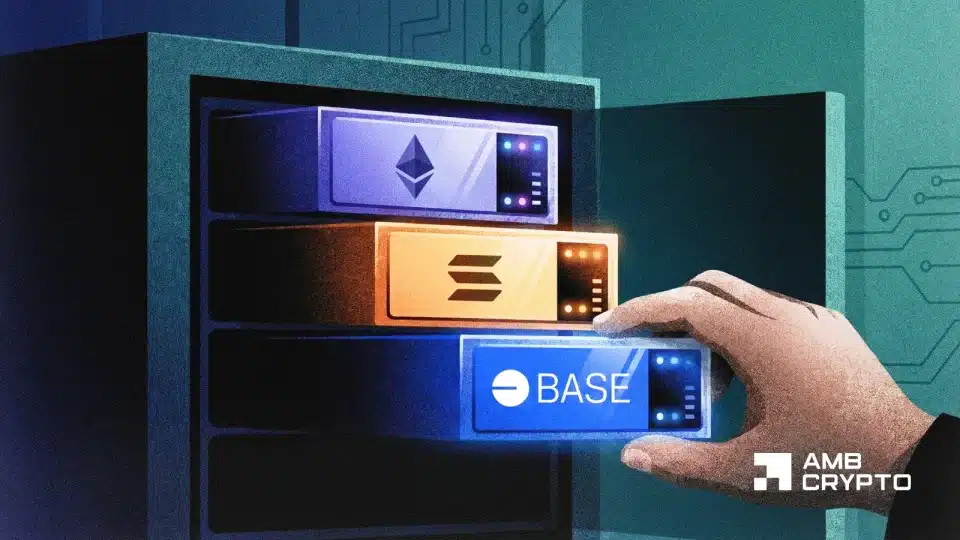
Why 2026 could redefine Ethereum, Solana, Base and Avalanche

Blockchain infrastructure is undergoing a major coordinated transformation, driven by institutional demand for reliability, compliance, and predictable settlement. Over $30 billion in Real-World Assets (RWA) on-chain has exposed network weaknesses. Major blockchains are responding with foundational upgrades, moving beyond incremental speed improvements. Ethereum's "Glamsterdam" upgrade, planned for H1 2026, will significantly increase gas limits and introduce features like PBS (pre-blocked state) for enhanced settlement and parallel execution. Solana's "Alpenglow," targeting a mainnet launch in H2 2026, focuses on reducing finality time dramatically and freeing network resources to improve reliability. Beyond speed, compliance is critical. Base's "Beryl" upgrade in Q3 2026 will introduce a standardized, regulatory-compliant token framework (B20). Avalanche's "Octane" upgrade aims to boost transaction processing and reduce costs for enterprise applications. Even Bitcoin is evolving with the potential activation of OP_CAT by late 2026/early 2027. The competition is shifting. While technical upgrades are widespread, institutions will ultimately allocate capital based on proven execution, operational resilience, and regulatory compatibility during market stress. Ethereum currently leads in tokenized assets, while networks like Base and Solana are strengthening their institutional offerings. The blockchain that best delivers reliable, compliant, and uninterrupted service is poised to attract the greatest share of future institutional capital.

ambcrypto3 min fa

Why 2026 could redefine Ethereum, Solana, Base and Avalanche

ambcrypto3 min fa

Tiger Research: Take RWA Tokenization Overseas First

This article discusses the strategic choices facing financial institutions in jurisdictions lacking mature regulatory frameworks for Real-World Asset (RWA) tokenization. With the market growing rapidly, institutions must choose between waiting for local legislation, using regulatory sandboxes, or—the recommended priority—expanding into overseas markets to gain early experience. Successfully launching cross-border RWA tokenization requires meticulous preparation across six key areas: establishing an overseas base (e.g., Hong Kong, Singapore, the U.S.), securing necessary licenses, defining the tokenized asset (with bonds being simpler than non-standard assets), defining the target investor scope, deciding on settlement currencies/payment flows, and designing operational requirements like custody and on-chain governance. The article outlines two primary strategic paths: a direct "onshore" path and a "native on-chain" path. The direct path involves setting up a legal entity and obtaining licenses in a mature jurisdiction like Hong Kong, Singapore, or the U.S., leveraging existing platforms (e.g., DigiFT, Securitize) for efficiency. The alternative native on-chain path involves partnering with compliant, decentralized platforms (e.g., Ondo, Plume Nest) that use structures like offshore SPVs to facilitate tokenization and access DeFi liquidity, offering speed and broader reach but with greater structural complexity. The core argument is that institutions should not wait for perfect domestic regulation. A detailed hypothetical case study illustrates the multi-step, 6-12 month process of launching an overseas tokenized bond. The key takeaway is that the essence of a tokenization business lies not in the technology but in successfully executing the entire sales and operational process. The market is moving forward, and the time to act is now.

marsbit14 min fa

Tiger Research: Take RWA Tokenization Overseas First

marsbit14 min fa

Chain Gaming Giant YGG Capitulates, Losing $15 Billion in Value Over 5 Years

The leading blockchain gaming guild Yield Guild Games (YGG) is shutting down its publishing arm, YGG Play, announced on July 6th by its official account and co-founder Gabby Dizon. The platform and its supported games will be phased out by July 31st. While YGG Play successfully validated a market for casual, crypto-native mobile games—generating over $9M in total revenue, including $876,000 in Q1 2026—Dizon stated the closure was a market-driven decision. He cited insufficient liquidity and declining user confidence in the macroeconomic environment, making the business commercially unsustainable. Founded in 2020, YGG rose to prominence during the Play-to-Earn (P2E) boom, particularly with Axie Infinity, organizing players and managing assets. Its token price soared above $10 during the 2021 bull market. However, the 2022 crypto downturn exposed the fragility of P2E economic models. YGG attempted to pivot in 2025 with the YGG Play publishing initiative, focusing on short-session casual games. The shutdown reflects broader struggles in the Web3 gaming sector. An April 2026 report highlighted a "structural mismatch" between speculative financial designs and genuine player entertainment needs, leading to an estimated $15 billion in destroyed capital. The report noted that 93% of roughly 3,200 tracked blockchain game projects are now "functionally dead," with token prices down an average of 95% from 2022 peaks. YGG itself is now pivoting its strategy entirely towards the AI Data Economy, aiming to build B2B pipelines around gaming datasets.

Foresight News32 min fa

Chain Gaming Giant YGG Capitulates, Losing $15 Billion in Value Over 5 Years

Foresight News32 min fa

Trading

Spot
活动图片