QCP Capital: биткоин сохраняет устойчивость несмотря на торговую войну США и Китая

cryptonews.ruPubblicato 2025-05-02Pubblicato ultima volta 2025-06-02

Трейдинговая фирма QCP Capital опубликовала новый аналитический отчет, в котором оценивает устойчивость биткоина на фоне обострения торговых противоречий между США и Китаем. Несмотря на масштабные ликвидации и отток средств из ETF, первая криптовалюта продолжает удерживаться выше отметки $102 000.

Эскалация торговой войны ударила по рынкам

30 мая Трамп объявил о расширении технологических санкций против Китая и удвоении тарифов на сталь до 50%. Эти меры спровоцировали массовый отток средств с рисковых активов по всему миру, и криптовалютный рынок не стал исключением.

Последствия оказались серьезными — с 30 мая ликвидировано позиций почти на $1 млрд. Даже биткоин-ETF IBIT от BlackRock прервал рекордную 34-дневную серию притоков, зафиксировав отток в $430 млн. Такого оттока фонд не видел с момента запуска.
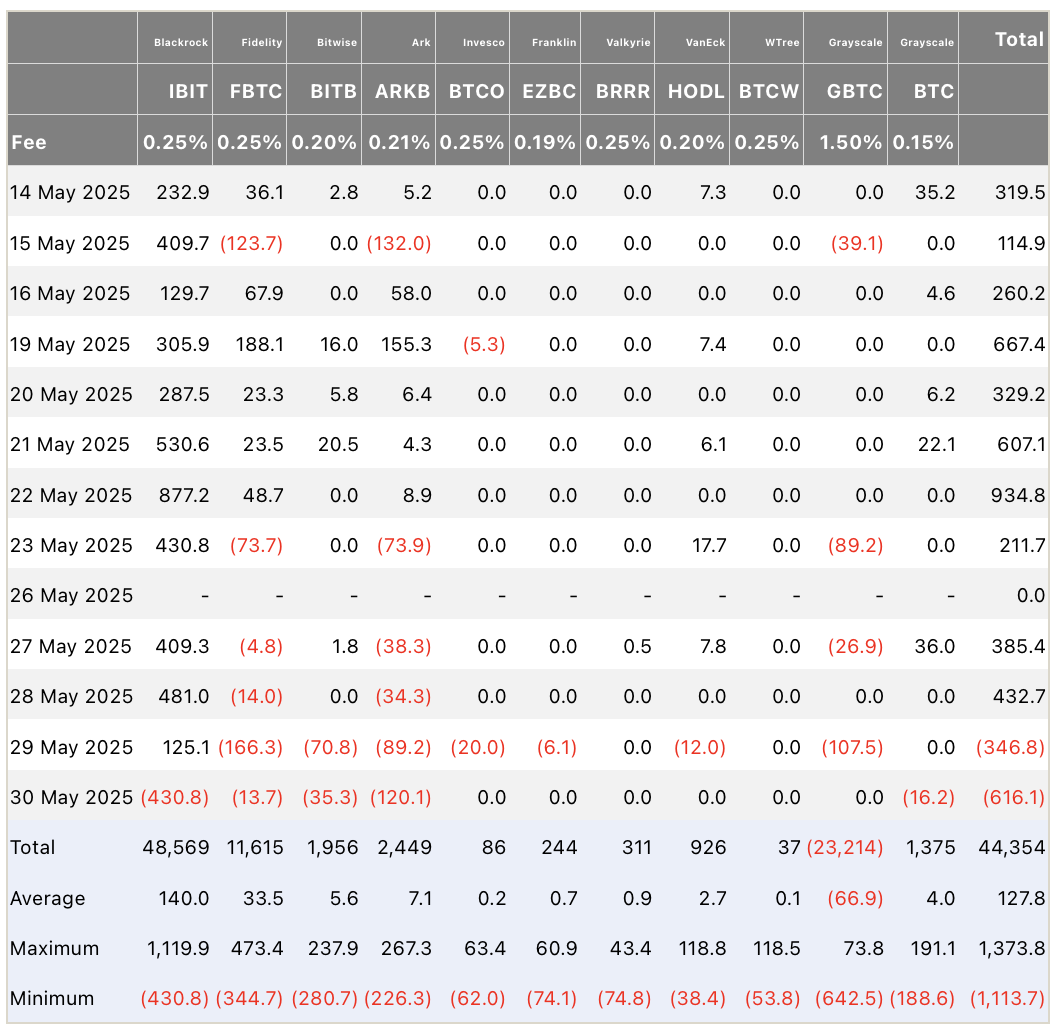
Движение средств в биткоин-ETF США. Источник: Farside Investors

Институционалы не сдаются

Пока одни инвесторы покидали рынок, другие наращивали позиции. Японская компания Metaplanet использовала падение для докупки биткоинов на $114 млн, доведя общие запасы до символичных 8 888 BTC. Подобная активность показывает, что институциональный интерес к первой криптовалюте остается высоким даже в условиях геополитической неопределенности.

Стратегия крупных игроков понятна — они рассматривают текущие колебания как возможность для накопления активов по более выгодным ценам. Такой подход контрастирует с поведением розничных трейдеров, которые чаще поддаются панике.

Технические показатели указывают на стабилизацию

Несмотря на бурные события, биткоин демонстрирует завидную устойчивость, удерживаясь выше психологически важной отметки $102 000. QCP Capital отмечает сжатие волатильности на ближайших сроках и восстановление баланса между опционами на рост и падение по всем временным интервалам — это говорит о том, что экстремальные настроения на рынке постепенно успокаиваются.

Фандинг по бессрочным контрактам вернулся к нулевым значениям, что отражает очистку рынка от избыточных заемных позиций. Этот фактор может способствовать более здоровому движению цены в ближайшей перспективе.

Аналитики фирмы ожидают ограниченного движения цены в краткосрочной перспективе. Ключевыми уровнями для наблюдения остаются $100 000 и $110 000 — именно на этих страйках сосредоточен наибольший открытый интерес по опционам на конец месяца.

Макроэкономический календарь недели

Напряженность вокруг тарифов, вероятно, будет доминировать в макроэкономических новостях до июня, поскольку значимые политические решения начнут приниматься только с 8 июля. В отсутствие свежих катализаторов биткоин может оставаться в боковом тренде.

На этой неделе внимание трейдеров будет приковано к ряду важных экономических публикаций:

  • Понедельник: индекс деловой активности ISM в производственном секторе, выступление главы ФРС Джерома Пауэлла (Jerome Powell)
  • Вторник: данные по вакансиям JOLTS
  • Среда: изменение занятости в частном секторе от ADP
  • Четверг: еженедельная статистика по заявкам на пособие по безработице
  • Пятница: данные по занятости вне сельского хозяйства и уровень безработицы

QCP Capital подчеркивает, что текущая ситуация демонстрирует зрелость биткоина как актива. Первая криптовалюта все чаще ведет себя как традиционный рисковый актив, реагируя на макроэкономические события, но при этом сохраняет собственную устойчивость.


Letture associate

How Does Codex Use a Computer? Three Entry Points and Permission Boundaries

This article explains the three primary methods for Codex to interact with a computer, each with distinct use cases, permission boundaries, and trust levels. **1. Computer Use:** This offers the broadest access, allowing Codex to visually control and interact with the graphical user interface of authorized macOS/Windows apps, system settings, and even iOS simulators. It's ideal for tasks lacking APIs or structured tools, such as operating legacy software or multi-app workflows. However, it's the slowest method and has the widest permission scope, requiring careful supervision for sensitive actions. **2. Chrome Extension:** This grants Codex access to the user's logged-in Chrome browser state, including cookies, profiles, and open tabs. It's best for tasks requiring user identity across websites like Gmail, LinkedIn, Salesforce, or internal dashboards. Its key advantage is multi-tab control for complex workflows. While more powerful for browser-based tasks than Computer Use, it carries higher sensitivity as actions are performed under the user's identity. **3. In-App Browser:** This is a browser isolated within the Codex thread, separate from the user's personal browsing data. It excels in web development and debugging scenarios—previewing local servers, testing responsive layouts, or annotating designs directly on the page. Its isolation is a strength for development but a limitation for tasks requiring login sessions. The core principle is to choose the narrowest, safest, and most structured interface for the task. Use plugins or MCPs first, resort to visual control (Computer Use) only for GUI-dependent tasks, employ the Chrome extension for identity-reliant browser work, and prefer the In-App Browser for isolated development. **Appshots** are clarified as a fourth, complementary tool for *inputting* context—capturing a screenshot of a window to point Codex to something—rather than a method for Codex to *act*. Together, this layered approach highlights a key to AI agent productization: not granting unlimited permissions, but constraining them within clear boundaries for specific tasks while preserving user oversight.

marsbit15 min fa

How Does Codex Use a Computer? Three Entry Points and Permission Boundaries

marsbit15 min fa

The "Iron Rule" of Chip Equipment Is Being Broken

For years, the semiconductor equipment industry followed an unwritten "iron rule": suppliers offered steep discounts for new tool introductions (Design-in) and faced consistent price pressure during repeat orders, especially during market downturns. This long-standing buyer's market dynamic is now being upended. Recently, SK Hynix's primary equipment suppliers have reportedly requested a 3-4% price *increase*, a nearly unprecedented move. This shift is driven by a severe supply-demand imbalance fueled by the AI compute boom. Securing equipment has become an urgent arms race as chipmakers' expansion speed dictates their ability to fulfill massive AI chip orders. Key areas feeling the strain include: **TCB (Thermal Compression Bonding) Equipment:** Demand is exploding, driven by the simultaneous needs of HBM4 memory stacking, AI chip Chip-on-Substrate (C2S), and logic Chiplet Chip-on-Wafer (C2W) packaging. Players like Hanmi Semiconductor, Hanwha Semitech, and ASMPT are receiving major orders. While hybrid bonding is seen as the future, TCB remains the pragmatic choice for HBM4 mass production, with its lifecycle extended by relaxed specifications and ongoing technological upgrades. **Test Equipment Bottlenecks:** Ironically, AI-driven shortages are now crippling test equipment manufacturing. Critical components like FPGAs, Driver ICs, and CPUs face severe shortages and extended lead times (up to 52 weeks for FPGAs), as AI data center and server vendors prioritize supply. This creates a paradoxical cycle: AI chip shortages drive fab expansion, which requires more test equipment, whose production is delayed because its key parts are diverted to make AI chips. The industry is entering a broad, AI-powered upcycle. SEMI forecasts global semiconductor equipment sales to hit a record $156 billion by 2027, fueled by investment in advanced logic/foundry, HBM-driven DRAM, and advanced packaging (like CoWoS). Major players like TSMC, SK Hynix, and Micron are aggressively ramping capital expenditure. In conclusion, leading equipment vendors are no longer just selling tools; they are selling the critical capability to deliver AI-era capacity. Pricing power is shifting decisively to those with indispensable technology in key process nodes like advanced logic, HBM, and advanced packaging, rewriting the industry's traditional power structure.

marsbit28 min fa

The "Iron Rule" of Chip Equipment Is Being Broken

marsbit28 min fa

Trading

Spot
Futures
活动图片