Telegram关闭“有史以来最大的暗网市场”

Cointelegraph中文Pubblicato 2025-05-15Pubblicato ultima volta 2025-05-15

Introduzione

好旺担保(Haowang Guarantee,前身为Huione Guarantee)宣布,在Telegram对商户账户进行大规模清理后,该平台将停止运营。

一个被怀疑协助加密诈骗和网络犯罪的重大中文暗网市场已被Telegram消息服务关闭,该市场在其平台上运营。

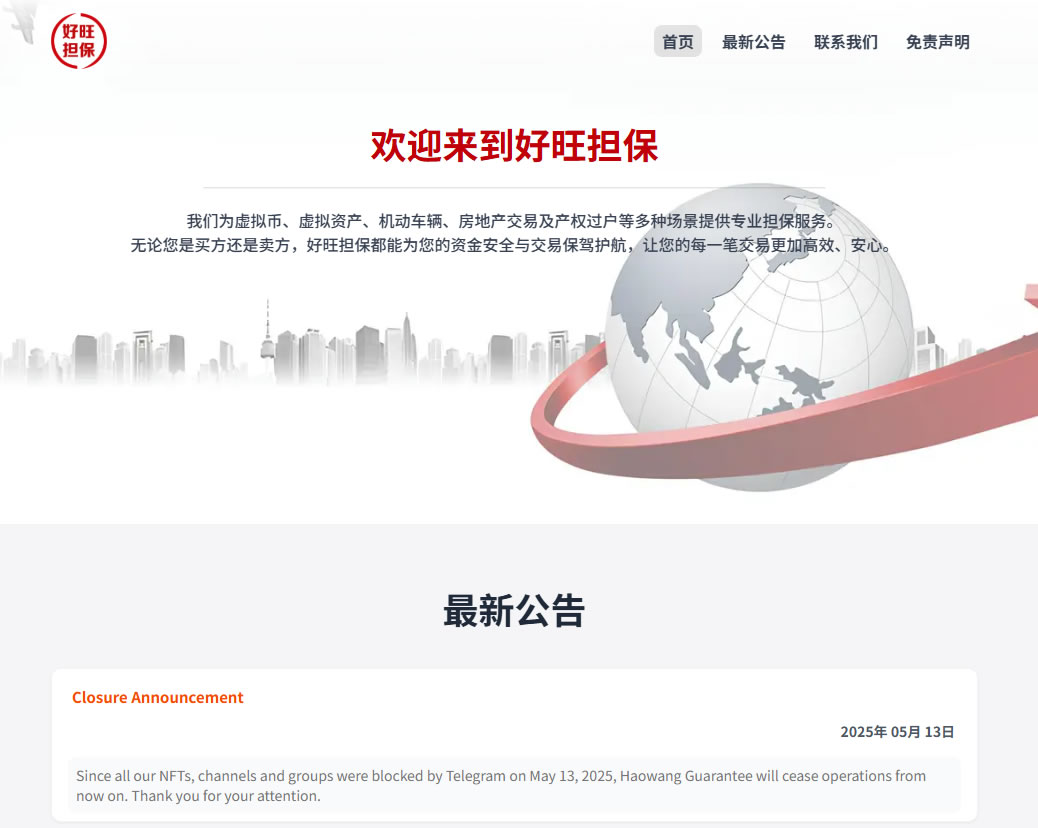
互联网上最大的非法市场好旺担保(Haowang Guarantee,原汇旺担保,Huione Guarantee)表示,在Telegram于5月13日封禁了数千个相关账户后,该市场将关闭。

“自2025年5月13日我们的所有NFT、频道和群组被Telegram封锁以来,Haowang Guarantee将从现在起停止运营,”该市场网站上的通知写道。

根据《连线》杂志的一份报告,此次行动涉及封禁数千个账户和用户名,这些账户和用户名构成了加密犯罪市场及其供应商的基础设施。

Telegram发言人Remi Vaughn对该媒体表示,“之前由《连线》报告给我们或Elliptic发布的报告中提到的社区都已被取缔,”随后补充道,“像诈骗或洗钱这样的犯罪活动是Telegram服务条款所禁止的,一旦发现,总是会被移除。”
根据区块链安全公司Elliptic的报告,这个中文黑市促成了估计价值270亿美元的非法交易,主要使用泰达币稳定币(USDT)。

Elliptic的研究人员还发现,更广泛的Huione集团公司在加密交易中促成了超过980亿美元的交易。

该市场为加密诈骗者提供了服务,包括洗钱、用于“杀猪盘”诈骗的被盗个人信息、电信基础设施和设备、深度伪造软件和身份证,甚至包括在东南亚诈骗呼叫中心大院中使用的物理约束设备。

Elliptic联合创始人Tom Robinson表示,这是一个“巨大的胜利”,因为“有史以来最大的暗网市场已被关闭”。

“这对于整体在线犯罪市场来说是一个游戏规则的改变者,对于在线诈骗的受害者来说也是巨大的。这个市场是全球诈骗疫情的关键推动者,我认为这将真正削弱在线诈骗者的能力。”

5月初,该平台被美国财政部金融犯罪执法网络(FinCEN)指定为洗钱操作,并将被从美国银行系统中切断。

Xinbi Guarantee的增长

然而,Elliptic还发现了另一个基于Telegram的非法市场Xinbi Guarantee,该公司发现了该市场上商户使用的数千个加密地址。

5月13日,该公司表示,到目前为止已看到84亿美元的交易,但这应被视为“平台真实交易量的下限”。

Xinbi与一家成立于2022年的科罗拉多公司有关联,但该公司在2025年1月被列为逾期未履行义务。

Elliptic表示,像这样的黑市揭示了一个“基于中文的地下银行系统”,该系统围绕稳定币和加密支付展开,被用于“大规模”洗钱。

Letture associate

Faked Trades, Clone Websites, 1105 Videos: Polymarket Under CFTC Scrutiny

The U.S. Commodity Futures Trading Commission (CFTC) has launched a wide-ranging investigation into prediction market platform Polymarket. The probe, triggered by a Wall Street Journal report, focuses on allegations of systematic marketing fraud. The report revealed Polymarket allegedly hired dozens of student content creators to post over 1,100 videos showing fake, profitable trades on cloned websites, without disclosing the paid relationships. These videos, with over 140 million views, were pivotal to user growth. Simultaneously, the National Association of Consumer Advocates (NACA) filed a lawsuit in Washington D.C., accusing Polymarket and its executives of deceptive advertising targeting college students. The suit details off-campus promotions and payments made through the CMO's personal PayPal account to influencers who failed to disclose sponsorships. The investigation places CFTC Chairman Michael Selig in a difficult position, as he has been a vocal advocate for prediction markets and is currently suing multiple states to assert federal jurisdiction over them. This case tests the CFTC's dual role as both promoter and enforcer. This marks Polymarket's second major clash with the CFTC. After a 2022 settlement and U.S. ban, it regained approval to operate in September 2025, secured a $20 billion investment, and saw its valuation soar. The current crisis, compounded by a recent $3.1 million front-end supply chain attack, represents the platform's most severe multi-front challenge since its founding.

Foresight NewsAdesso

Faked Trades, Clone Websites, 1105 Videos: Polymarket Under CFTC Scrutiny

Foresight NewsAdesso

Real-Life 'Black Mirror' Pumpfun Go: 40 Yuan to Lick a Toilet, $14,000 to Tattoo a Logo on Your Forehead

Pumpfun Go, a bounty task platform launched by the meme coin platform Pump.fun, is facing intense controversy. The platform's slogan "Pay anyone to do anything" has manifested in real-world tasks where participants perform increasingly extreme or demeaning acts for cryptocurrency rewards. These tasks range from licking a gas station toilet floor for roughly $5.63 to getting a permanent "bounty.fun" logo tattooed on one's forehead for $14,000. Other completed challenges include eating live insects and quitting a job on camera. The highest-value active bounty offers approximately $560,000 for climbing Mount Everest and placing a bet on a specified platform. While some tasks involve promoting meme coins or community events, the platform has drawn widespread criticism for incentivizing the exploitation of economic desperation. Participants, often citing "we need money" as their motivation, complete these tasks for sums that can far exceed their regular income. Critics, including New York Governor Kathy Hochul, have condemned Pumpfun Go as a dystopian system that commodifies human dignity and preys on the vulnerable. Supporters argue it provides a novel income opportunity for those in need. The debate highlights deeper societal issues around power, inequality, and the historical human fascination with spectacles of humiliation. The platform's existence raises questions about the ethical limits of anonymous online markets and the persistent reality where financial need forces individuals to trade their dignity for survival.

Odaily星球日报7 min fa

Real-Life 'Black Mirror' Pumpfun Go: 40 Yuan to Lick a Toilet, $14,000 to Tattoo a Logo on Your Forehead

Odaily星球日报7 min fa

The Strategy That Would Never Sell Bitcoin Opened a Permanent Sales Channel

MicroStrategy, a company long known for its "never sell Bitcoin" mantra, announced a "Digital Credit Capital Framework" allowing it to sell up to $1.25 billion worth of Bitcoin. Surprisingly, its stock (MSTR) rose nearly 7% pre-market. This shift, coming just a month after a small, "ad-hoc" sale of 32 BTC for dividends, transitions from a temporary action to a formal, institutional tool. The framework outlines four clear purposes for potential sales: bolstering USD reserves, paying preferred stock dividends/interest, and repurchasing its own preferred and common stock. The key driver for this change is the immense financial pressure from MicroStrategy's complex capital structure, specifically its massive $8.5 billion perpetual preferred stock (STRC). STRC features a variable interest rate that has been reset upward eight times in a year to 12% in an attempt to stabilize its price. However, the stock has fallen over 25% below its face value. Combined with other preferred stocks and convertible notes, MicroStrategy's total annual fixed obligations now stand at $1.76 billion, equating to a daily burn of roughly $4.8 million. While its $2.55 billion in USD reserves and the new $1.25 billion BTC sales framework provide a two-year+ runway, a dangerous feedback loop exists. Falling Bitcoin prices would force the sale of more BTC to meet fixed obligations, potentially creating further sell-side pressure and lowering MSTR's asset valuation multiple. This, in turn, limits its ability to raise cash through stock issuance. The market's positive reaction likely stems from relief; the framework replaces fears of a forced, disorderly sell-off with a structured plan. However, it does not resolve the underlying high-cost capital structure, leaving the company's long-term health heavily dependent on Bitcoin's price performance.

marsbit40 min fa

The Strategy That Would Never Sell Bitcoin Opened a Permanent Sales Channel

marsbit40 min fa

Trading

Spot
活动图片