Аналитик раскритиковал связь между ростом глобальной ликвидности и ценой биткоина

cryptonews.ruPubblicato 2021-12-18Pubblicato ultima volta 2025-04-18

TXMCtrades: модели на основе M2 вводят в заблуждение и искажают рынок

Финансовый аналитик под ником TXMCtrades подверг резкой критике распространенную практику связывать глобальную денежную массу (M2) с прогнозами по биткоину. Он считает такие графики математически некорректными и способными вводить инвесторов в заблуждение.
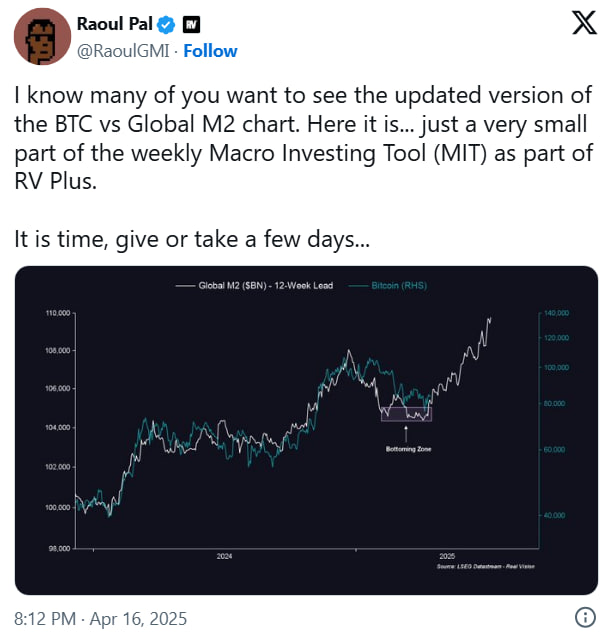
Корреляция биткоина и глобального M2 от Рауля Пала

Поводом стала диаграмма от Рауля Пала, где рост BTC накладывался на график глобального M2. TXMCtrades назвал такие сопоставления некорректными из-за несовпадения частоты обновления данных по странам и сильного влияния валютных курсов.

«Вы смотрите не на рост денежной массы, а на FX-индикатор, замаскированный под M2», — подчеркнул он.

Почему расчеты M2 искажены?

Аналитик напомнил, что США обновляют данные по M2 еженедельно, тогда как большинство других стран — раз в месяц. Кроме того, многие страны еще не обновили статистику за март–апрель, а значит, «глобальный» M2 строится на неполном массиве данных, где FX-колебания задают тон.

TXMCtrades отдельно отметил, что 46% глобального M2 приходится на Китай, и именно там денежная масса продолжает расти в долларовом выражении. США, наоборот, все еще не вернулись к пику 2022 года, а темпы роста остаются минимальными с момента появления биткоина.

Что важно понимать: глобальная M2 — не единственный показатель. Разбор ключевых метрик: M2, глобальная ликвидность и их влияние на рынок.

Лаги в моделях M2 и BTC — это подгонка

Особую критику аналитик высказал в адрес моделей, где биткоин якобы «следует за M2» с лагом в 12, 15 или 100 дней. Такие отставания используют, например, Рауль Пал, Curb и Colin Talks Crypto. Последний применяет схему даже к альткоинам, включая Solana.

«Это подгонка под ретроспективу, а не работающая модель. Деньги не ждут. Не изобретайте задержки там, где их нет», — заявил TXMCtrades.

Призыв к аналитикам: меньше кликбейта, больше математики

Аналитик призвал отказаться от «шумных» визуализаций и перестать распространять «схемные» графики, которые вводят в заблуждение:

«Давайте быть честными — если вы строите модель на M2, которую можно сдвигать, масштабировать и интерпретировать как угодно, она ничего не объясняет.»

Тем не менее, сторонники такой корреляции считают, что рост глобальной ликвидности влияет на цену биткоина и других активов.

Читать по теме: Аналитик спрогнозировал рост биткоина на фоне притока ликвидности в систему

А рынок все равно растет

Несмотря на критику, биткоин остается в позитивной фазе: RSI указывает на пробой, а технические индикаторы подтверждают восстановление с начала апреля.

Читать далее: Трёхмесячный максимум RSI — шанс на разворот BTC?

Letture associate

Kalshi's Biggest Rival is Not Polymarket

Kalshi's CEO Tarek Mansour has identified the company's primary competitors not as the crypto-based prediction market Polymarket, but as established financial and gaming giants: CME Group, Robinhood, and DraftKings. This reflects a shift in the prediction market landscape, where the 2026 FIFA World Cup is expected to bring massive new trading volume. Traditional platforms are increasingly integrating prediction markets as a feature within their existing ecosystems. Robinhood has seen rapid growth with its prediction markets, contributing significantly to its "other transaction revenue." Similarly, Interactive Brokers (IBKR) integrates contracts from Kalshi and CME Group, while DraftKings and FanDuel (via CME) have launched their own prediction products. This allows these firms to leverage their vast user bases and infrastructure at low marginal cost, turning prediction markets from standalone apps into embedded functionalities. In response, prediction market platforms are evolving along two paths. First, they are expanding into new event categories like sports (e.g., the World Cup) and financial data to reduce reliance on election cycles. Second, they are moving towards becoming infrastructure and liquidity providers for distribution platforms. Kalshi's lead over Polymarket in trading volume is partly attributed to this channel strategy, integrating with brokers like Robinhood, Coinbase, and Webull. However, this strategy faces a challenge as distributors like Robinhood begin building their own in-house prediction market capabilities (e.g., Rothera), potentially threatening the value of pure infrastructure providers. The situation parallels historical tech battles, such as Zoom competing with Microsoft Teams and Google Meet, where embedded features in larger platforms reshape market dynamics. The future of standalone prediction market leaders like Kalshi and Polymarket will depend on their ability to navigate this new competitive landscape dominated by integrated financial and gaming titans.

链捕手5 min fa

Kalshi's Biggest Rival is Not Polymarket

链捕手5 min fa

Trends in US Stocks (June 22): Strait of Hormuz Agreement Changes Course, Thursday's PCE and Micron to Determine Chip Sector Direction

U.S. Stock Market Outlook (June 22): Strait of Hormuz Deal Falters, Thursday's PCE & Micron to Set Chip Sector Direction. Geopolitical tensions resurged over the weekend as Iran's IRGC announced the closure of the Strait of Hormuz, and its negotiation team walked out after threats from Trump, pausing U.S.-Iran talks. This renewed risk premium is weighing on U.S. equity futures ahead of the open. Last week's market was driven by chip stocks, with the Philly Semiconductor Index hitting a record high. While the Fed's hawkish tone was overshadowed by initial deal optimism, the S&P 500 gained 0.9% for the week. SpaceX debuted strongly but ended with two down days. Key events this week: The status of U.S.-Iran negotiations remains the immediate variable for oil and energy stocks. Monday sees Marvell and Flex added to the S&P 500. Tuesday's MSCI reclassification could benefit South Korean semiconductors and memory stocks. **Thursday, June 25th, is the critical day**, featuring the May Core PCE report and Micron's earnings. Hotter PCE data could solidify expectations for two 2024 rate hikes, while softer data would rapidly reprice rate cut bets. Micron's report is a key test for the AI narrative; the market will scrutinize its 2027 HBM supply visibility, HBM4 progress, and its position in Nvidia's Vera Rubin supply chain. Nvidia's AGM and a potential OpenAI GPT-5.6 release will make Thursday a pivotal 24 hours for AI. Friday concludes with the Russell reconstitution, elevating small-cap volatility. In summary, last week's gains face a true test. The path hinges on two concurrent threads: geopolitical developments with Iran and the AI narrative defined by Micron's guidance and Nvidia's updates. The chip sector's record highs are vulnerable if Thursday brings hot PCE data and conservative guidance from Micron. Conversely, positive outcomes could reaffirm the AI bull case, making this week's volatility a potential entry window.

marsbit1 h fa

Trends in US Stocks (June 22): Strait of Hormuz Agreement Changes Course, Thursday's PCE and Micron to Determine Chip Sector Direction

marsbit1 h fa

OpenAI's "Most Open" Move: Codex No Longer Exclusively Favors GPT

OpenAI has significantly opened up its Codex programming agent by introducing a "model provider" configuration layer that allows users to connect it with various open-source models, not just its proprietary GPT. Through a configuration file or a simple `--oss` command-line flag, Codex can now route requests to local services like Ollama or LM Studio, or to third-party APIs such as Mistral or DeepSeek. This move is seen as one of OpenAI's most "open" steps, potentially lowering costs and enhancing privacy for developers who can run code generation offline. However, integration isn't seamless for all models. Codex primarily uses OpenAI's newer Responses API, while many open-source models rely on the older Chat Completions interface. This creates compatibility issues, especially for advanced features like function calling. The developer community is already building "routing" or adapter layers (e.g., CC Switch, LiteLLM) to translate between these protocols, enabling hybrid setups where GPT handles planning and open-source models handle execution. Analysts interpret this as a strategic shift for OpenAI: from competing solely on model superiority to controlling the platform and interface standards. By making Codex a flexible, pluggable entry point for AI-assisted programming, OpenAI aims to become the central hub in the developer toolchain ecosystem, even as users gain the freedom to switch underlying models.

marsbit2 h fa

OpenAI's "Most Open" Move: Codex No Longer Exclusively Favors GPT

marsbit2 h fa

Trading

Spot
Futures
活动图片