Цена биткоина сегодня: стабильно на уровне 84 тыс. $ на фоне ограниченных тарифных послаблений

investing.ruPubblicato 2025-04-14Pubblicato ultima volta 2025-04-14

Investing.com — Биткоин стабилизировался в понедельник на фоне незначительного улучшения аппетита к риску после объявления о некоторых исключениях из торговых тарифов США против Китая, хотя опасения по поводу усиления торговой войны продолжают держать трейдеров в напряжении.

Криптовалютные рынки переживали резкие колебания в течение последних нескольких недель, поскольку торговая война между крупнейшими экономиками мира резко обострилась, нанося удар по глобальным рисковым рынкам.

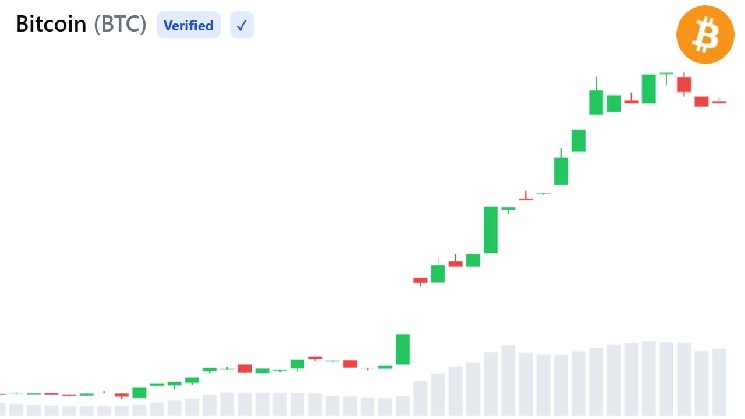
Биткоин падал до отметки 74 000 $, хотя быстро восстановился от этих минимумов после того, как президент США Дональд Трамп сделал масштабные уступки в планах по введению торговых тарифов для основных торговых партнеров. Однако Китай не был включен в эти уступки.

Крупнейшая криптовалюта мира снизилась на 0,2% до 84 447,0 $ к 09:13 по московскому времени.

Биткоин стабилизируется на фоне некоторых тарифных послаблений

Биткоин в значительной степени отставал от сильного роста более широких рисковых активов в понедельник. Но криптовалюта все же стабилизировалась после недавних потерь после того, как Белый дом заявил, что электронные импортные товары из Китая, которые составляют основную часть торгового профицита страны с США, будут освобождены от ответных тарифов Трампа.

Это помогло смягчить некоторые непосредственные опасения по поводу влияния тарифов Трампа на экономику США.

Однако в воскресенье Трамп заявил, что это временная мера, и что скоро он объявит отдельные тарифы на электронику и полупроводники.

Трамп увеличил свои тарифы на Китай до совокупных 145%, что вызвало ответные тарифы в размере 125% со стороны Пекина на фоне быстро обостряющейся торговой войны между крупнейшими экономиками мира.

Эта ситуация по-прежнему держит трейдеров в напряжении, ограничивая привлекательность рисковых активов, таких как криптовалюты. Спекулятивные активы, такие как криптовалюты, как правило, показывают низкие результаты в периоды экономической неопределенности, в то время как защитные активы, такие как золото и японская иена, демонстрируют лучшие показатели.

Также было замечено, что трейдеры обеспокоены возросшими ожиданиями рецессии в США, что еще больше подрывает аппетит к риску.

Майкл Сэйлор намекает на дополнительные покупки биткоина

Майкл Сэйлор, председатель Strategy (NASDAQ:MSTR), крупнейшего корпоративного держателя биткоина, намекнул, что компания может приобрести больше монет, особенно на фоне недавнего падения цен.

Сэйлор сделал несколько загадочных публикаций в социальной сети X (ранее Twitter (NYSE:TWTR), заблокирован на территории РФ), включая трекер владения BTC, что в прошлом предвещало покупки биткоина компанией Strategy.

Публикации Сэйлора появились всего через несколько дней после того, как Strategy раскрыла нереализованный убыток в размере 5,9 млрд $ по своим цифровым активам.

Strategy приобрела 80 715 биткоинов в течение первого квартала 2025 года.

Цены на криптовалюты сегодня: альткоины стабильны на фоне торговой напряженности

Цены на более широкий спектр криптовалют двигались в узком диапазоне в понедельник. Вторая по величине криптовалюта мира Ether выросла на 0,4% до 1 622,57 $, в то время как XRP упал на 0,4% до 2,1331 $.

Solana выросла на 2,7%, в то время как Cardano и Polygon упали на 0,6% и 3,2% соответственно.

Среди мем-токенов Dogecoin остался без изменений, в то время как $TRUMP упал на 3,1%.

Эта статья была переведена с помощью искусственного интеллекта. Для получения дополнительной информации, пожалуйста, ознакомьтесь с нашими Условиями использования.


Letture associate

The Biggest Dark Horse in AI Payments Might Be Coinbase Giving Agents a Wallet

In the AI payments race, while most focus on traditional giants like Visa or AI platforms like OpenAI, Coinbase has quietly emerged as a key player. Data from 2026 shows over 90% of on-chain Agent transactions occur on Coinbase's Base network, with 99% settled in USDC and over 97% using the x402 protocol. Coinbase's pivotal move was launching "Agentic Wallets" in February 2026—a dedicated wallet infrastructure giving AI Agents their own financial identity. Unlike Visa or Stripe, which connect Agents to existing payment rails, Coinbase provides Agents with autonomous wallets to hold assets (like stablecoins), initiate transfers, and execute transactions under predefined rules. This solves core issues for machine-to-machine payments: high credit card fees for micropayments, the need for constant human authorization, and unclear transaction attribution. Coinbase's strength lies in its closed-loop ecosystem: the Base blockchain (low-cost, high-throughput), the x402 payment protocol, Agentic Wallets, and native assets like USDC. This integrated stack, built through years of infrastructure investment, positioned Coinbase to capture early Agent payment demand as the AI economy surged. The key insight is that AI payment adoption may depend less on whose standard wins and more on whose usable infrastructure is ready first. While debates over protocols and payment rails continue, real Agent transactions are already flowing—primarily through Coinbase's ecosystem. It may not be the ultimate winner, but for now, it's the frontrunner by being prepared.

marsbit22 min fa

The Biggest Dark Horse in AI Payments Might Be Coinbase Giving Agents a Wallet

marsbit22 min fa

Dialogue with Bitwise CIO: Bitcoin May Be Near Bottom, Who Will Drive the Next Rally?

In a recent podcast, Bitwise CIO Matt Hougan analyzed Bitcoin's current market cycle, suggesting it is near a bottom characterized by low volatility and investor indifference. He believes the next major price surge will be driven primarily by wealth management platforms, financial advisors, and family offices, who control trillions in assets and are now gaining access to Bitcoin ETFs. Hougan views Bitcoin as a long-dated, out-of-the-money call option on it becoming a global reserve asset. Its value increases with global monetary system volatility, making it a natural hedge against currency disorder. He outlined Bitcoin's adoption path: first as a global digital store of value (competing with gold), and potentially later as a check against fiat currency abuse by sovereign states. Addressing the muted price action despite institutional ETF inflows, Hougan explained that significant selling by long-term retail holders has offset buying pressure. However, he is optimistic as data shows retail selling has subsided, which, combined with continued institutional inflows, could propel prices higher. Hougan downplayed the future impact of Federal Reserve interest rates and MicroStrategy's actions on Bitcoin's price, arguing they are becoming less relevant. Instead, he pointed to runaway U.S. fiscal deficits and debt as the core long-term drivers. Finally, he discussed the transformative potential of asset tokenization, predicting all traditional assets will eventually trade 24/7 on blockchains. This will merge traditional and crypto markets, increasing efficiency but also introducing crypto-like features such as overnight volatility and easier access to leverage into traditional finance.

marsbit1 h fa

Dialogue with Bitwise CIO: Bitcoin May Be Near Bottom, Who Will Drive the Next Rally?

marsbit1 h fa

Dalio Warns of U.S. Bond Supply-Demand Imbalance: Gold and Bitcoin Could Become Hedge Assets in Debt Crisis

Ray Dalio warns of an unsustainable imbalance in US Treasury supply and demand, drawing parallels to the mechanisms of a "big debt cycle" described in his book. Key recent developments include Japan selling US bonds to support the yen, rising US long-term yields amid weak demand, and limited Treasury buybacks. Dalio explains that when debt service burdens become too large relative to income, and bond supply outstrips market demand, a crisis point approaches. Typically, central banks then print money to buy bonds, leading to currency devaluation and inflation. He simplifies the US government's position: with ~$5.5T in revenue, ~$7.5T in spending, a $2T deficit, and $32T in debt, annual debt service is roughly $1T in interest plus ~$10T in maturing principal needing refinancing. Without change, he estimates a potential debt crisis in roughly three years, give or take two. Dalio proposes a "3% three-part solution" to reduce the deficit to 3% of GDP through balanced spending cuts, tax increases, and naturally lower interest rates. He warns that Japan's high debt, often cited as sustainable, has led to poor bond returns and significant currency losses versus gold and the dollar. In response to questions, Dalio states that all reserve currencies eventually decline via this debt cycle mechanism. He advises investors to diversify globally, favor countries with strong finances and stable politics, underweight bonds, overweight gold, and allocate a small portion (e.g., 10-15%) to Bitcoin as hedges against government-created currency devaluation.

marsbit1 h fa

Dalio Warns of U.S. Bond Supply-Demand Imbalance: Gold and Bitcoin Could Become Hedge Assets in Debt Crisis

marsbit1 h fa

Trading

Spot
活动图片