TVL DeFi упал на $45 млрд, сведя на нет рост с момента избрания Трампа

cryptonews.ruPubblicato 2024-06-11Pubblicato ultima volta 2025-03-11

Общая заблокированная стоимость (TVL) криптовалют в протоколах децентрализованных финансов (DeFi), потеряла все достижения с момента избрания Дональда Трампа президентом США в ноябре 2024 года.

После выборов в США DeFi TVL вырос до 138 млрд долларов 17 декабря, но к 10 марта снизился до 92,6 млрд долларов, как отмечает аналитик Майлз Дойчер.

Solana приняла на себя основную тяжесть критики, поскольку популярность его мемкойна падает, но Ethereum столкнулся со своими собственными проблемами в последних циклах, при этом Ethereum (ETH) не смог достичь нового исторического максимума, несмотря на то, что Bitcoin (BTC) взлетел выше $109 000 20 января, в день вступления Трампа в должность. TVL Ethereum также упал на $30,6 млрд от циклических максимумов, показывают данные DefiLlama.
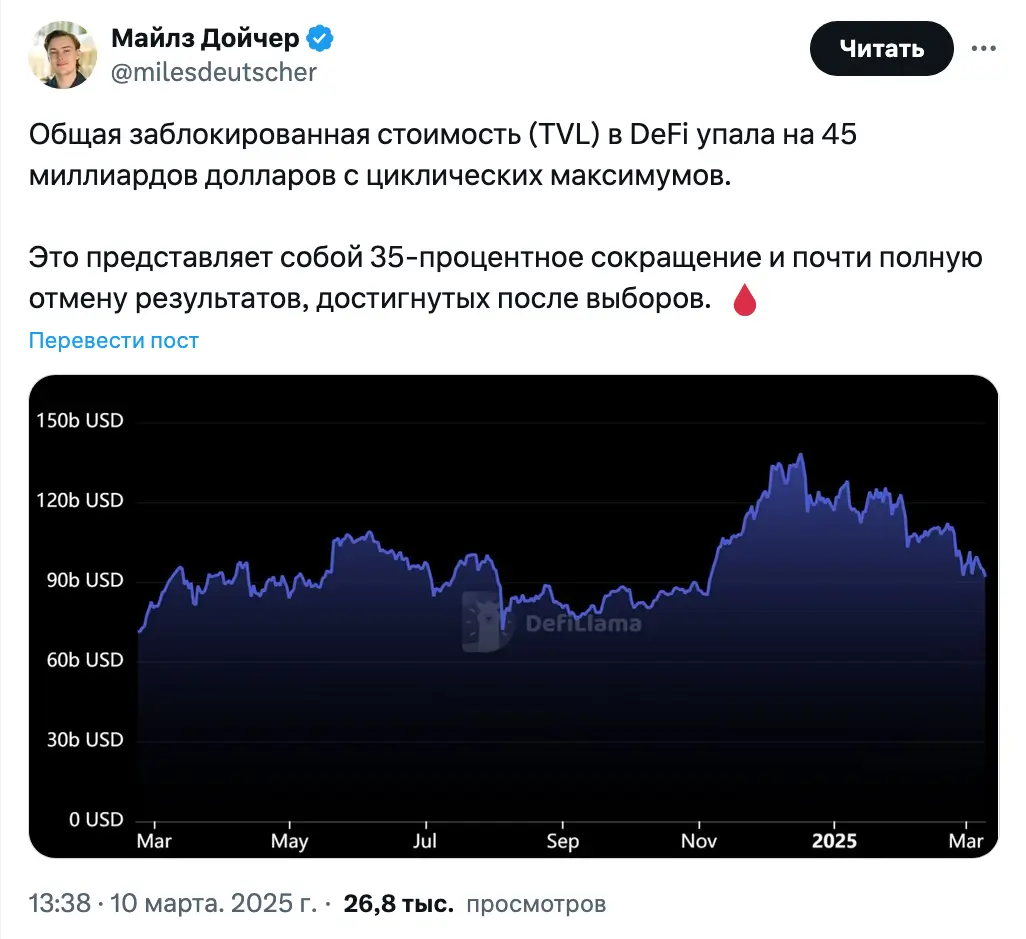

Источник: Майлз Дойчер.

Рекордно высокая цена Ethereum в $4787, установленная в ноябре 2021 года, остается непобитой, несмотря на позитивные события в отрасли, такие как запуск спотовых биржевых фондов (ETF) в США и указ Трампа о стратегическом резерве биткоина.

Чистый отток средств с бирж на Ethereum составил $1,8 млрд за неделю

Почти 800 000 ETH, что примерно на $1,8 млрд, покинули биржи за неделю, начинающуюся 3 марта, что привело к самому высокому чистому оттоку средств за семь дней, зафиксированному с декабря 2022 года, согласно данным IntoTheBlock.

Отток средств необычен, учитывая падение цены Ethereum на 10% за этот период, достигнув минимума в $2007, согласно CoinGecko. Обычно приток средств на биржи сигнализирует о давлении продаж, в то время как отток средств предполагает долгосрочное удержание или переход в приложения децентрализованного финансирования (DeFi), такие как стекинг или доходный ферминг.

«Несмотря на продолжающийся пессимизм вокруг цены Ethereum, эта тенденция говорит о том, что многие держатели рассматривают текущие уровни как стратегическую возможность для покупки», — считают аналитики IntoTheBlock.

До 3 марта Ethereum ежедневно испытывал чистый приток биржевых средств, что указывает на то, что инвесторы продавали во время спада, сказал Хуан Пеллисер, старший аналитик IntoTheBlock. Он отметил, что падение ETH до $2100 могло спровоцировать накопление, которое затем заставило инвесторов вывести средства с бирж.

Обновление Pectra встречает собственные препятствия

Дорожная карта Ethereum, ориентированная на роллапы, снизила перегрузку и газовые сборы, но появление множества решений Layer 2 привело к фрагментации ликвидности.

Предстоящее обновление Pectra направлено на решение этой проблемы за счет повышения эффективности и совместимости сетей Layer 2. Удваивая количество блоков, оно снижает транзакционные издержки и помогает консолидировать ликвидность. Кроме того, абстракция учетных записей позволяет смарт-контрактным кошелькам более плавно функционировать в сетях Ethereum и Layer 2, упрощая мосты и управление фондами.

Развертывание обновления Pectra столкнулось с неудачами 5 марта, когда оно было запущено в тестовой сети Sepolia. Разработчик Ethereum Мариус ван дер Вейден сообщил об ошибках на узлах Geth и пустых блоках, которые добываются из-за депозитного контракта, вызывающего неверный тип события. В связи с этим было развернуто исправление.


Letture associate

Losing $55 Million to Sell Bitcoin, MicroStrategy's Faith Reaches Its Interest Payment Day

On July 6th, Michael Saylor's MicroStrategy announced the sale of 3,588 BTC for approximately $216 million, incurring a realized loss of around $55.45 million compared to its average cost basis. This move, contradicting Saylor's long-standing "never sell" Bitcoin philosophy, was executed to pay dividends on its digital credit securities. The article traces this shift from a small "desensitization test" sale of 32 BTC in late May to the board's authorization on June 30th to sell up to $1.25 billion in Bitcoin for corporate purposes like dividends and buybacks. Analysis reveals that MicroStrategy's previous growth "flywheel"—using stock premiums to fund more Bitcoin purchases—has stalled. With its stock trading near a critical threshold (1.22x its Bitcoin NAV), issuing new shares would dilute value. Simultaneously, its financing channels (preferred stock, common stock ATM, convertible notes) are constrained while facing rigid annual dividend/interest obligations of roughly $1.76 billion. Consequently, selling Bitcoin became the calculated "optimal solution" under its own financial model. This transforms MicroStrategy from crypto's most prominent steady buyer into a predictable seller, creating a potential overhead of ~2,400 BTC in monthly selling pressure if obligations are fully covered by sales. This shift challenges the valuation models of the entire Digital Asset Treasury (DAT) sector that emulated MicroStrategy. The company's path forward now hinges on Bitcoin's price recovery, which would allow its preferred stock to trade at par and reopen its financing flywheel, creating a cyclical dependency between the firm's financial model and the asset it holds.

链捕手28 min fa

Losing $55 Million to Sell Bitcoin, MicroStrategy's Faith Reaches Its Interest Payment Day

链捕手28 min fa

OUSD Fake Partnership Controversy? Stablecoins and the Credit Game of Giant Endorsements

Author: Chloe, ChainCatcher Last week, Open Standard launched the dollar stablecoin OpenUSD (OUSD) with a list of over 140 supposedly supporting companies, including major names like Visa, Mastercard, Stripe, American Express, BlackRock, BNY, Standard Chartered, Google, Shopify, Samsung, Coinbase, Solana, and Ripple. The announcement initially impacted Circle's stock price, but doubts about the list quickly emerged. Several Korean firms named, including Samsung Electronics, Shinhan Financial Group, Dunamu (Upbit's parent), and K Bank, clarified they had not formally agreed to join the alliance. Some stated they were only approached for potential interest or learned of their inclusion from news reports, expressing surprise. Similar concerns were raised by U.S. entities, suggesting the list may be misleading. OUSD, led by Zach Abrams of Bridge (acquired by Stripe in 2024), promotes zero-fee minting/redemption, no transaction limits, and sharing reserve asset yields with partners instead of keeping profits. However, this model makes listed partnership imply economic benefits, turning it into a serious credibility issue. This incident reflects a common crypto marketing tactic of leveraging big names. A Chainstory analysis found over 62% of crypto press releases in late 2025 were high-risk or scams. The situation recalls Facebook's Libra (later Diem), which collapsed in 2022 after initial heavyweight backers like Visa and PayPal withdrew under regulatory pressure. Circle CEO Jeremy Allaire welcomed the competition but highlighted the challenges. He argued stablecoin success relies on network effects and real usage, not just alliances. He criticized OUSD's "free" model and full revenue sharing as potentially starving infrastructure development. Noting the dominance of USDT (~$1.84T) and USDC (~$730B) in the ~$2.91T stablecoin market, he suggested many new entrants lack real utility despite inflated circulation from incentives. In conclusion, while OUSD has genuine backing and a distinct model, its future depends on actual adoption in B2B payments, settlements, and cross-border transactions, not just a prestigious partner list. The market will determine if it is a credible challenger or merely another marketing promise.

链捕手30 min fa

OUSD Fake Partnership Controversy? Stablecoins and the Credit Game of Giant Endorsements

链捕手30 min fa

Trading

Spot
活动图片