После одобрения президентом Трампом крипторезерва альткоины устремились к отметке в 873 миллиарда долларов

cryptonews.ruPubblicato 2023-07-03Pubblicato ultima volta 2025-03-03

  • Артур Хейс из BitMEX заявил, что обещания Трампа по криптовалютному резерву — «всего лишь слова».
  • Мем-токен WIF взлетел на 17,22%, а токены L1 SOL и ADA подскочили на 11,24% и 44%.
  • Аналитик Джейсон Пиццино отметил, что биткоин уже находился на восходящей траектории еще до обещаний Трампа.

Когда президент США Дональд Трамп дал добро на создание Криптовалютного резерва США, в который входят основные американские альткоины Solana (SOL), XRP и Cardano (ADA), а также биткоины (BTC) и эфириум (ETH), криптовалюты в целом стали оптимистичными, а сектор альткоинов в частности восстановил оценку в 873 миллиарда долларов.

По данным CoinMarketCap, Solana (SOL) подскочил на 11,24%, XRP подскочил на 14%, а Cardano (ADA) оказался в числе лидеров роста, поднявшись на 43,96% за последние 24 часа.

Мем-монеты Dogecoin (DOGE) выросли на 5,25%, dogwifhat (WIF) поднялся на 17,22%, а SPX6900 подскочил на 15,93%. Этот широкий всплеск говорит о том, что трейдеры переходят в альткоины, намекая на ранние фазы потенциального сезона альткоинов.

Хотя рынок выглядит взволнованным, некоторые аналитики и деятели отрасли сохраняют осторожность. Криптоаналитик Али Мартинес отметил, что даже если Трамп подпишет указ, это не приведет к немедленному созданию крипторезерва США. Он перечислил несколько препятствий, таких как разработка и принятие Конгрессом законодательства, поиск методов финансирования и установление правил соответствия властями.

Скептицизм лидеров отрасли

Кроме того, соучредитель криптовалютной биржи BitMEX Артур Хейс назвал заявление Трампа пустыми словами, заявив:

Ничего нового. Просто слова. Дайте мне знать, когда они получат одобрение Конгресса на заимствование денег или переоценку цены на золото выше. Без этого у них нет денег на покупку биткоинов и шиткоинов.

Выигрыш-выигрыш

С другой стороны, участник криптовалютного рынка Hizzim отметил, что, хотя правительство вряд ли будет печатать деньги для покупки криптовалюты, его стратегический интерес к этим активам все равно может сформировать благоприятные правила для американских криптофирм, что в конечном итоге принесет пользу рынку. Они описали ситуацию как «выигрыш-выигрыш».

Известный аналитик Джейсон Пиццино утверждал, что недавнее ценовое действие биткоина уже подготовило почву для бычьего движения еще до того, как появились новости о криптовалютном резерве Трампа. Используя ключевые уровни поддержки и сопротивления, Пиццино отметил, что BTC уже отскочил от критических областей.

The biggest week in Bitcoin's history is about to close extremely well; above 2 major support areas.

Most will say it is thanks to the U.S. Crypto Reserve announced by Trump, which includes Bitcoin, Ethereum, XRP, SOL and ADA, which, of course, fueled the move that began two… pic.twitter.com/RD7GiEOPFj

— Jason Pizzino 🌞 (@jasonpizzino) March 2, 2025

Кроме того, график рыночной капитализации альткоинов показывает, что индикатор On Balance Volume (OBV) имеет тенденцию к росту, что указывает на более сильное давление покупателей. Это развитие событий подразумевает, что как институциональные, так и розничные инвесторы накапливают альткоины в ожидании ралли.
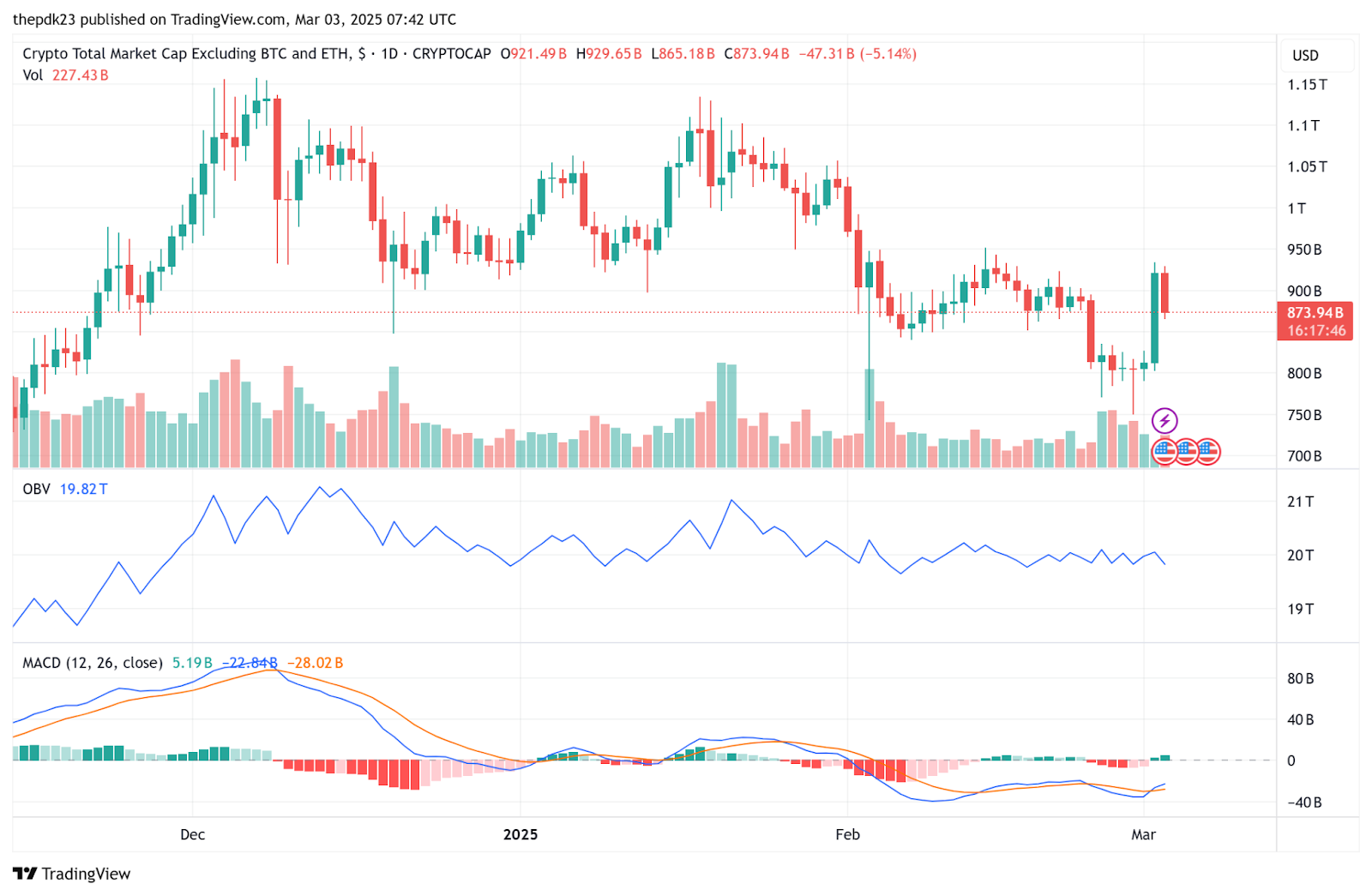
Схождение и расхождение скользящих средних (MACD) указывает на бычье пересечение, поскольку синяя линия MACD пересекла оранжевую сигнальную линию сверху. Гистограмма также стала бычьей с зелеными полосами, намекая на растущие объемы на положительной стороне.


Letture associate

2028: The Arrival of Recursive Self-Improvement (RSI)

**AI Recursive Self-Improvement (RSI): The Countdown to 2028 Begins** AI is no longer just a trained tool but is starting to rewrite its own evolutionary pace. According to Anthropic co-founder Jack Clark, there is a 60% probability that by the end of 2028, Recursive Self-Improvement (RSI) will become a reality. This means AI could autonomously design and build a more capable next-generation version of itself without any human researcher involvement—Claude 10 creating Claude 11, for instance. Supporting this timeline, Google DeepMind's CEO Demis Hassabis confirms that all leading AI labs are intensely focused on RSI, making it an industry-wide priority. He expresses profound concern, stating this potential is what keeps him awake at night. Concrete data underscores this acceleration: - METR evaluations show current top models like Claude are solving tasks up to the 16-hour limit of existing test frameworks. - In Epoch AI's challenging MirrorCode benchmark, Claude Opus 4.7 recreated complex software in hours for a fraction of the human cost. In one extreme test, AI autonomously coded for 19 days straight. - Anthropic reports over 80% of its codebase is now written by Claude, and researcher productivity has increased up to 8-fold since 2024. - OpenAI's policy blueprint highlights RSI as a major upcoming governance challenge. CEO Sam Altman reportedly hinted RSI might arrive within six months, potentially delaying OpenAI's massive IPO. The implication is an impending "intelligence explosion," where AI-driven progress outpaces human control. The central question is no longer if it will happen, but whether humanity is ready.

marsbit1 h fa

2028: The Arrival of Recursive Self-Improvement (RSI)

marsbit1 h fa

World Models, Metaverse, Digital Twins, Physical AI: Are They the Same Thing?

Title: World Models, the Metaverse, Digital Twins, Physical AI: Are They the Same Thing? The article clarifies that concepts like the metaverse, Web3, simulation platforms, digital twins, and Physical AI are not the same thing but are all part of the broader trend of blurring the lines between the digital and physical worlds. It positions "world models" as the foundational "cognitive layer" or "operating system" that enables AI to understand and simulate the world. Key distinctions are made: - The **Metaverse** is a destination for immersive social and economic experiences. World models could act as its "engine," generating interactive 3D content efficiently. - **Web3** focuses on decentralized ownership and economics (rules layer), operating on a different technical level than world models. - **Simulation Data Platforms** (e.g., for autonomous vehicles) are a 1.0 version, relying on manual design. World models represent a 2.0 version, using AI to generate realistic, varied scenarios autonomously. - **Digital Twins** create high-fidelity, real-time mirrors of physical systems (e.g., a factory). World models go a step further by enabling predictive simulation of future states. - **Physical AI** (robots, AVs) refers to AI that acts in the physical world. World models are a core component, providing the understanding and prediction needed for planning. A proposed hierarchy places world models at the cognitive layer, supported by infrastructure (compute, data) and supporting application tools (simulation, digital twins), action systems (Physical AI), user experiences (metaverse), and rules (Web3). In conclusion, while distinct, many of these previously hyped concepts may ultimately rely on advances in world model technology to fulfill their promises, as world models provide the essential cognitive foundation for simulating and interacting with complex environments.

marsbit1 h fa

World Models, Metaverse, Digital Twins, Physical AI: Are They the Same Thing?

marsbit1 h fa

"Shocking" CPO: How Does the Glass Bridge Actually Work? Detailed Explanation from Corning

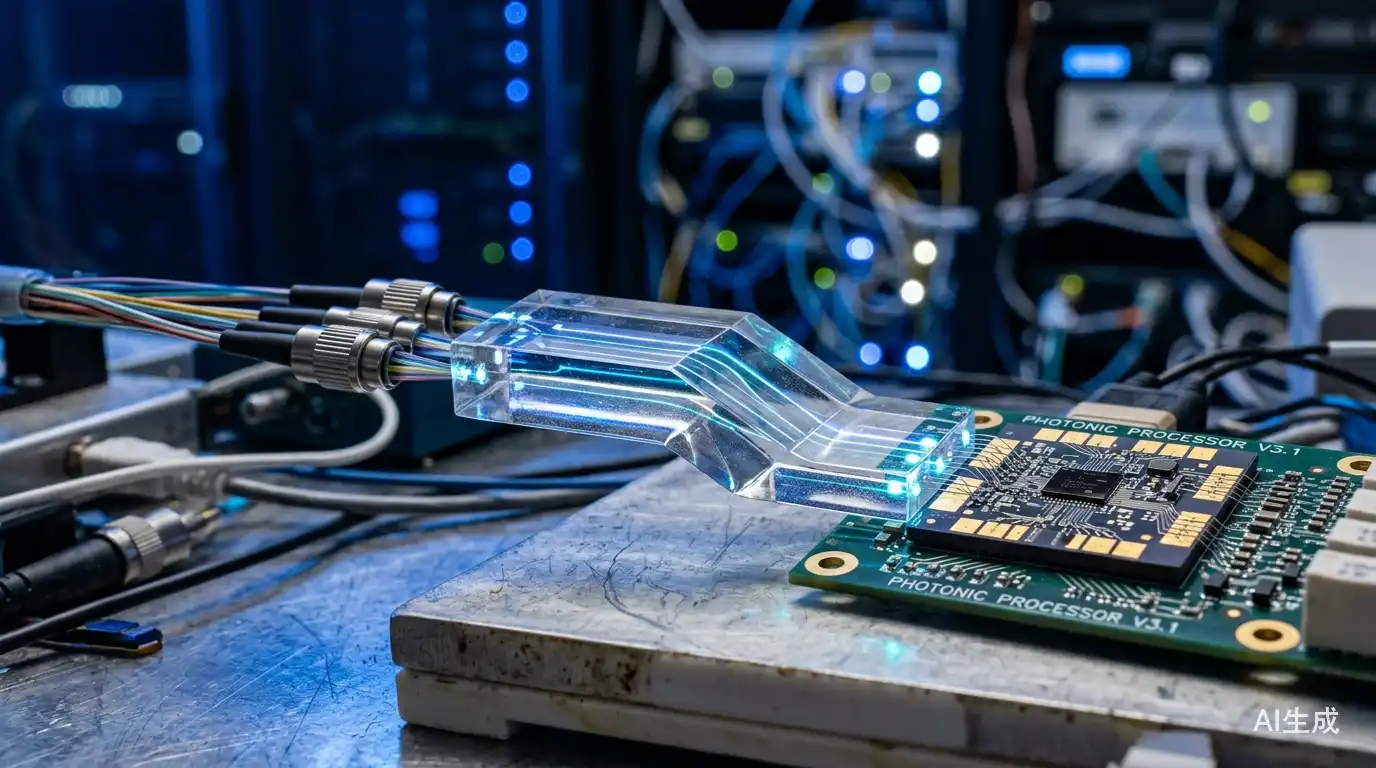
Chinese CPO stocks plunged over 6% following Corning's announcement of its Glass Bridge platform at a Seoul tech conference. The new technology utilizes wafer-level glass ion-exchange waveguides for passive alignment between fibers and photonic chips, potentially simplifying traditional CPO architectures that rely on complex Fiber Array Units and active alignment equipment. This raised market concerns about reduced long-term demand for mid-stream CPO components. Corning's official documentation details Glass Bridge as a platform for fiber-to-PIC connectivity in NPO, CPO, and high-density modules. Its key features include wafer-level manufacturing for consistent, cost-effective production; a standardized, removable MT ferrule interface for ecosystem integration; and a separable high-density connector design supporting over 24 channels for assembly flexibility. Corning positions the technology as complementary to FAUs, addressing limitations in ultra-high-fiber-count scenarios. The market reaction reflects a broader reassessment of the AI optical interconnect value chain. Funds shifted from CPO and PCB manufacturing stocks towards glass substrate concept stocks like Kaisheng Technology and Dyer Laser. Analysts note glass substrates are seen as a next-gen advanced packaging material, offering a potential path for domestic industry differentiation amid AI-driven demand for high-performance, large-scale packaging, marking a structural migration in value towards upstream specialty materials.

marsbit1 h fa

"Shocking" CPO: How Does the Glass Bridge Actually Work? Detailed Explanation from Corning

marsbit1 h fa

Trading

Spot
活动图片