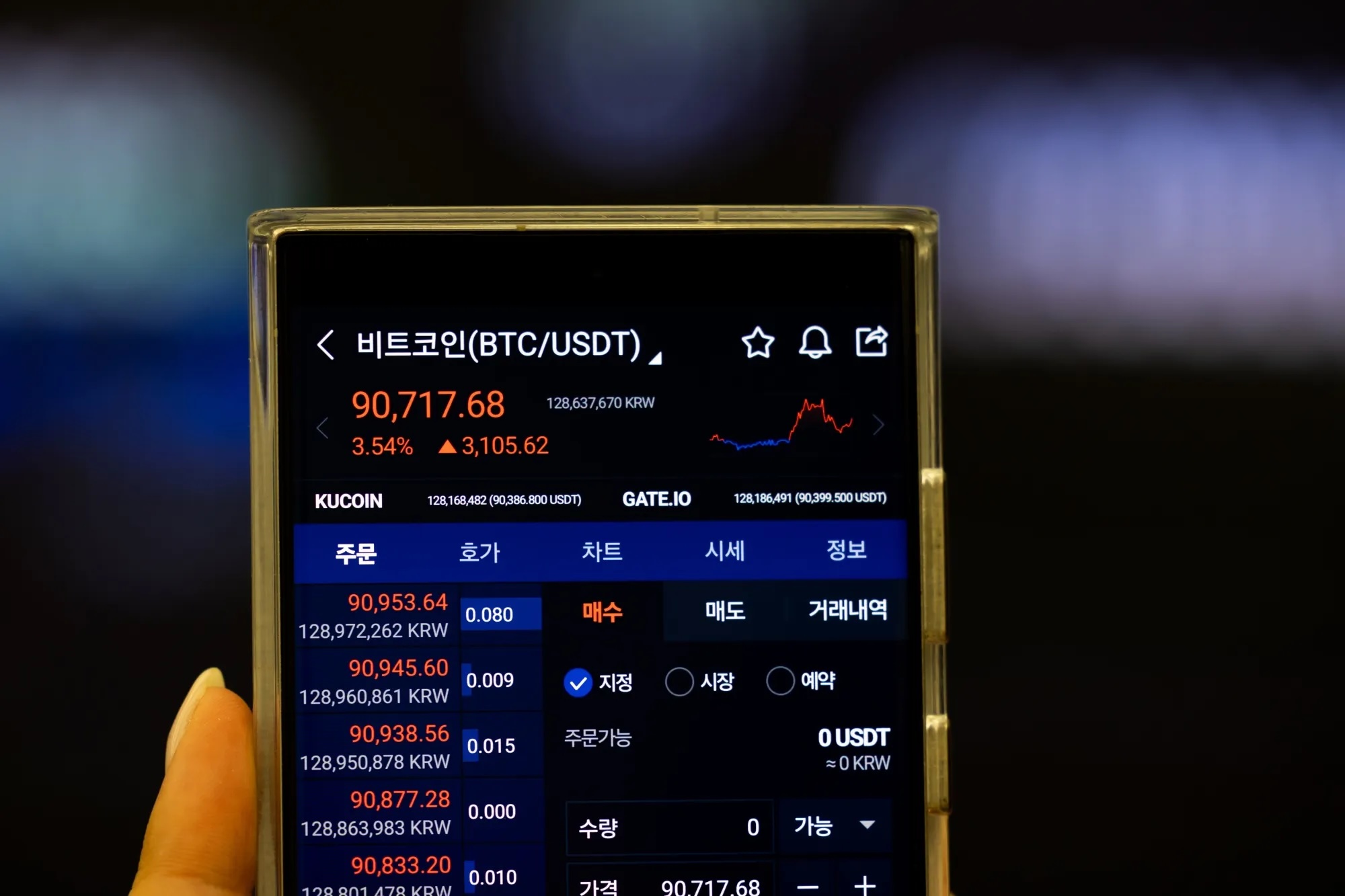
Биткоин и альткоины под давлением из-за углубления рыночной коррекции

cryptonews.ruPubblicato 2022-12-30Pubblicato ultima volta 2024-12-30

  • Биткоин потерял ценовой уровень в 95 000 долларов и торгуется на уровне 93 600 долларов.
  • Спотовые ETF BTC доминировали в этом году среди 740 новых ETF в США.
  • Альткоины XRP, ONDO, XLM, DOGE и ADA значительно обвалились за последние 24 часа.

Криптовалютный рынок переживает широкомасштабное падение цен, при этом Bitcoin и несколько ведущих альткоинов находятся под давлением. Bitcoin (BTC) в настоящее время торгуется на уровне $93 692,56, снизившись на 1,36% за последние 24 часа. Ведущий цифровой актив ненадолго подскочил до дневного максимума в $95 110, но не смог удержаться выше этого уровня, рухнув до $92 881, прежде чем отскочить.

Несмотря на недавнюю волатильность, биткоин в этом году показал значительный рост, достигнув исторических максимумов в марте и декабре, когда он превысил $100 000. В этом году также было запущено более 740 новых ETF, при этом спотовые биткоин-ETF доминировали в притоке средств. Спотовые BTC и ETH-ETF BlackRock и Fidelity зафиксировали многомиллиардные притоки средств.

NEW: Spot #Bitcoin ETFs dominate inflows in 2024, leading the pack among 740 newly launched ETFs

The shift from TradFI is real! pic.twitter.com/OCBBMrtoS9

— Simply Bitcoin (@SimplyBitcoinTV) December 30, 2024

Долгосрочные перспективы биткоина

Взгляд на недельный график биткоина показывает бычий долгосрочный тренд. Индекс относительной силы (RSI) в настоящее время показывает 65,41, что указывает на сильное давление покупателей. Градиент линии предполагает потенциальное движение к $100 000 в ближайшее время.

Читайте также: Индекс сезона альткоинов поднялся до 48, что свидетельствует о нейтральном рынке

Galaxy Research прогнозирует, что Bitcoin достигнет $150 000 в первой половине следующего года. Они также ожидают, что Ethereum будет торговаться выше $5 500, поскольку количество поставленных токенов Ether продолжает расти. Однако альткоины, такие как XRP и Solana (SOL), могут составить конкуренцию ETH.

Альткоины ожидают значительного спада

Несколько ведущих альткоинов столкнулись со значительным падением цен. Например, XRP упал до дневного минимума в $2,04 после достижения $2,15, но с тех пор восстановился до $2,06.

Индекс относительной силы (RSI) для XRP составляет 45,56, что означает, что медведи взяли верх, а градиент линии предполагает, что текущая коррекция цен продолжится в ближайшем будущем.

Аналогично снизились и другие альткоины:

  • Акции ADA снизились на 2,03% и торгуются на уровне $0,8694.
  • ONDO упал на 4,92% до $1,38.
  • Dogecoin (DOGE) упал на 1,86% и оценивается в $0,3206.
  • Stellar (XLM) упал на 4,56% до $0,3365.

Похоже, что в краткосрочной перспективе эти альткоины продолжат нисходящую тенденцию.

Letture associate

South Korean Institutions' Crypto Race: Dual Explosion of Stablecoins and RWA

**Summary: South Korea's Institutional Crypto Race: Stablecoins and RWA Take Off** South Korea is undergoing a structural shift in its crypto ecosystem, moving beyond its historical role as a major retail trading hub. Major financial institutions and internet platforms are now building institutional-grade blockchain infrastructure, with stablecoins and Real-World Asset (RWA) tokenization as the primary drivers. The push for a regulated Korean won stablecoin market is a major policy and corporate focus. This is driven partly by an estimated $115 billion outflow into dollar stablecoins like USDC, threatening the domestic financial system. Banks (e.g., KB Financial, Hana), payment giants (e.g., Shinhan Card, BC Card), and internet super-apps (KakaoPay, NAVER Pay) are all conducting pilots. The goal is to anchor future digital finance to the Korean won and local regulations. In RWA, South Korea is advancing rapidly within regulatory sandboxes, focusing on unique domestic assets beyond typical global templates like US Treasuries. Projects involve tokenizing ships (with Hyundai Heavy Industries), defense supply chain assets, and K-pop intellectual property, alongside more conventional assets. A legal framework is set for 2027, and platforms like NXT are preparing for regulated trading. Key opportunities for crypto-native projects lie in providing the underlying technology these traditional institutions lack: global distribution channels for tokenized assets, cross-chain liquidity solutions, and enabling infrastructure tools (e.g., for asset packaging and management). Partnerships, such as Solana with Shinhan Card or LayerZero with the Korea Gold Exchange, exemplify this proactive approach. Crucially, user access is being shaped by consumer platforms. NAVER's planned acquisition of Upbit's operator Dunamu and Kakao's development of a unified wallet aim to seamlessly integrate crypto with everyday payments for tens of millions of users. The race is now about which protocols and projects will become the foundational standards as regulation solidifies and institutional adoption accelerates.

Foresight News1 h fa

South Korean Institutions' Crypto Race: Dual Explosion of Stablecoins and RWA

Foresight News1 h fa

How to Detect AI-Generated Videos? A Review of Dynamic, Traceable, and Explainable Detection Systems

**How to Detect AI-Generated Videos: A Survey on Dynamic, Traceable, and Explainable Detection Systems** With rapid advances in AI video generation (e.g., Sora, Veo), creating highly realistic, multi-minute videos is now possible, widening the gap with detection research. Current AI video detection, often limited to unreliable binary classifications, is insufficient. This survey, accepted at ACL 2026, reframes the goal as **"factual fidelity verification"**—checking if a video's content (who, when, where, what) aligns with the real world perceptually and cognitively. It categorizes AI-generated videos into three paradigms: **Local Manipulation Videos (LMV**, e.g., face swaps), **Audio-Visual Editing (AVE**, e.g., lip-syncing), and **Generative Video Synthesis (GVS**, fully synthetic videos like Sora's). Detection challenges evolve from visual artifacts in LMV to multi-modal inconsistencies in AVE and higher-level world knowledge violations in GVS. The core proposal is a **Vision-Language Dual-View framework** with four hierarchical layers: 1. **Layer 1 (Intrinsic Visual Cues):** Analyzes low-level signal statistics, noise patterns, and physiological signals. 2. **Layer 2 (Spatiotemporal Consistency):** Checks for temporal coherence in object motion and scene dynamics. 3. **Layer 3 (Cross-Modal Consistency):** Verifies alignment between video, audio, and text within the video. 4. **Layer 4 (Language-Guided World-Level Reasoning):** Uses external knowledge, facts, and physical laws to judge semantic plausibility and factual correctness. The survey traces a shift in detection focus from lower layers (1 & 2) toward higher, language-involved layers (3 & 4). It also reviews evolving evaluation metrics and datasets tailored for each video paradigm. The conclusion advocates for a **dynamic, evidence-first detection system** that moves beyond simple classification. Future trustworthy detection requires combining visual evidence (from CV) with semantic reasoning and explanation (from NLP & multimodal AI), ultimately creating traceable and explainable judgments about a video's adherence to real-world constraints.

marsbit1 h fa

How to Detect AI-Generated Videos? A Review of Dynamic, Traceable, and Explainable Detection Systems

marsbit1 h fa

Trading

Spot
活动图片