Американские аналитики оценили текущую динамику биткоина

cryptonews.ruPubblicato 2024-01-03Pubblicato ultima volta 2024-12-03

На текущий момент многие аналитики сходятся во мнении, что рост главной цифровой монеты может быть существенно ограничен, пока она не сможет закрепиться выше отметки $98 000. Подобную точку зрения разделяет популярный криптовалютный эксперт Микаэль ван де Поппе. По его словам, если котировки биткоина смогут преодолеть данный уровень, то в таком случае уже можно ожидать потенциального роста вплоть до $100 тыс.

Накануне президентских выборов в США специалисты отмечали, что биткоин выступил в качестве определенного посредника, обеспечившего победу кандидата от Республиканской Партии Дональда Трампа. Однако для более устойчивого роста котировок не хватило важных фундаментальных факторов. Главная цифровая монета продемонстрировала устойчивый буллран, и ей не хватило совсем немного для того, чтобы достичь уровня $100 тыс. Далее последовала локальная коррекция, но цена все еще прочно удерживается выше области $95 000.

Однако специалисты считают, что достижение котировками 6-значной отметки — это только лишь вопрос времени. Главная цифровая монета может вырасти вплоть до $110 тыс. в начале грядущего года, исходя из его устойчивой корреляции с индексом глобальной ликвидности Global Macro Investor. Данная метрика отражает совокупный баланс всех мировых Центральных банков.

Стоит также отметить, что, согласно ончейн-метрикам, краткосрочные держатели главной цифровой монеты планомерно снижают объемы продаж BTC. Это довольно позитивный признак, который в перспективе может способствовать устойчивому росту котировок. Однако при этом стоит учитывать и действия институциональных инвесторов.

Спрос со стороны крупных долгосрочных держателей остается стабильным. В пользу данного тезиса говорит то, что спотовые биткоин-ETF продолжают активно привлекать дополнительные средства.

Ошибка в тексте? Выделите её мышкой и нажмите Ctrl + Enter

Letture associate

24/5 Settlement Is Here for US Stocks, but Cryptocurrency Didn't Get a Ticket

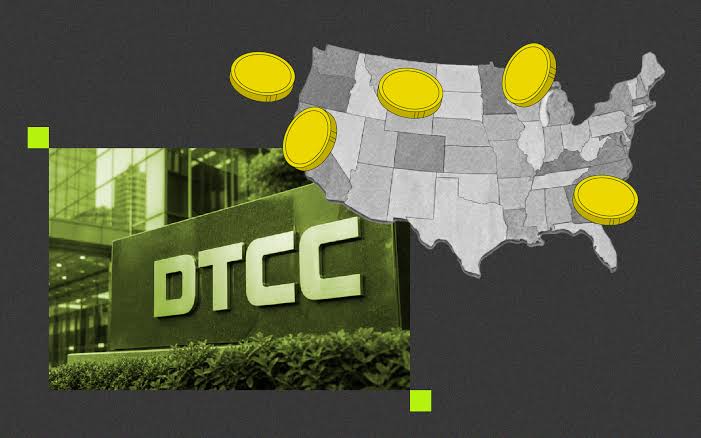
The U.S. National Securities Clearing Corporation (NSCC), a subsidiary of the Depository Trust & Clearing Corporation (DTCC), has announced the implementation of 24-hour clearing operations on weekdays. This move, approved by the SEC and being rolled out in phases, fundamentally challenges a core narrative of the cryptocurrency industry: that digital assets offer a unique advantage with their 7x24 trading availability, unlike traditional markets that close at 4 p.m. The transition to near-continuous clearing for stocks and other traditional assets diminishes this perceived crypto edge. While crypto markets still operate on weekends, the article notes that DTCC could potentially expand to weekend clearing in the future if demand warrants. The development is presented as another instance where DTCC has disappointed crypto enthusiasts. Despite frequent speculation from communities supporting Ethereum, XRP Ledger, and others that DTCC would integrate public blockchains, the clearing giant consistently opts for private, permissioned distributed ledger solutions for its projects, such as its Ion platform and a recent U.S. Treasury tokenization initiative on the Canton network. The article concludes that the successful launch of this traditional finance "always-on" market relied entirely on existing mature infrastructure, with the cryptocurrency industry failing to secure a role or "admission ticket" in its implementation.

Foresight News14 min fa

24/5 Settlement Is Here for US Stocks, but Cryptocurrency Didn't Get a Ticket

Foresight News14 min fa

Karpathy's Genius Strikes Again, Challenging RAG, Turning Your Notes into a Second Brain

Andrej Karpathy has proposed a revolutionary concept for managing personal knowledge: treating notes as immutable "source code" and using LLMs as "compilers" to build a structured, interlinked wiki. This approach fundamentally shifts the cognitive workflow away from the limitations of RAG (Retrieval-Augmented Generation), which merely retrieves and pieces together fragments, leading to contradictions and "digital mummies"—unused, decaying notes. The LLM-Wiki framework introduces a three-layer architecture: the **Raw Layer** for original, immutable notes; the **Schema Layer** defining rules for structuring knowledge; and the **Wiki Layer**, where the LLM continuously compiles and maintains a coherent, cross-referenced knowledge base. Key operations are **Ingest** (adding new material, which triggers updates across related pages), **Query** (asking the compiled wiki, with answers that can become new pages), and **Lint** (periodic AI audits to find contradictions, outdated claims, or gaps). This system automates the tedious maintenance—updating links, resolving conflicts, keeping summaries fresh—that has historically made large-scale personal knowledge management unsustainable. It realizes Vannevar Bush's 1945 "Memex" vision by finally solving the maintenance problem. Karpathy's proposal represents a third piece in human-AI collaboration, following "Vibe Coding" and "Agentic Engineering." It liberates human attention from organizational drudgery, refocusing it on what matters: deciding what to read and deriving meaning.

marsbit23 min fa

Karpathy's Genius Strikes Again, Challenging RAG, Turning Your Notes into a Second Brain

marsbit23 min fa

Claude Science Completes Two Years' Work in a Few Weeks, Is 10x Research Acceleration Really Here?

Claude Science, a new AI workbench from Anthropic, is being tested by scientists, reportedly accelerating specific research workflows by up to 10x. A neuro-scientist at the Allen Institute completed a lengthy literature review in weeks instead of nearly two years using the tool, which automates tasks like citation verification. The platform is an integrated environment for macOS and Linux, connecting to local or remote computing resources. It streamlines the fragmented research process—literature analysis, computation, visualization, and drafting—into a single, auditable workflow. A key feature is its emphasis on reproducibility: every chart generated includes the exact code, environment, and history used to create it. Claude Science uses a multi-agent system. A coordinator manages over 60 pre-configured skills for life sciences (genomics, proteomics, etc.) and can spawn specialized agents. A dedicated reviewer agent checks citations and calculations for accuracy, creating a form of internal AI peer review. The system operates with a human-in-the-loop, requiring user approval for major steps. Initial applications are in life sciences. Examples include target identification for biotech company Manifold Bio and germline variant analysis for glioma research at UCSF, completing analyses in roughly one-tenth the previous time. The approach contrasts with competitors: Google focuses on proprietary models like AlphaFold, while OpenAI is advancing models' scientific reasoning with benchmarks like GeneBench-Pro. Claude Science differentiates by automating and integrating the practical research pipeline, not just the model's intelligence, aiming to make AI-aided science more reproducible and integrated into daily lab work.

marsbit27 min fa

Claude Science Completes Two Years' Work in a Few Weeks, Is 10x Research Acceleration Really Here?

marsbit27 min fa

Trading

Spot
活动图片