Ripple Labs Nears New York Approval For Stablecoin Launch In US Crypto Market

bitcoinistPubblicato 2024-11-30Pubblicato ultima volta 2024-12-01

Introduzione

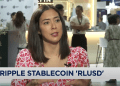
Ripple Labs is on the verge of receiving approval from New York’s top crypto regulator for its new stablecoin, RLUSD....

Ripple Labs is on the verge of receiving approval from New York’s top crypto regulator for its new stablecoin, RLUSD. According to a Fox Business report, the New York Department of Financial Services (NYDFS) is expected to greenlight the stablecoin, with a potential launch date set for December 4.

Ripple Set To Launch RLUSD Stablecoin

If approved, Ripple will legally be able to offer RLUSD to the public, solidifying its position as a major player in New York’s regulated digital finance market and expanding its footprint to the broader stablecoin ecosystem. 

However, both Ripple Labs and the regulator have yet to comment on the matter or provide any official communication to further corroborate the information gathered by Fox’s sources.

Ripple’s primary business revolves around its decentralized global payments network, RippleNet, which leverages blockchain technology to facilitate faster, cheaper, and more efficient cross-border transactions for banks and businesses. 

This approach serves as an alternative to the traditional global bank settlement system, SWIFT. Ripple’s native token, XRP, acts as a bridge currency for settlement, although its status remains uncertain due to ongoing legal challenges with the US Securities and Exchange Commission (SEC). 

The SEC has argued that XRP should be classified as an “unregistered security,” a claim Ripple contests in an appeals case currently before the Second Circuit.

The legal battle has had significant implications for XRP’s market performance. Following the SEC’s lawsuit in late 2020, XRP’s price plummeted over 50%, resulting in a market cap loss of approximately $16 billion. Since then, XRP has fluctuated, often remaining below the $1 mark as Ripple navigates its legal challenges. 

However, recent developments, including Donald Trump’s election victory on November 5, ant the official departure announcement by the SEC chair Gary Gensler, have spurred optimism among investors, boosting XRP’s price to $1.89 and positioning it as the fifth largest cryptocurrency by market cap, exceeding $107 billion.

Competing With Established Stablecoins 

By entering the stablecoin market with RLUSD, Ripple aims to provide a stable alternative for customers seeking to utilize digital currencies without the volatility associated with XRP.

To operate within this regulatory framework, the firm is expected to obtain a limited purpose trust charter, allowing it to offer specific digital asset-related services without the complexities associated with traditional banking regulations. 

Additionally, the NYDFS offers a BitLicense, which enables exchanges such as Coinbase and Robinhood to provide trading and custody services for cryptocurrencies.

Ripple’s entry into the stablecoin sector comes at a time when other firms, including Paxos and Gemini, have already secured approval to offer their stablecoins, PAX and GUSD, respectively. 

Keith Grossman, president of Enterprise at MoonPay, expressed enthusiasm for the new entry into the stablecoin market, highlighting the importance of “well-capitalized, highly regulated players” in the evolving global financial landscape.

Ripple
The daily chart shows XRP’s price trending upwards. Source: XRPUSDT on TradingView.com

Featured image from DALL-E, chart from TradingView.com 

Ronaldo Marquez

Ronaldo Marquez

Ronaldo is a seasoned crypto enthusiast with over four years of experience in the field. He is passionate about exploring the vast and dynamic world of decentralized finance (DeFi) and its practical applications for achieving economic sovereignty. Ronaldo is constantly seeking to expand his knowledge and expertise in the DeFi space, as he believes it holds tremendous potential for transforming the traditional financial landscape.

Letture associate

Unitree Robotics' IPO Hearing Countdown! Dissecting the 'Ice and Fire' in the Prospectus of the 'First Humanoid Robot Stock'

Unitree Robotics, poised to become China's first publicly listed humanoid robot company, is set for its IPO review on the Shanghai Stock Exchange. Its prospectus reveals a company undergoing a rapid transformation. Once primarily a quadruped robot (robodog) maker, humanoids now account for over half of its revenue as of 2025, with the company selling approximately 5,500 units in that year—reportedly the highest global volume. Current demand, however, is heavily concentrated in research and education (74% of humanoid sales), while commercial and consumer use is largely for promotional "display" purposes. Industrial applications remain limited (~9% of sales), though quadruped robots see more mature use in industrial inspections. A key strength is Unitree's vertically integrated model, self-designing and manufacturing critical components like motors and actuators. This has driven manufacturing costs down and pushed gross margins up to nearly 60%—exceptionally high for a hardware company. Financially, revenue surged 335% to about $252 million in 2025, with the company achieving profitability. Its IPO targets a valuation of $6-7 billion, planning to invest nearly half the raised capital into AI model development. This includes funding for Vision-Language-Action (VLA) and World Model + Action (WMA) models, highlighting its strategic focus on building a software "brain" to complement its hardware leadership and secure a long-term competitive edge. The prospectus showcases Unitree's manufacturing prowess and growth but also underscores the early, niche stage of widespread humanoid robot commercialization beyond academia and demonstration.

marsbit25 min fa

Unitree Robotics' IPO Hearing Countdown! Dissecting the 'Ice and Fire' in the Prospectus of the 'First Humanoid Robot Stock'

marsbit25 min fa

IOSG: DeFi at Its Most Critical Moment, The Real Vulnerability Lies Not in the Code

In April 2026, a series of major DeFi exploits—targeting Drift Protocol ($285M), KelpDAO ($292M via bridge), and Wasabi Protocol ($4.5M)—revealed a fundamental security crisis. None involved smart contract code vulnerabilities. Instead, losses stemmed from compromised operational foundations: social engineering of multi-signature signers, a single-point-of-failure bridge validator, and stolen admin private keys. This month, where over $625M was stolen across ~30 incidents, marked the collapse of DeFi's core security premise: that rigorous code audits alone ensure safety. The real vulnerabilities lay in trusted operational components—admin keys, governance councils, and bridge configurations—areas audits typically ignore. The KelpDAO incident triggered an asymmetric domino effect: its $2.92B unsupported token mint caused ~$8.5B in outflows from Aave and a $13.2B total DeFi TVL drop in 48 hours, showcasing how one protocol's operational failure can cascade through composable systems. The article argues that most so-called "DeFi" is actually "OpenFi": permissionless and transparent on-chain, but critically reliant on trusted third parties for key operations. This inherent trade-off between decentralization and operational feasibility is often obscured by marketing. The industry's path forward requires honest disclosure of trust assumptions (like L2Beat's framework), treating operational security as a first-class discipline alongside code audits, and designing systems whose risks can be clearly assessed and insured. The April events were not a code security failure but a breakdown in the mental model surrounding it.

marsbit39 min fa

IOSG: DeFi at Its Most Critical Moment, The Real Vulnerability Lies Not in the Code

marsbit39 min fa

The 'Stock Call King' Serenity: 3840% Annual Return, Beating Institutions to the Punch

This article profiles the mysterious stock trader and analyst known as Serenity, who has gained significant influence on social media platform X as a "stock call king." Serenity claims extraordinary annual returns of 3840% for the current year and 2256% over the past two years, primarily by focusing on overlooked companies within the AI and semiconductor supply chains. Operating anonymously, Serenity describes himself as a former Reddit WallStreetBets trader, an AI/semiconductor supply chain analyst, and a former AI research scientist. His core investment strategy, termed the "Chokepoint" theory, involves identifying small, critical bottleneck companies in the AI infrastructure ecosystem—such as those in photonics, substrates, and materials—that are essential yet undervalued. He argues these "invisible champions" become crucial as demand for AI hardware surges, creating significant investment opportunities before large institutions take notice. A frequently cited example is stock AXTI, which he has recommended for over two years and claims has yielded over 10,000% returns. The article notes that while Serenity's free, public posts on X have garnered a large following, his identity and exact portfolio size remain unverified, leading to some skepticism. Critics question if his reported returns are fabricated or if he might be manipulating prices of low-market-cap stocks. Serenity counters that he shares research freely to democratize information, allowing retail investors to benefit before institutional buy-ins, and that percentage returns are more meaningful than disclosing specific dollar amounts. Ultimately, the article presents Serenity as a polarizing figure—either a visionary analyst with a superior research framework or a potentially sophisticated market player. It concludes that the truth of his claims and legacy will only be determined by time.

Odaily星球日报46 min fa

The 'Stock Call King' Serenity: 3840% Annual Return, Beating Institutions to the Punch

Odaily星球日报46 min fa

Trading

Spot
Futures
活动图片