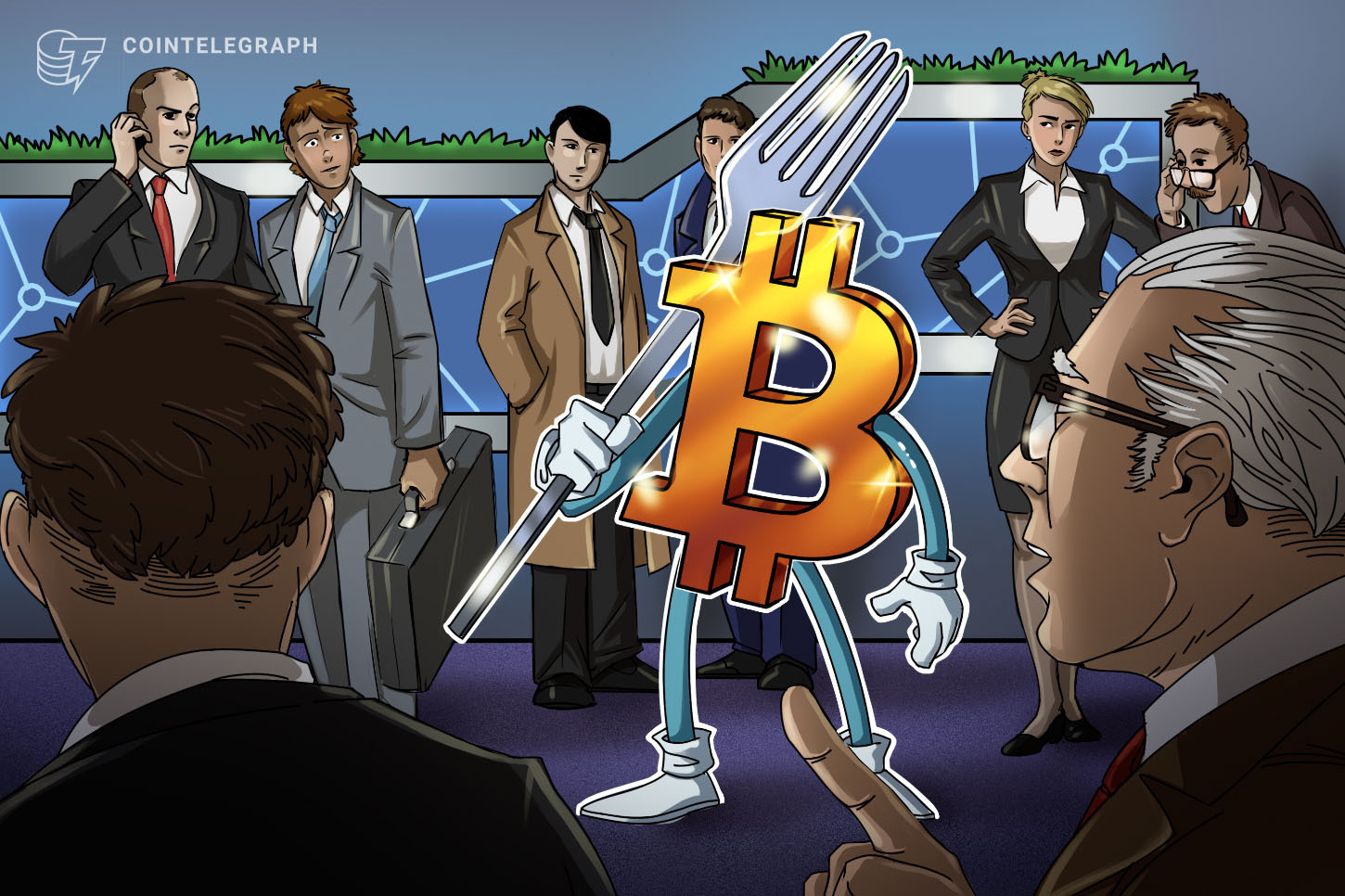
Руководитель Fundstrat считает, что биткоин будет уверенно торговаться выше $100 тыс. в этом году

cryptonews.ruPubblicato 2021-09-19Pubblicato ultima volta 2024-11-19

Том Ли, руководитель отдела исследований в Fundstrat, выражает уверенность в том, что биткоин спокойно преодолеет отметку в $100 000 к концу 2024 года.

Ли озвучил прогноз во время своего выступления на CNBC, представив свой оптимистичный взгляд на крупнейшую в мире криптовалюту. Руководитель Fundstrat предполагает, что к концу года биткоин будет спокойно торговаться выше $100 000.

Этот прогноз привлек внимание нескольких видных деятелей криптовалют, включая председателя правления MicroStrategy Майкла Сэйлора.

На момент прогноза биткоин торговался на уровне около $90 500, что указывает на то, что первенец отрасли должен вырасти на 10,49%, чтобы достичь цели в $100 000.

В феврале Ли установил свою цель на конец года для биткоина на уровне $150 000, обусловленную такими факторами, как биткоин-ETF, халвинг и снижение процентной ставки. Однако он снизил ее на 33,33% до $100 000.

Показатели Bitcoin соответствуют ожиданиям после халвинга

Кроме того, Ли подчеркнул, что текущие рыночные условия Bitcoin соответствуют тому, как актив должен вести себя после халвинга.

Исторически BTC обычно демонстрирует значительный рост после события Bitcoin Halving, которое снижает вознаграждение майнеров и уровень инфляции BTC, способствуя росту цены. Последний скачок Bitcoin до отметки в $90 000 произошел через семь месяцев после последнего события халвинга.

Другие оптимистичные прогнозы

Кроме того, Ли предсказал, что Bitcoin будет хорошо работать в течение следующих 12 месяцев. Кроме того, руководитель Fundstrat подчеркнул потенциал Bitcoin, особенно при администрации Дональда Трампа.

По его словам, Bitcoin является важным направлением экономических соображений следующей администрации, которые могут включать использование его в качестве резервного актива. Ли отметил, что этот шаг решит некоторые неотъемлемые проблемы в рамках текущей финансовой системы.

Между тем, инвесторы ожидают, что криптовалюты, включая Bitcoin, будут процветать при следующей администрации из-за замечательных обещаний Трампа для сектора.

Трамп заявил, что его администрация обеспечит наличие у США национального запаса биткоинов, что позволит стране хранить BTC в качестве резервного актива. Это соответствует проекту законопроекта о биткоинах сенатора Синтии Ламмис (республиканец от Вайоминга).

Законопроект предлагает, чтобы Америка приобрела 5% предложения биткоинов в течение следующих пяти лет. После приобретения законопроект рекомендует правительству США удерживать актив в течение как минимум 20 лет.

Предложение повысило доверие инвесторов к биткоину, и несколько компаний выпустили благоприятные прогнозы относительно актива.

Вчера Бернстайн спрогнозировал, что биткоин вырастет до 200 000 долларов к следующему году, что может быть обусловлено прокриптовалютными обещаниями Дональда Трампа, предложением США о национальном резерве биткоинов и растущим институциональным спросом.


Letture associate

How Does Codex Use a Computer? Three Entry Points and Permission Boundaries

This article explains the three primary methods for Codex to interact with a computer, each with distinct use cases, permission boundaries, and trust levels. **1. Computer Use:** This offers the broadest access, allowing Codex to visually control and interact with the graphical user interface of authorized macOS/Windows apps, system settings, and even iOS simulators. It's ideal for tasks lacking APIs or structured tools, such as operating legacy software or multi-app workflows. However, it's the slowest method and has the widest permission scope, requiring careful supervision for sensitive actions. **2. Chrome Extension:** This grants Codex access to the user's logged-in Chrome browser state, including cookies, profiles, and open tabs. It's best for tasks requiring user identity across websites like Gmail, LinkedIn, Salesforce, or internal dashboards. Its key advantage is multi-tab control for complex workflows. While more powerful for browser-based tasks than Computer Use, it carries higher sensitivity as actions are performed under the user's identity. **3. In-App Browser:** This is a browser isolated within the Codex thread, separate from the user's personal browsing data. It excels in web development and debugging scenarios—previewing local servers, testing responsive layouts, or annotating designs directly on the page. Its isolation is a strength for development but a limitation for tasks requiring login sessions. The core principle is to choose the narrowest, safest, and most structured interface for the task. Use plugins or MCPs first, resort to visual control (Computer Use) only for GUI-dependent tasks, employ the Chrome extension for identity-reliant browser work, and prefer the In-App Browser for isolated development. **Appshots** are clarified as a fourth, complementary tool for *inputting* context—capturing a screenshot of a window to point Codex to something—rather than a method for Codex to *act*. Together, this layered approach highlights a key to AI agent productization: not granting unlimited permissions, but constraining them within clear boundaries for specific tasks while preserving user oversight.

marsbit1 h fa

How Does Codex Use a Computer? Three Entry Points and Permission Boundaries

marsbit1 h fa

The "Iron Rule" of Chip Equipment Is Being Broken

For years, the semiconductor equipment industry followed an unwritten "iron rule": suppliers offered steep discounts for new tool introductions (Design-in) and faced consistent price pressure during repeat orders, especially during market downturns. This long-standing buyer's market dynamic is now being upended. Recently, SK Hynix's primary equipment suppliers have reportedly requested a 3-4% price *increase*, a nearly unprecedented move. This shift is driven by a severe supply-demand imbalance fueled by the AI compute boom. Securing equipment has become an urgent arms race as chipmakers' expansion speed dictates their ability to fulfill massive AI chip orders. Key areas feeling the strain include: **TCB (Thermal Compression Bonding) Equipment:** Demand is exploding, driven by the simultaneous needs of HBM4 memory stacking, AI chip Chip-on-Substrate (C2S), and logic Chiplet Chip-on-Wafer (C2W) packaging. Players like Hanmi Semiconductor, Hanwha Semitech, and ASMPT are receiving major orders. While hybrid bonding is seen as the future, TCB remains the pragmatic choice for HBM4 mass production, with its lifecycle extended by relaxed specifications and ongoing technological upgrades. **Test Equipment Bottlenecks:** Ironically, AI-driven shortages are now crippling test equipment manufacturing. Critical components like FPGAs, Driver ICs, and CPUs face severe shortages and extended lead times (up to 52 weeks for FPGAs), as AI data center and server vendors prioritize supply. This creates a paradoxical cycle: AI chip shortages drive fab expansion, which requires more test equipment, whose production is delayed because its key parts are diverted to make AI chips. The industry is entering a broad, AI-powered upcycle. SEMI forecasts global semiconductor equipment sales to hit a record $156 billion by 2027, fueled by investment in advanced logic/foundry, HBM-driven DRAM, and advanced packaging (like CoWoS). Major players like TSMC, SK Hynix, and Micron are aggressively ramping capital expenditure. In conclusion, leading equipment vendors are no longer just selling tools; they are selling the critical capability to deliver AI-era capacity. Pricing power is shifting decisively to those with indispensable technology in key process nodes like advanced logic, HBM, and advanced packaging, rewriting the industry's traditional power structure.

marsbit1 h fa

The "Iron Rule" of Chip Equipment Is Being Broken

marsbit1 h fa

Trading

Spot
Futures
活动图片