Предсказание цены биткоина по его редкости: что такое модель Stock-to-Flow

cryptonews.ruPubblicato 2024-01-30Pubblicato ultima volta 2024-10-30

Предсказывать цену биткоина с помощью всевозможных формул с различными параметрами пробуют довольно часто, однако успеха добиваются немногие. Модели Stock-to-Flow, основанной на редкости биткоина, удалось стать известной.

Что такое Stock-to-Flow

Модель Stock-to-Flow (SF) основана на соотношении количества криптовалюты (или любого другого товара), находящейся в обращении, к уровню ее производства. SF призвана показать, какое количество времени необходимо для выпуска текущего предложения биткоина.

Интересно, что концепция SF представляет собой показатель редкости криптоактива. При этом редкость понимается не в бытовом смысле слова, как что-то, что трудно получить. За основу берется определение криптографа Ника Сабо (Nick Szabo), который рассматривает редкость как «неподдельную бесценность». Иными словами, подразумевается, что создание каждой единицы товара, будь-то золото или биткоин, бесценно само по себе.

Как рассчитать Stock-to-Flow

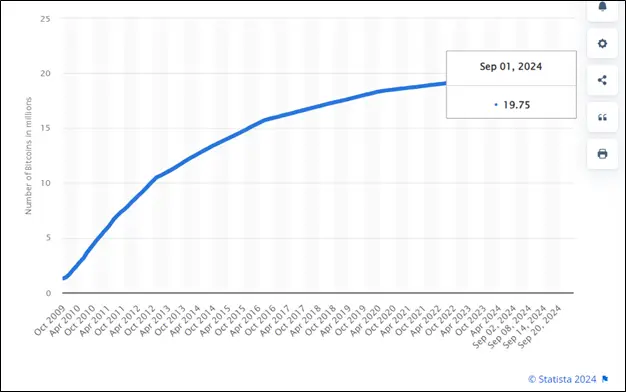
Например, 1 сентября 2024 года количество BTC в обращении составляло 19,75 млн, а 1 сентября 2023 года — 19,28 млн. Таким образом, за год было произведено 0,47 млн BTC.
2910202401.png

Источник: statista.com

В итоге мы можем посчитать SF:

SF = 19 750 000/470 000 = 42

Получается, при текущем уровне производства понадобится 42 года, чтобы достичь современного предложения. Что это дает? То, что на основе Stock-to-Flow можно рассчитать возможную стоимость биткоина.

Расчет цены

Помимо прочего, SF представляет собой функцию степенного закона. Первоначально она имела следующий вид:

Цена BTC = 0,4*SF3

Однако, после 2019 года расчет модели был пересмотрен в сторону увеличения. Новая формула выглядит так:

Цена BTC = 0,18*SF3,3

Стоит отметить, что часто различные ресурсы при расчете Stock-to-Flow используют данные не за год, а за другие периоды. Рассмотрим, где можно воочию увидеть прогноз цены биткоина на основании этой модели.

Где искать Stock-to-Flow

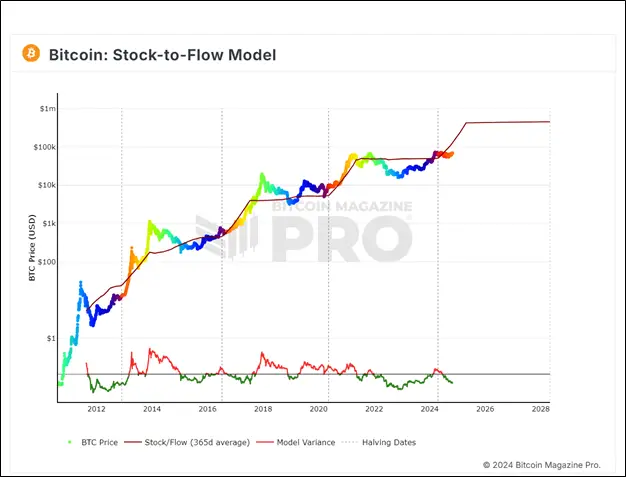
Достаточно много ресурсов предоставляют информацию по модели Stock-to-Flow. Например, в Bitcoimagazinepro приводятся данные в среднем за год, с уточнением количества дней до следующего халвинга.
2910202402.png

Источник: bitcoinmagazinepro.com

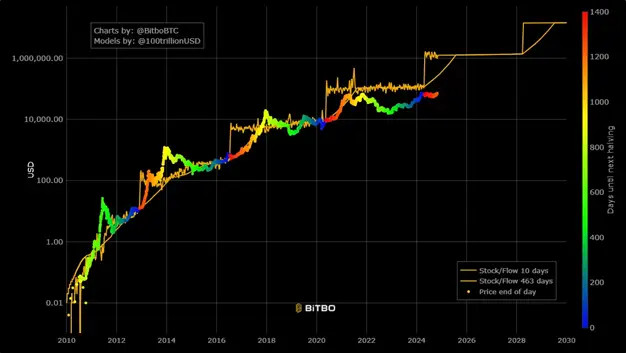
Ресурс bitbo.io приводит информацию по SF за 10 и 463 дня. При этом для первого показателя берется количество произведенного биткоина за последние 10 дней, затем оно делится на десять и умножается на 365. Таким образом, просто получается своеобразный расчет выпуска. Второе число — 463 — берется из-за исследования, которое провел инвестор и ютубер Престон Пыш (Preston Pysh). По его данным, циклы биткоина случаются приблизительно каждые 200 000 блоков в три фазы: бычью, фазу коррекции и возвратную к среднему значению. Учитывая, что на один день приходится около 144 блоков, получаем:

200 000 /3/144 = 463.
2910202403.png

Источник: charts.bitbo.io

Свой вариант есть и у Coinglass. Он более классический и схож с тем, что предлагает Bitcoimagazinepro.
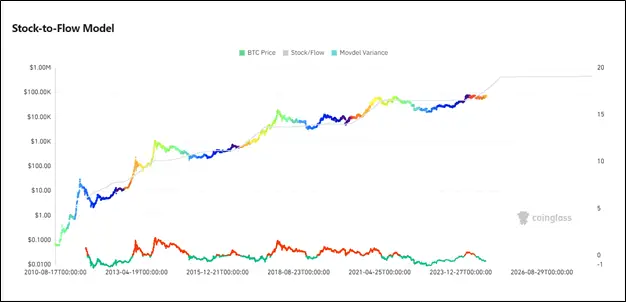
2910202404.png

Источник: coinglass.com

Если присмотреться, то внизу на графике можно увидеть линии — это еще один индикатор, который называется Stock-to-Flow Deflection.

Stock-to-Flow Deflection

Stock-to-Flow Deflection показывает расхождение между реальной ценой биткоина и расчетной по модели. Трактовка при этом следующая: если индикатор больше единицы, то BTC перекуплен и можно ожидать скорого падения; если же меньше, то он перепродан, что предвещает бычье ралли.

Кто создал Stock-to-Flow

Впервые модель была предложена 22 марта 2019 года в статье «Моделирование ценности биткоина с учетом его редкости». Ее автором стал анонимный пользователь под псевдонимом Plan B. В другой своей статье «Действенная рыночная гипотеза и модель Stock-to-Flow в биткоине» от 17 января 2022 года Plan B рассказывает, что у него за плечами более 20 лет стажа в качестве институционального инвестора, под руководством которого находились многомиллиардные счета в евро. Аналогичную информацию можно найти в аккаунте Plan B на YouTube.

Вывод

Таким образом, модель Stock-to-Flow — это еще одна попытка с помощью математики узнать будущую цену биткоина. Ее автор остается инкогнито, известен лишь его псевдоним — Plan B. Модель не повторяет цену биткоина всецело, а возникающее расхождение также имеет индикатор — Stock-to-Flow Deflection.

Данный материал и информация в нем не является индивидуальной или иной другой инвестиционной рекомендацией. Мнение редакции может не совпадать с мнениями аналитических порталов и экспертов.


Crypto di tendenza

Letture associate

Robinhood Chain Mainnet Goes Live: Can Stocks Finally Be Moved Into Wallets?

Robinhood has officially launched its public mainnet, Robinhood Chain, along with stock-like tokens, the USDG yield product, and a DeFi lending portal. This marks a significant shift where a major online broker is integrating its user interface, regulatory compliance, self-custody wallet, and on-chain protocols into a single, streamlined experience. The goal is to simplify access to stock exposure, stablecoin yields, collateralized lending, and AMM trading for mainstream users. Eligible non-U.S. users can hold these "Stock Tokens"—structured as tokenized debt securities—in the Robinhood Wallet for 24/7 exposure to assets like U.S. stocks or ETFs. U.S. users can access an estimated ~7% APY on dollar-backed USDG through the Robinhood Earn program via self-custody wallets, with lending infrastructure powered by Morpho protocol. Built as a Layer 2 on Arbitrum, Robinhood Chain leverages existing DeFi protocols like Uniswap. The core strategy is not to reinvent DeFi but to channel Robinhood's large traditional finance user base (27.4 million funded customers as of Q1 2026) into on-chain finance, lowering the technical barriers. However, key limitations exist. The stock tokens are not direct equity ownership and are unavailable in the U.S. and some jurisdictions due to regulatory constraints. The ~7% yield is variable and carries inherent DeFi risks, not guaranteed principal protection. Furthermore, while AMMs enable trading, price discovery for major stocks will likely remain anchored in traditional markets like NASDAQ for the foreseeable future. Ultimately, Robinhood Chain is an early experiment in "on-chain brokerage." Its success will depend on real-world metrics like trading volume, sustained user migration to self-custody, stable yield performance, and regulatory feedback, rather than its launch narrative.

marsbit1 h fa

Robinhood Chain Mainnet Goes Live: Can Stocks Finally Be Moved Into Wallets?

marsbit1 h fa

Circle CEO Responds to OUSD Challenge: Stablecoin Market Is 'Winner-Takes-All', Consortium Model Doomed to Fail

Circle CEO Jeremy Allaire addresses market concerns following the announcement of the Open USD (OUSD) stablecoin project backed by 140 global companies. Allaire argues the stablecoin market exhibits "winner-takes-all" dynamics due to powerful network effects. He cites USDC's near-decade lead in three key areas: 1) **Application Integration & Protocol Development**: Thousands of integrated services and protocols (like CCTP) create utility and lock-in for developers and users. 2) **Liquidity Network Effects**: A deeply embedded, globally distributed liquidity infrastructure across primary and secondary markets, built over years. 3) **Regulatory Integration**: Extensive licensing and compliance groundwork ensuring USDC's acceptance in major markets like Europe and Japan. Allaire challenges OUSD's proposed advantages. He contends that promises of free redemption, while appealing, face market realities where such models can become exit routes for other stablecoins. He also questions the feasibility of fully distributing all revenue to an alliance, stating it would "starve" the critical infrastructure investments needed for scale and utility. Furthermore, he expresses skepticism about large alliance governance models, noting they often lead to slow decision-making and misaligned incentives. While welcoming OUSD to the ecosystem, Allaire reaffirms confidence in USDC's dominant position, backed by its long-term infrastructure investments and strong partnerships, including its ongoing collaboration with Coinbase.

marsbit1 h fa

Circle CEO Responds to OUSD Challenge: Stablecoin Market Is 'Winner-Takes-All', Consortium Model Doomed to Fail

marsbit1 h fa

Circle CEO Responds to OUSD Challenge: Alliance Model Doomed to Fail, It's a 'Winner-Takes-All' Game

Circle CEO Jeremy Allaire addresses the challenge posed by the new Open USD (OUSD) stablecoin project, backed by 140 global companies. He argues that the stablecoin market exhibits "winner-take-all" characteristics, where USDC's near-decade-long lead in application integrations, global liquidity, and regulatory compliance secures its dominant position. Allaire outlines three key network effects underpinning USDC's strength: 1) Extensive integration as an internet protocol layer, 2) Deep, globally distributed liquidity networks, and 3) Deep integration with global policy and regulatory frameworks. He cites data showing USDC facilitated 80% of on-chain USD stablecoin transaction volume in Q1 2026. He directly counters OUSD's proposed advantages: 1) "Free minting and redemption" may not be sustainable against market realities, which USDC addresses via contractual mechanisms. 2) "Sharing all revenue" risks starving the infrastructure of necessary investment for growth and reliability. 3) A "consortium model" often leads to slow innovation and poor coordination compared to focused, independent operators like Circle. Allaire reaffirms Circle's strong partnership with Coinbase and notes that Circle continues to collaborate with many OUSD founding members. He concludes by welcoming OUSD to the ecosystem while expressing confidence in USDC's entrenched network advantages and continued expansion.

Odaily星球日报1 h fa

Circle CEO Responds to OUSD Challenge: Alliance Model Doomed to Fail, It's a 'Winner-Takes-All' Game

Odaily星球日报1 h fa

Trading

Spot

Articoli Popolari

Come comprare FLOW

Benvenuto in HTX.com! Abbiamo reso l'acquisto di Flow (FLOW) semplice e conveniente. Segui la nostra guida passo passo per intraprendere il tuo viaggio nel mondo delle criptovalute.Step 1: Crea il tuo Account HTXUsa la tua email o numero di telefono per registrarti il tuo account gratuito su HTX. Vivi un'esperienza facile e sblocca tutte le funzionalità,Crea il mio accountStep 2: Vai in Acquista crypto e seleziona il tuo metodo di pagamentoCarta di credito/debito: utilizza la tua Visa o Mastercard per acquistare immediatamente FlowFLOW.Bilancio: Usa i fondi dal bilancio del tuo account HTX per fare trading senza problemi.Terze parti: abbiamo aggiunto metodi di pagamento molto utilizzati come Google Pay e Apple Pay per maggiore comodità.P2P: Fai trading direttamente con altri utenti HTX.Over-the-Counter (OTC): Offriamo servizi su misura e tassi di cambio competitivi per i trader.Step 3: Conserva Flow (FLOW)Dopo aver acquistato Flow (FLOW), conserva nel tuo account HTX. In alternativa, puoi inviare tramite trasferimento blockchain o scambiare per altre criptovalute.Step 4: Scambia Flow (FLOW)Scambia facilmente Flow (FLOW) nel mercato spot di HTX. Accedi al tuo account, seleziona la tua coppia di trading, esegui le tue operazioni e monitora in tempo reale. Offriamo un'esperienza user-friendly sia per chi ha appena iniziato che per i trader più esperti.

198 Totale visualizzazioniPubblicato il 2024.12.10Aggiornato il 2026.06.02

Come comprare FLOW

Discussioni

Benvenuto nella Community HTX. Qui puoi rimanere informato sugli ultimi sviluppi della piattaforma e accedere ad approfondimenti esperti sul mercato. Le opinioni degli utenti sul prezzo di FLOW FLOW sono presentate come di seguito.

活动图片