Биткоин возобновил рост. Что произошло на рынке криптовалют

cryptonews.ruPubblicato 2024-05-04Pubblicato ultima volta 2024-10-04

Доля рынка биткоина находится на уровнях трехлетнего максимума

Курс биткоина (BTC) восстановился после падения ниже $60 тыс. Вечером 3 октября цена монета опустилась до $59,95 тыс., на 12:00 мск 4 октября она торгуется около $61,5 тыс., по данным CoinGecko.

BTC/USD

61 469 +646 (1,06%)
ОКХ Oct 04 12:57:43

За сутки BTC подорожал на 2%, за неделю подешевел на 6,1%. Доля рынка биткоина находится на уровнях трехлетнего максимума, превышая 56%, по данным Coinmarketcap.

rbc.group

Коррекция курса биткоина в начале октября до отметок около $60 тыс. привела к тому, что почти половина нереализованных убытков пришлась на долгосрочных держателей BTC. По расчетам аналитиков, на эта группа инвесторов владеет 47,4% всех убыточных монет.

В то же время, эксперты отмечают позитивный знак для первой криптовалюты: идет накопление актива, участники рынка сейчас больше покупают биткоин и выводят с бирж, чем продают.

Общая капитализация крипторынка за последние сутки практически не изменилась, она составляет $2,23 трлн. Объем торгов цифровыми активами за это время — $100 млрд.

Индекс страха и жадности на крипторынке остается в зоне «страха», но показатель вырос за сутки с 37 до 41 балла из 100.

Ethereum (ETH) за 24 часа подорожал на 2%. На 12:00 мск цена альткоина колеблется около $2,38 тыс.

ETH/USD

2 382,7 +25,2 (1,07%)
ОКХ Oct 04 12:59:06

Курсы других криптовалют из топ-10 по капитализации за прошедшие 24 часа показали рост. Сильнее других поднялась в цене Dogecoin (DOGE), за сутки она подорожала на 6,2%. Курс Toncoin (TON) вырос на 3,5%. Самый слабый подъем у Tron (TRX) — 2,1%.

Из топ-100 криптовалют по капитализации самое сильное снижение за прошедшие сутки у монеты Sui (SUI), она подешевела на 4,5%. Больше всего вырос курс криптовалюты Aptos (APT) — она поднялась в цене на 13,3%. 3 октября стало известно, что проект Aptos выходит на рынок Японии, приобретая местную компанию — разработчика блокчейнов HashPalette.

Несмотря на падение рынка криптовалют в начале октября, аналитики полагают, что курс биткоина вырастет после выборов в США. В Standard Chartered назвали просадку цен на BTC на фоне обострения ближневосточного конфликта возможностью для закупок активом.


Letture associate

Li Feifei's Latest Article: When Video Generation, Robotics, and NVIDIA All Claim to Have 'World Models,' We Need a Taxonomy

"World Model" has become a widely used yet ambiguous term in AI. Drawing from the classic POMDP framework (agent → action → state → observation), this article proposes a functional taxonomy to clarify the concept. It identifies three distinct types, categorized by their output in the perception-action loop: 1. **Renderers**: Output visual observations (pixels). These models, like advanced video generators, prioritize visual fidelity but often lack underlying physical accuracy. 2. **Simulators**: Output the state of the world (geometry, physics, dynamics). They provide a structurally accurate representation for professionals (e.g., architects) and serve as training environments for robots and AI agents. 3. **Planners**: Output actions. Given an observation and a goal, they determine what an agent should do next, closing the perception-action loop (e.g., vision-language-action models). While renderers are currently the most commercially mature and planners are the most aspirational, the article argues that **simulators are the crucial, underappreciated hub**. By working at the level of geometry and physics, a simulator can project upwards to create visuals for humans and downwards to predict action consequences for agents. The future lies in the convergence of these three functions. Emerging research and products, like World Labs' Marble model which outputs both visual splats and physical collision meshes, are beginning to blur these boundaries. The logical endpoint is a unified world foundation model capable of rendering, simulating, and planning based on a shared understanding of spatial and temporal structures—ultimately enabling machines to understand, imagine, and interact with the physical world.

链捕手3 min fa

Li Feifei's Latest Article: When Video Generation, Robotics, and NVIDIA All Claim to Have 'World Models,' We Need a Taxonomy

链捕手3 min fa

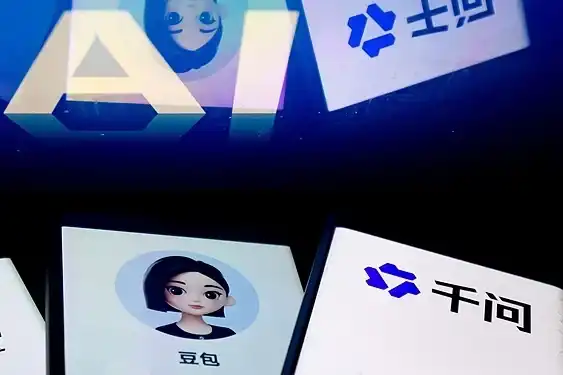
Doubao and Qwen Will Discontinue Agent Functionality on July 15

On July 4th, Doubao and Tongyi Qianwen announced the impending shutdown of their user-created "AI Agent" features. Doubao confirmed its agent feature will be taken offline on July 15, directing users to ByteDance's CatBox app for similar needs. On the same day, Tongyi Qianwen notified users, specifying that personalized interactive agents and user-built agent functions will cease on July 10, with all agent features and services completely deactivated by July 15. After this date, access to agent configurations and historical chat records will be lost. This adjustment impacts core user scenarios like role-playing, personal assistants, and vertical tool agents. The shutdown date coincides with the official implementation of China's "Interim Measures for the Administration of Artificial Intelligence Human-like Interactive Services" on July 15. The new regulations impose strict rules on "human-like emotional interaction services," requiring platforms to implement measures like anti-addiction systems, minor verification, and content moderation. This move is widely seen as a proactive step by the platforms to align with regulatory timelines and mitigate compliance risks. Additionally, commercial challenges are a key driver. Analysis suggests that casual, human-like chat agents generate high-frequency, low-value interactions, leading to high computational costs with poor monetization. As the AI application market shifts from user growth to proving value, sustaining such "high-cost, low-efficiency" user-generated content becomes difficult. Both platforms have outlined transition plans. Doubao will allow data viewing and self-backup for a period after shutdown, with data scheduled for permanent deletion by October 15. Tongyi Qianwen similarly advised users to save important content via copying or screenshots before the deadline. This strategic retreat from C-end agent features signals a broader market shift. Compliance capability and sustainable business models are replacing user scale and feature richness as the new core competitive dimensions. Tongyi Qianwen's recent move to fully open its Agent and Skill platforms to third-party enterprises and developers further underscores a strategic pivot from low-value C-end services to high-value B-end enterprise scenarios.

marsbit3 h fa

Doubao and Qwen Will Discontinue Agent Functionality on July 15

marsbit3 h fa

Why Did Codex and ChatGPT Merge? What's Next for Codex? OpenAI Core Leader Answers Everything

In 2026, OpenAI's Codex saw explosive growth, with weekly active users surging over 5x to 5 million since January, driven largely by the February launch of its desktop app. Codex desktop lead Andrew Ambrosino explains key shifts behind its evolution. A core change is the inversion of development costs: implementation is now cheap, while curation and taste—judging which of many AI-generated prototypes is valuable—have become the new scarcities. Ambrosino defines taste as a blend of aesthetics, systems thinking, direction, and semantic coherence in interaction. He notes AI still struggles with design because evaluating it requires human cultural context and abstract reasoning about how components relate—capabilities beyond current models. Timing is critical: the same Codex app would have failed months earlier; success hinges on the model's capabilities at launch. Roles are blurring within his team, with engineers, designers, and PMs overlapping significantly. However, Ambrosino cautions against eliminating specialized roles entirely, as each field retains deep expertise. On AI-assisted development, the focus has shifted from measuring code written by AI to distinguishing between supervised and unsupervised generation. A current challenge is teaching models to simplify code, not just add complexity. The merger of Codex and ChatGPT stems from observed user behavior: non-developers adopted Codex for general knowledge work despite its developer-centric interface. This revealed a collapsing boundary between specialized tools and universal assistants. The vision is a "home base" that orchestrates tasks across external professional tools (like Excel or Premiere Pro) via connectors, rather than rebuilding everything internally. An internal example showed Codex helping edit video by interacting with Premiere Pro's files and even writing a plugin for it. The future direction is a unified, extensible platform that serves as a central hub for automating and managing work across any specialized tool the user employs.

marsbit3 h fa

Why Did Codex and ChatGPT Merge? What's Next for Codex? OpenAI Core Leader Answers Everything

marsbit3 h fa

Trading

Spot
活动图片