Сколько потеряла криптоиндустрия в III квартале — Immunefi

cryptonews.ruPubblicato 2023-11-28Pubblicato ultima volta 2024-09-28

Главная цель хакерских атак — сектор децентрализованных финансов (DeFi). Однако наибольшие потери чаще несут централизованные площадки

По данным Immunefi, в третьем квартале этого года ущерб криптоиндустрии от хакеров и мошенников составил $412 млн.

Как хакеры провели III квартал 2024 года

На первый взгляд $413 млн кажутся огромной суммой. Однако специалисты по безопасности из Immunefi отмечают, что в отрасли заблокировано почти $90 млрд, что делает эти потери относительно незначительными.

Читайте также: Во II квартале потери криптопроектов от взломов и скама подскочили на 113%
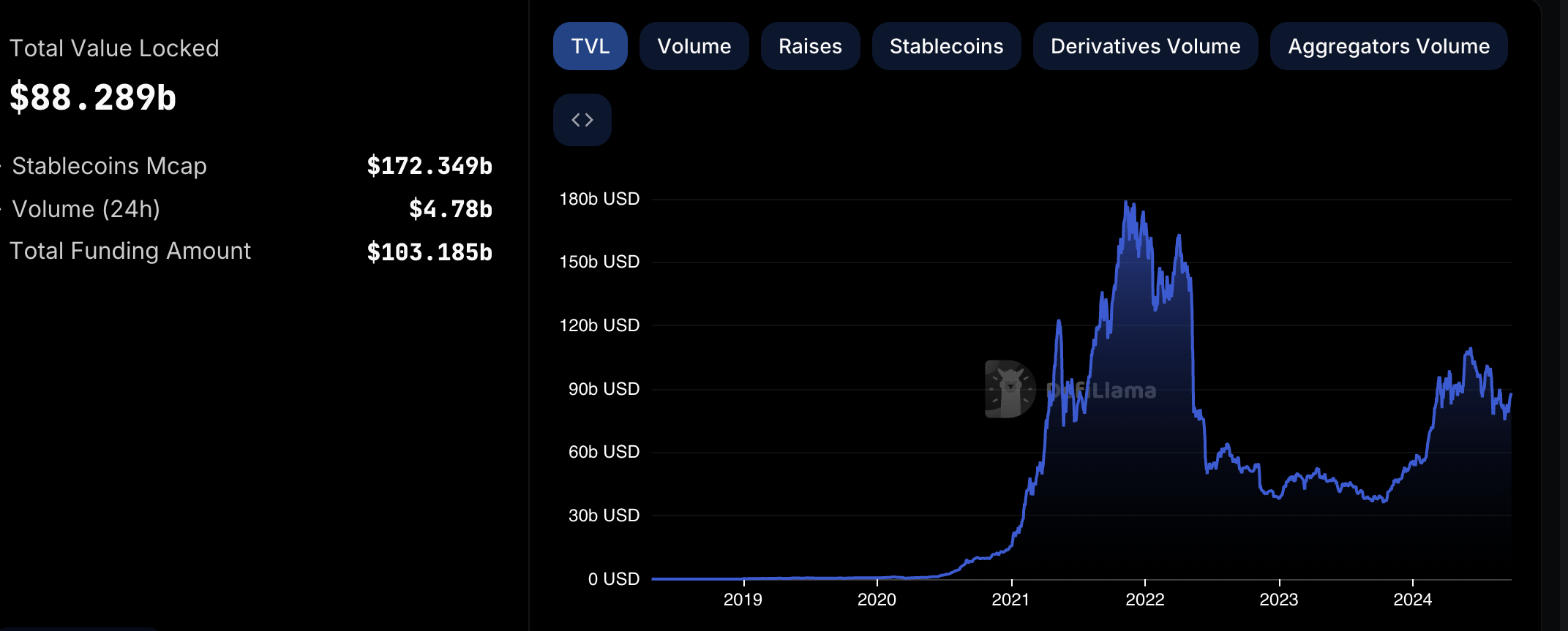
Общая заблокированная стоимость криптовалют. Источник: DefiLlama

По словам экспертов, ситуация с безопасностью в криптоиндустрии улучшается. Для сравнения, во втором квартале этого года потери составили $572 млн, а в третьем квартале прошлого — $685 млн.

С начала 2024 года общая сумма ущерба от хакерских атак сократилась практически на 40%. Более 99% потерь пришлось именно на взломы — $409 млн.

Одна из крупнейших атак за последние три месяца произошла всего за несколько дней до публикации отчета. На этой неделе неизвестные взломали криптобиржу BingX, похитив $52 млн. Самым масштабным инцидентом стал хак WazirX. Индийская торговая площадка потеряла $235 млн.

Тем временем количество мошенничеств в отрасли цифровых активов снизилось на 86% за последний год. В третьем квартале в результате фишинговых атак криптоиндустрия лишилась только $3 млн.

Самыми атакуемыми блокчейнами остаются Ethereum и BNB Chain. За ними следуют Base, Blast, Arbitrum и Solana.

Читайте также: Топ-5 угроз криптобезопасности — как хакеры атакуют блокчейны

По словам специалистов Immunefi, DeFi — по-прежнему главная цель злоумышленников. В сфере централизованных финансов инцидентов значительно меньше. Однако последствия атак часто намного серьезнее.

«Мы видим больше инцидентов, связанных с DeFi, в то время как в CeFi их меньше, но последствия часто более серьезные. Хакеры крадут сотни миллионов долларов за раз. В CeFi главная проблема — управление приватными ключами, что критически важно для самостоятельного хранения криптоактивов, но часто не проверяется на безопасность», — отметил Митчелл Амадор, генеральный директор Immunefi.

В третьем квартале 2024 года удалось вернуть только $14,9 млн. Это составило 3,6% от общего объема потерь за три месяца.


Letture associate

In the AI Era, What's Left for Bitcoin?

As Bitcoin falls below $60,000, the author reflects on the relationship between AI and Bitcoin, seeing them as two sides of the same coin. In the AI era, the cost of generating content has plummeted, making fake text, images, and videos increasingly easy and cheap to produce. This has led to a fundamental shift: while AI dramatically lowers the cost of information production, it also undermines trust and authenticity online. What becomes truly valuable is not more content, but the ability to verify what is real—"verifiability." This perspective offers a new lens for Bitcoin. Its massive energy consumption, often criticized as wasteful, is reinterpreted. While AI burns energy to enhance "capability" and efficiency, Bitcoin burns energy to produce "verifiability." Its purpose is not to be trusted but to enable a system where no trust in intermediaries—banks, platforms, or developers—is needed. Every transaction and the entire ledger's history is secured by cryptography and a decentralized network of nodes, making it independently verifiable. AI cannot forge a transaction on the Bitcoin network because the system is designed for proof, not generation. The author draws a historical parallel to the Renaissance: the printing press drastically reduced the cost of copying knowledge, while double-entry bookkeeping reduced the cost of trust in commerce. Today, AI is the new printing press, reducing content creation costs to near zero. Blockchain, and Bitcoin as its pioneer, may be the modern equivalent of double-entry bookkeeping—a foundational technology for verifying digital asset ownership and historical records without centralized authorities. Thus, AI and blockchain are not competitors. AI lowers the cost of creation; blockchain lowers the cost of verification. In an age where AI can generate anything, true scarcity may lie not in more content, but in independently verifiable facts. Whether the market will reprice Bitcoin accordingly remains uncertain, but its core value proposition as a "machine for producing verifiability" becomes strikingly relevant.

marsbit1 h fa

In the AI Era, What's Left for Bitcoin?

marsbit1 h fa

In the Age of AI, What's Left for Bitcoin?

Author: Sevclub, Seven Research Amid Bitcoin's recent drop below $60k, the author reflects on a growing sense that AI and Bitcoin are two sides of the same coin. Today, encountering any content triggers a new default question: "Was this made by AI?" The cost of generating convincing text, images, and video is now negligible. While the internet lowered information *distribution* costs, AI is crashing information *production* costs to near zero. The consequence is a flood of content where truth and falsehood are increasingly indistinguishable. In this environment, what becomes truly valuable is not more information, but the ability to verify what is real—"verifiability." This reframes the common criticism that Bitcoin "wastes electricity." AI consumes power to produce "capability" (e.g., more powerful models). Bitcoin consumes power to produce something else: "verifiability." Bitcoin's core purpose isn't about belief or trust in any institution, developer, or even its creator. It's about enabling independent verification. Every bitcoin's origin, every transaction, and the integrity of the entire ledger are secured by mathematics, cryptography, and a global network of nodes. AI can fabricate convincing media, but it cannot falsify a transaction on the Bitcoin network. The expended energy makes篡改历史 (tampering with history) prohibitively expensive, purchasing a globally verifiable ledger. The author draws a historical parallel to the Renaissance. The printing press drastically reduced the cost of copying knowledge, while double-entry bookkeeping reduced the cost of trust in commerce—one enabled creation, the other verification. Today, AI is the new printing press, driving content production costs toward zero. The question becomes: what is this era's "double-entry bookkeeping"? Blockchain appears to be the leading candidate. It doesn't verify which news is true or which image is real, but it provides a foundational layer for independently verifying asset ownership and historical records in the digital realm without centralized authorities. Therefore, AI and blockchain are not in competition. AI lowers the cost of *generation*. Blockchain (and Bitcoin as a prime example) lowers the cost of *verification*. One creates, the other proves. Whether Bitcoin ultimately succeeds remains uncertain, facing potential challenges from quantum computing, regulation, and technical evolution. However, the author now sees it less as a "machine for making bitcoin" and more as a "machine for making verifiability." In an age where AI can generate anything, true scarcity may no longer be "more content," but "more independently verifiable facts." Whether the market will price this accordingly is a separate question.

链捕手1 h fa

In the Age of AI, What's Left for Bitcoin?

链捕手1 h fa

Trading

Spot
活动图片