10 月最值得投资的加密货币, 预计收益超过 100% – SOL、XRP、TON

金色财经Pubblicato 2024-09-27Pubblicato ultima volta 2024-09-27

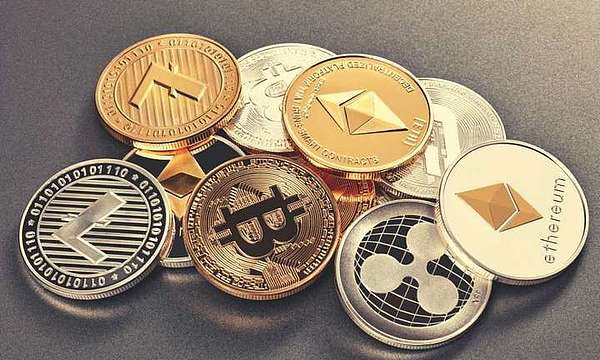
加密货币社区正准备迎接 10 月份的潜在反弹,也称为 Uptober,以看涨的价格走势而闻名。分析师预测,以下山寨币——Solana (SOL)、Ripple (XRP) 和 IntelMarkets 将在本月飙升。
v2-db4acf47784850dd9b49527ca95bc2ff_720w.jpg

Solana (SOL) 和 Ripple (XRP) 的价格在未来几周内可能飙升至 200 美元和 0.7343 美元,而IntelMarkets的价格预计也会大幅上涨。分析师表示,IntelMarkets 的价格在未来几个月内可能会飙升 200%。

Virtune 推出 Solana (SOL) ETP 产品

瑞士数字资产管理公司 Virtune 宣布将在阿姆斯特丹泛欧交易所推出 Virtune Staked Solana (SOL) 交易所交易产品。这款 ETP 为投资者跟踪 Solana (SOL) 的价格,并为交易产品带来额外的质押收入。

ETP 的年管理费为 0.95%,代表着 Virtune 在加密货币投资领域的持续扩张。另外,Solana 的价格在过去一周表现出显著的复苏,飙升至 50-SMA(141.84 美元)和 200-SMA(146.39 美元)。

几个月前,Solana 加密货币测试了 120 美元的支撑位。目前,市场已经恢复了积极势头,加密货币的价值正在上涨。如果这种上涨趋势持续下去,分析师预计 Solana 代币价格将在 10 月突破 200 美元大关。

XRP

尽管过去几周瑞波币 (XRP) 交易横盘整理,但它仍然受到巨额投资者的关注。CryptoWuant的最新数据显示,9 月 23 日,超过 2.52 亿 XRP 从加密货币交易所被提取。

此次大规模撤资表明投资者的看涨情绪和抛售压力有所减轻。分析师认为,瑞波币 XRP 从交易所撤出可能导致未来几周出现看涨势头。

目前,瑞波币的价格正在50-SMA(0.567861 美元)和 200-SMA(0.550068 美元)上方盘整,这是一个看涨信号。他们表示,瑞波币价格(美元)可能会在 10 月份出现上涨,飙升至 0.7343 美元的峰值。然而,任何看跌的价格走势都会使这一预测失效,DeFi 代币可能会跌破 50-SMA。

Toncoin 概述和未来价格预测

Toncoin (TON) 是一种与开放网络 (TON) 挂钩的加密货币,TON 是 Telegram 最初创建的去中心化区块链。在 Telegram 因法院命令停止参与后,TON 基金会继续运营该网络。它使用权益证明模型来支持安全、高效且费用低廉的交易。该网络旨在提供各种去中心化服务。对 Toncoin 价格的预测显示未来几年可能会上涨。2025 年,价格可能在 6.45 美元至 30.30 美元之间,而到 2030 年,价格可能在 16.06 美元至 26.04 美元之间。这些预测基于过去的价格趋势和比特币的市场周期。

总结

根据当前的加密货币市场情绪,目前最值得投资的代币是 Solana (SOL)、Ripple (XRP) 和 IntelMarkets。这三种代币目前都是市场上表现最好的代币,并且可能在未来一个月为持有者带来更多收益。


Letture associate

Wall Street Takes Over Bitcoin and Stablecoins, But Where Are the Real Profit Opportunities for Retail Investors?

Wall Street is taking over Bitcoin and stablecoins, but where can retail investors really make money now? The common narrative is that Wall Street's dominance via ETFs and regulated stablecoins has structurally ended the era of easy 100x returns from altcoins. While this is true for Bitcoin and stablecoins, which are becoming traditional financial products, it's only half the story. Other crypto sectors are failing for their own reasons. GameFi is largely dead, with 93% of projects failed. NFTs are at multi-year lows with most collections losing all value. Memecoins persist but overwhelmingly benefit insiders and whales at the expense of late retail buyers. These sectors aren't being consumed by TradFi; they've exhausted their growth narratives. The real opportunities for retail in the next 6-12 months lie elsewhere: 1. **Prediction Markets:** Platforms like Polymarket have seen explosive growth (21x in a year) with a genuine, active retail user base. The utility of forecasting events provides sustainable demand beyond mere speculation. 2. **DeFi Yield:** While the era of 1000% APY farms is over, sustainable yields of 4-8% are available through liquid staking, regulated stablecoin platforms, and RWA lending. 3. **Select Altcoins:** If Bitcoin breaks its all-time high, a selective altcoin season could emerge. The favorable bets would be on ETH, assets within the Base and Solana ecosystems with real users, and asymmetric opportunities in AI-crypto and DePIN presales. The most likely market scenario (45% probability) is sideways action, making asset selection far more critical than broad market momentum. The playbook has changed. Actionable steps: Focus time on prediction markets; use DeFi for reliable yield, not lottery tickets; only buy altcoins with genuine user bases; and avoid GameFi, random NFTs, and new memecoins. The "TradFi is eating crypto" story misses the growing sectors. The easy money era is over, leaving a niche, selective market that requires real understanding, but opportunities remain for those who adapt.

marsbit4 min fa

Wall Street Takes Over Bitcoin and Stablecoins, But Where Are the Real Profit Opportunities for Retail Investors?

marsbit4 min fa

A Trillion-Dollar Frenzy for Memory Sellers, Halved Profits for Memory Buyers

Summary: A stark divide has emerged in the tech industry. While memory chipmaker Micron's stock soared 19% in a single day, pushing its market cap over $1 trillion, smartphone manufacturer Xiaomi reported a 43% plunge in adjusted net profit. The core driver is a severe supply crunch in memory chips, particularly for AI applications. Wall Street analysts, led by UBS and its unprecedented 204% target price hike for Micron, argue that long-term agreements (LTAs) from AI cloud giants are fundamentally ending the sector's notorious boom-and-bust cycles, justifying a re-rating from cyclical to infrastructure-like valuations. However, the "storage" market is now fragmented into three tiers. The first, AI-grade memory like HBM and server DDR5, faces extreme shortages and soaring prices driven by massive cloud capex. The second, mobile memory for smartphones, is also seeing sharp price hikes as manufacturers like Xiaomi are forced to pay more for remaining capacity, severely squeezing their margins. The third, PC retail channels, shows price declines due to existing inventory. The article questions the sustainability of the "supercycle" narrative. It highlights that Micron's revenue surge is driven almost entirely by price increases, not shipment volumes, making it vulnerable to a potential demand slowdown. While LTAs may dampen volatility, history suggests they are often tested during downturns. The current peak earnings, used to justify high valuations, represent a classic cyclical top. The piece concludes with a note of caution: when the entire Street chants "this time is different," it's wise to remember past bubbles, even as it acknowledges AI demand may indeed be structural.

marsbit1 h fa

A Trillion-Dollar Frenzy for Memory Sellers, Halved Profits for Memory Buyers

marsbit1 h fa

This New Generation of US Stock Trading Gods No Longer Read Financial Reports

The new generation of "stock gods" in the 2026 US AI bull market are not analyzing traditional financial reports. Instead of focusing on giants like NVIDIA, figures like the 22-year-old Leopold Aschenbrenner (who reportedly turned $200M into $14B) and influencers like Serenity on platforms like Reddit's WallStreetBets, X, and Substack are gaining fame and returns by targeting obscure, low-cap "micro-cap" stocks. Their strategy, dubbed "supply chain sniping," involves identifying critical, often monopolistic, bottlenecks in the AI hardware supply chain—such as specific materials or components essential for giants like Google and NVIDIA—that are missed by mainstream Wall Street analysts. Serenity's call on AXTI, a $700M company supplying indium phosphide substrates crucial for photonics and optical interconnects, saw the stock soar from ~$12 to nearly $150. Similarly, accounts like KawzInvests and PhotonCap focus on thematic, supply-chain-driven research in areas like AI infrastructure, optics, and cloud services for SMEs, bypassing traditional valuation metrics. This shift represents a cultural move away from Warren Buffett-style value investing based on deep financial statement analysis. The new approach thrives on low liquidity, early narratives, and strong community propagation on social media, similar to meme stocks or crypto. However, this "attention economy" strategy carries risks: it depends on sustained information gaps, the underlying companies' ability to deliver fundamental results, and the potential for crowded, volatile exits as narratives shift. The trend also shows crypto traders applying their narrative-sensing skills to US micro-caps, marking a significant evolution in trading culture.

marsbit1 h fa

This New Generation of US Stock Trading Gods No Longer Read Financial Reports

marsbit1 h fa

Trillion-Dollar Euphoria for Memory Sellers, Halved Profits for Memory Buyers

Title: The Trillion-Dollar Memory Seller's Carnival vs. The Buyer's Halved Profits On May 26, a stark contrast unfolded. While memory chipmaker Micron's market cap surged past $1 trillion, smartphone maker Xiaomi reported plummeting profits. Xiaomi's Q1 2026 profits fell 43% year-on-year. Executive Lu Weibing cited memory prices quadrupling from last year, adding roughly $210 to a phone's cost. To survive, Xiaomi is cutting entry-level models, sacrificing volume. Micron's stock, however, skyrocketed over 19% in a day, capping an 8x gain in a year. Major banks like UBS and JPMorgan issued bullish reports, raising price targets drastically. Their core thesis: Long-Term Agreements (LTAs) with AI cloud giants (Microsoft, Google, etc.) are eliminating the memory industry's notorious boom-bust cycle. By locking in fixed-price, multi-year contracts for AI-grade memory (HBM, server DDR5), these deals promise stable, utility-like earnings, justifying a higher valuation (20-30x P/E vs. the historical 8-15x). The article reveals a three-tiered memory market in 2026: 1) **AI Storage (HBM/DDR5/Enterprise SSD)**: Extreme shortage, soaring prices, LTAs. This is Micron's story. 2) **Mobile/Embedded Memory**: Also facing sharp price hikes as AI production crowds out capacity, severely pressuring phone makers like Xiaomi. 3) **PC Retail**: Some spot prices are falling due to channel inventory liquidation, creating a divergence from contract markets. The author questions if LTAs truly end the cycle. It hinges on sustained, hyper-growth AI demand. Micron's current profits are at a cycle peak, driven mostly by price hikes, not volume. If AI capital expenditure growth slows, the massive industry capacity expansion (e.g., Micron's $250B+ CapEx plan) could lead to a glut. Historically, using peak-cycle earnings for valuation is a classic trap. While the AI-driven structural shift might be real, the unanimous Wall Street euphoria warrants caution, echoing past bubbles like Cisco's in 2000. The memory seller's trillion-dollar狂欢 (carnival) continues, but the cycle's shadow remains.

链捕手1 h fa

Trillion-Dollar Euphoria for Memory Sellers, Halved Profits for Memory Buyers

链捕手1 h fa

Trading

Spot
Futures

Articoli Popolari

Come comprare TON

Benvenuto in HTX.com! Abbiamo reso l'acquisto di The Open Network (TON) semplice e conveniente. Segui la nostra guida passo passo per intraprendere il tuo viaggio nel mondo delle criptovalute.Step 1: Crea il tuo Account HTXUsa la tua email o numero di telefono per registrarti il tuo account gratuito su HTX. Vivi un'esperienza facile e sblocca tutte le funzionalità,Crea il mio accountStep 2: Vai in Acquista crypto e seleziona il tuo metodo di pagamentoCarta di credito/debito: utilizza la tua Visa o Mastercard per acquistare immediatamente The Open NetworkTON.Bilancio: Usa i fondi dal bilancio del tuo account HTX per fare trading senza problemi.Terze parti: abbiamo aggiunto metodi di pagamento molto utilizzati come Google Pay e Apple Pay per maggiore comodità.P2P: Fai trading direttamente con altri utenti HTX.Over-the-Counter (OTC): Offriamo servizi su misura e tassi di cambio competitivi per i trader.Step 3: Conserva The Open Network (TON)Dopo aver acquistato The Open Network (TON), conserva nel tuo account HTX. In alternativa, puoi inviare tramite trasferimento blockchain o scambiare per altre criptovalute.Step 4: Scambia The Open Network (TON)Scambia facilmente The Open Network (TON) nel mercato spot di HTX. Accedi al tuo account, seleziona la tua coppia di trading, esegui le tue operazioni e monitora in tempo reale. Offriamo un'esperienza user-friendly sia per chi ha appena iniziato che per i trader più esperti.

1.7k Totale visualizzazioniPubblicato il 2024.12.10Aggiornato il 2025.03.21

Come comprare TON

Discussioni

Benvenuto nella Community HTX. Qui puoi rimanere informato sugli ultimi sviluppi della piattaforma e accedere ad approfondimenti esperti sul mercato. Le opinioni degli utenti sul prezzo di TON TON sono presentate come di seguito.

活动图片