DZ Bank и Boerse Stuttgrart заключили партнерское соглашение

cryptonews.ruPubblicato 2022-05-19Pubblicato ultima volta 2024-09-19

Крупный банк из Германии DZ Bank заключил партнерское соглашение с сервисом Boerse Stuttgrart. Это позволит 700 корпоративным кредитным учреждениям под эгидой DZ Bank предоставлять своим клиентам доступ к цифровым активам. Ориентировочно развертывание новой платформы начнется уже в конце этого года. Но на раннем этапе воспользоваться услугой смогут только избранные клиенты. Операционные и технические элементы новой услуги уже реализуются, а подключение первых банков планируется к концу 2024 года.

Ожидается, что по результатам тестов и опроса участников состоится полноценный запуск сервиса. Помимо этого Штутгартская фондовая биржа сосредоточиться на обеспечении правовой инфраструктуры и технических элементов. Ранее в апреле этого года представители Landesbank Baden-Württemberg сообщили о том, что в скором времени они предложат клиентам решения по хранению цифровых активов.

При этом поддержку будет оказываться криптовалютной биржей Pitpanda. Партнерство с Bitpanda позволит федеральному банку получить соответствующую лицензию, которая необходима для ведения профильной деятельности. Ранее сотрудники банка Bernstein проанализировали ситуацию на криптовалютном рынке.

Они считают, что в скором времени можно ожидать планомерного восстановления доходности сегмента DeFi. Профильные протоколы позволяют участникам торгов использовать стейблкоины и получать пассивный доход.

Следует отметить, что пик популярности данных инструментов пришелся на 2020 год, после чего начался спад. Однако в 2024 году данный сегмент начал активно восстанавливаться. По мнению специалистов, ключевую поддержку децентрализованным протоколам окажет смягчение монетарной политики ФРС. И по итогам вчерашнего заседания регулятор действительно снизил ключевую ставку.
Letture associate

A Chip Company Releases AIDC Energy Storage Certification Standards. Why NVIDIA? Computing Power Reshapes Power Supply Logic. Who's in the Lead and Who's Left Out?

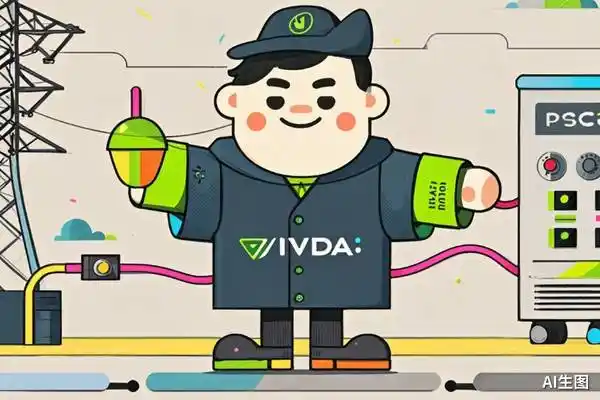
NVIDIA has released a "Battery Energy Storage System Self-Certification Guide," setting strict technical standards for energy storage systems specifically for AI data centers (AIDC). The guide focuses solely on certifying the Power Conversion System (PCS), not the batteries, with 10 mandatory performance metrics and 12 validation tests requiring real-world and simulation comparisons. Key requirements include rapid dynamic response to AI workloads, high-frequency system telemetry, and detailed electromagnetic transient models. The move is driven by the extreme and fluctuating power demands of next-generation AI hardware. Modern AIDCs require energy storage systems to act as intelligent, controllable grid assets, not just passive backup, to manage instantaneous, massive power load shifts that traditional UPS systems cannot handle. This redefines the competitive landscape for energy storage providers, shifting focus from capacity and cost to advanced control capabilities and system integration. While the market potential is significant—with forecasts of hundreds of GWh in new demand by 2030—the certification creates a high barrier to entry. It requires proven PCS delivery volumes and credible plans for rapid capacity scaling, favoring established, well-resourced players. Early movers like Fluence (partnering with Siemens) and several Chinese companies have secured projects ahead of the standard, but new entrants must now navigate this rigorous, costly, and time-intensive certification process to compete in the AIDC energy storage market.

marsbit28 min fa

A Chip Company Releases AIDC Energy Storage Certification Standards. Why NVIDIA? Computing Power Reshapes Power Supply Logic. Who's in the Lead and Who's Left Out?

marsbit28 min fa

After Missing the 20x, I've Found a 'Dumb' Method for AI Investing

**Missing the 20x Opportunity: A Simple 'Dumb' Approach to AI Investing** The AI boom, driving NVIDIA's revenue from $60B to $216B in two years, creates immense investment pressure. However, like the internet bubble of 2000, the largest AI opportunities likely lie ahead, perhaps after a correction. Instead of rushing in now or waiting paralyzed for a crash, the author proposes a third way: building a "knowledge warehouse" by systematically mapping the AI industry to be ready when opportunities arise. The core of the strategy is understanding AI's four-layer value chain: 1. **Compute Infrastructure (The "Engine"):** This foundational layer, where all money eventually flows, includes: a) **Chip Design:** NVIDIA's dominance via its CUDA ecosystem, b) **Chip Manufacturing/Packaging/Memory:** TSMC's near-monopoly in advanced manufacturing and SK Hynix's lead in High Bandwidth Memory (HBM), c) **Optical Interconnects:** Essential for large-scale AI clusters (e.g., Lumentum, Coherent), d) **Cooling & Power:** Critical for high-density AI data centers (e.g., Vertiv), e) **Servers/Data Centers & Cloud Platforms:** The physical and virtual wholesale providers. 2. **Models & Tools (The "OS"):** The competitive layer of foundation models (OpenAI, Anthropic, Google, Meta, xAI), now generating real revenue. A key shift is the center of gravity moving from **Training** models to **Inference** (running models), which demands different chip characteristics and could challenge NVIDIA's monopoly. 3. **Middleware & Platform ("The Glue"):** Connects models and applications (e.g., Scale AI, Hugging Face). This layer could explode if applications take off. 4. **Vertical Applications ("The Cash Register"):** Where AI meets end-users (e.g., enterprise AI, coding tools, medical AI, robotics). A critical cross-cutting constraint is **Energy**, as AI's massive power consumption drives investment in nuclear and other energy infrastructure. The author identifies four key questions for further research: 1) How will the shift from Training to Inference reshape the competitive landscape? 2) With tech giants spending over $600B on capex, where is the ROI from AI applications? 3) What are the under-the-radar opportunities in the "second" and "third" circles of the value chain (e.g., cooling, specialty foundries)? 4) How will geopolitics (e.g., U.S.-China chip restrictions) bifurcate the supply chain? The conclusion is that missed opportunities stem from insufficient research, not slow timing. By methodically studying each layer—its business models, competition, and valuations—investors can build the "killer intuition" needed to act decisively when the market presents its chance.

marsbit49 min fa

After Missing the 20x, I've Found a 'Dumb' Method for AI Investing

marsbit49 min fa

Trading

Spot
Futures
活动图片