解读 Messari 代币解锁报告:新增 5% 的流通量会显著影响币价,11 月第 1 周将出现最大解锁

深潮Pubblicato 2024-09-18Pubblicato ultima volta 2024-09-18

有些趋势值得注意,比如,高度期待的大规模解锁可能会引发意外的市场反应。

作者:Stacy Muur

编译:深潮TechFlow
几周前,Messari 发布了他们的深入报告《不要低头:应对解锁的市场策略》,该报告分析了流通供应增加对市场的影响。

本文总结了他们研究的主要发现,并提供了关于跟踪解锁事件的背景信息和建议。

Messari 的报告:主要亮点

Messari 的分析师分析了 41 种资产的 619 次解锁事件的数据,以识别市场对流通供应增加的反应模式。大多数事件涉及流通供应的增加不足 2.5%,而超过 5% 的解锁事件不到一半。
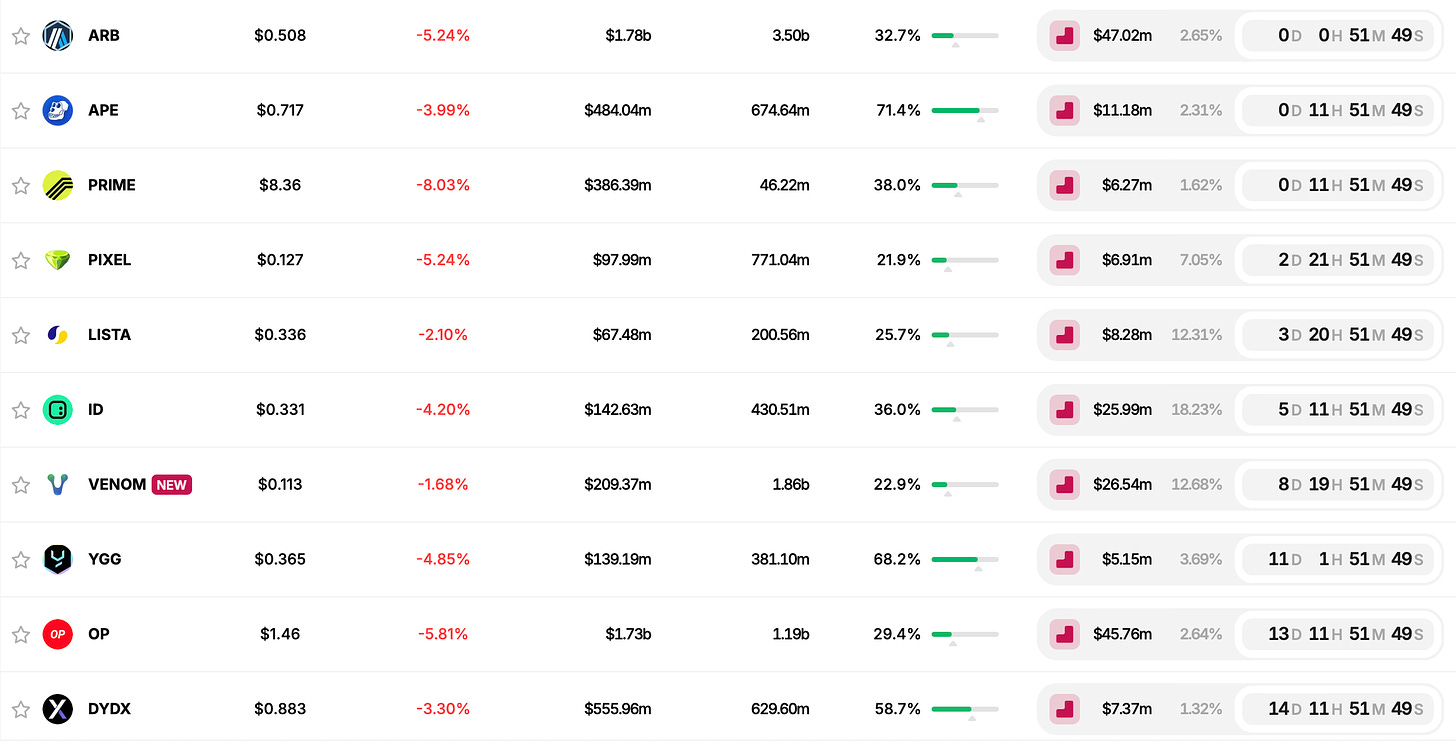
数据来源:Token Unlocks,截至 9 月 16 日的数据

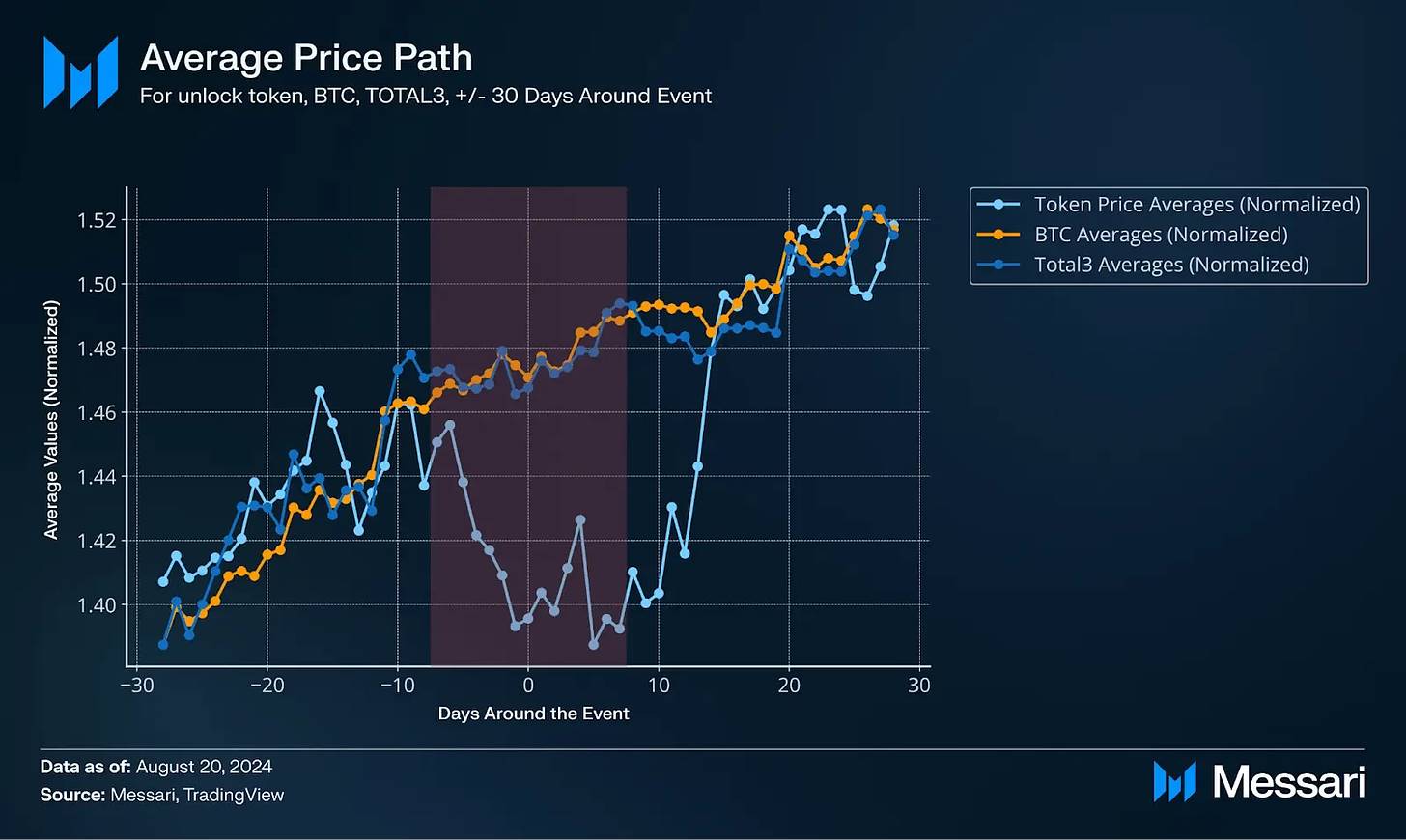
加密代币很少单独交易,它们的价格受到市场情绪、新产品发布和叙事变化等因素的影响。尽管代币解锁通常对代币价格相对于 BTC 有负面影响,但情况并非总是如此。
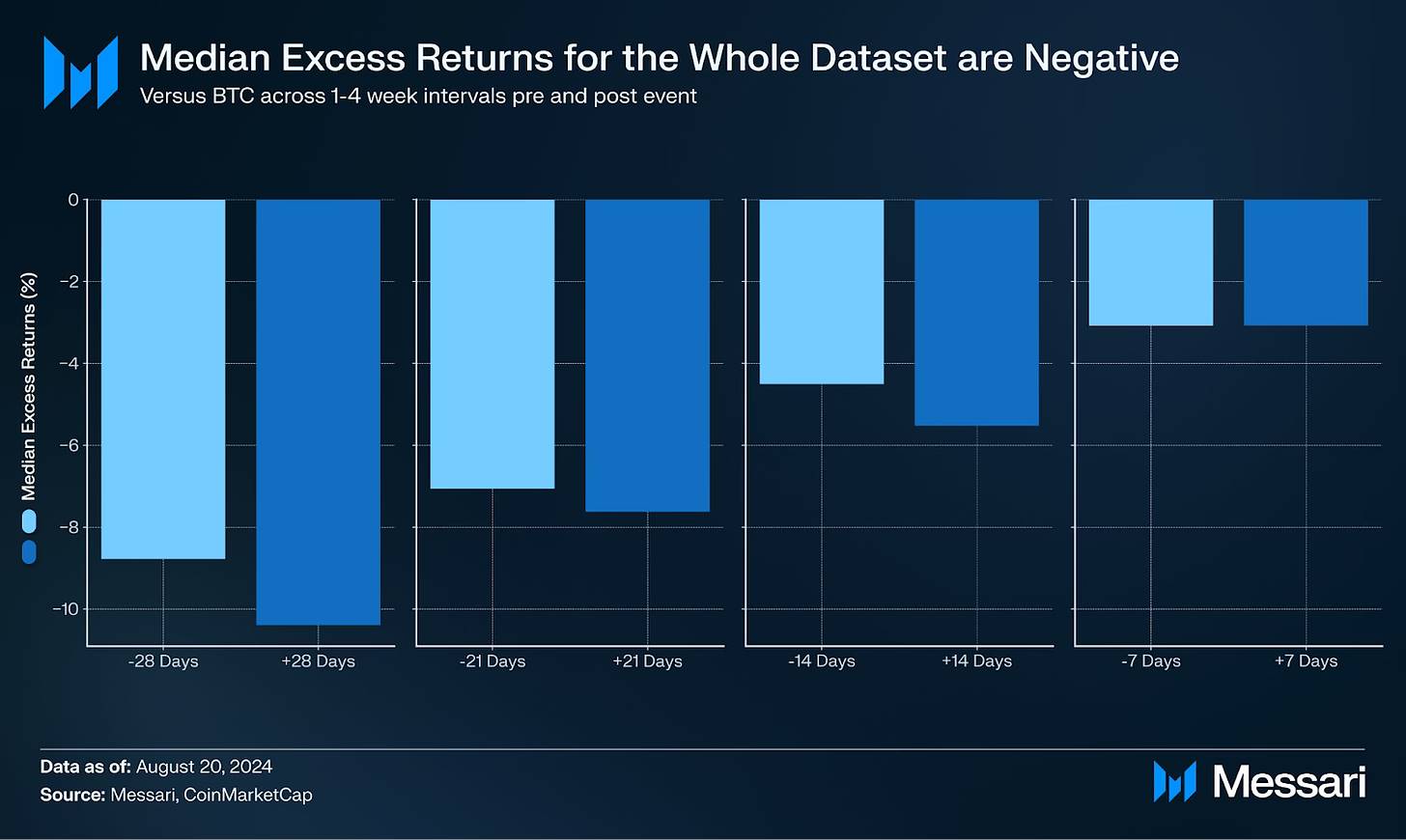
不过,有些趋势值得注意:

  • 至少 5% 的流通供应解锁往往会显著影响代币的表现;

  • 代币通常在解锁事件前后七天内表现较差;

  • 新产品发布、行业表现优异和其他催化因素可以影响解锁日期周围的典型行为;

  • 高度期待的大规模解锁可能会引发意外的市场反应;

  • 每月有大量解锁的代币在长期内难以超越其他山寨币;

跟踪解锁事件

在跟踪解锁时,我常用 Messari 仪表板。不过,其他值得注意的解锁追踪工具还包括 Token UnlocksDefiLlama.。

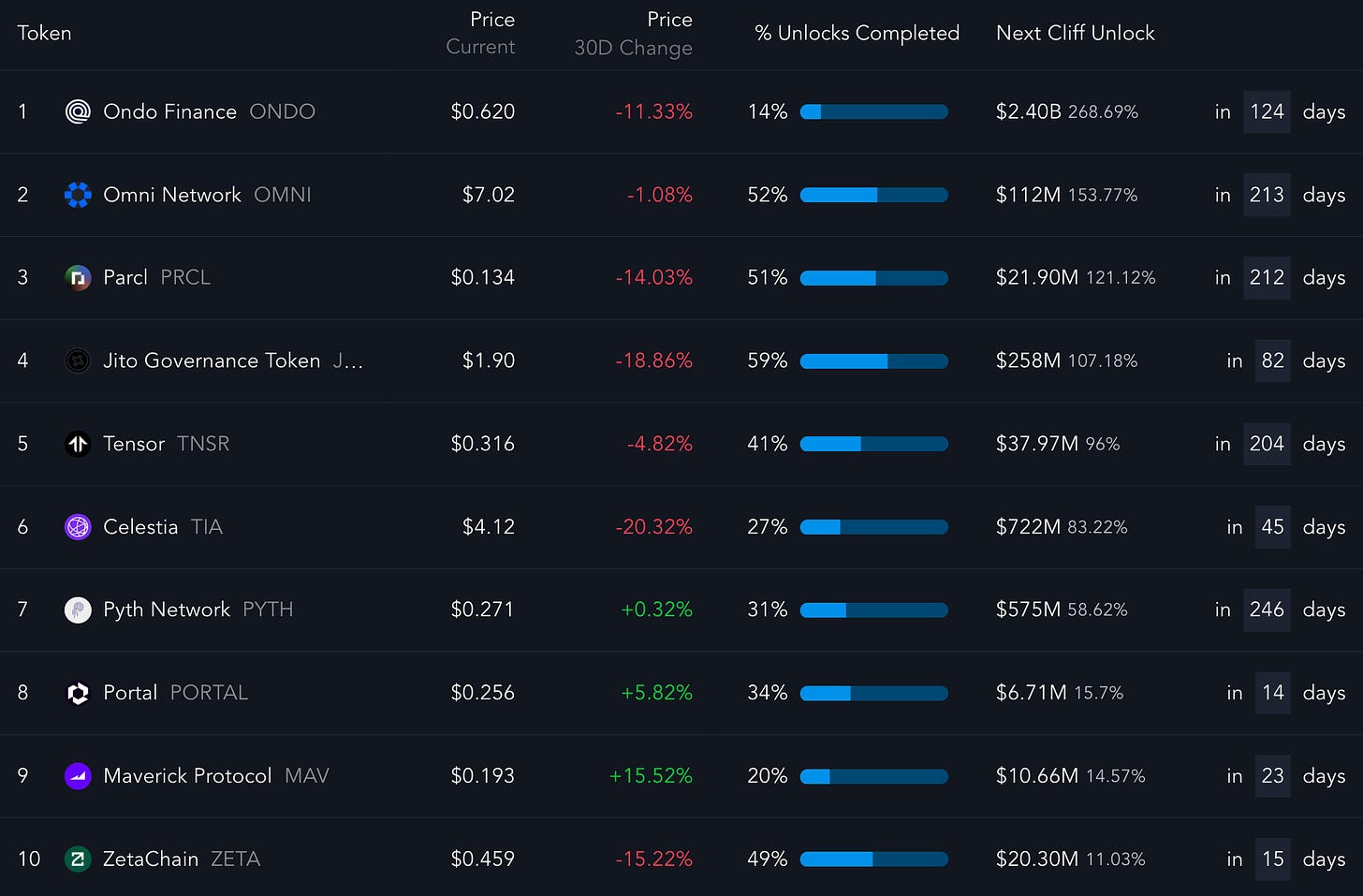
在 Messari 上,最重要的即将到来的解锁事件包括:

  • $ONDO:在 3 个月内供应量增加 268%;

  • $OMNI:在 7 个月内供应量增加 154%;

  • $PRCL:在 7 个月内供应量增加 121%;

  • $JITO:在 2.5 个月内供应量增加 108%;

  • $TNSR:在 7 个月内供应量增加 96%;

  • $TIA:在 1.5 个月内供应量增加 83%;

  • $PYTH:在 8 个月内供应量增加 58%;

  • $PORTAL:在 2 周内供应量增加 15.7%;

  • $MAV:在 3 周内供应量增加 14.5%;

  • $ZETA:在 2 周内供应量增加 11%;

DeFiLlama 提供了以下数据:

  • $BIGTIME:在 3 周内供应增加 61%;

  • $CYBER:在 1 个月内供应增加 69%;

  • $HOLD:在 2 个月内供应增加 38%;

  • $LVL:在 3 个月内供应增加 19%;

  • $BB:在 7 个月内供应增加 100%;

监测通货膨胀

另一个重要的指标是每日代币的发行量和发行率变化。在这方面,Messari 再次提供了很大的帮助,他们的每日线性发行率最大变化仪表板非常实用。
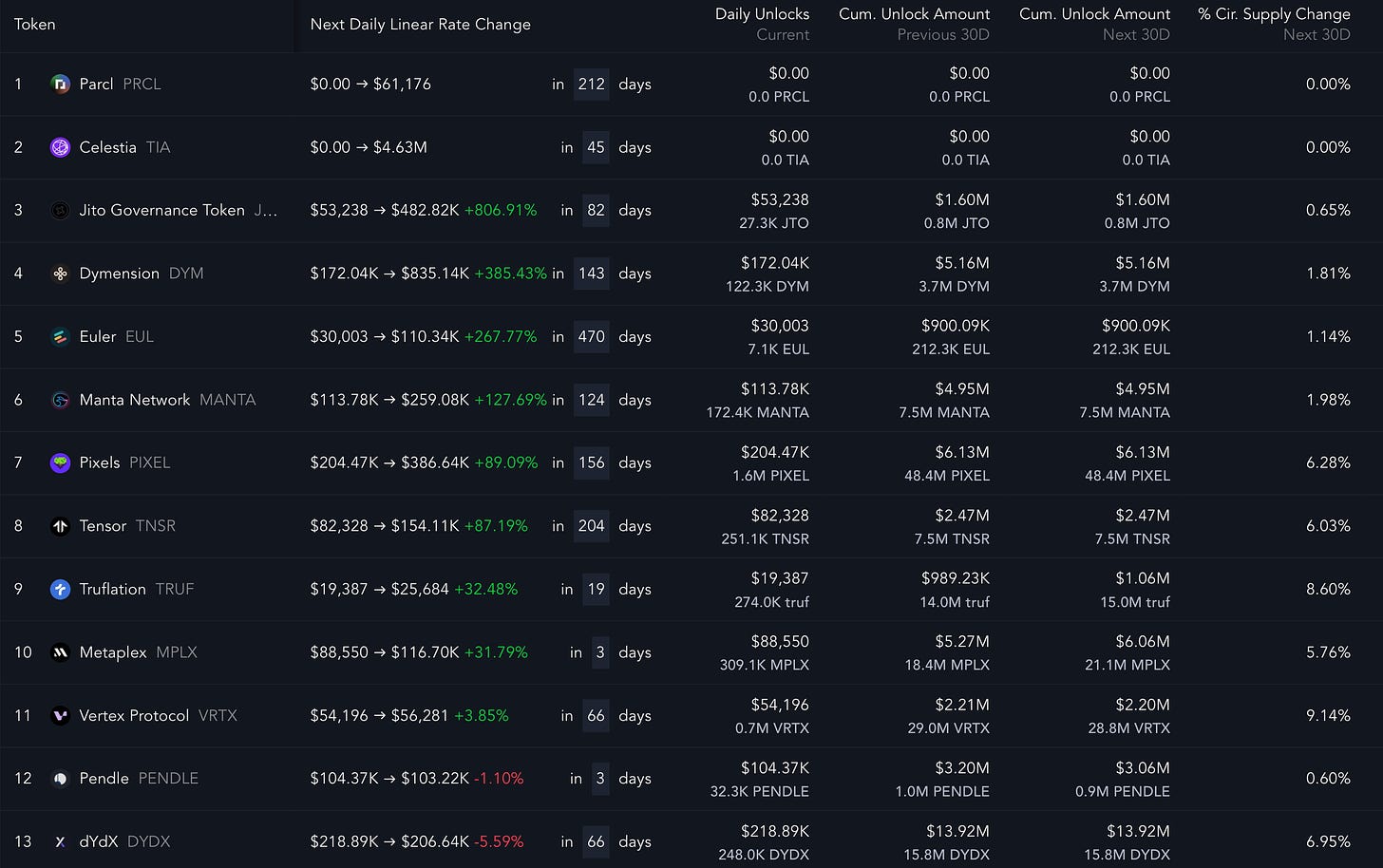
重要事件将导致通货膨胀增加:

  • $TIA 将在 1.5 个月内开始发行;

  • $JITO 将在 3 个月内将每日发行增加 8 倍;

  • $DYM 将在 4.5 个月内将每日发行增加 3.8 倍;

重要事件将导致通货膨胀降低:

  • UNI 将在本周停止新的发行,与 RON 和 $XVS(下周停止新发行)相同;

  • $WOO 将在 1.5 个月内减少 75% 的发行量;

  • $NEAR 将在 1 个月内减少 38% 的发行量;

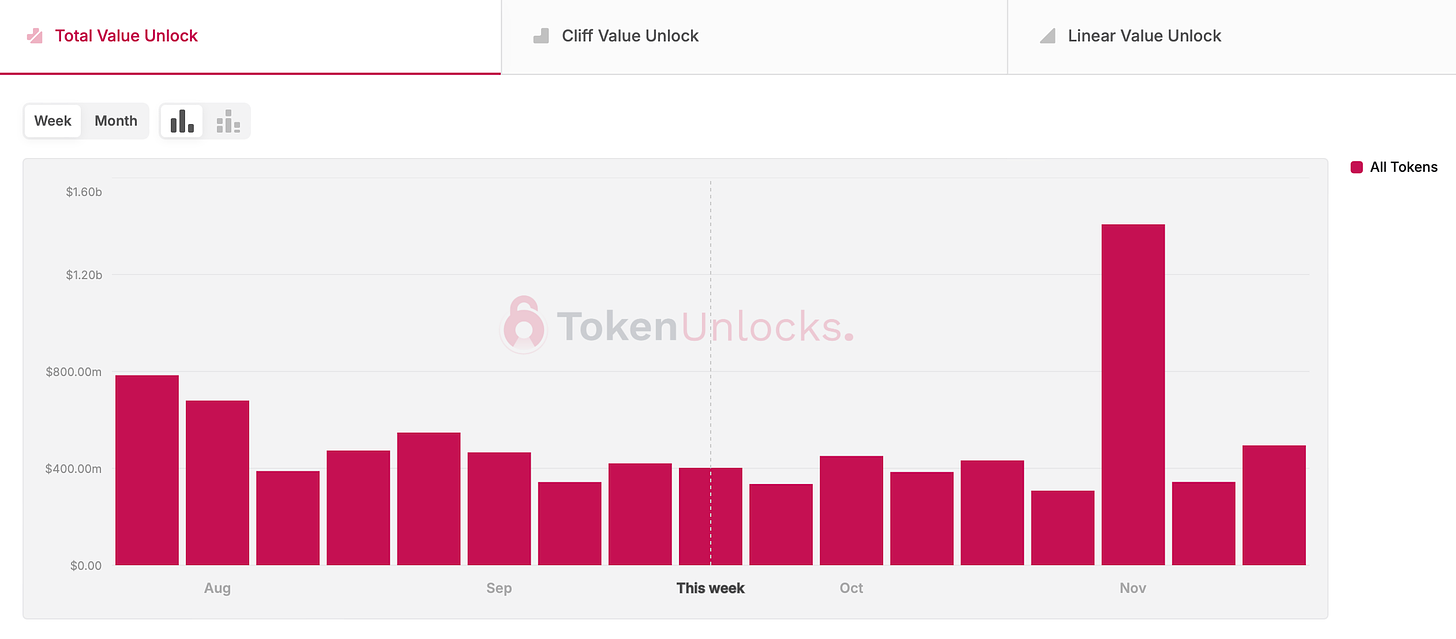
根据 Token Unlocks,11 月的第一周将出现最高的新发行量,预计将有 14 亿美元流入市场。
总结

代币解锁是做出投资或交易决策时需要考虑的众多因素之一。其他重要因素还包括新产品发布、整体市场情绪和流动性。通常,当解锁事件发生时,其影响已经反映在市场价格中,因此在解锁日期做空代币并不是一个可靠的策略。

当解锁规模超过流通供应的 5% 到 10% 且没有即将到来的催化剂或对代币的关注度不高时,影响最为显著。
Letture associate

DeFi Has Reached Its Most Dangerous Moment: The Real Vulnerabilities Are Not in the Code

DeFi in Peril: The Real Vulnerability Isn't in the Code April 2026 marked a paradigm shift in DeFi security, with over $625 million lost across 30 incidents—the worst month in crypto history by event count. Crucially, none of the major exploits (Drift Protocol: $285M, KelpDAO: $292M, Wasabi Protocol: $4.5M) resulted from smart contract vulnerabilities. Instead, failures occurred in the operational "plumbing": social engineering to compromise multi-signature councils, a single-point-of-failure 1-of-1 bridge validator, and stolen admin private keys. These events expose a fundamental misalignment: the industry's security model has long focused on code audits, while the actual attack surface has shifted to privileged access points and off-chain infrastructure. The article introduces the term "OpenFi" to describe this reality: permissionless, on-chain, yet operationally dependent on trusted third parties (admins, validators, oracles) at key junctures. The KelpDAO exploit vividly demonstrated asymmetric "contagion risk." A configuration error in a smaller protocol triggered a panic, causing approximately $13.2 billion in outflows from larger, unaffected protocols like Aave within 48 hours, as users fled uncertain collateral. The core dilemma is the double-edged sword of centralization. Operational levers like emergency councils (e.g., Arbitrum freezing stolen funds post-KelpDAO) enable crisis response but also create catastrophic attack surfaces if compromised (e.g., Drift). The path forward demands radical honesty: protocols must clearly disclose their trust assumptions, operational levers, and failure modes. The industry must treat operational security (key management, configurations, incident response) with the same rigor as code security. Survival depends on building systems whose risks can be understood, priced, and insured, moving beyond the outdated "code is law" mantra to a mature model of disclosed and managed trust.

链捕手6 h fa

DeFi Has Reached Its Most Dangerous Moment: The Real Vulnerabilities Are Not in the Code

链捕手6 h fa

Vitalik's Article Emphasizes Ethereum Must Be 'Amazing', But Foundation Is Not the Center

Vitalik Buterin has published a lengthy response to recent community criticism directed at the Ethereum Foundation (EF). Acknowledging a sense of "unease," he addresses concerns about the EF's strategic direction, its perceived disconnect from ETH's price performance, and calls for its reduced central role. Vitalik rejects the notion that the EF should be the central governing body of Ethereum, framing it instead as one "node with a clear mandate" among many within the ecosystem. He highlights the EF's limited ETH holdings (≈0.16% of supply) compared to other blockchain foundations and states it will no longer sell significant amounts of ETH. Its future focus will be on long-term, critical projects that align with Ethereum's core values of censorship-resistance and decentralization, which might not otherwise happen. A core argument is that Ethereum must be "amazing," but not by merely chasing higher transaction speeds at the cost of decentralization. He proposes focusing on the "CROPS" dimensions: creating a Cryptographically provable, Reliable, Open, Private, and Secure network. This includes pursuing goals like a formally verifiable, bug-free Ethereum client and minimizing protocol-level reliance on intermediaries. The article concludes by noting that while Vitalik clarifies the EF's refocused role, he does not directly address community suggestions for creating a new organization explicitly aligned with ETH's economic interests. This "alignment gap" is presented as a key challenge for Ethereum's future.

链捕手6 h fa

Vitalik's Article Emphasizes Ethereum Must Be 'Amazing', But Foundation Is Not the Center

链捕手6 h fa

Galxe: How a Quest Platform Evolved into Web3's Growth Infrastructure

Galxe, once perceived as a simple Web3 quest platform, has evolved into a core growth infrastructure within the Web3 ecosystem. It addresses a fundamental Web3 growth dilemma: the lack of a mature, systematic user acquisition and retention system akin to Web2's advertising and analytics platforms. While users complete quests (social tasks, on-chain interactions) for rewards, Galxe's true innovation lies in transforming these fragmented, one-off actions into lasting, verifiable identity credentials. This process of *behavioral assetization* creates a persistent record of a user's activities across projects and chains. For users, their wallet accumulates a valuable history that can unlock future access and rewards, fostering a "profile-building" mentality. For projects, Galxe provides a pre-screened user pool with rich behavioral data, enabling targeted outreach to users based on their specific on-chain history and community engagement. Galxe employs a gamefied growth path, guiding users from low-friction social tasks into deeper, valuable on-chain interactions through a structured progression of quests. This solves the incentive-behavior mismatch common in Web3, filtering users by their willingness to engage. Beyond quests, products like Passport (identity verification) and Starboard (community analytics) position Galxe as a comprehensive growth operating system. The platform's defensible advantage is its self-reinforcing data and network flywheel: more projects attract more users, enriching behavioral data; richer data enables better user targeting, attracting more projects. Ultimately, Galxe is shifting Web3's growth logic from short-term "reward-driven" traffic towards a long-term "identity-driven" relationship model, where a user's accumulated on-chain履历 becomes a core asset.

marsbit6 h fa

Galxe: How a Quest Platform Evolved into Web3's Growth Infrastructure

marsbit6 h fa

Trading

Spot
Futures
活动图片