Биткоин-ETF привлекли 1000+ институционалов

cryptonews.ruPubblicato 2024-01-10Pubblicato ultima volta 2024-09-10

Рынок очень положительно отреагировал на запуск в январе 2024 года биржевые фонды (ETF) на биткоин. В них вложились уже более 1 000 институциональных инвесторов

Биржевые фонды ETF на биткоин появились на рынке США в январе 2024 года. Они сразу же стали привлекать внимание институциональных инвесторов. Этот инструмент позволяет включать BTC в портфель, минуя сложности с прямой покупкой и безопасным хранением. Всего за два периода подачи обязательных квартальных отчетов 13F в биткоин-ETF вложились более 1000 институциональных инвесторов.

В биткоин-ETF от BlackRock инвестировал 661 институционал

Эрик Балчунас, старший аналитик Bloomberg, обсудил успехи ETF на BTC. Он также сравнил их с традиционными ETF, которым часто трудно привлечь значительное внимание институциональных инвесторов на ранних этапах.

Особенно выдающимся в этом смысле является iShares Bitcoin Trust от BlackRock (IBIT). За ним стоит 661 институциональный держатель, и 20% его акций сосредоточено у институционалов и крупных советников. Балчунас прогнозирует, что этот показатель может удвоиться в следующем году.

Кроме того, наблюдается значительный прогресс в сегменте ведущих хедж-фондов США. 60% этих фондов теперь держат BTC-ETF. Это значительно больше, чем ранее в этом году.

Ни один из этих фондов не продал свои активы во втором квартале. Наоборот, такие крупные игроки, как Citadel Investments, Millennium Management, Mariner Investment и Fortress Investment, наращивают свои инвестиции.

Привлекательность ETF на биткоин оценили не только хедж-фонды. Тринадцать из топ-25 зарегистрированных инвестиционных советников в США теперь вкладываются в биткоин через такие ETF. Такие компании, как Cambridge Associates и Hightower Advisors, последовательно увеличивают свои инвестиции. Все это говорит о расширяющемся институциональном доверии.

Читайте также: Что нужно знать инвестору в спотовые ETF на биткоин

Пионеры в сфере ETF

Институциональная поддержка меняет восприятие и практическое использование криптовалют. После запуска ETF на биткоин появились и ETF на Ethereum, что привлекло ещё больше традиционных инвестиций в криптопространство.

Влияние этих ETF на крипторынок огромно. Об этом говорит резкий рост числа биткоин-миллионеров на 111%. Оно достигло 85 400 человек по всему миру, как сообщает Henley & Partners.

Впрочем, проблемы сохраняются. Американские биткоин-ETF переживают самый длинный период ежедневных чистых оттоков с момента их запуска. Инвесторы вывели примерно $1,2 млрд из этих фондов за восемь дней с конца августа.
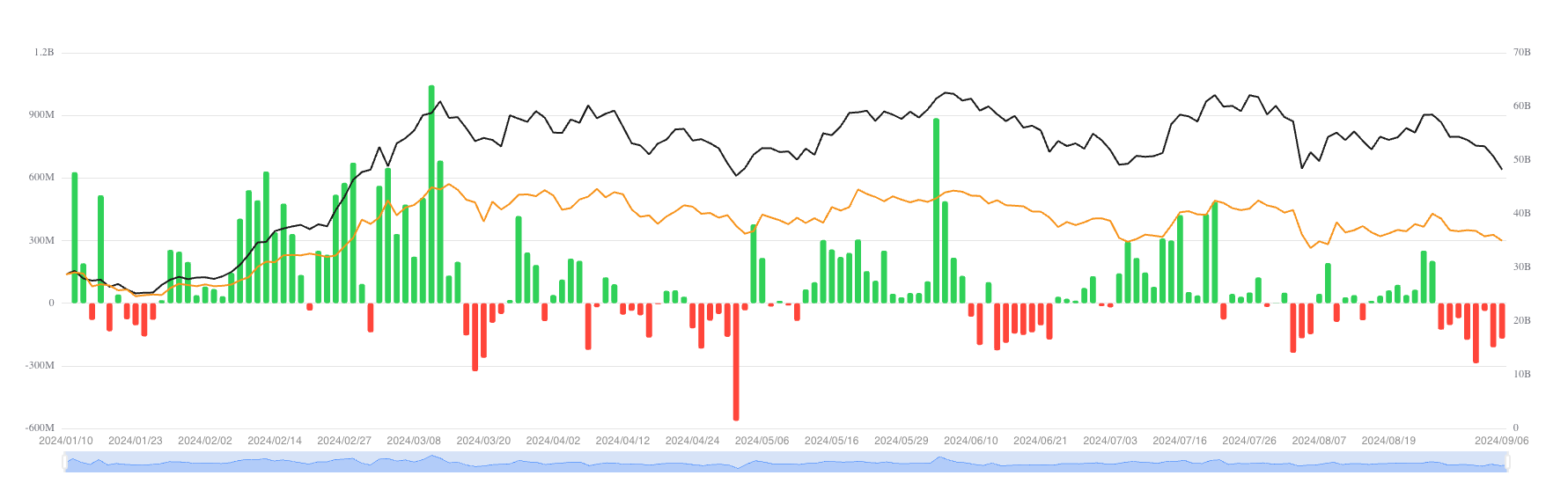
Общий чистый поток ETF на биткоин. Источник: SoSoValue

Эта тенденция подчеркивает осторожность рынка в текущий нестабильный финансовый период. Однако Балчунас сохраняет оптимизм.

«Отток средств был лишь небольшим. Отток в $287 млн за месяц — это всего 0,5% от общего объема управляемых активов, а $787 млн за неделю — 1,5%. Другими словами, почти 99% инвесторов продемонстрировали устойчивость», — сказал Балчунас.

Letture associate

The Largest Upgrade Since The Merge? How Glamsterdam Will Affect Ethereum and Regular Users?

The upcoming Glamsterdam upgrade, scheduled for late 2026, is considered Ethereum's most significant change since The Merge. It focuses on fundamentally restructuring Ethereum's block production, transaction execution, and gas pricing to enable major scalability improvements while preserving decentralization. The upgrade centers on three key innovations: * **Enshrined PBS (ePBS)**: Moves the Proposer-Builder Separation mechanism into the protocol's core, eliminating reliance on external relays. This reorganizes the block pipeline, extending the time window for processing execution payloads, which is crucial for safely increasing block capacity. * **Block-Level Access Lists (BALs)**: Attaches a "map" to each block, declaring in advance which state data its transactions will access. This enables potential parallel transaction processing and faster node synchronization, breaking a key performance bottleneck. * **Gas Repricing**: Introduces a more accurate resource pricing model by separating computation costs from state storage costs. This discourages uncontrolled state growth by making operations that create permanent data (like new accounts) more accurately reflect their long-term network burden. Together, these changes aim to solve the core challenges of increasing Ethereum's throughput (e.g., raising the Gas Limit) without overburdening node hardware or increasing centralization risks. They prepare the infrastructure for higher capacity, targeting a credible post-upgrade capacity of up to 200 million Gas. For users, the impact will be nuanced: * General transaction fees may become lower and more stable as block space increases. * Simple transfers could see cost reductions, while state-intensive operations (like contract deployment) may become relatively more expensive due to the new gas model. * Gas fee estimations by wallets will become more accurate. * L2 networks could benefit long-term from increased data blob capacity. * Standardized logs for all ETH transfers (EIP-7708) will improve tracking for wallets and exchanges. Ultimately, Glamsterdam represents a foundational shift, not a simple block size increase. It seeks to expand Ethereum's capacity by re-engineering its underlying mechanics, maintaining its commitment to decentralization while enabling significant performance gains.

marsbit1 h fa

The Largest Upgrade Since The Merge? How Glamsterdam Will Affect Ethereum and Regular Users?

marsbit1 h fa

Circle CEO Responds to the OUSD Challenge: Stablecoin is a Winner-Takes-All Business, and We Won't Slow Down

In response to questions about the OUSD stablecoin initiative, Circle CEO Jeremy Allaire argues that the stablecoin market is a "winner-take-most" platform business driven by powerful network effects, and Circle has no plans to slow down. He outlines three key drivers behind USDC's dominant position: 1. **Protocol/Software Layer Network Effects**: The value of a stablecoin network grows as more developers and services integrate it, creating compounding utility and user preference. Circle has spent nearly a decade building this ecosystem with USDC, now accelerated by mainstream adoption and enhanced by software stacks like CCTP and Gateway for interoperability. 2. **Liquidity Network Effects**: Liquidity begets more liquidity. USDC has achieved top-tier global liquidity—ranking among the top three digital assets alongside BTC and USDT—through nearly a decade of building deep primary and secondary market access across regions and venues. 3. **Regulatory and Policy Integration**: Establishing a global stablecoin requires deep regulatory engagement, licensing, and compliance across key markets—a significant, long-term investment where Circle is a leader. Allaire cites Artemis data showing USDC facilitated 80% of all dollar stablecoin on-chain transaction volume in Q1 2026, with USDT at 20% and all others negligible. He addresses OUSD's purported advantages: "free" minting/burning is often not sustainable in practice; redistributing all revenue can starve essential infrastructure investment; and large consortium models historically struggle with inefficiency and slow execution, unlike focused strategic partnerships. He reaffirms Circle's strong ongoing partnership with Coinbase on USDC and notes Circle collaborates with dozens of other stablecoin issuers through its expanding platform (Arc, CCTP, CPN, etc.). While welcoming OUSD to the ecosystem, Allaire asserts that Circle's vast, trusted network and continued investment make USDC the foundational digital dollar infrastructure for the world.

链捕手1 h fa

Circle CEO Responds to the OUSD Challenge: Stablecoin is a Winner-Takes-All Business, and We Won't Slow Down

链捕手1 h fa

Q2 Crypto Market Review: Did Bitcoin Rise for 'Nothing'? Did Money Flow to AI and On-Chain?

Q2 2026 Crypto Market Recap: Bitcoin's Gains Erased Amid Shift to AI and On-Chain Activity The second quarter of 2026 saw a significant reversal for the cryptocurrency market. Bitcoin gave back all its April gains, ending Q2 down approximately 11%, while major stock indices posted strong gains. This divergence was driven by a hawkish shift in Fed rate expectations, capital rotation into AI stocks, and weakening liquidity channels into crypto. Key demand pillars deteriorated simultaneously. Spot Bitcoin ETFs recorded net outflows of $4.08 billion for the quarter, with outflows dominating June. Crypto treasury entity Strategy's bitcoin accumulation slowed markedly, and the total stablecoin market cap contracted by ~$4.2 billion. This created a tighter liquidity environment. Exchange data reflected the downturn. Spot trading volumes fell 28% quarter-over-quarter. The market underwent significant deleveraging, with $8.35 billion in long liquidations for BTC and ETH, primarily in late May/early June. Open interest and order book liquidity also declined. Despite the bearish price action, structural developments point to an expanding on-chain ecosystem. These include the rise of tokenized stocks with full legal rights, the growth of RWA (real-world asset) perpetual contracts for trading stocks and commodities 24/7, and the use of crypto markets for price discovery ahead of major events like the SpaceX IPO. On-chain vaults are also emerging as a core layer for institutional capital allocation.

Foresight News2 h fa

Q2 Crypto Market Review: Did Bitcoin Rise for 'Nothing'? Did Money Flow to AI and On-Chain?

Foresight News2 h fa

Trading

Spot
活动图片