Smart Contracts On The XRP Ledger, Ripple’s Change Of Heart Worries Community

bitcoinistPubblicato 2024-09-04Pubblicato ultima volta 2024-09-04

Introduzione

On September 2, Ripple announced ongoing plans to introduce native smart contracts to the XRP Ledger (XRPL) mainnet. Some members...

On September 2, Ripple announced ongoing plans to introduce native smart contracts to the XRP Ledger (XRPL) mainnet. Some members of the XRPL developer community haven’t taken this announcement kindly, especially the Director of XRPL Labs, Wietse Wind, who wrote an open letter to Ripple. 

The Sudden Change To XRPL Smart Contracts Is “Surprising”

Wind mentioned in the open letter on the X (formerly Twitter) platform that the sudden change in Ripple’s stance about introducing native smart contracts is surprising. He noted that three mongs ago, Ripple’s Chief Technology Officer (CTO) David Schwartz had made it clear at the XRP Ledger Apex that there was no room for smart contracts on the XRP Ledger. 

Back then, Schwartz mentioned that the XRPL mainnet was a “fixed function ledger” and that smart contracts belonged on other networks such as the EVM Sidechain and Xahua. Wind remarked that Ripple’s turnaround makes it hard to sustainably grow the thriving ecosystem with such “whimsical pivots by the organization consistently pushing for the direction of the core protocol.”

The Director of XRPL Labs further stated that the lack of direct communication from Ripple’s leadership about this pivotal change in stance and the reasons for it is “disappointing.” Wind claimed that learning about this development from back channels rather than direct dialogue highlights the current state of collaboration within the developer ecosystem. 

Interestingly, Wind revealed they had proposed and championed the idea of native smart contracts on the XRPL mainnet years ago. However, Ripple seemed to have brushed off the idea. Despite the lack of communication from Ripple, the developer mentioned that they were glad to see the change in perspective but added that they feel this realization comes “frustratingly late and at a cost to those who have been driving innovation in the ecosystem.”

In line with this, Wind declared that the XRPL developer ecosystem stands at a “critical juncture.” He stated that Ripple faces a clear choice of either embracing and supporting the existing Hooks technology on the mainnet or pursuing a separate path that “risks alienating dedicated developers and fracturing the ecosystem.” 

Hooks was the layer-1 smart contract solution that Wind and his team had begun to work on after Ripple seemed reluctant to introduce a native smart contract on the XRPL mainnet.

Ripple’s CTO Responds To Open Letter

Ripple’s CTO, David Schwartz, responded to Wind’s open letter, explaining Ripple’s side of the situation. Contrary to Wind’s claims about lack of direct communication, Schwartz revealed that the RippleX team called him before the announcement went live. The Ripple CTO also revealed that his firm had supported and even funded Hooks from the beginning but clarified that it would only support Hooks as an amendment on the mainnet. 

Schwartz also mentioned that there is a lot of innovation in Hooks, as XRPL Labs proposed initially, but believes some updates could make it a better option for XRPL mainnet. In an earlier X post, the Ripple CTO explained why he didn’t support Hooks being the smart contract solution on the XRPL mainnet

He remarked that he wasn’t convinced it was “small and safe enough to deploy on the mainnet without significant risk to things like transaction price stability and performance payments.”

Wind responded to Schwartz, stating that he was happy about the change of heart and excited for what was coming to the mainnet with or without Hooks, which his team developed. He added that his major concern was just the lack of communication on Ripple’s part as stakeholders in the developer ecosystem deserve an explanation when the crypto firm decides to pivot as they have done in this situation. 

XRP price chart from Tradingview.com (Ripple)
Price recovers from lows | Source: XRPUSDT on Tradingview.com
Featured image created with Dall.E, chart from Tradingview.com
Scott Matherson

Scott Matherson

Scott Matherson is a leading crypto writer at Bitcoinist, who possesses a sharp analytical mind and a deep understanding of the digital currency landscape. Scott has earned a reputation for delivering thought-provoking and well-researched articles that resonate with both newcomers and seasoned crypto enthusiasts. Outside of his writing, Scott is passionate about promoting crypto literacy and often works to educate the public on the potential of blockchain.

Crypto di tendenza

Letture associate

A Group of Suzhou Engineers Unexpectedly Attain Financial Freedom

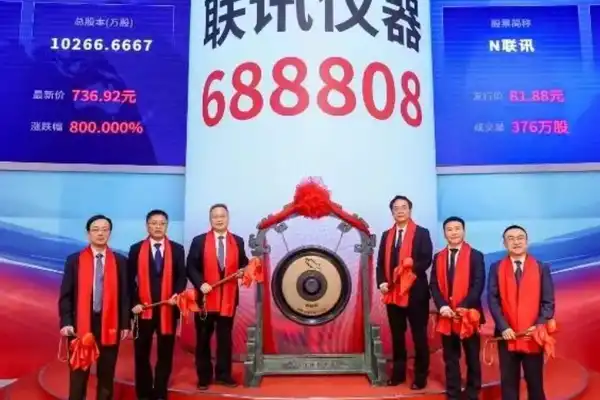
In Suzhou, a group of engineers from Lianxun Instruments, a leader in optical communication testing equipment, have achieved remarkable wealth after the company's IPO. Listed just two months ago on the STAR Market, the company's stock price surged approximately 30 times, making it the only A-share stock priced above 2,000 yuan. This surge created substantial fortunes for nearly 100 technical employees who held a collective 15.91% stake through employee stock ownership platforms, valued at over 36 billion yuan at the current market cap. Among them, nearly 40 became billionaires, while even the smallest holdings exceeded 5 million yuan in value. Founded in 2017 by Hu Haiyang, Yang Jian, and Huang Jianjun, Lianxun Instruments was established to address China's reliance on foreign high-end testing instruments. The company grew rapidly with a strong focus on R&D, where technical staff make up nearly 80% of its workforce. Early implementation of employee stock plans helped retain this core talent. The company's explosive growth is fueled by booming AI computing demand, with clients including major global optical module leaders. Its revenue skyrocketed from 276 million yuan in 2023 to 1.194 billion yuan in 2025, turning a profit in 2024. The IPO has also generated massive returns for early investors, including Suzhou's state-owned capital, which saw a hundredfold return. This story reflects a broader trend in China's markets, where technology firms in AI, semiconductors, and optics are creating new wealth, rewarding engineers and technical teams who are now central to modern capital-driven success stories, marking a shift from previous eras dominated by internet and real estate tycoons.

marsbit15 min fa

A Group of Suzhou Engineers Unexpectedly Attain Financial Freedom

marsbit15 min fa

NVIDIA's Annual 'Most Dangerous' Paper: AI Self-Replicating Code, Unlimited Leveling and Evolution

NVIDIA's "Red Queen Gödel Machine" (RQGM) paper proposes a potentially groundbreaking AI self-evolution framework. It breaks from the long-stalled concept of the "Gödel Machine," which required mathematically proven beneficial self-modifications, by adopting an evolutionary approach. The core, and most striking, innovation is that the AI does not just evolve its own code in a static environment. Instead, it co-evolves both the "student" (the task-performing agent) and the "examiner" (the evaluation system that judges it). This creates a dynamic, recursive self-improvement loop inspired by the biological "Red Queen Hypothesis"—where continuous adaptation is needed just to maintain relative fitness. The mechanism operates in epochs. Within an epoch, a fixed examiner evaluates all candidate code variants. At epoch boundaries, a new, potentially more rigorous examiner can replace the old one, but only if it proves statistically superior on a held-out "ground truth" dataset. This "controlled utility evolution" aims to ensure progress is measurable and grounded. The paper demonstrates RQGM's effectiveness across three domains: 1. **Code Generation:** It achieved a 71.7% test-set pass rate (improving over a 69.9% SOTA) while using 1.35-1.72x fewer computational tokens. 2. **Paper Writing:** In a subjective task, the co-evolved writer and reviewer achieved a 40.5% acceptance rate by a fixed human panel, up from 21.8%. 3. **Math Proofs:** It evolved more accurate graders (at 3x lower cost) and higher-scoring provers. Notably, RQGM also mitigated a known LLM bias where AI reviewers favor AI-generated content. By specifically rewarding reviewers that correctly rejected AI-written papers from a historical pool, the evolved system achieved impartiality while maintaining 80% accuracy. The research has sparked significant discussion about the acceleration of Recursive Self-Improvement (RSI). Some, like Anthropic's Jack Clark, have predicted a high probability of highly autonomous, self-evolving AI emerging by 2028. The paper suggests that when an AI begins to design its own evaluators and push itself toward ever-higher standards in a recursive loop, it may be taking a fundamental step toward redefining intelligence and autonomy.

marsbit41 min fa

NVIDIA's Annual 'Most Dangerous' Paper: AI Self-Replicating Code, Unlimited Leveling and Evolution

marsbit41 min fa

Apple and the Power Rebalancing with 'The Microns': Dissecting the Profit Ledger Behind the iPhone

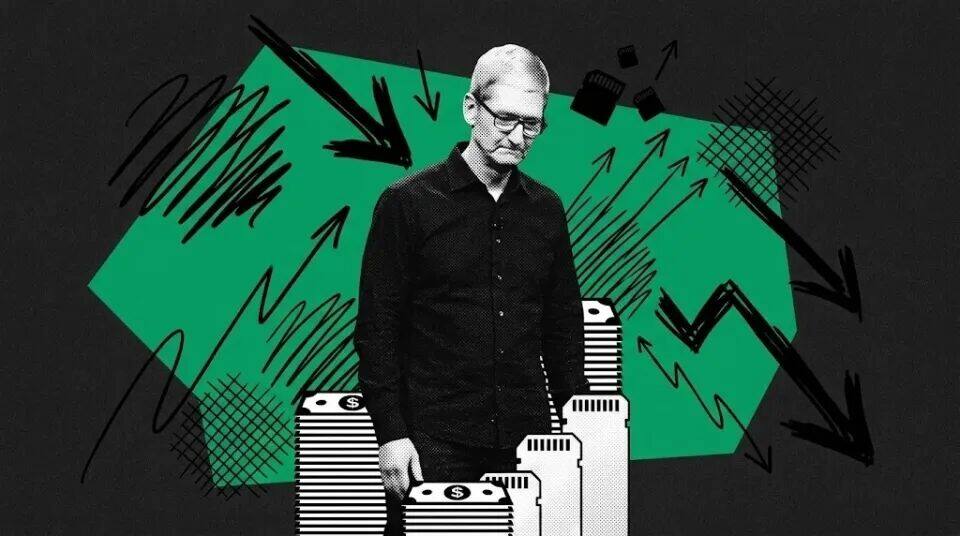
The article analyzes the shifting profit dynamics and power balance between Apple and memory suppliers like Micron within the iPhone supply chain. It highlights a social media post criticizing Apple for raising iPhone prices while blaming memory chip cost increases, despite historically paying suppliers like Micron very little. An estimated iPhone 18 cost breakdown is referenced. Historically, memory was a minor cost component. In 2017's iPhone X, memory accounted for only about 1.6-2.3% of the price, with Apple capturing nearly 50% net profit. Over time, memory's share of the Bill-of-Materials (BOM) cost has grown significantly, reaching an estimated 12-15% for the iPhone 17 series. The core driver of this change is soaring demand for memory from the AI industry, particularly for High Bandwidth Memory (HBM) and AI servers, which is diverting production capacity and squeezing supply for consumer electronics. Memory manufacturers, after enduring periods of low profits, now hold greater pricing power. This is reflected in their recent strong financials, like Micron's 84.6% gross margin. Apple CEO Tim Cook initially described the memory price pressure as unprecedented in his 40-year career, later calling it a "once-in-a-century flood," before Apple announced price hikes across several product lines, causing a significant stock drop. Elon Musk echoed Cook's sentiment about the dramatic cost surge. The article concludes that the era of memory suppliers being at the mercy of Apple's pricing power has temporarily reversed, thanks to AI-driven demand. It notes Apple is reportedly seeking to diversify its supply chain, including exploring chips from China's CXMT.

Odaily星球日报2 h fa

Apple and the Power Rebalancing with 'The Microns': Dissecting the Profit Ledger Behind the iPhone

Odaily星球日报2 h fa

Conversation with the Founder of 42 Macro: The Fed's 'Boiling the Frog Slowly' and the K-Shaped Economy

In a conversation with Anthony Pompliano, Darius Dale, founder of 42 Macro, discusses the Federal Reserve's monetary policy and the K-shaped U.S. economy. Dale characterizes new Fed Chair Kevin Warsh as a "dove in hawk's clothing," expecting the Fed to signal or enact policy tightening in the coming quarters to create room for later easing. He argues current economic signals, including high deficit spending, debt monetization, and credit growth, strongly indicate inflation is not on a credible path back to 2%, forcing the Fed to act. The discussion highlights the stark "K-shaped" economic reality. While top earners, buoyed by massive cash savings (up ~$8 trillion since pre-pandemic), continue robust spending, those at the bottom face severe financial strain, with delinquency rates on consumer loans reaching crisis-era highs. Dale attributes much of the current social and political anxiety to this divergence, driven by the "Cantillon effects" of monetary expansion, which disproportionately benefits asset owners. He emphasizes that in this environment of "financial repression," individuals must participate in asset markets to avoid being left behind. On equities, Dale notes a rotation from the "Magnificent Seven" tech giants into broader AI-exposed companies, while warning that the tech giants' massive capital expenditure cycles could eventually puncture over-optimistic cash flow projections. Dale concludes by stressing that the core desire across all economic strata is simply the dignity to provide for one's family, a goal currently undermined by systemic policies that act as a "wealth siphon" from the bottom to the top.

marsbit2 h fa

Conversation with the Founder of 42 Macro: The Fed's 'Boiling the Frog Slowly' and the K-Shaped Economy

marsbit2 h fa

Trading

Spot

Articoli Popolari

Cosa è XRP 2.0

XRP 2.0: Una Nuova Frontiera nel Paesaggio delle Criptovalute Introduzione a XRP 2.0 Nel mondo in continua evoluzione delle criptovalute, nuovi progetti emergono continuamente, cercando attenzione e adozione. Una tale iniziativa promettente è XRP 2.0, un nuovo progetto di criptovaluta progettato per sfruttare avanzate tecnologie blockchain e metodologie di crittografia robuste. Anche se il nome richiama alla mente l'XRP di Ripple, è fondamentale notare che XRP 2.0 opera in modo indipendente, concentrandosi sul miglioramento della sicurezza delle transazioni, della privacy e della scalabilità. Mentre il panorama finanziario digitale abbraccia sempre di più soluzioni decentralizzate, XRP 2.0 mira a contribuire in modo significativo al web3 e all'espansione generale dei progetti crypto. Cos'è XRP 2.0? Alla sua base, XRP 2.0 è un progetto di criptovaluta che mira a creare un ecosistema di valuta digitale sicuro e decentralizzato. La sua tecnologia fondamentale integra principi di blockchain sofisticati con tecniche di crittografia all'avanguardia. L'obiettivo principale di XRP 2.0 è quello di affermarsi come una piattaforma affidabile ed efficiente in grado di consentire un'esecuzione rapida delle transazioni, dando priorità a migliori protezioni della privacy per i suoi utenti. Il progetto è promosso come una soluzione a molte limitazioni affrontate dalle criptovalute esistenti, proponendo un sistema in grado di gestire un volume maggiore di transazioni con migliorata velocità e privacy. Questa versatilità pone XRP 2.0 come un significativo competitor in un mercato affollato di varie valute digitali. Chi è il Creatore di XRP 2.0? L'identità del creatore dietro XRP 2.0 è stata segnalata come 'Wilbur'. Tuttavia, i dettagli completi riguardanti Wilbur o l'entità associata rimangono sfuggenti. L'anonimato di molti creatori di criptovalute non è un fenomeno raro nel settore, spesso progettato per mantenere un certo grado di privacy e sicurezza. Chi sono gli Investitori di XRP 2.0? Al momento, informazioni specifiche relative alle fondazioni o organizzazioni di investimento a supporto di XRP 2.0 non sono disponibili pubblicamente. Nel settore delle criptovalute, il supporto di investitori rinomati può influenzare significativamente la credibilità e il successo di un progetto, tuttavia la trasparenza riguardo ai sostenitori finanziari di XRP 2.0 non è stata stabilita. Come Funziona XRP 2.0? XRP 2.0 si distingue per l'impiego di una combinazione di tecnologia blockchain e algoritmi di crittografia avanzati che garantiscono transazioni sicure e decentralizzate. La sua struttura innovativa include caratteristiche uniche progettate per promuovere il coinvolgimento degli utenti e ampliare le funzionalità oltre le transazioni convenzionali delle criptovalute. Tra queste caratteristiche, XRP 2.0 incorpora capacità alimentate da intelligenza artificiale, come funzionalità di testo in immagini e testo in voce. Queste aggiunte sono progettate per migliorare l'esperienza interattiva per gli utenti, promuovendo una maggiore applicabilità in vari settori. Unendo progressi tecnologici con design incentrati sugli utenti, XRP 2.0 mira a catturare l'attenzione di una vasta gamma di individui e aziende che cercano di integrare soluzioni di criptovaluta nei loro framework operativi. Cronologia di XRP 2.0 Comprendere XRP 2.0 richiede di esaminare i traguardi che hanno definito il suo percorso fino ad ora: 23 luglio 2023: XRP 2.0 viene introdotto come un nuovo progetto di criptovaluta, mirante a rivoluzionare le capacità di transazione sicura e decentralizzata nel dominio blockchain. 8 settembre 2023: Si verifica il lancio di un altro progetto, XRP20, marcando l'emergere di un token ERC-20 sulla blockchain di Ethereum che resta non correlato a XRP 2.0. 13 novembre 2023: Il ledger XRP subisce un significativo aggiornamento con il rilascio della versione 2.0.0 del software server rippled. È essenziale notare che questo sviluppo è scollegato dal progetto di criptovaluta XRP 2.0. Punti Chiave su XRP 2.0 Per distillare l'essenza di XRP 2.0, emergono diversi fattori critici: Caratteristiche Uniche: L'inclusione di funzionalità come il testo in immagini e testo in voce alimentato da intelligenza artificiale diversifica ulteriormente le potenziali applicazioni di XRP 2.0. Tecnologia Blockchain: Il framework utilizza meccanismi blockchain avanzati e protocolli di crittografia, garantendo un ambiente sicuro e decentralizzato per le transazioni. Scalabilità e Privacy: XRP 2.0 dà priorità a migliori protezioni della privacy nei processi di transazione e alla scalabilità necessaria per accogliere una base di utenti in crescita. Nessuna Affiliazione con Ripple: È importante notare che, nonostante il suo nome, XRP 2.0 non ha alcuna fedeltà o collaborazione con l'XRP di Ripple, distinguendo il proprio framework operativo e obiettivi all'interno dell'ecosistema delle criptovalute. Conclusione XRP 2.0 rappresenta un'ambiziosa venture nell'ambito delle criptovalute, mirante a offrire una combinazione di sicurezza, privacy ed efficienza nelle transazioni digitali. Integrando tecnologie sofisticate e caratteristiche user-friendly, il progetto si propone di ampliare gli orizzonti di ciò che le criptovalute possono realizzare nell'economia digitale odierna. Sebbene l'anonimato del suo creatore e la mancanza di investitori dichiarati possano sollevare domande per alcuni, il focus di XRP 2.0 su funzionalità avanzate e decentralizzazione ne amplifica l'appeal in un mercato crypto sempre più affollato. Man mano che il panorama delle criptovalute continua a evolversi, XRP 2.0 potrebbe emergere come un attore decisivo nell'espansione di soluzioni blockchain sicure e scalabili.

175 Totale visualizzazioniPubblicato il 2024.04.05Aggiornato il 2024.12.03

Cosa è XRP 2.0

Come comprare XRP

Benvenuto in HTX.com! Abbiamo reso l'acquisto di XRP (XRP) semplice e conveniente. Segui la nostra guida passo passo per intraprendere il tuo viaggio nel mondo delle criptovalute.Step 1: Crea il tuo Account HTXUsa la tua email o numero di telefono per registrarti il tuo account gratuito su HTX. Vivi un'esperienza facile e sblocca tutte le funzionalità,Crea il mio accountStep 2: Vai in Acquista crypto e seleziona il tuo metodo di pagamentoCarta di credito/debito: utilizza la tua Visa o Mastercard per acquistare immediatamente XRPXRP.Bilancio: Usa i fondi dal bilancio del tuo account HTX per fare trading senza problemi.Terze parti: abbiamo aggiunto metodi di pagamento molto utilizzati come Google Pay e Apple Pay per maggiore comodità.P2P: Fai trading direttamente con altri utenti HTX.Over-the-Counter (OTC): Offriamo servizi su misura e tassi di cambio competitivi per i trader.Step 3: Conserva XRP (XRP)Dopo aver acquistato XRP (XRP), conserva nel tuo account HTX. In alternativa, puoi inviare tramite trasferimento blockchain o scambiare per altre criptovalute.Step 4: Scambia XRP (XRP)Scambia facilmente XRP (XRP) nel mercato spot di HTX. Accedi al tuo account, seleziona la tua coppia di trading, esegui le tue operazioni e monitora in tempo reale. Offriamo un'esperienza user-friendly sia per chi ha appena iniziato che per i trader più esperti.

1.6k Totale visualizzazioniPubblicato il 2024.12.10Aggiornato il 2026.06.02

Come comprare XRP

Discussioni

Benvenuto nella Community HTX. Qui puoi rimanere informato sugli ultimi sviluppi della piattaforma e accedere ad approfondimenti esperti sul mercato. Le opinioni degli utenti sul prezzo di XRP XRP sono presentate come di seguito.

活动图片