Pepecoin Will Outshine Shiba Inu In 2025, Mpeppe Presale Takes Centre Stage

bitcoinistPubblicato 2024-09-03Pubblicato ultima volta 2024-09-03

Introduzione

In the dynamic world of cryptocurrencies, the battle for dominance among meme coins is intensifying. As Pepecoin (PEPE) and Shiba...

In the dynamic world of cryptocurrencies, the battle for dominance among meme coins is intensifying. As Pepecoin (PEPE) and Shiba Inu (SHIB) continue to capture the attention of investors, a new contender, Mpeppe (MPEPE), is quietly making waves, positioning itself for a potential explosive growth. With the market constantly evolving, the question on everyone’s mind is: Can Pepecoin (PEPE) outshine Shiba Inu (SHIB) by 2025, and will Mpeppe (MPEPE)’s presale be the next big thing?

Pepecoin (PEPE) Eyes Shiba Inu’s (SHIB) Market Cap

Pepecoin (PEPE), a relative newcomer to the meme coin arena, has been gaining traction rapidly. With its recent 9.8% price surge, Pepecoin (PEPE) is positioning itself as a serious contender to Shiba Inu (SHIB), which has long been a favorite among meme coin enthusiasts. Pepecoin (PEPE)’s community-driven approach and viral appeal have fueled its rise, but can it truly challenge Shiba Inu (SHIB)’s dominance?

Shiba Inu (SHIB) has built a massive community since its inception, often dubbed the “Dogecoin Killer.” The coin’s success in 2021, driven by strong social media presence and strategic partnerships, made early investors significant returns. However, as the market matures, Shiba Inu (SHIB) faces stiff competition from newer projects like Pepecoin (PEPE), which are looking to carve out their own space in the meme coin market.

Shiba Inu’s (SHIB) Journey: A Look Back

Shiba Inu (SHIB) has had a remarkable journey since its launch. Initially viewed as a joke, much like Dogecoin, SHIB quickly gained a cult-like following, thanks in part to its strategic marketing and community engagement. The coin’s meteoric rise in 2021 saw it enter the top 10 cryptocurrencies by market cap, turning early investors into millionaires.

A top investor, known for his success with Shiba Inu (SHIB) and Dogecoin, is now betting on other meme tokens, signaling a shift in market sentiment. The investor’s move away from SHIB suggests that while Shiba Inu (SHIB) may still have potential, the real opportunities might lie elsewhere, particularly in new and emerging projects like Pepecoin (PEPE) and Mpeppe (MPEPE).

Mpeppe (MPEPE)’s Potential 100x Returns

While Pepecoin (PEPE) and Shiba Inu (SHIB) battle it out, Mpeppe (MPEPE) is gaining momentum. The Mpeppe (MPEPE) presale has garnered significant attention from investors looking for the next big thing in the meme coin space. With the potential for 100X returns, Mpeppe (MPEPE) is positioning itself as a token that could rival even the most established meme coins.

Mpeppe (MPEPE) offers a unique blend of DeFi and AI technology, making it more than just a meme coin. Its innovative approach has attracted a diverse range of investors, from seasoned crypto veterans to newcomers looking for high-risk, high-reward opportunities. As the presale continues, all eyes are on Mpeppe (MPEPE) to see if it can live up to its potential and deliver on the hype.

Pepecoin (PEPE) vs. Shiba Inu (SHIB): The Battle for Meme Coin Supremacy

As Pepecoin (PEPE) continues to rise, the question remains: Can it surpass Shiba Inu (SHIB) and become the top meme coin by 2025? Both coins have their strengths— Shiba Inu (SHIB)’s established community and proven track record versus Pepecoin (PEPE)’s fresh appeal and recent price surge.

Shiba Inu (SHIB) has a strong foundation, but Pepecoin (PEPE)’s rapid growth and innovative marketing strategies make it a formidable challenger. The outcome of this battle will likely depend on how each coin adapts to the evolving crypto landscape and whether they can continue to attract and retain their respective communities.

Conclusion: The Future of Meme Coins

The race to the top of the meme coin market is heating up, with Pepecoin (PEPE), Shiba Inu (SHIB), and Mpeppe (MPEPE) all vying for investor attention. While Shiba Inu (SHIB) has the advantage of an established presence, Pepecoin (PEPE)’s recent momentum and Mpeppe (MPEPE)’s promising presale suggest that the landscape could shift dramatically in the coming years.

For more information on the Mpeppe (MPEPPE) Presale: 

Visit Mpeppe (MPEPPE)

Join and become a community member: 

https://t.me/mpeppecoin

https://x.com/mpeppecommunity?s=11&t=hQv3guBuxfglZI-0YOTGuQ


Bitcoinist

Bitcoinist

Bitcoinist is the ultimate news and review site for the crypto currency community!

Letture associate

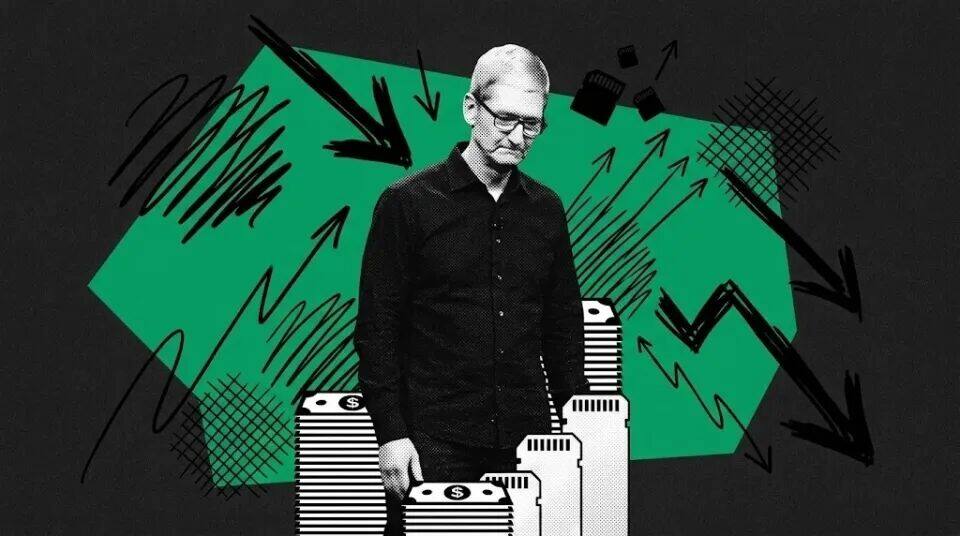
Apple and the Power Rebalancing with 'The Microns': Dissecting the Profit Ledger Behind the iPhone

The article analyzes the shifting profit dynamics and power balance between Apple and memory suppliers like Micron within the iPhone supply chain. It highlights a social media post criticizing Apple for raising iPhone prices while blaming memory chip cost increases, despite historically paying suppliers like Micron very little. An estimated iPhone 18 cost breakdown is referenced. Historically, memory was a minor cost component. In 2017's iPhone X, memory accounted for only about 1.6-2.3% of the price, with Apple capturing nearly 50% net profit. Over time, memory's share of the Bill-of-Materials (BOM) cost has grown significantly, reaching an estimated 12-15% for the iPhone 17 series. The core driver of this change is soaring demand for memory from the AI industry, particularly for High Bandwidth Memory (HBM) and AI servers, which is diverting production capacity and squeezing supply for consumer electronics. Memory manufacturers, after enduring periods of low profits, now hold greater pricing power. This is reflected in their recent strong financials, like Micron's 84.6% gross margin. Apple CEO Tim Cook initially described the memory price pressure as unprecedented in his 40-year career, later calling it a "once-in-a-century flood," before Apple announced price hikes across several product lines, causing a significant stock drop. Elon Musk echoed Cook's sentiment about the dramatic cost surge. The article concludes that the era of memory suppliers being at the mercy of Apple's pricing power has temporarily reversed, thanks to AI-driven demand. It notes Apple is reportedly seeking to diversify its supply chain, including exploring chips from China's CXMT.

Odaily星球日报6 min fa

Apple and the Power Rebalancing with 'The Microns': Dissecting the Profit Ledger Behind the iPhone

Odaily星球日报6 min fa

Conversation with the Founder of 42 Macro: The Fed's 'Boiling the Frog Slowly' and the K-Shaped Economy

In a conversation with Anthony Pompliano, Darius Dale, founder of 42 Macro, discusses the Federal Reserve's monetary policy and the K-shaped U.S. economy. Dale characterizes new Fed Chair Kevin Warsh as a "dove in hawk's clothing," expecting the Fed to signal or enact policy tightening in the coming quarters to create room for later easing. He argues current economic signals, including high deficit spending, debt monetization, and credit growth, strongly indicate inflation is not on a credible path back to 2%, forcing the Fed to act. The discussion highlights the stark "K-shaped" economic reality. While top earners, buoyed by massive cash savings (up ~$8 trillion since pre-pandemic), continue robust spending, those at the bottom face severe financial strain, with delinquency rates on consumer loans reaching crisis-era highs. Dale attributes much of the current social and political anxiety to this divergence, driven by the "Cantillon effects" of monetary expansion, which disproportionately benefits asset owners. He emphasizes that in this environment of "financial repression," individuals must participate in asset markets to avoid being left behind. On equities, Dale notes a rotation from the "Magnificent Seven" tech giants into broader AI-exposed companies, while warning that the tech giants' massive capital expenditure cycles could eventually puncture over-optimistic cash flow projections. Dale concludes by stressing that the core desire across all economic strata is simply the dignity to provide for one's family, a goal currently undermined by systemic policies that act as a "wealth siphon" from the bottom to the top.

marsbit35 min fa

Conversation with the Founder of 42 Macro: The Fed's 'Boiling the Frog Slowly' and the K-Shaped Economy

marsbit35 min fa

The Domestic Answer to Space Computing Power: Photonics Are More Efficient, Musk and Huang's Approaches Are Too Roundabout

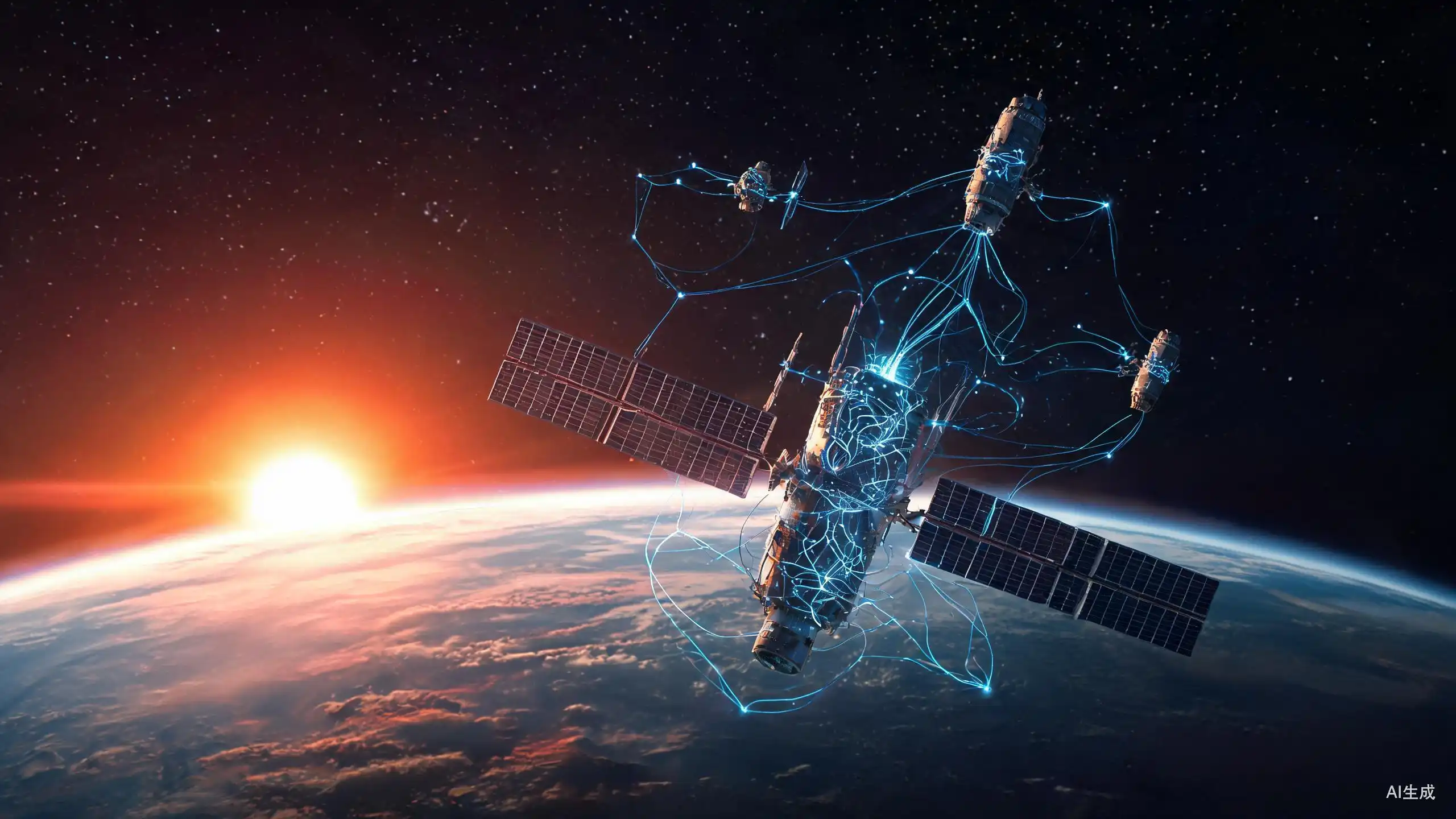
The Space Computing Race: A Photonic Advantage The competition for space-based computing has intensified, with figures like Elon Musk and NVIDIA's Jensen Huang highlighting its potential. Musk predicts solar-powered AI satellites could offer the most cost-effective computing by 2032. However, space presents extreme challenges for traditional electronic chips: radiation from cosmic particles can cause errors, the vacuum environment hinders heat dissipation, and limited solar power constrains energy-hungry systems. Photonic computing, using light instead of electrons, offers a promising solution. Its core advantages for space are threefold: 1) **Radiation Resistance**: Photons are charge-neutral, making them inherently immune to particle interference. 2) **Low Heat Generation**: Light propagation in waveguides generates minimal heat, bypassing critical thermal management issues. 3) **Low Power Consumption**: Photonic chips have near-zero static power draw, aligning perfectly with the energy constraints of satellites. Furthermore, for a given payload weight and volume, photonic systems can potentially deliver higher total compute density. Since they require less bulky cooling and power infrastructure, more space can be allocated to the compute units themselves. While photonic computing holds great promise, current industry approaches face hurdles like the memory-compute bottleneck (separate storage and processing) and challenges in large-scale integration. Engineering for space—withstanding launch vibrations and validating full system operation in orbit—remains a critical step. The path forward resembles the evolution from single GPUs to computing clusters, but via a photonic route. As electronic chips approach physical limits in miniaturization, photonic computing and optical interconnects (光算光联) may provide a key alternative to bypass these constraints and define the next generation of space-based computing capabilities.

marsbit1 h fa

The Domestic Answer to Space Computing Power: Photonics Are More Efficient, Musk and Huang's Approaches Are Too Roundabout

marsbit1 h fa

Trading

Spot
活动图片