2024年加密影响者看好 50 倍收益的三大山寨币

marsbitPubblicato 2024-09-02Pubblicato ultima volta 2024-09-03

加密领域的影响者在加密货币领域中是至关重要的利益相关者,因为他们通常会影响社区对特定山寨币的接受度。他们再次看好三种山寨币在2024年获得50倍的收益,并大举买入这些山寨币——ETFSwap(ETFS)、LayerZero(ZRO)和PEPE。因此,加密投资专家和市场量化分析师已经发出零售和巨鲸购买这些山寨币的警报,预计它们将在2024年市场周期中表现强劲。

加密影响者看好 ETFSwap (ETFS) 在 2024 年获得 50 倍收益

ETFSwap (ETFS) 被认为是2024年最受加密领域影响者青睐的加密项目,主要加密影响者预测它将在2024年市场周期中引领50倍的价格飙升。ETFSwap (ETFS) 已经吸引了Web3领域主要加密影响者和利益相关者的关注,其突破性的生态系统为ETF交易设定了新的标准。ETFSwap (ETFS) 是第一个提供无许可访问主要机构ETF并在区块链上进行交易的去中心化协议。

ETFSwap (ETFS) 团队致力于将盈利丰厚的现实世界资产(如黄金、白银、煤炭和石油)的代币化版本进行民主化和透明化的交易访问。团队成员均通过了SolidProof KYC认证,以促进生态系统的问责性和透明性。因此,难怪加密社区期待着ETFSwap的测试平台上线。测试平台的推出将包括ETF筛选器和追踪器功能,预计将彻底改变ETF交易的模式。

原生的ETF筛选器和追踪器是由人工智能驱动的大数据聚合工具,为用户提供鲸鱼和主要市场做市商交易的精准市场分析。该算法使用预测性和情感分析来追踪这些资产的价格走势,为交易者提供准确的市场入场点。因此,ETFSwap (ETFS) 的交易者相较于其他交易者具有领先优势,可以获得赢得市场的入场点并实现持续盈利。此外,ETFSwap (ETFS) 上的杠杆ETF选项通过金融衍生品为交易者提供高达100倍的放大倍率。

ETFSwap (ETFS) 在50倍上涨的过程中已经领先于其他山寨币,其正在进行的预售活动取得了突破性成果,已筹集超过400万美元。您仍然可以加入,尽早赶上这波50倍的价格涨势,目前价格仍然低至$0.01831。

PEPE 是MEME 中的热门之选

PEPE 成为顶级加密影响者的首选之一,因为它在即将到来的加密市场周期中准备创造新一批百万富翁。PEPE 曾达到历史最高价 $0.00001717,从上市价开始飙升了1,716,900%。在当前的市场环境下,加密影响者再次将 PEPE 代币选为2024年可能获得50倍收益的币种。

PEPE 生态系统已经从最初的模因理念演变,融入了 GameFi 创新和其他 APR 产出农业机制。难怪主要加密影响者正在大量购买 PEPE 代币,以赶上即将到来的生态系统繁荣。

LayerZero (ZRO) 走向主流

LayerZero (ZRO) 正受到主流关注,加密影响者已经购买了 ZRO 代币,预计在 2024 年实现 50 倍的收益。LayerZero (ZRO) 正在推动一个生态系统,支持不同区块链之间的无缝交易和通信,建立一个数据和数字资产可以自由互动的基础设施。LayerZero (ZRO) 将当代 DeFi 技术与强大的安全性结合起来,以推进这一 DeFi 解决方案,Web3 开发人员已经开始采用其原生的 ZRO 山寨币。

主要价格行为分析师预计,LayerZero (ZRO) 将通过其区块链互动解决方案达到 10 美元的目标,鲸鱼分析师也在发出投资警报。因此,随着 Web3 开发人员的逐步采用,LayerZero (ZRO) 价格飙升可能只是时间问题。

结论

ETFSwap (ETFS)、LayerZero (ZRO) 和 PEPE 都具备现代化的 DeFi 解决方案,并且正在获得主要利益相关者的广泛采用。因此,加密领域的影响者们纷纷买入这些原生山寨币,期待在2024年实现50倍的收益。

加密影响者尤其看好 ETFS 代币,因为它有更大的上涨空间,价格可能飙升高达20,000%。在 $0.01831 的预售优惠结束前,加入加密影响者的行列,为2024年实现改变人生的财富做好准备。


Letture associate

USDC Begins Nested Issuance, Coinbase Launches Custom Stablecoin Branding Service

Coinbase has launched its "Custom Stablecoins" platform, enabling businesses to offer branded stablecoins. The first client is Flipcash, a social payments app, which has introduced USDF. USDF is a Solana-based stablecoin, pegged 1:1 to USDC, and is designed to serve as a stable pricing and settlement unit for Flipcash's user-created community currencies. This move shifts the focus of stablecoins from being standalone assets or investment products to becoming embedded payment and settlement components within broader applications. For businesses like Flipcash, the core need is not to become a stablecoin issuer, but to integrate stable, reliable digital cash functionality—handling pricing, payments, and settlements—without managing the complex underlying infrastructure of issuance, reserves, on-chain contracts, fiat on-ramps, and compliance. Coinbase's platform provides this infrastructure as a service, positioning the exchange as a stablecoin infrastructure provider. While USDC remains the foundational reserve asset, the branded token (e.g., USDF) offers applications a tailored, user-facing financial tool. This development highlights a potential path for stablecoins to become ubiquitous backend utilities in social, gaming, and e-commerce applications, though it also brings significant regulatory and operational complexities associated with handling real user funds.

链捕手5 min fa

USDC Begins Nested Issuance, Coinbase Launches Custom Stablecoin Branding Service

链捕手5 min fa

Detained for 37 Days: The First Wave of People Who Got Rich from 'AI Gateways' Are Starting to Go to Jail

A prominent AI proxy service operator was reportedly detained for 37 days and is now on bail pending trial, highlighting the legal risks in China's booming but unregulated AI intermediary market. These services act as "AI scalpers," providing domestic users with access to restricted overseas models (like OpenAI, Claude) by bundling APIs, handling payments, and bypassing network blocks, all for a fee. Their controversial profitability stems from practices like bulk-registering accounts to resell free credits, exploiting refund policies, overcharging for tokens, substituting cheaper models, and illegally selling user conversation data. Major figures, including cryptocurrency entrepreneurs, are now entering this space. Legally, these operations face severe risks. Their core model often involves unauthorized API access and operating without required telecom licenses, potentially constituting illegal business operations. They fail to meet data security obligations for the vast amounts of user data they process, risking charges for failing to fulfill network security duties. Crucially, the unauthorized collection and sale of user data, which can include personal and commercial secrets, easily meets the threshold for the crime of infringing on personal information. The case underscores a critical juncture for the AI industry. While proxies lower access barriers, they expose user data to unsecured middlemen and undermine the business models of AI developers, forcing them to divert resources to security and distorting market value perceptions. The article argues that the industry's sustainable future depends on building trust, protecting data, and fostering compliant competition, moving away from its current "wild growth" phase.

marsbit31 min fa

Detained for 37 Days: The First Wave of People Who Got Rich from 'AI Gateways' Are Starting to Go to Jail

marsbit31 min fa

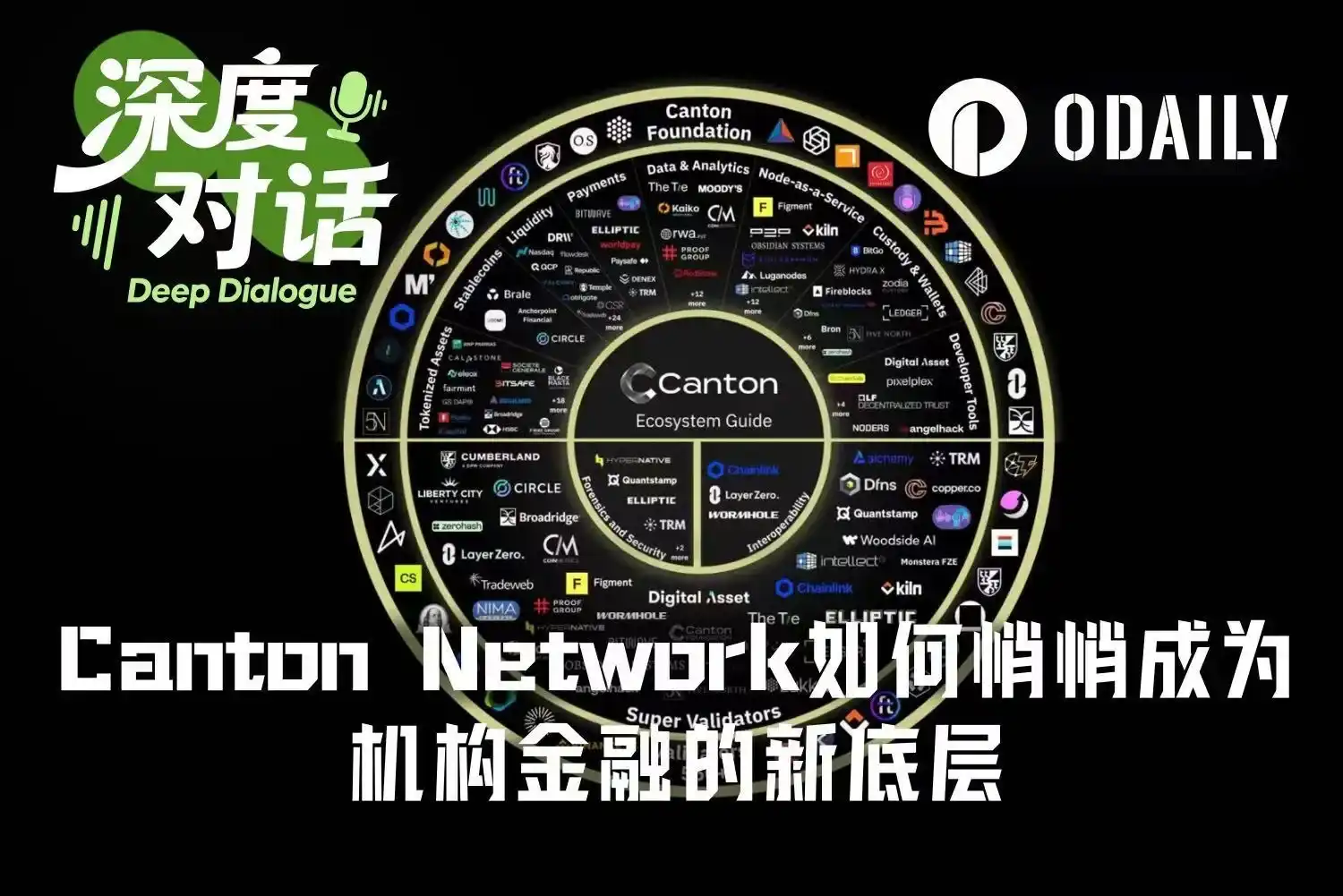
Putting Markets On-Chain: Canton Network Quietly Becomes the New Backbone of Institutional Finance

**Title: Letting the Market Itself Go On-Chain: Canton Network Quietly Becomes the New Backbone for Institutional Finance** **Summary:** The Canton Network, a blockchain platform designed for institutional finance, is gaining significant traction. A key sign of its maturity was Visa's recent entry as a super-validator, a proposal approved in just three days—highlighting prior, extensive collaboration between traditional finance and crypto. Unlike public chains like Ethereum that prioritize transparency and asset onboarding, Canton focuses on enabling confidential, compliant business operations for regulated institutions. Its core design features built-in **data visibility control**, meaning transaction details are only shared between direct counterparties. This privacy is fundamental, allowing competing institutions (like banks Goldman Sachs, JPMorgan, and BNP Paribas, all validators) to interact on the same network without exposing sensitive positions or strategies. Developed by Wall Street veterans at Digital Asset, Canton has taken a slow, deliberate approach to onboard real financial activity. It now handles over **$9 trillion monthly** in transaction volume, primarily from real-world institutional use cases like **tokenized repo agreements**, Treasury settlements, and collateral mobility. Major live applications include **JPM Coin** for institutional payments and **DTCC's tokenized U.S. Treasuries** project. Canton's native token, **CC**, is framed as a "network utility asset" with zero pre-mine or VC allocations. Its value is intended to be driven by the volume of real financial activity on the network. Looking ahead, Canton aims to become the invisible foundational layer for global finance—enabling atomic settlement (where payment and asset delivery occur simultaneously), 24/7 capital flows, and the native issuance and settlement of various asset classes, from corporate bonds to potentially equities. The main challenges are no longer technical but involve navigating fragmented global regulations and integrating with legacy financial systems.

marsbit51 min fa

Putting Markets On-Chain: Canton Network Quietly Becomes the New Backbone of Institutional Finance

marsbit51 min fa

It's Bankless That Needs Ethereum, Not Ethereum That Needs Bankless

Titled "Bankless Needs Ethereum, Not the Other Way Around," this article analyzes the significant recent news involving Bankless, a prominent crypto media outlet. Bankless co-founder David Hoffman announced the sale of all his ETH holdings, while the company also reportedly underwent major layoffs, with its founders parting ways. The news, likened to a high-profile defection, initially sent shockwaves through the Ethereum community, given Bankless's historical role as a key evangelist and "semi-official" narrative builder for Ethereum. For years, through its podcasts and writings, Bankless championed core Ethereum ideas like "ultrasound money" and the blockchain's role as a new financial settlement layer, acting as a crucial community hub and belief system during its growth phase. However, the article argues this development is not necessarily negative for Ethereum. It suggests Bankless's "first mission"—serving as Ethereum's passionate, inward-facing "propaganda department"—has largely been completed. As Ethereum matures and moves towards mainstream, institutional adoption, the narrative baton has shifted. Today, the value propositions of ETH are increasingly communicated to traditional finance by asset managers like BlackRock and VanEck, public companies adding ETH to their treasuries, and established financial figures. This represents a natural evolution towards a more decentralized, professional, and institutionally-focused narrative network. Therefore, while Bankless's retreat marks the end of an era, it signifies Ethereum's growing resilience and its reduced reliance on any single entity for belief, as its story is now carried forward by a broader and more mature ecosystem of advocates.

链捕手1 h fa

It's Bankless That Needs Ethereum, Not Ethereum That Needs Bankless

链捕手1 h fa

Trading

Spot
Futures
活动图片