Telegram 案的可怕结果:开发者有罪论

深潮Pubblicato 2024-09-02Pubblicato ultima volta 2024-09-02

尽管这些加密理想可能很珍贵,但执法当局似乎有意划定一条界限,打击有组织犯罪的优先度远高于所谓的加密行业精神。

撰文:Liam Kelly

编译:比推 BitpushNews Mary Liu

加密货币开发者真的需要小心了——他们很可能会因为自己的成果被他人使用而承担法律责任。

隐私专家表示,这就是本周法国对亿万富翁、Telegram 首席执行官帕维尔·杜罗夫 (Pavel Durov) 提出起诉的最糟糕结果。
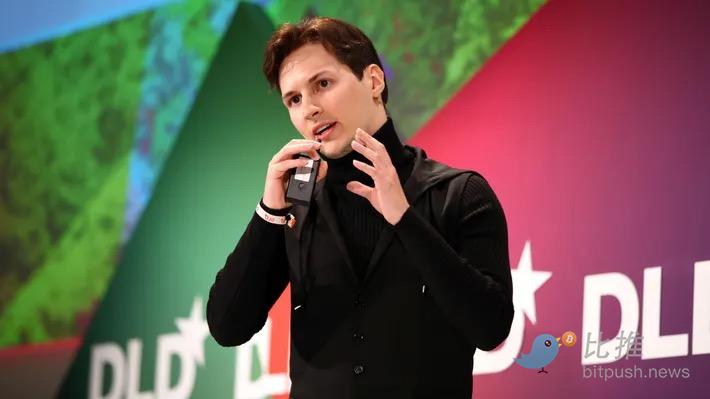
监管机构试图让杜罗夫对 Telegram 平台上的非法活动负责,该案件将开发者对其产品如何使用的责任再次推到了聚光灯下。

加密钱包提供商 MetaMask 首席安全研究员 Taylor Monahan 告诉 DL News:「我的观点是, 如果把 Telegram 与 Tornado Cash 的情况结合来看,那简直就是双重打击。」

「这很可怕,因为它要求开发商承担责任,他们要提前预见并了解用户所做的一切,然后阻止他们这样做。」

巨额赌注

Telegram 否认了法国当局对杜罗夫的罪行指控,并表示其遵守欧盟法律。

此案涉及的风险巨大,尤其是对于加密货币而言。

总部位于迪拜的 Telegram 在全球拥有 9.5 亿用户,通过为数百万人和企业提供协作和交流的渠道,它已成为数字资产生态系统中不可或缺的一部分。

智能合约救不了他们,从一开始,该公司就宣称其对用户活动的「不问不说」方式是其商业模式的主要特征。

多年来,技术产品开发的结束和法律责任开始的界限一直很模糊。

此前在 3 月,荷兰一家法院判处加密货币混合器 Tornado Cash 的前开发人员 Alexey Pertsev 犯有 22 亿美元洗钱罪,随后他被判处五年监禁。

即使 Pertsev 本人没有直接洗钱,但这并不重要,只要他管理一个为此类活动提供便利的网站就足够了。

现在,39 岁的杜罗夫拥有法国和阿联酋双重国籍,也面临着类似的境地。

法国法院周三指控杜罗夫未能阻止犯罪分子利用这个流行的社交媒体平台实施儿童性虐待、贩毒和欺诈等各种罪行。

根据法国检察官的声明,Telegram 拒绝配合法国执法部门调查这些犯罪行为,并且拒绝提供信息。

言论自由

包括埃隆·马斯克在内的 Telegram 支持者纷纷将此案定性为对言论自由的破坏。毕竟,Telegram 的商业模式建立在这样一个理念之上:该平台是一个不受审查的开放思想市场,无论好坏。

但这种想法与长期以来的法律原则相冲突,该原则优先考虑与执法部门的合作,而不是商业模式、产品设计或智能合约等技术特性。

在这方面,加里·根斯勒 (Gary Gensler) 确实知道如何激怒行业。

此外,就商业模式而言,Tornado Cash 实际上可能处于更有利的地位,因为它是去中心化的,并且至今仍在运营。相比之下,Telegram 主要由 Durov 控制,更接近 Whatsapp 等传统模式。

区块链隐私公司 Nym Technologies 首席执行官 Harry Halpin 告诉 DL News:「WhatsApp 和 Telegram 都集中在一组服务器中,负责的公司对这些服务器拥有绝对的控制权。」

这使得管理层更容易审核非法或攻击性内容,以及关闭或审查账户。

「难以发现」

Halpin 表示,由于 WhatsApp 和 Telegram 不是开源的,这意味着它们的代码不公开可见,因此政府可能会监视用户。他说:「这很难被发现。」

尽管对国家监控的恐惧长期以来一直激发加密文化,但检察官似乎最终划出了一条红线。

在 Pertsev 的审判中,一名荷兰法官谴责该开发商没有回应有关当局寻求有关混币器非法行为的信息或行动。

MetaMask 首席安全研究员 Taylor Monahan 告诉 DL News:「这很可怕,大致相当于政府要求每个开发商从第一天起就成为一家高审查性的 Web2 公司。」

加密通道

对于一个以去中心化为荣的行业来说,Telegram 的角色至关重要。场外交易市场,例如 offx 和 SecondLane,直接内置于 Telegram 中。

新兴项目的传播和营销高度依赖 TG 群来接触受众,这款消息应用程序今年集成了加密钱包和应用内加密支付。

隐私项目 Firo 管理员 Reuben Yap 告诉 DL News:「Telegram 不再只是一个消息平台。」

随着案件的推进,Telegram 的命运和市场地位可能会发生转变。

Monahan 表示,此案已经造成了相当大的损失,她说:「这是一个非常糟糕的事情,将对个人自由和隐私造成不可估量的损害。」

尽管这些加密理想可能很珍贵,但执法当局似乎有意划定一条界限,打击有组织犯罪的优先度远高于所谓的加密行业精神。
Letture associate

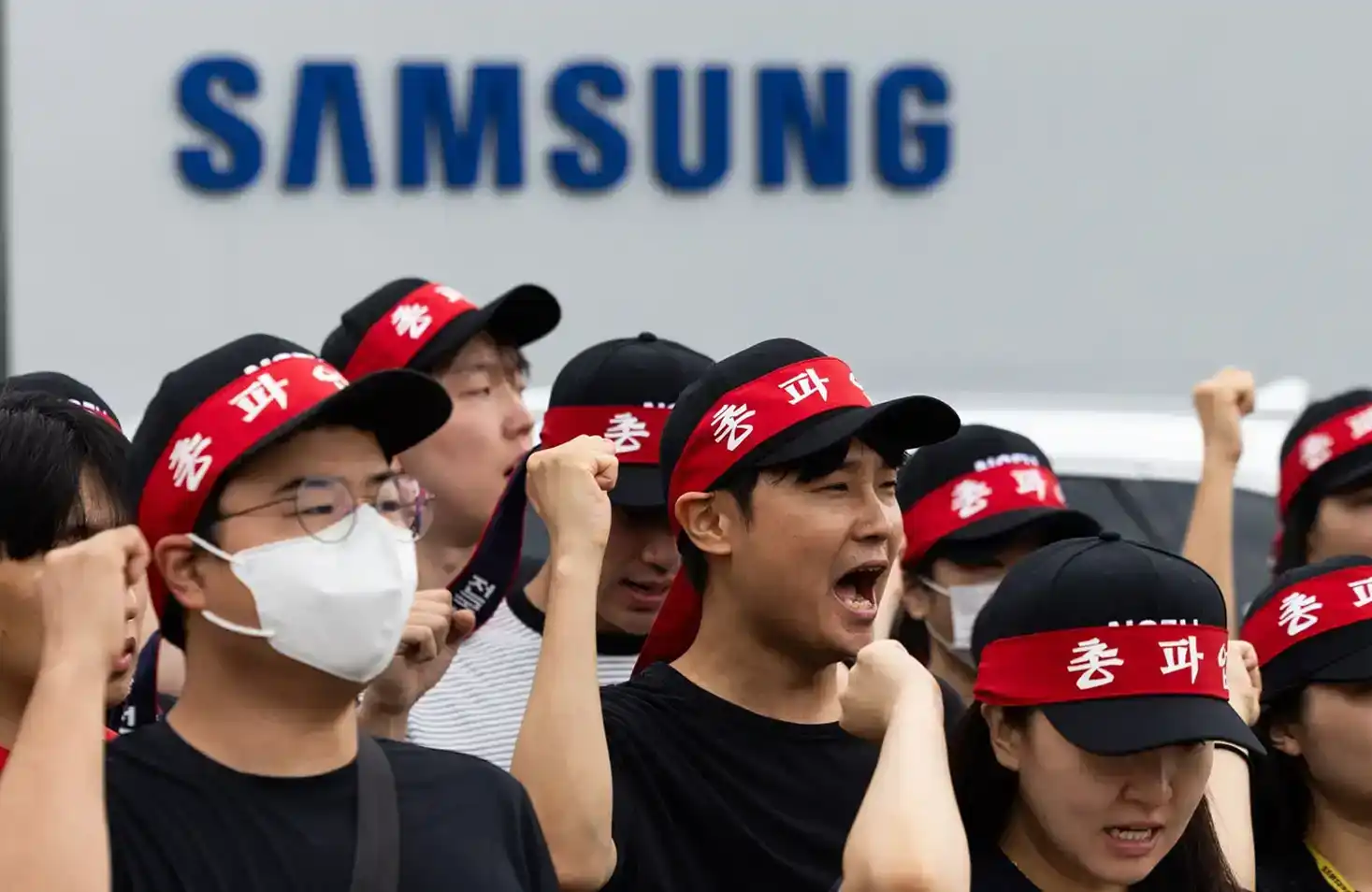
The First Large-Scale Strike in the AI Era Comes from the Factories That Build AI

The article describes a potential large-scale strike at Samsung Electronics, narrowly averted in May 2026 after a temporary agreement. The strike, planned by the company's union, would have been the first major labor action in the AI era targeting a core AI supply chain player. Samsung, alongside SK Hynix, produces roughly two-thirds of the world's memory chips, critical components for AI training and data centers like HBM. An 18-day strike could have disrupted global supply, affecting prices and production for tech companies and cloud providers. For South Korea, where semiconductors constitute about 35% of exports and Samsung represents a quarter of the stock market's value, such an action threatens national economic stability. The union's demands include a 7% base wage increase and, crucially, a clear, substantial profit-sharing model. They want 15% of annual operating profit as an employee bonus pool and the removal of the existing cap (about 50% of annual salary). This frustration is amplified by seeing rival SK Hynix successfully negotiate a deal granting employees 10% of operating profit as bonuses, with reports suggesting some workers could receive bonuses equivalent to hundreds of thousands of dollars. The conflict stems from deeper issues in South Korea's chaebol (conglomerate) system, where rapid national industrialization often prioritized corporate growth over labor rights. Samsung long maintained a "no union" policy until a 2020 apology from its leader. The article argues this strike highlights a fundamental tension in the AI age: as technology advances and corporate profits soar—often driven by AI—the workers who build the infrastructure are demanding a fair share and dignity, rejecting the notion that they are mere expendable components in a machine that "must not stop." The piece concludes that the true test of the AI era isn't just computational power, but whether the people who build the future can secure a stable and valued place within it.

marsbit18 min fa

The First Large-Scale Strike in the AI Era Comes from the Factories That Build AI

marsbit18 min fa

Ripple’s Fed Master Account Bid Gains Momentum After Trump Order

President Donald Trump has signed an executive order directing financial regulators and the Federal Reserve to review expanding fintech and crypto firms' access to core payment infrastructure. This order significantly advances the industry's push for direct Fed connectivity, a central issue for Ripple. The company has been seeking a Federal Reserve master account as part of its strategy for its RLUSD stablecoin, which would allow it to hold reserves directly with the central bank and access its payment rails. The order, titled "Integrating Financial Technology Innovation into Regulatory Frameworks," mandates a Fed review within 120 days on allowing access for entities like uninsured depository institutions and non-bank financial companies, including those in digital assets. This creates a formal policy timeline for resolving whether crypto payment firms must rely on traditional bank intermediaries. Ripple's application for a national bank charter and a master account is part of this broader landscape. The issue gained precedent when Kraken Financial received a limited-purpose master account, while Custodia Bank's application was denied after a legal battle. The Fed has also proposed a more restricted "payment account" option. Trump's order does not guarantee approval for Ripple but forces a high-level examination of the regulatory barriers, bringing the company's long-running effort to the forefront of Washington's financial policy agenda.

bitcoinist32 min fa

Ripple’s Fed Master Account Bid Gains Momentum After Trump Order

bitcoinist32 min fa

Google's 2026 Roadmap is Hidden in This Keynote Speech

Google I/O 2026 was not merely a product launch, but a strategic unveiling of the company's decade-long roadmap. The core signal is that Google is evolving its AI, Gemini, from a feature within products into a foundational operating layer that integrates and reshapes its entire ecosystem—Search, Android, Chrome, YouTube, Workspace, XR, and developer tools. The traditional paradigms of digital interaction are being redefined. Search is shifting from finding links to understanding intent and completing tasks. Android is transforming from an app-centric OS into an AI-native platform that orchestrates workflows across services. Chrome is becoming an AI reasoning layer over the web, while YouTube is evolving into a conversational knowledge engine. Google is heavily investing in Agentic AI, aiming for AI to act as a digital operator that executes tasks autonomously. Underlying this vision is the integration of Gemini across all products, making it the central nervous system. Key developments include Gemini Omni for multimodal generation, deeper product integrations, and a push into XR glasses for contextual, ambient computing. Google is positioning AI not as an optional feature but as essential infrastructure, akin to electricity. The broader implication is a competition for the next computing interface. Google's goal is not just to win in chatbots or models, but to become the operating system for the AI era by controlling the primary entry points—search, assistant, OS, and browser—and weaving them into a unified, intelligent layer. This represents a fundamental shift in computing paradigms that will impact creators, developers, businesses, and how all users interact with technology.

marsbit1 h fa

Google's 2026 Roadmap is Hidden in This Keynote Speech

marsbit1 h fa

‘Withdraw Insurance to Buy Stocks’: South Koreans Over 60 Are Borrowing to Bet on Samsung

South Korea's stock market has seen a frenzy, with the KOSPI nearly doubling in six months. This boom is fueled by a surge in retail investors borrowing to buy stocks, with outstanding margin loans hitting a record high. A significant portion of this debt is held by people over 50, with the 60+ age group seeing the fastest growth. Many are reportedly cashing out savings-type life insurance policies—even at a loss—to fund their stock investments. They are heavily concentrated in major semiconductor stocks like Samsung Electronics and SK Hynix, which have driven most of the market's gains. This trend is particularly risky for older investors, who are leveraging their limited retirement savings. While a market correction in March caused significant losses for leveraged accounts, the swift recovery and continued rally have reinforced risky behavior. Stories of quick profits on platforms like Blind further fuel the speculative rush. The phenomenon is partly driven by economic anxiety. With South Korea having a high elderly poverty rate and a low public pension replacement rate, some seniors see the booming market as a last chance to improve their finances. This "FOMO" (fear of missing out) sentiment is palpable, even in public parks where retirees gather and now discuss stock tips alongside their usual activities. Despite regulatory warnings and the inherent risks of leverage—especially for those with little time to recover from losses—the borrowing binge continues. The market's heavy reliance on a few tech stocks and its cyclical nature pose a substantial threat to these elderly investors, for whom a downturn could be catastrophic.

marsbit1 h fa

‘Withdraw Insurance to Buy Stocks’: South Koreans Over 60 Are Borrowing to Bet on Samsung

marsbit1 h fa

Trading

Spot
Futures

Articoli Popolari

Come comprare TON

Benvenuto in HTX.com! Abbiamo reso l'acquisto di The Open Network (TON) semplice e conveniente. Segui la nostra guida passo passo per intraprendere il tuo viaggio nel mondo delle criptovalute.Step 1: Crea il tuo Account HTXUsa la tua email o numero di telefono per registrarti il tuo account gratuito su HTX. Vivi un'esperienza facile e sblocca tutte le funzionalità,Crea il mio accountStep 2: Vai in Acquista crypto e seleziona il tuo metodo di pagamentoCarta di credito/debito: utilizza la tua Visa o Mastercard per acquistare immediatamente The Open NetworkTON.Bilancio: Usa i fondi dal bilancio del tuo account HTX per fare trading senza problemi.Terze parti: abbiamo aggiunto metodi di pagamento molto utilizzati come Google Pay e Apple Pay per maggiore comodità.P2P: Fai trading direttamente con altri utenti HTX.Over-the-Counter (OTC): Offriamo servizi su misura e tassi di cambio competitivi per i trader.Step 3: Conserva The Open Network (TON)Dopo aver acquistato The Open Network (TON), conserva nel tuo account HTX. In alternativa, puoi inviare tramite trasferimento blockchain o scambiare per altre criptovalute.Step 4: Scambia The Open Network (TON)Scambia facilmente The Open Network (TON) nel mercato spot di HTX. Accedi al tuo account, seleziona la tua coppia di trading, esegui le tue operazioni e monitora in tempo reale. Offriamo un'esperienza user-friendly sia per chi ha appena iniziato che per i trader più esperti.

1.7k Totale visualizzazioniPubblicato il 2024.12.10Aggiornato il 2025.03.21

Come comprare TON

Discussioni

Benvenuto nella Community HTX. Qui puoi rimanere informato sugli ultimi sviluppi della piattaforma e accedere ad approfondimenti esperti sul mercato. Le opinioni degli utenti sul prezzo di TON TON sono presentate come di seguito.

活动图片