突破增长的力量:SunPump 对火币 HTX 平台及 $HTX 币价的多维影响

Odaily星球日报Pubblicato 2024-08-21Pubblicato ultima volta 2026-05-10

Introduzione

近年来,随着加密市场的快速发展,Meme 币逐渐崛起,成为市场中的一大现象。 作为一种具有极强社交传播效应的加密资产类别,Meme 币吸引了大量年轻投资者的关注。而在这一领域中,SunPump 凭借其创新的发射机制、强大的技术支持和广泛的生态激励,迅速成为行业焦点。

近年来,随着加密市场的快速发展,Meme 币逐渐崛起,成为市场中的一大现象。

作为一种具有极强社交传播效应的加密资产类别,Meme 币吸引了大量年轻投资者的关注。而在这一领域中,SunPump 凭借其创新的发射机制、强大的技术支持和广泛的生态激励,迅速成为行业焦点。

而近期SunPump与火币HTX的合作,以及$HTX币价的快速上涨,成为行业内备受关注的现象。本文将从多个维度分析SunPump对火币HTX平台以及$HTX币价的影响,包括技术创新、市场情绪、交易量、Meme币效应等方面,深入解读这种合作的多重影响。
一、SunPump平台的背景与创新

1、SunPump平台定位与创新点

SunPump是波场TRON首个公平发射的Meme币平台,旨在为市场提供一个去中心化、透明且具备公平机制的Meme币发行平台。其创新点在于公平发射机制,即通过智能合约和链上验证,确保所有用户可以平等参与项目的早期投资。此外,SunPump还推出了高达99%的Gas费减免活动,大大降低了用户的交易成本,增加了市场参与度。

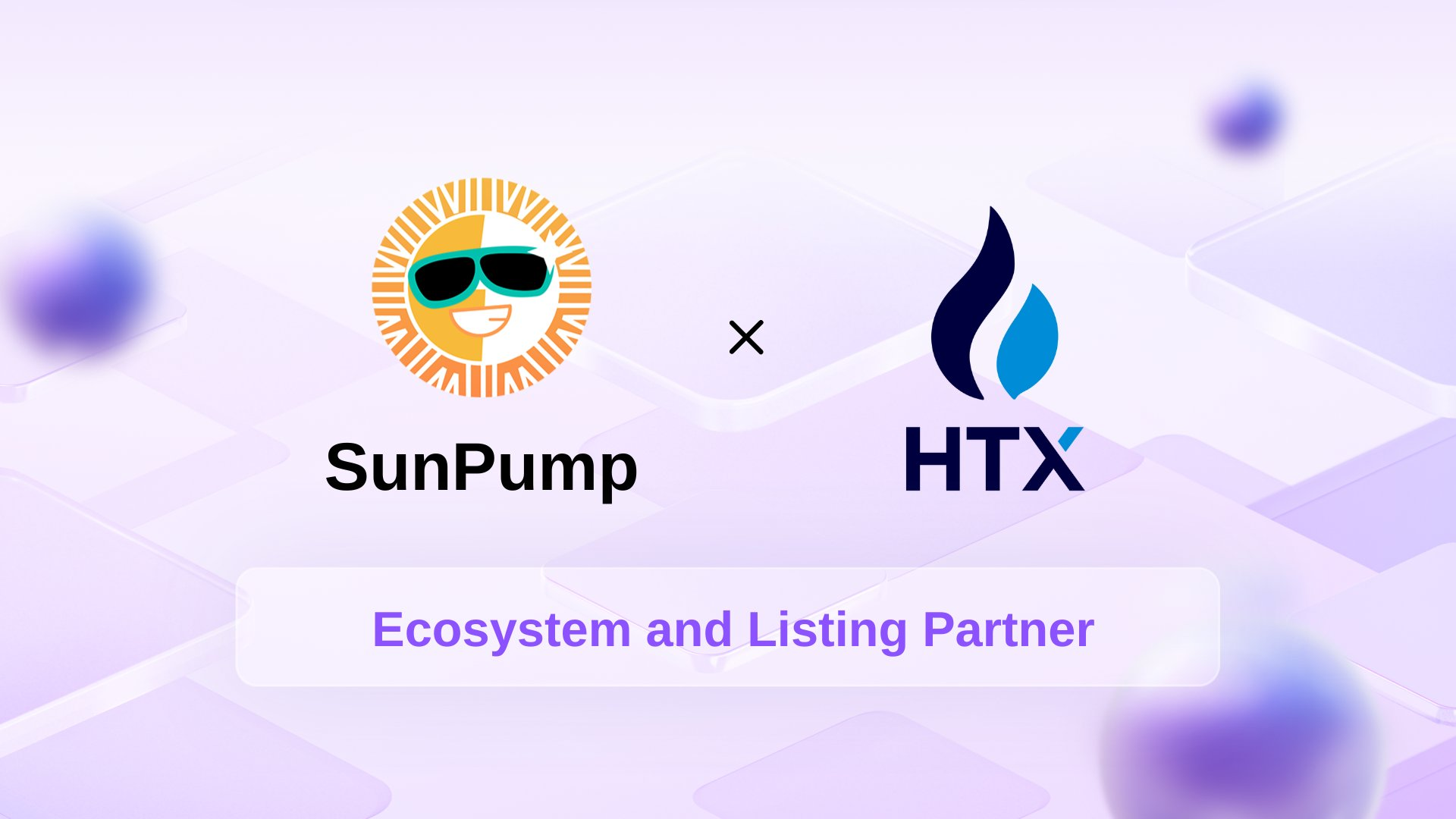
SunPump通过与火币HTX的合作,进一步提升了其平台的影响力。根据协议,SunPump上启动的项目只要在三天内连续24小时交易量超过1000万美元,即可通过快速通道直接在火币HTX上线。这一机制为项目提供了流动性支持,同时也为火币HTX用户带来了优质的交易机会。

2、SunPump平台的用户群体分析

作为协议收入排名前列的区块链网络之一,波场 TRON 近期表现亮眼:7 月 16 日,成功达成“首个单一稳定币(USDT)供应量突破 600 亿美元的区块链网络”成就;8 月 12 日,波场 TRON 账户总数正式突破 2.5 亿,交易笔数超 82.3 亿,总锁仓量(TVL)超 207 亿美元。
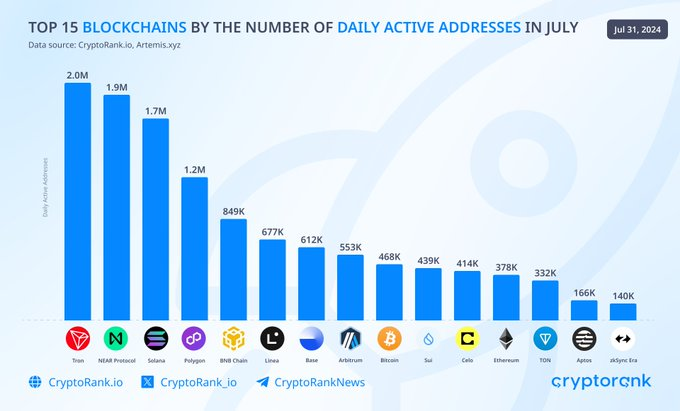
协议收入排名前列的Tron
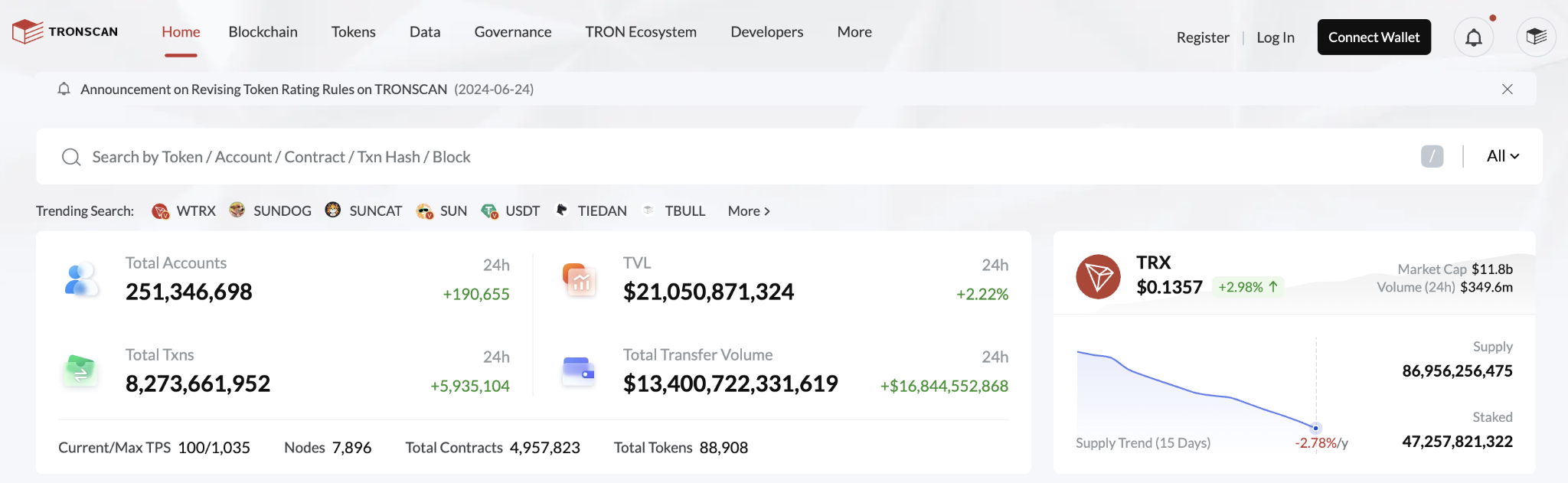
SunPump依托于波场TRON的生态,吸引了大量去中心化交易平台(DEX)用户以及Meme币投资者。

Meme币投资者群体以高度活跃、追求高风险高回报著称,他们通常会密切关注新兴项目的市场表现,并通过社交媒体、社区讨论迅速传播。这种社区驱动效应是Meme币快速上涨的重要因素之一,而SunPump平台的公平发射机制则进一步放大了这一效应,吸引了更多早期投资者。

二、SunPump与火币HTX合作的战略意义

1、突破增长的力量,HTX币价一周上涨超过30%

SunPump生态与火币HTX、波场Tron之间的联动机制通过多个层面的交互来实现资源共享和利益最大化。首先,SunPump平台上的交易会收取1%的手续费,这些手续费以$TRX(波场币)的形式支付,并进行销毁。这一机制不仅有效减少了市场上的$TRX流通量,从而推动$TRX的价格上涨,带动波场生态整体发展。

此外,当SunPump的内部流动性池(内盘)充满后,用户可以直接在SunSwap(波场Tron上的去中心化交易所)上进行交易。在DEX(去中心化交易所)上进行交易时,产生的交易费用将用于回购和销毁$SUN代币。这一操作不仅减少了$SUN代币的供应量,有助于提升其市场价值,同时通过$SUN与$HTX之间的锚定关系,间接带动了$HTX的回购和销毁。因此,$HTX的价值也将随之提升。

这种多层次的联动机制使得SunPump、火币HTX和波场Tron三者之间形成了一个紧密的生态循环,既强化了各自的市场地位,也为整个生态系统带来了更大的发展潜力。通过这种互利共生的方式,三方能够在各自领域内获得更大的影响力和市场认可。
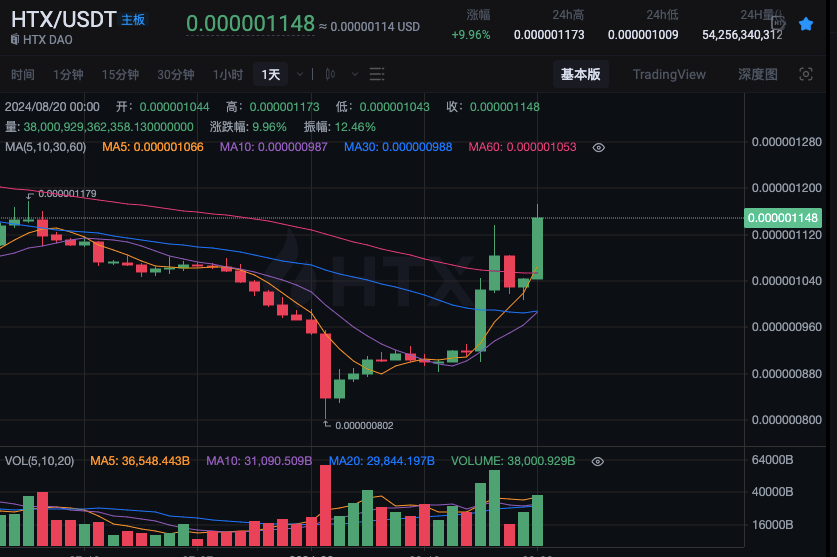
2、 SunPump与火币HTX如何实现生态闭环

火币HTX近年来不断拓展其生态布局,SunPump作为TRON生态中的重要平台,其与火币HTX的合作进一步加强了火币HTX在波场生态中的地位。通过与SunPump的深度合作,火币HTX不仅能够为其用户提供更多高质量的Meme币项目,还能够加强与波场生态的协同效应,推动平台整体交易量的增长。

这个生态闭环包括以下几个关键环节:从SunPump平台的Meme发射,到SunSwap的去中心化交易,再到Poloniex和HTX这样的头部交易所,形成了一条完整的生态路径。

SunPump平台为Meme项目的发射提供了一个高度聚焦和创新的起点。通过这个平台,用户可以轻松发布和推广他们的项目,而有趣且吸引眼球的Meme项目在这里能够快速获得关注。

接下来,这些项目有机会通过火币HTX、Poloniex等大型交易所进行更广泛的交易。这不仅为项目本身带来了更多的流动性和市场影响力,同时也让交易所通过手续费等方式获利,进一步强化了整个生态体系的经济基础。

随着越来越多的用户涌入SunPump平台发射项目,这种成功的循环效应将吸引更多的玩家和用户参与进来。更多的用户意味着更多的TRX手续费收入,而这些手续费的增加直接导致更多的$SUN和$HTX代币被回购和销毁,进一步提升了这些代币的稀缺性和市场价值。

最终,所有这些环节共同作用,确保了从项目发射、推广到交易、再到价值提升的全过程都在一个紧密联动的生态闭环内完成,充分实现了资源的优化配置和利益的最大化。这种闭环机制不仅增强了SunPump和火币HTX的生态力量,还为整个波场生态系统注入了持续发展的动力。

三、HTX币价上涨的背后逻辑

1、市场情绪与资金流入

HTX币价在SunPump上线后出现明显上涨,其中一个重要原因是市场情绪的推动。随着SunPump上多个项目的成功发射,尤其是Sundog这样的明星项目的巨大涨幅,市场对Meme币的投资热情空前高涨。这种情绪效应迅速传导至火币HTX平台,带动了HTX币的资金流入。
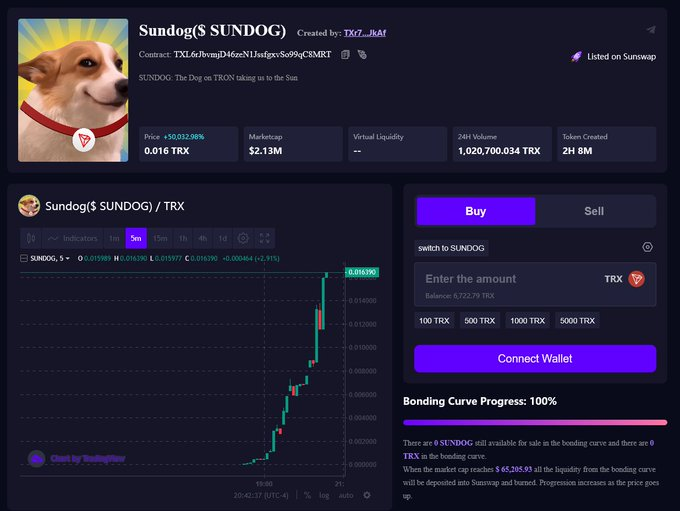
暴涨6000倍的Meme币Sundog

Meme币的成功通常伴随着大规模的市场宣传和社区动员,而这些活动在短期内会吸引大量资金进入相关交易平台。火币HTX作为与SunPump合作的平台,自然成为资金涌入的主要受益者。HTX币作为火币HTX的平台币,在这种资金流动的背景下,其价格上涨成为市场对平台未来潜力的预期反映。
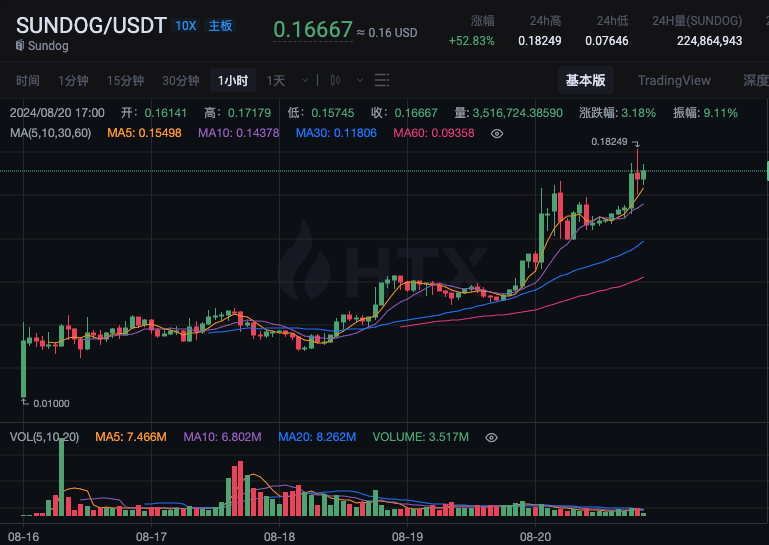
上线火币HTX平台的Sundog

2、流动性与供需关系的变化

HTX币的价格上涨也与其供需关系的变化密切相关。随着SunPump项目上线火币HTX,平台的交易量和用户活跃度显著提升,这在一定程度上增加了HTX币的需求。此外,火币HTX推出的相关激励措施(如Sundog的空投活动)进一步增强了用户对HTX币的需求。

同时,HTX币作为平台的原生代币,其使用场景也在不断扩展。用户可以使用HTX币参与平台的各类活动、享受交易手续费优惠等,这在提高HTX币使用频率的同时,也增强了其市场价值。随着平台生态的不断完善,HTX币的市场需求预计将持续增长,这将为其价格带来长期支撑。

四、SunPump平台的未来展望

1、Meme币市场的持续发展

Meme币市场在过去几年中经历了快速发展,特别是以Dogecoin和Shiba Inu为代表的Meme币项目,展示了Meme文化在加密货币市场中的巨大影响力。SunPump作为波场生态中的首个Meme币平台,通过公平发射和Gas费减免等创新举措,进一步推动了Meme币市场的繁荣。

随着越来越多的项目选择在SunPump平台上发射,预计Meme币市场的活跃度将进一步提升。而火币HTX作为这一合作中的重要平台,将有机会持续从中受益,不仅可以通过引入新项目增加交易量,还可以通过提供更为多样的交易工具和激励措施,吸引更多用户参与。

2、火币HTX与SunPump的长期合作

未来,SunPump与火币HTX的合作有望进一步深化。火币HTX可以通过持续引入SunPump平台上的优质项目,不断优化其平台的产品结构,并通过提供更多样化的交易选择(如期权、杠杆等)来满足不同投资者的需求。此外,火币HTX还可以通过与SunPump的合作,进一步拓展其在波场生态中的影响力,增强平台的竞争优势。

同时,SunPump平台也将通过与火币HTX的合作,获得更多的用户基础。双方的合作不仅将为各自平台带来更大的市场份额,还将在长期内推动整个加密货币市场的创新和发展。
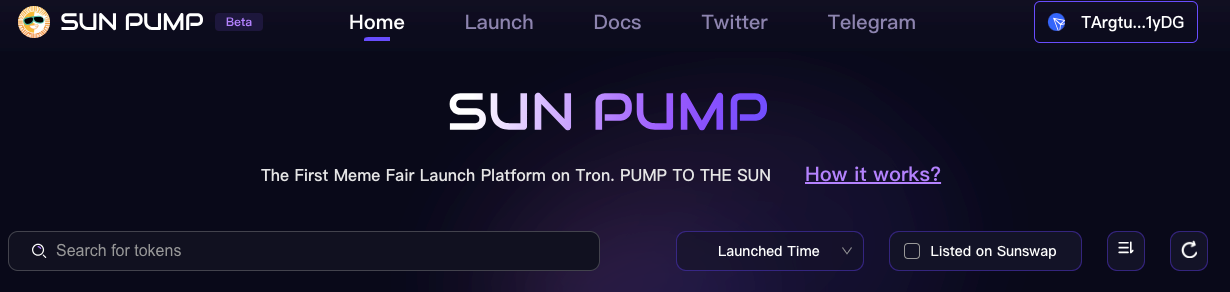
https://sunpump.meme/

SunPump与火币HTX的合作无疑为加密货币市场带来了新的活力。通过引入Meme币项目,火币HTX不仅提升了平台的市场活跃度和用户黏性,还进一步推动了HTX币的价格上涨。随着Meme币市场的持续发展,SunPump平台将为火币HTX带来更多的合作机会和市场增量。

未来,随着双方合作的不断深化,火币HTX有望在全球加密货币市场中占据更加重要的地位。而HTX币也将在这一合作中持续受益,为投资者带来更多的回报。

Letture associate

From KYC to KYA, Is It Time to Give AI Agents Their Own 'ID Cards'?

Titled "From KYC to KYA: Is It Time to Issue 'Identity Cards' for AI Agents?", this article discusses the emerging concept of Know Your Agent (KYA) as AI agents become increasingly autonomous. In Agent-to-Agent (A2A) scenarios, where agents execute contracts, payments, and trades without human intervention, the lack of a shared identity standard creates risks like unauthorized transactions, fraud, and accountability gaps. KYA acts as a trust layer to verify an agent's origin, authority, and accountability. The need for KYA is most critical outside centralized platforms (like Google or Coinbase), such as in decentralized exchanges (DEX), A2A payments, and merchant payments. Several key players are building KYA infrastructure: - **ERC-8004**: A proposed Ethereum standard that issues a unique AgentID as an NFT, building on-chain identity, reputation, and validation systems. - **Visa TAP**: Visa's solution issues agent identity credentials, with transactions verified via triple signatures (legitimacy, delegator, payment method). - **Trulioo**: Extends its KYC/KYB compliance infrastructure using a Digital Passport for Agents (DAP), issued after verifying both the developer and user, and refreshed per transaction. - **Sumsub**: Focuses on post-issuance real-time verification, detecting agent anomalies during transactions using its existing compliance systems. Regulatory bodies are also acting. The EU AI Act mandates operator identification in logs for high-risk AI systems, the US NIST prioritizes agent identity management standards, and Singapore has released a national AI governance framework. Similar to how the 2019 FATF Travel Rule impacted crypto exchanges, possessing KYA infrastructure may determine market entry in the AI agent era. The market is expected to segment rather than produce a single winner, with success depending on integrations with merchants, payment networks, and KYC client bases.

marsbit35 min fa

From KYC to KYA, Is It Time to Give AI Agents Their Own 'ID Cards'?

marsbit35 min fa

The Next Generation of Payments Lies Not in the Payment Layer

The Next-Generation of Payment is Not in the Payment Layer This is the second piece in a series analyzing Stripe's AI strategy. The series stems from Stripe's vision of becoming the economic infrastructure for the AI Agent era, announced at Stripe Sessions 2026. A key debate centers on whether Know Your Agent (KYA) is merely an upgrade to existing payment systems. The author argues the opposite: payment will become a subsystem of KYA, not the other way around. Historically, major payment innovations (online banking, mobile wallets, QR codes) emerged from new transaction scenarios that broke the underlying assumptions of old systems, not from optimization within the payment layer itself. Agent economy is that new scenario, and KYA is the foundational infrastructure growing to support it. KYA's proposed five layers—Agent Identity, Authorization Scope, Intent Signing, Liability Chain Auditing, and Credit Rating—extend far beyond payments. Only authorization and auditing directly touch the payment链路. Identity, intent, and credit layers serve broader needs like cross-platform calls, AI alignment, and permission management. Stripe's strategic moves validate this view. Its focus on "economic infrastructure for AI," investments in protocols like Agentic Commerce Protocol (an identity/session protocol), Shared Payment Tokens, stablecoin infrastructure, embedded wallets, and its own Tempo blockchain for settlement, all point to building the KYA layer, not just optimizing payments. Data shows the core challenge in AI commerce has shifted upstream: determining "who this is, what they intend to do, and if they deserve resources" happens long before checkout. This is why Stripe is moving its Radar fraud prevention from the transaction moment to the entire user lifecycle—a KYA-layer concern. Legally, ultimate responsibility will still fall on a human, as laws like AB 316 dictate. However, in a distributed,网状 liability chain involving users, Agent platforms, model providers, and payment protocols, KYA's role is to use cryptography to make every entity's actions and roles verifiable and traceable. This enables accountability where it was previously impossible to pinpoint evidence, fundamentally changing责任追溯, not just payment efficiency. The next-generation payment形态 will not be designed within the payment layer. It will emerge from the Agent economy scenario after the KYA infrastructure is established.

marsbit3 h fa

The Next Generation of Payments Lies Not in the Payment Layer

marsbit3 h fa

The Next Generation of Payments Is Not in the Payment Layer

The next generation of payments won't be designed within the payment layer itself. This article argues that historical payment innovations (e.g., online banking, mobile wallets) emerged from new transactional scenarios, not from optimizing existing payment systems. The new scenario is the Agent economy. Know Your Agent (KYA) is not merely a payment-layer upgrade for efficiency. It is the foundational infrastructure layer for the Agent economy. KYA’s five layers—Agent identity, authorization scope, intent signature, accountability chain audit, and credit rating—primarily serve broader needs like cross-platform identification, AI alignment, and permission management. Payment is just one application built on top of this KYA foundation. Stripe’s strategy exemplifies this shift. Its focus on "economic infrastructure for AI," investments in protocols like the Agentic Commerce Protocol (identity/session layer), stablecoin infrastructure, embedded wallets, and moving risk management (Radar) to the user lifecycle all indicate it is building the KYA layer, not just optimizing payments. While ultimate legal liability remains with a human (as laws like AB 316 stipulate), KYA enables traceability in a distributed,网状 responsibility chain involving multiple entities (user, Agent platform, model provider, etc.). It makes accountability verifiable where previously it was opaque. The conclusion: A new class of economic actors (Agents) forces a new infrastructure layer (KYA) to emerge. This layer redefines identity, authorization, and accountability. On top of it, the next generation of payment will reorganize and emerge from the demands of the scenario, not from within the traditional payment system.

链捕手3 h fa

The Next Generation of Payments Is Not in the Payment Layer

链捕手3 h fa

Trading

Spot
Futures

Articoli Popolari

Come comprare HTX

Benvenuto in HTX.com! Abbiamo reso l'acquisto di HTX DAO (HTX) semplice e conveniente. Segui la nostra guida passo passo per intraprendere il tuo viaggio nel mondo delle criptovalute.Step 1: Crea il tuo Account HTXUsa la tua email o numero di telefono per registrarti il tuo account gratuito su HTX. Vivi un'esperienza facile e sblocca tutte le funzionalità,Crea il mio accountStep 2: Vai in Acquista crypto e seleziona il tuo metodo di pagamentoCarta di credito/debito: utilizza la tua Visa o Mastercard per acquistare immediatamente HTX DAOHTX.Bilancio: Usa i fondi dal bilancio del tuo account HTX per fare trading senza problemi.Terze parti: abbiamo aggiunto metodi di pagamento molto utilizzati come Google Pay e Apple Pay per maggiore comodità.P2P: Fai trading direttamente con altri utenti HTX.Over-the-Counter (OTC): Offriamo servizi su misura e tassi di cambio competitivi per i trader.Step 3: Conserva HTX DAO (HTX)Dopo aver acquistato HTX DAO (HTX), conserva nel tuo account HTX. In alternativa, puoi inviare tramite trasferimento blockchain o scambiare per altre criptovalute.Step 4: Scambia HTX DAO (HTX)Scambia facilmente HTX DAO (HTX) nel mercato spot di HTX. Accedi al tuo account, seleziona la tua coppia di trading, esegui le tue operazioni e monitora in tempo reale. Offriamo un'esperienza user-friendly sia per chi ha appena iniziato che per i trader più esperti.

2.5k Totale visualizzazioniPubblicato il 2024.12.12Aggiornato il 2026.04.30

Come comprare HTX

Discussioni

Benvenuto nella Community HTX. Qui puoi rimanere informato sugli ultimi sviluppi della piattaforma e accedere ad approfondimenti esperti sul mercato. Le opinioni degli utenti sul prezzo di HTX HTX sono presentate come di seguito.

活动图片