澳大利亚监管机构:Facebook上58%的加密广告是骗局

币界网Pubblicato 2024-08-15Pubblicato ultima volta 2024-08-15

币界网报道:

作者:Stephen Katte,CoinTelegraph;编译:邓通,

根据澳大利亚竞争监管机构的初步研究,Facebook 上超过一半的加密广告要么是骗局,要么违反了 Meta 的政策。

2022 年,澳大利亚竞争和消费者委员会 (ACCC) 将 Facebook 母公司 Meta 告上法庭,指控该公司“协助和教唆”Facebook 上的名人加密诈骗广告。听证日期尚未确定。

在最近提交给联邦法院的文件中,ACCC 声称,在对该平台上的加密广告进行初步分析时,审查的广告中有 58% 以上违反了“Meta 的广告政策或可能涉及诈骗”。

这些广告宣传加密投资骗局,使用了知名澳大利亚人的形象,例如企业家迪克·史密斯、亿万富翁前赌场高管詹姆斯·帕克、好莱坞演员克里斯·海姆斯沃斯、梅尔·吉布森、妮可·基德曼、罗素·克劳和前政治家迈克·贝尔德。

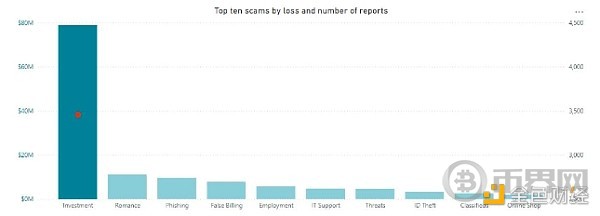
虽然没有提到这些骗局可能造成的损失的具体数字,但澳大利亚政府网站 Scamwatch 显示,投资骗局仍然是澳大利亚人损失金钱的最主要方式。
dA00SOJq4czWtcGoSRlnWZnxhxqFb0qDUK9SJmzg.jpeg

2024 年,投资骗局从澳大利亚人手中骗取的现金比任何其他骗局都多。资料来源:Scamwatch

到目前为止,2024 年已有 3,456 起投资诈骗报告,损失总额超过 7800 万美元。

ACCC 表示,在调查期间发现了 600 条广告。然而,它现在只关注 234 条广告,并声称在案件的调查过程之后,它可以找到其他名人诈骗案例。

2023 年 12 月,亿万富翁澳大利亚矿业大亨安德鲁·福雷斯特 (Andrew Forrest) 起诉 Meta,指控 Facebook 广告使用他的深度伪造图像来宣传骗局加密计划。该案最初被驳回,但一名美国法官在 6 月份批准了该案的审理。

与此同时,监管机构辩称,“至少从 2018 年 1 月开始,Meta 就已经意识到 Facebook 平台上相当一部分加密货币广告使用了误导性或欺骗性的促销手段。”

“广告商必须同意某些合同条款,包括遵守 Meta 的广告政策。这些政策禁止使用欺骗性或误导性做法来宣传计划的广告,”ACCC 表示。

据澳大利亚监管机构称,Meta 确实拥有“技术能力,或者可能已经开发出技术”,可以在可疑广告上发出警告,警告用户在互动时要小心。

据称,尽管 Meta 在收到投诉后会删除个别广告,有时还会禁止相关账户,但它仍会继续展示以同一名人或其他公众人物为主角的类似广告并从中赚取收入。

Meta 在其安全中心声称,它投资于“产品和支持系统以阻止诈骗者”,并删除虚假账户。
cUJUoQjJZF9vxhPoxByBJ3fbUQp2F4OqsOVEhY5e.jpeg

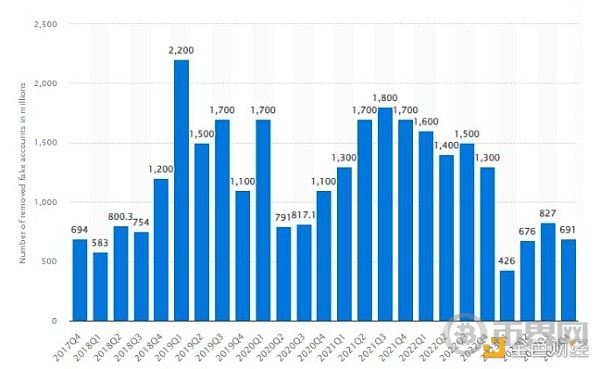
2023 年第四季度,Facebook 对 6.91 亿个虚假账户采取了行动,低于上一季度的 8.27 亿个。资料来源:Statista

Statista 数据估计,2023 年第四季度,Facebook 对 6.91 亿个虚假账户采取了行动,低于上一季度的 8.27 亿个虚假账户和 2019 年 22 亿个虚假资料的高点。

Letture associate

Google and Amazon Simultaneously Invest Heavily in a Competitor: The Most Absurd Business Logic of the AI Era Is Becoming Reality

In a span of four days, Amazon announced an additional $25 billion investment, and Google pledged up to $40 billion—both direct competitors pouring over $65 billion into the same AI startup, Anthropic. Rather than a typical venture capital move, this signals the latest escalation in the cloud wars. The core of the deal is not equity but compute pre-orders: Anthropic must spend the majority of these funds on AWS and Google Cloud services and chips, effectively locking in massive future compute consumption. This reflects a shift in cloud market dynamics—enterprises now choose cloud providers based on which hosts the best AI models, not just price or stability. With OpenAI deeply tied to Microsoft, Anthropic’s Claude has become the only viable strategic asset for Google and Amazon to remain competitive. Anthropic’s annualized revenue has surged to $30 billion, and it is expanding into verticals like biotech, positioning itself as a cross-industry AI infrastructure layer. However, this funding comes with constraints: Anthropic’s independence is challenged as it balances two rival investors, its safety-first narrative faces pressure from regulatory scrutiny, and its path to IPO introduces new financial pressures. Globally, this accelerates a "tri-polar" closed-loop structure in AI infrastructure, with Microsoft-OpenAI, Google-Anthropic, and Amazon-Anthropic forming exclusive model-cloud alliances. In contrast, China’s landscape differs—investments like Alibaba and Tencent backing open-source model firm DeepSeek reflect a more decoupled approach, though closed-source models from major cloud providers still dominate. The $65 billion bet is ultimately about securing a seat at the table in an AI-defined future—where missing the model layer means losing the cloud war.

marsbit21 min fa

Google and Amazon Simultaneously Invest Heavily in a Competitor: The Most Absurd Business Logic of the AI Era Is Becoming Reality

marsbit21 min fa

Computing Power Constrained, Why Did DeepSeek-V4 Open Source?

DeepSeek-V4 has been released as a preview open-source model, featuring 1 million tokens of context length as a baseline capability—previously a premium feature locked behind enterprise paywalls by major overseas AI firms. The official announcement, however, openly acknowledges computational constraints, particularly limited service throughput for the high-end DeepSeek-V4-Pro version due to restricted high-end computing power. Rather than competing on pure scale, DeepSeek adopts a pragmatic approach that balances algorithmic innovation with hardware realities in China’s AI ecosystem. The V4-Pro model uses a highly sparse architecture with 1.6T total parameters but only activates 49B during inference. It performs strongly in agentic coding, knowledge-intensive tasks, and STEM reasoning, competing closely with top-tier closed models like Gemini Pro 3.1 and Claude Opus 4.6 in certain scenarios. A key strategic product is the Flash edition, with 284B total parameters but only 13B activated—making it cost-effective and accessible for mid- and low-tier hardware, including domestic AI chips from Huawei (Ascend), Cambricon, and Hygon. This design supports broader adoption across developers and SMEs while stimulating China's domestic semiconductor ecosystem. Despite facing talent outflow and intense competition in user traffic—with rivals like Doubao and Qianwen leading in monthly active users—DeepSeek has maintained technical momentum. The release also comes amid reports of a new funding round targeting a valuation exceeding $10 billion, potentially setting a new record in China’s LLM sector. Ultimately, DeepSeek-V4 represents a shift toward open yet realistic infrastructure development in the constrained compute landscape of Chinese AI, emphasizing engineering efficiency and domestic hardware compatibility over pure model scale.

marsbit58 min fa

Computing Power Constrained, Why Did DeepSeek-V4 Open Source?

marsbit58 min fa

Trading

Spot
Futures
活动图片